Family & Leisure, India Travel Guides

Lal Bagh Palace: A Guide to the European-Maratha Architecture and Royal Artifacts

Set amidst 28 acres of lush green gardens on the banks of the Khan River, Lal Bagh Palace is one of the most grand and opulent royal residences in India. Serving as the primary palace of the Holkar rulers, it is a magnificent example of Italian, French, and Maratha architectural fusion. Here is a complete visitor guide. Table of Contents 1. History of Lal Bagh Palace 2. Location and Entry Details 3. The European Palace Gates 4. Architecture: Italian Marble and French Glass 5. Key Artifacts and Rooms to See 6. Best Season and Visiting Tips 7. Inquire About Your Heritage Day Tour History of Lal Bagh Palace Construction of the palace was started in 1886 by Maharaja Shivaji Rao Holkar and completed in 1921 by Maharaja Tukoji Rao Holkar III. The Vibe: Unlike Rajwada, which was the administrative seat, Lal Bagh was the private residential palace, built to host royal guests and British dignitaries. Modern Era: It was converted into a public museum by the Madhya Pradesh Government in the late 1980s. Location and Entry Details Location: Lal Bagh Road, Near collectorate Office, Indore. Timings: 10:00 AM to 5:00 PM (Tuesday to Sunday; closed on Mondays). Entry Fee: Approximately ₹20 for Indian nationals. 💡 The TPH Advantage The palace is surrounded by large gardens requiring a 10-minute walk to the entrance. We arrange battery-operated cart options or step-free access assistance for senior citizens, ensuring a comfortable tour of the grounds. The European Palace Gates The first highlight of the palace is its massive main entrance gates. The Design: The cast-iron gates were manufactured in England and are exact replicas of the gates at Buckingham Palace in London. The Detail: The gates feature the Holkar royal crest and are reportedly so heavy that they were shipped in sections and assembled on site. Architecture: Italian Marble and French Glass The interiors display a heavy European influence: The Ballroom: Features polished wooden floors with large French crystal chandeliers and ceiling paintings in the Rococo style. The Dining Hall: Decorated in Baroque style with carved wood paneling and marble fireplaces. The Washrooms: Fitted with early 20th-century English sanitary ware and imported Italian marble bath fittings. Key Artifacts and Rooms to See The Royal Library: Holds a rare collection of leather-bound books, maps, and royal journals. The Banquet Hall: Displays historical dining sets, silver silverware, and royal family portraits. The Coin Collection: A rare collection of coins minted during the Holkar regime. Best Season and Visiting Tips Best Season: November to February (cool winter months are ideal for walking around the surrounding gardens). Guidelines: Photography inside the main museum rooms is restricted. Carry proper ID. Inquire About Your Heritage Day Tour Ready to walk through the grand European corridors of the Holkars? Let us coordinate your transportation, entry tickets, and customized heritage tours. Book Your Lal Bagh Palace Tour on WhatsApp
Family & Leisure, India Travel Guides

Rajwada Palace: Exploring the Royal 7-Story Holkar Heritage in Indore

If you want to understand the heart and history of Indore, your journey must start at Rajwada Palace. Standing tall in the center of the city’s busiest marketplace, this iconic seven-story structure is the historical seat of the Holkar dynasty. Here is your ultimate visitor guide to exploring Rajwada. Table of Contents 1. History of Rajwada Palace 2. Location and Entry Details 3. Architecture: The Maratha-Mughal Fusion 4. Inside the Palace: Wada Layout and Shrines 5. The Light and Sound Show 6. Best Season and Visiting Tips 7. Inquire About Your Heritage Day Tour History of Rajwada Palace Built in 1747 AD by Malhar Rao Holkar, the founder of the Holkar dynasty, Rajwada has served as the royal residence and administrative headquarters. The Fires: The palace has been burned down three times in its history, with the most destructive fire occurring in 1984. Restoration: The structure was meticulously restored to its original glory using traditional materials like limestone, wood, and organic binding materials. Location and Entry Details Location: Rajwada Chowk, City Center, Indore. Timings: 10:00 AM to 5:00 PM (Tuesday to Sunday; closed on Mondays). Entry Fee: Approximately ₹10 for Indians, ₹250 for foreigners. Light & Sound Show tickets are sold separately. 💡 The TPH Advantage Rajwada is located in a high-traffic market area. We provide private AC cars with experienced drivers who handle the local parking hassle, letting you and your family step out directly at the palace gates in comfort. Architecture: The Maratha-Mughal Fusion Rajwada is famous for its unique structural design: Lower Floors: Built of solid stone, displaying classic Maratha architectural features. Upper Floors: Built of lightweight teak wood, displaying delicate Mughal-style arches, balconies, and wood-carved windows. The Entrance Gate: A massive wooden gate reinforced with iron spikes to prevent elephant attacks. Inside the Palace: Wada Layout and Shrines The palace is laid out as a traditional Maratha *Wada* (courtyard house): The Courtyard: A central open courtyard surrounded by wooden galleries and carved pillars. The Temple: A quiet shrine dedicated to Lord Ganesha is situated inside the courtyard, where the Holkar family performed daily prayers. The Light and Sound Show Every evening, Rajwada hosts a highly recommended Light and Sound Show. The Story: Narrates the heroic history of Malhar Rao, Ahilyabai Holkar, and Shivaji Rao, describing how Indore grew from a small trade post into a major capital. Voice: Narrated by Bollywood stars (available in Hindi and English). Best Season and Visiting Tips Best Season: October to March (cooler months are best for walking around the open courtyard). Photography: Carry a camera; the wood-carved balconies and stone pillars offer fantastic heritage backdrops. Nearby Shopping: The streets surrounding Rajwada (Sarafa, MT Market) are famous for local snacks and traditional fabrics. Inquire About Your Heritage Day Tour Ready to discover the royal heritage of Indore? Let us handle your transportation, local guide permissions, and combined city sightseeing tours with comfort and ease. Plan My Indore City Tour on WhatsApp

Family & Leisure, India Travel Guides, Tour Packages & Guides

15 Places to Explore Within 100km of Indore: The Ultimate Weekend Guide

Indore is not only the financial capital and cleanest city of Central India, but it is also geographically blessed. Surrounded by the Vindhya range, dense forests, sacred rivers, and historical ruins, Indore serves as the perfect launchpad for quick weekend escapes. Whether you are looking for spiritual yatras, roaring monsoon waterfalls, historical fortresses, or quiet forest treks, here are the top 15 places to explore within 100 km of Indore. Table of Contents 1. Quick Distance and Travel Summary 2. Spiritual & Pilgrimage Centers 3. Historical Ruins & Fortresses 4. Scenic Waterfalls & Nature Escapes 5. Offbeat Valleys & Forest Treks 6. Audited Family Travel Safety Guidelines 7. Inquire About Your Weekend Road Trip Quick Distance and Travel Summary Destination Name Distance from Indore Ideal Travel Mode Best Season to Visit 3. Tincha Falls 25 km Car / AC Cab Monsoon 5. Hatyari Khoh 33 km Car / SUV Monsoon / Winter 6. Patalpani Waterfall 35 km AC Cab / Heritage Train Monsoon 7. Wanchoo Point 40 km Car / AC Cab Monsoon / Winter 8. Janapav Kuti 45 km AC Cab / SUV Monsoon / Winter 9. Choral Dam 45 km AC Cab / Car Monsoon / Winter 10. Sitlamata Falls 45 km Car / SUV Monsoon 11. Gidiya Khoh 48 km SUV (Requires Trekking) Monsoon / Winter 12. Ujjain Mahakal 55 km AC Cab / Train October to March 13. Jam Gate 55 km Car / AC Cab Monsoon / Winter 14. Omkareshwar 80 km AC Cab / Car October to March 15. Maheshwar & Mandu 90–95 km AC Cab / Car Monsoon / Winter Spiritual & Pilgrimage Centers 1. Ujjain Mahakaleshwar (55 km) One of the most sacred Hindu pilgrimage centers in India, Ujjain is home to the south-facing Mahakaleshwar Jyotirlinga. The grand Mahakal Lok Corridor features hundreds of murals and statues depicting Shiva mythology, beautifully illuminated in the evenings. Highlight: Attending the early morning *Bhasma Aarti* and exploring the ship-like architecture of nearby temples. Transit: Smooth 4-lane highway via Rau-Indore bypass road (1.5 hours). 2. Omkareshwar (80 km) Situated on the Mandhata island in the holy Narmada River, the island’s shape naturally resembles the sacred symbol “Om”. Highlight: VIP Darshan at the Omkareshwar and Mamleshwar temples, followed by a relaxing boat ride on the Narmada River. Transit: Indore-Khandwa Highway (2.5 hours). Winding ghat sections require careful driving. 💡 The TPH Advantage 💡 The TPH Advantage (Elderly Care): Pilgrimages can involve long walks. We structure our Ujjain & Omkareshwar tours with pre-arranged wheelchair access, battery-operated golf carts, and temple-side hotels to minimize walking distance for seniors. 3. Janapav Kuti (45 km) The second-highest peak in the Malwa region, Janapav Kuti is the legendary birthplace of Lord Parashurama (the sixth avatar of Lord Vishnu). Highlight: A sacred pond (*Kund*) marking the origin of the Chambal River and panoramic watchtowers offering sunset views over the Vindhya valleys. Transit: Direct climb via NH 3 (Mumbai Highway) with steep curves near the peak. Historical Ruins & Fortresses 4. Maheshwar Fort & Ghats (95 km) The 18th-century capital of the Holkar dynasty under Queen Ahilyabai Holkar. It is famous for its clean stone ghats on the Narmada River and the handloom weaving of Maheshwari sarees. Highlight: A sunset boat ride on the Narmada and a visit to the *Ahilya Wada* palace inside the fort. 5. Mandu (Mandavgarh) (90 km) A fort city perched on the Vindhya range, filled with grand Afghan-style stone palaces, tombs, and lakes. Highlight: Exploring the floating Jahaz Mahal (Ship Palace) and the high cliff-edge Rani Roopmati Pavilion overlooking the Nimar valley. Transit: Best accessed via NH 47 (Dhar Road) for a smooth 2-hour drive. 6. Kajligarh Fort (20 km) A small, ruined 18th-century fort built during the Holkar regime. Highlight: While the structure is in ruins, the surrounding valleys turn vibrant green in the monsoons, making it a great offbeat photography spot. Transit: Khandwa Road, near Simrol. 7. Jam Gate (55 km) A massive, double-story stone archway that served as the southern gateway watchtower to the Nimar plains. Highlight: Standing on the gate terrace during monsoon evenings as thick clouds drift directly through the stone archway. Scenic Waterfalls & Nature Escapes 8. Patalpani Waterfall (35 km) A famous seasonal waterfall plunging nearly 300 feet into a deep forest gorge near Mhow. Highlight: View the roaring waterfall from behind the safety fences and catch a glimpse of the special Vistadome Heritage Train passing over the valley bridge. 9. Choral Dam (45 km) A peaceful reservoir built on the Choral River, surrounded by the Vindhyachal forest ranges. Highlight: Speed boating, pedal boating, and relaxing family lunches at the lakeside MP Tourism resort. 10. Tincha Falls (25 km) One of the most popular monsoon getaways, where water falls in a massive, single-sheet drop into a deep valley. Highlight: The surrounding mist and green valley views. *Note: Swimming is strictly prohibited due to strong currents.* 11. Sitlamata Falls (45 km) A beautiful seasonal waterfall featuring natural rock caves located behind the water sheet. Highlight: Exploring the shallow stream beds and small stone caves during the post-monsoon months. 💡 The TPH Advantage 💡 The TPH Advantage (Hygiene Audits): Most natural picnic spots lack clean restrooms and hygienic dining. All TPH day tours feature designated halts at handpicked hotels and MP Tourism properties, ensuring clean facilities for ladies, seniors, and kids. Offbeat Valleys & Forest Treks 12. Ralamandal Wildlife Sanctuary (12 km) Located on the outskirts of Indore, this is a protected forest reserve containing deer, leopards, and diverse bird species. Highlight: Trekking up the paved pathway to the hilltop colonial hunting lodge (built in 1905) for birds-eye views of Indore city. 13. Hatyari Khoh (33 km) A deep, dramatic mountain gorge surrounded by tall cliffs and dense forests near Kampel. Highlight: Exploring the misty valley edge. The name “Hatyari Khoh” (Killer Gorge) comes from local legends, and the sheer drop offers a highly dramatic view. Transit: Winding village roads; an SUV is recommended. 14. Wanchoo Point (40 km) An offbeat hilltop viewpoint

Family & Leisure, India Travel Guides

Exploring Mhow’s Cantonment Heritage: War Colleges, Infantry Museum & Gothic Churches

Established in 1818 by Sir John Malcolm after the Treaty of Mandsaur, Mhow (Military Headquarters of War) remains one of Central India’s most important cantonment towns. Blending British colonial architecture, elite military academies, and historic churches, it is a fascinating spot for heritage explorers. Here is your complete guide. Table of Contents 1. History of Mhow Cantonment 2. Getting to Mhow from Indore 3. Top Military Institutions & Museums 4. Gothic-Style Colonial Churches 5. The Cantonment Layout & Gardens 6. Important Security Rules for Visitors 7. Inquire About Your Heritage Sightseeing Tour History of Mhow Cantonment For nearly two centuries, Mhow served as a strategic military base. The Name: Although Mhow was officially renamed Dr. Ambedkar Nagar in 2003, the name M.H.O.W. is widely believed to be an acronym for *Military Headquarters of War* or *Military Headquarters of Western India*. Colonial Character: The town features wide, tree-lined avenues, clean military zones, and British-style bungalows. Getting to Mhow from Indore Distance: Approximately 25 km. Travel Time: Around 45 minutes to 1 hour. Route: Indore -> Rau -> Mhow Cantonment (via the old AB Road / Indore-Mhow Highway). The route is direct and very easy to navigate. 💡 The TPH Advantage Because Mhow is an active army cantonment, certain zones have restricted entry or traffic rules. We provide local drivers who know the permitted routes, parkings, and bypass zones, ensuring a smooth, stress-free heritage walk for your family. Top Military Institutions & Museums 1. The Infantry School One of the largest and most prestigious training centers of the Indian Army. It houses the Infantry Museum, showcasing historical weapons, uniforms, and war memorabilia (prior permission required for entry). 2. Army War College & MCTAE Premier tactical training colleges for senior officers, featuring beautiful colonial stone buildings. Gothic-Style Colonial Churches 1. Christ Church Built in 1872, this beautiful church features classic Gothic revival architecture, high wood-beamed ceilings, and stunning stained-glass windows imported from England. 2. St. Anthony’s Church Known for its peaceful gardens and historical stone structure, serving as a quiet spiritual sanctuary in the heart of Mhow. The Cantonment Layout & Gardens Mall Road: The main boulevard of the cantonment, lined with massive Banyan trees and colonial bungalows. Cantonment Board Parks: Well-maintained public parks like the Mall Road Garden are great for families to sit and relax in a clean environment. Important Security Rules for Visitors As Mhow is an active military station: No Photography: Photography is strictly prohibited near military checkpoints, gates, and army training academies. Follow the local signage. Drive Slowly: Adhere strictly to the cantonment speed limits (usually 30–40 km/h) and traffic guidelines. Inquire About Your Heritage Sightseeing Tour Ready to walk through the colonial military history of Mhow? Let us coordinate your private transport, heritage guide permissions, and local city routes. Book Your Mhow Heritage Tour on WhatsApp

Family & Leisure, India Travel Guides

Bhim Janmabhoomi Memorial: A Guide to the Birthplace of Dr. B.R. Ambedkar in Mhow

Mhow (officially renamed Dr. Ambedkar Nagar) holds immense historical and social significance as the birthplace of Dr. Bhimrao Ramji Ambedkar, the father of the Indian Constitution. The Bhim Janmabhoomi Memorial is a grand monument built here to honor his life and legacy. Here is a complete visitor guide. Table of Contents 1. Historical Significance of the Memorial 2. Indore to Mhow Memorial Route and Access 3. Architecture and Layout of the Monument 4. The Memorial Museum and Exhibition 5. Important Dates and Festivals 6. Nearby Amenities and Facilities 7. Inquire About Your Customized Heritage Tour Historical Significance of the Memorial Dr. B.R. Ambedkar was born in Mhow on April 14, 1891, where his father, Ramji Maloji Sakpal, was serving as a Subedar Major in the British Indian Army cantonment. The Foundation: The foundation stone of this grand memorial was laid on April 14, 1991. The finished double-story structure was dedicated to the nation on Dr. Ambedkar’s birth anniversary in 2008. Indore to Mhow Memorial Route and Access Distance: Approximately 25 km from Indore. Travel Time: Around 45 minutes to 1 hour. The Route: Indore -> Rau -> Mhow Cantonment (via the Indore-Mhow Road / AB Road). The memorial is situated near the Mhow railway station and is very easy to find. 💡 The TPH Advantage The memorial is located inside the busy Mhow Cantonment area. We coordinate private transport with experienced drivers who handle the local city traffic and ensure hassle-free parking right near the memorial entrance. Architecture and Layout of the Monument The monument features a grand dome-shaped structure built of white marble, inspired by Buddhist stupas. The Entrance: The front features a massive statue of Dr. B.R. Ambedkar pointing forward, with the preamble of the Indian Constitution engraved on stone tablets. The Core: The central hall holds a holy bronze urn containing the ashes (*Asthi Kalash*) of Dr. Ambedkar. The Memorial Museum and Exhibition Inside the memorial complex, a well-curated museum and photo gallery showcase: Rare childhood photos of Bhimrao in Mhow. His handwritten letters, books, and personal diary pages. A chronological exhibition of his struggle for social equality and the drafting of the Constitution. Important Dates and Festivals April 14 (Ambedkar Jayanti): The birth anniversary of Dr. Ambedkar. The memorial is beautifully decorated, attracting lakhs of followers from across India. December 6 (Mahaparinirvan Din): The death anniversary, marked by quiet prayers, candlelight marches, and floral tributes. *Note: If traveling with family and seniors, we recommend visiting on non-festival weekdays for a peaceful experience.* Nearby Amenities and Facilities Accessibility: The memorial is fully wheelchair accessible with flat ramps and wide corridors, making it senior-friendly. Visiting Hours: Open daily from 9:00 AM to 6:00 PM (no entry fee). Inquire About Your Customized Heritage Tour Ready to explore the historical social heritage of Mhow? Let us organize your private travel, heritage guide, and nearby sightseeing spots with complete comfort. Plan My Mhow Heritage Tour on WhatsApp

India Travel Guides

Maheshwari & Chanderi Sarees: A Smart Shopping Guide to Authentic Handlooms in MP

Madhya Pradesh is globally famous for its rich textile heritage. If you are traveling through the state, buying an authentic Maheshwari or Chanderi saree is a must. However, with many powerloom copies in the market, finding pure, hand-woven fabrics requires some knowledge. Here is your smart shopping guide. Table of Contents 1. Understanding MP’s Famous Handlooms 2. What is a Maheshwari Saree? 3. What is a Chanderi Saree? 4. How to Identify Pure Handloom vs. Powerloom 5. Best Authentic Shopping Spots in MP 6. Caring for Your Pure Silk-Cotton Handlooms 7. Inquire About a Customized Shopping Tour Understanding MP’s Famous Handlooms Madhya Pradesh produces two distinct GI-tagged (Geographical Indication) weaves: Maheshwari: Characterized by geometric borders, solid colors, and a glossy finish. Chanderi: Characterized by its sheer, see-through texture (*mushru*), traditional floral motifs (*butis*), and lightweight feel. What is a Maheshwari Saree? Revived in the late 18th century by Rajmata Ahilyabai Holkar, Maheshwari sarees were originally made of pure silk as gifts for royal relatives. Design: Inspired by the stone carvings and geometric patterns on the Maheshwar Fort. Fabric: Typically a blend of fine cotton in the weft and silk in the warp, making them extremely lightweight and perfect for summers. Borders: Reversible borders (*Bugdi*), which look identical on both sides. What is a Chanderi Saree? Woven in the historical town of Chanderi in northern MP, these sarees date back to the Vedic period. Fabric: Made of pure silk, silk-cotton, or Chanderi cotton. Known as “woven air” due to its translucent quality. Motifs: Embellished with fine gold thread (*Zari*) in traditional motifs like peacocks, lotuses, and coins. 💡 The TPH Advantage Our heritage packages in Mandu, Maheshwar, and Gwalior feature designated shopping hours with trusted master weaver cooperatives. We bypass tourist trap shops to ensure you buy authentic handlooms directly from the weavers at fair prices. How to Identify Pure Handloom vs. Powerloom Avoid buying cheap polyester imitation copies by using these tests: 1. The Reversible Border Test (For Maheshwari) Check if the border design looks identical on both the front and back of the saree. Powerlooms rarely achieve this perfect dual-finish. 2. The Motif Test (For Chanderi) Look at the *Zari* motifs (*butis*). On handloom sarees, the gold thread ends are cut and tucked by hand, making each motif slightly unique. Powerloom motifs are perfectly uniform and often have long loose threads on the back. 3. The Texture Test Handloom sarees have minor, natural imperfections in the weave (uneven threads), which are a mark of human craftsmanship. Powerloom sarees are perfectly uniform and feel stiff/synthetic. Best Authentic Shopping Spots in MP Rehwa Society (Maheshwar): Located inside the Ahilya Wada Fort complex. Highly trusted for authentic Maheshwari fabrics where profits support weavers’ healthcare and education. Chanderi Weaver Cooperatives (Chanderi): Look for government-recognized cooperative societies in Chanderi town for direct deals. Mrignayani Emporium: The official MP Government handicraft showroom chain (outlets in Indore, Bhopal, and Gwalior). Caring for Your Pure Silk-Cotton Handlooms First Wash: Dry clean only to preserve the silk sheen and prevent color bleeding. Ironing: Always use a low-heat setting and iron on the reverse side of the *Zari* work. Storage: Store in soft cotton cloth bags instead of plastic covers to let the natural fibers breathe. Inquire About a Customized Shopping Tour Ready to combine historical heritage with authentic handloom shopping? Let us arrange your travel, hotel bookings, and visits to trusted weaver cooperatives. Inquire About an MP Shopping Tour on WhatsApp

Top tourist attractions and heritage sites in Andhra Pradesh
India Travel Guides

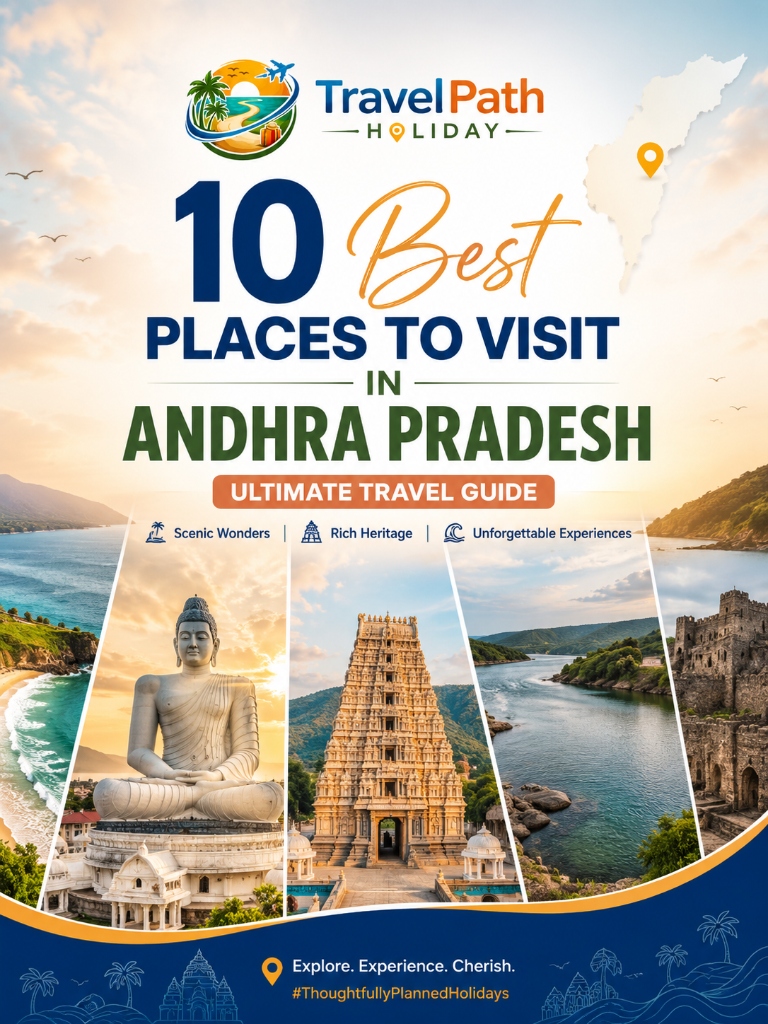
10 Best Places to Visit in Andhra Pradesh: Ultimate Travel Guide

If you are planning your next holiday and looking for the perfect destination, Andhra Pradesh offers some of the most spectacular travel experiences in India. From rich cultural heritage to stunning natural beauty, there is something for every traveler. In this guide, we explore the best places to visit in Andhra Pradesh to help you plan an unforgettable itinerary. Quick Andhra Pradesh Travel Guide Capital: Amaravati Best Time to Visit: September to March Ideal Tour Duration: 5-7 Days Top 10 Tourist Attractions in Andhra Pradesh 1. Tirupati (Venkateswara Temple) One of the world’s most sacred and visited Hindu pilgrimage sites, situated atop the scenic Tirumala Hills. 2. Araku Valley A picturesque hill station famed for its lush coffee plantations, pleasant climate, waterfalls, and rich tribal heritage. 3. Borra Caves Million-year-old limestone caves featuring spectacular stalactite and stalagmite formations, located in the Ananthagiri hill range. 4. Visakhapatnam (Vizag Beaches & Submarine Museum) A vibrant coastal city blending pristine beaches like Rishikonda with unique attractions like the INS Kursura Submarine Museum. 5. Gandikota (Grand Canyon of India) A stunning gorge formed by the Pennar River cutting through the Erramala hills, featuring a majestic medieval fort. 6. Belum Caves The second largest cave system in the Indian subcontinent, famous for its long passages, galleries, and unique stalactite formations. 7. Lepakshi (Veerabhadra Temple) A historical treasure renowned for its 16th-century Vijayanagara style architecture, hanging pillar, and giant monolithic Nandi. 8. Srisailam Mallikarjuna Temple A highly revered temple dedicated to Lord Shiva, nestled in the Nallamala Hills along the banks of the Krishna River. 9. Horsley Hills A serene series of hills offering lush green landscapes, refreshing viewpoints, and a peaceful escape from city life. 10. Amaravati An ancient Buddhist hub featuring ruins of a great stupa and a museum showcasing valuable relics and sculptures. — Plan Your Perfect Andhra Pradesh Holiday! Like these destinations but want a custom itinerary? Our travel designers can build a personalized package matching your budget, interests, and duration. 💬 Chat with our Travel Expert on WhatsApp Get a Free Customized Quote To get a personalized, hassle-free itinerary design, fill out a quick request with: 1. Your planned travel dates 2. Number of travelers 3. Preferred style (Leisure, Adventure, Family, Honeymoon) 💡 Pro Tip: Combine multiple attractions in Andhra Pradesh to make a comprehensive 5-to-7 day circuit. Chat with us to find out the best routing!

Srisailam Mallikarjuna Jyotirlinga Temple view in Andhra Pradesh
India Travel Guides

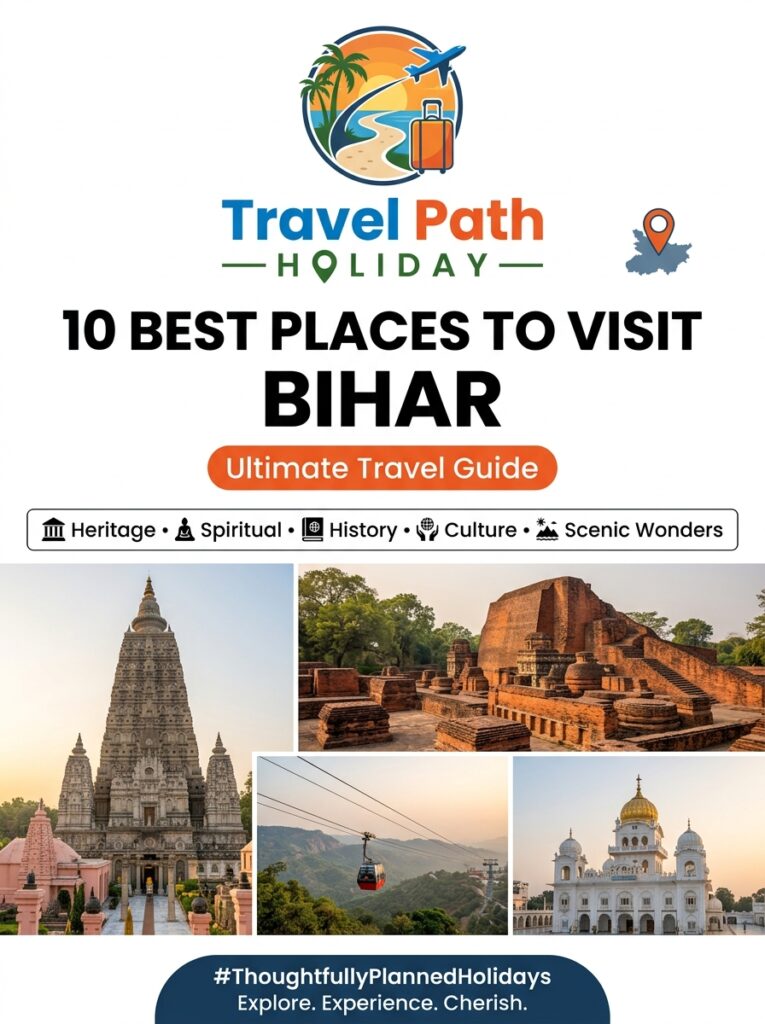
10 Best Places to Visit in Bihar: Ultimate Travel Guide

If you are planning your next holiday and looking for the perfect destination, Bihar offers some of the most spectacular travel experiences in India. From rich cultural heritage to stunning natural beauty, there is something for every traveler. In this guide, we explore the best places to visit in Bihar to help you plan an unforgettable itinerary. 📊 Quick Bihar Travel Guide Capital: Patna Best Time to Visit: October to March Ideal Tour Duration: 5-7 Days — Top 10 Tourist Attractions in Bihar 1. Bodh Gaya (Mahabodhi Temple) Best Time to Visit: October to March Recommended Stay: 2 Days Highlights: Buddhist, Spiritual, UNESCO, Heritage The sacred UNESCO world heritage temple where Lord Buddha attained enlightenment under the holy Bodhi Tree. 2. Nalanda University Ruins Best Time to Visit: October to March Recommended Stay: 1 Day Highlights: History, Heritage, Archaeology, UNESCO The archaeological ruins of one of the world’s oldest and most prestigious international residential universities. 3. Rajgir Best Time to Visit: October to March Recommended Stay: 1-2 Days Highlights: Spiritual, Hills, History, Hot Springs A historic valley featuring therapeutic hot water springs, the Vishwa Shanti Stupa, and the gridhracuta hill path. 4. Vaishali Best Time to Visit: October to March Recommended Stay: 1 Day Highlights: History, Heritage, Buddhist, Jain An ancient city historically recognized as one of the first republics, closely linked to Buddha and Mahavira. 5. Patna Sahib Gurudwara Best Time to Visit: October to March Recommended Stay: Half Day Highlights: Spiritual, Pilgrimage, Heritage, Sikhism A magnificent white-marble gurudwara marking the birthplace of Guru Gobind Singh Ji, the tenth Sikh Guru. 6. Valmiki National Park Best Time to Visit: November to March Recommended Stay: 2 Days Highlights: Wildlife, Nature, Forests, Safari The state’s sole national park and tiger reserve, showcasing dense forests and abundant wildlife along the Gandak River. 7. Sher Shah Suri Tomb (Sasaram) Best Time to Visit: October to March Recommended Stay: Half Day Highlights: History, Architecture, Mausoleum, Heritage A spectacular red sandstone mausoleum designed in Indo-Islamic architecture, standing in the middle of an artificial lake. 8. Kakolat Waterfall Best Time to Visit: October to February Recommended Stay: Half Day Highlights: Nature, Waterfalls, Scenic, Relaxation A cascading waterfall forming a cool, natural pool surrounded by verdant forests, ideal for weekend picnics. 9. Pawapuri Best Time to Visit: October to March Recommended Stay: 1 Day Highlights: Spiritual, Jain, Heritage, Architecture The holy site where Lord Mahavira attained Nirvana, featuring the Jal Mandir, a temple built entirely in white marble inside a lotus pond. 10. Mundeshwari Devi Temple Best Time to Visit: October to March Recommended Stay: Half Day Highlights: Spiritual, Ancient Temple, Heritage, History Considered the oldest functional temple in India, dating back to 108 AD and dedicated to Shiva and Shakti. — Plan Your Perfect Bihar Holiday! Like these destinations but want a custom itinerary? Our travel designers can build a personalized package matching your budget, interests, and duration. 💬 Chat with our Travel Expert on WhatsApp Get a Free Customized Quote To get a personalized, hassle-free itinerary design, fill out a quick request with: 1. Your planned travel dates 2. Number of travelers 3. Preferred style (Leisure, Adventure, Family, Honeymoon) 💡 Pro Tip: Combine multiple attractions in Bihar to make a comprehensive 5-to-7 day circuit. Chat with us to find out the best routing!

Lepakshi Veerabhadra Temple stone carvings in Andhra Pradesh
India Travel Guides

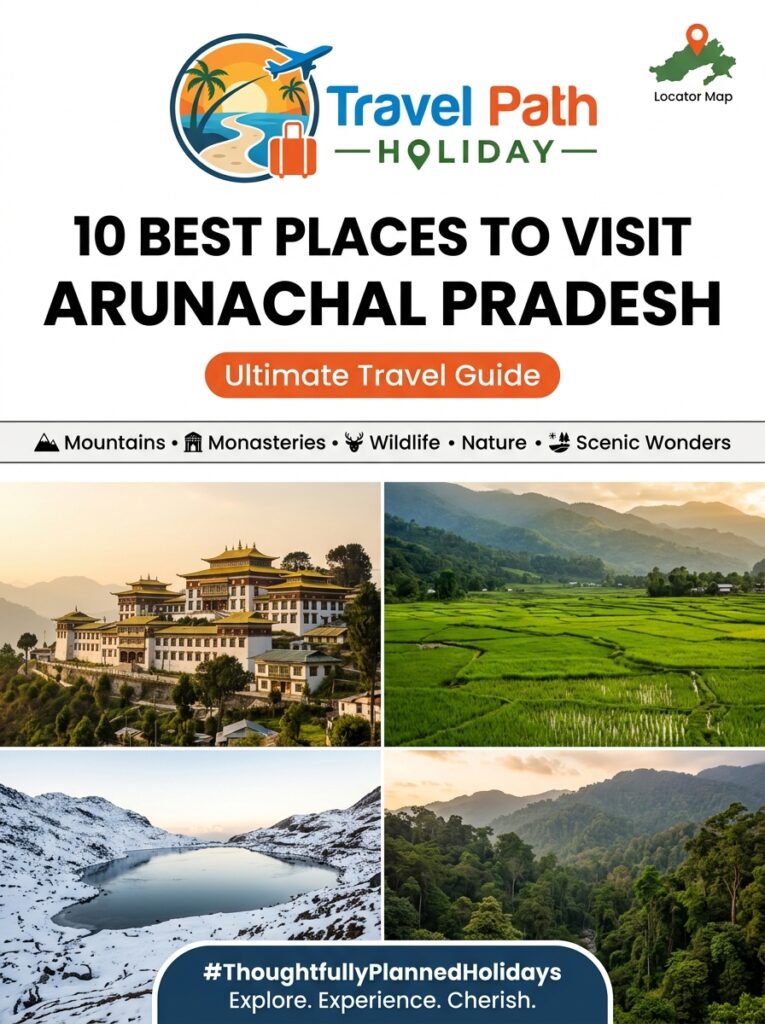
10 Best Places to Visit in Arunachal Pradesh: Ultimate Travel Guide

If you are planning your next holiday and looking for the perfect destination, Arunachal Pradesh offers some of the most spectacular travel experiences in India. From rich cultural heritage to stunning natural beauty, there is something for every traveler. In this guide, we explore the best places to visit in Arunachal Pradesh to help you plan an unforgettable itinerary. 📊 Quick Arunachal Pradesh Travel Guide Capital: Itanagar Best Time to Visit: March to June, September to October Ideal Tour Duration: 5-7 Days — Top 10 Tourist Attractions in Arunachal Pradesh 1. Tawang Monastery Best Time to Visit: March to June, September to October Recommended Stay: 1-2 Days Highlights: Buddhist, Spiritual, Heritage, Hills The largest monastery in India and second largest in the world, perched at 10,000 feet with breathtaking valley views. 2. Ziro Valley Best Time to Visit: March to October Recommended Stay: 2-3 Days Highlights: Nature, Culture, Valley, Music Festival A beautiful world heritage site home to the Apatani tribe, characterized by pine hills, terraced rice fields, and a famous music festival. 3. Namdapha National Park Best Time to Visit: October to April Recommended Stay: 2-3 Days Highlights: Wildlife, Nature, Adventure, Trekking A massive biodiversity hotspot harboring rare wildlife including red pandas, clouded leopards, and all four big cat species. 4. Sela Pass Best Time to Visit: April to June, October to November Recommended Stay: Half Day Highlights: Hills, Snow, Adventure, Scenic A high-altitude mountain pass at 13,700 feet, featuring the stunning frozen Sela Lake and panoramic snow-capped Himalayan peaks. 5. Roing Best Time to Visit: October to February Recommended Stay: 1-2 Days Highlights: Nature, Scenic, Heritage, Lakes A peaceful town on the Dibang River known for its beautiful lakes, archaeological ruins, and gorgeous sunset points. 6. Bomdila Best Time to Visit: April to October Recommended Stay: 1-2 Days Highlights: Hills, Monastery, Nature, Orchards A charming town offering Apple orchards, gorgeous Buddhist monasteries, and spectacular views of the snow-clad Gorichen Peak. 7. Itanagar (Ita Fort & Ganga Lake) Best Time to Visit: October to April Recommended Stay: 1 Day Highlights: History, Heritage, Nature, Lakes The capital city showcasing a historical 14th-century brick fort and the serene green lake surrounded by primeval vegetation. 8. Pasighat Best Time to Visit: October to March Recommended Stay: 1-2 Days Highlights: Adventure, River Rafting, Nature, Scenic The oldest town of the state, situated on the Siang River, famous for wild water rafting, angling, and pristine scenery. 9. Bhalukpong Best Time to Visit: October to April Recommended Stay: 1-2 Days Highlights: Adventure, River Rafting, Nature, Angling Nestled on the Kameng River, this town is popular for white-water rafting, angling, and trekking in the lush green foothills. 10. Dirang Best Time to Visit: September to May Recommended Stay: 1-2 Days Highlights: Valley, Nature, Hot Springs, Heritage A scenic valley town famous for its hot water springs, apple orchards, sheep farms, and the historic Dirang Dzong fort. — Plan Your Perfect Arunachal Pradesh Holiday! Like these destinations but want a custom itinerary? Our travel designers can build a personalized package matching your budget, interests, and duration. 💬 Chat with our Travel Expert on WhatsApp Get a Free Customized Quote To get a personalized, hassle-free itinerary design, fill out a quick request with: 1. Your planned travel dates 2. Number of travelers 3. Preferred style (Leisure, Adventure, Family, Honeymoon) 💡 Pro Tip: Combine multiple attractions in Arunachal Pradesh to make a comprehensive 5-to-7 day circuit. Chat with us to find out the best routing!

Srisailam Mallikarjuna Jyotirlinga Temple view in Andhra Pradesh
India Travel Guides

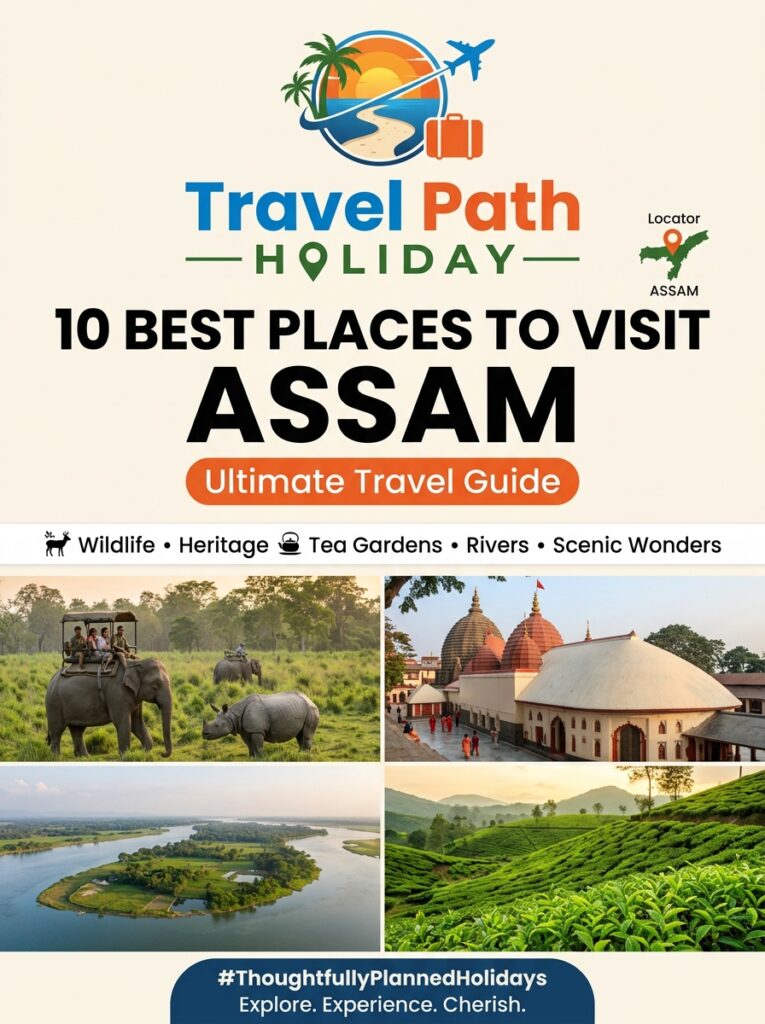
10 Best Places to Visit in Assam: Ultimate Travel Guide

If you are planning your next holiday and looking for the perfect destination, Assam offers some of the most spectacular travel experiences in India. From rich cultural heritage to stunning natural beauty, there is something for every traveler. In this guide, we explore the best places to visit in Assam to help you plan an unforgettable itinerary. 📊 Quick Assam Travel Guide Capital: Dispur Best Time to Visit: November to April Ideal Tour Duration: 5-7 Days — Top 10 Tourist Attractions in Assam 1. Kaziranga National Park Best Time to Visit: November to April Recommended Stay: 2 Days Highlights: Wildlife, UNESCO, Nature, Safari A UNESCO World Heritage site and home to two-thirds of the world’s great Indian one-horned rhinoceros population. 2. Kamakhya Temple Best Time to Visit: October to April Recommended Stay: 1 Day Highlights: Spiritual, Pilgrimage, Heritage, History A historic, revered Shakti Peeth temple in Guwahati, famous for its unique architecture and vibrant Ambubachi Mela festival. 3. Majuli Island Best Time to Visit: October to March Recommended Stay: 2 Days Highlights: Culture, River Island, Heritage, Art The world’s largest river island, situated on the Brahmaputra River, famous for Neo-Vaishnavite culture and mask-making. 4. Sivasagar Best Time to Visit: October to March Recommended Stay: 1-2 Days Highlights: History, Heritage, Architecture, Palaces The historic capital of the Ahom kingdom, featuring massive royal tanks, palaces, and ancient amphitheaters like Rang Ghar. 5. Manas National Park Best Time to Visit: November to April Recommended Stay: 2 Days Highlights: Wildlife, UNESCO, Nature, Adventure A UNESCO World Heritage site and tiger reserve, featuring elephant safaris and rich biodiversity in the foothills of the Himalayas. 6. Hajo Best Time to Visit: October to March Recommended Stay: 1 Day Highlights: Spiritual, Pilgrimage, Multifaith, Heritage A unique pilgrimage center sacred to Hindus, Buddhists, and Muslims, situated on the banks of the Brahmaputra. 7. Tezpur Best Time to Visit: October to March Recommended Stay: 1-2 Days Highlights: Culture, Nature, Gardens, Scenic Known as the cultural capital of Assam, featuring lush tea gardens, archaeological parks, and lovely views of the Brahmaputra River. 8. Dibru-Saikhowa National Park Best Time to Visit: November to April Recommended Stay: 1-2 Days Highlights: Wildlife, Nature, Biosphere, Bird Watching An island national park and biosphere reserve famous for its feral horses, birdwatching, and boat safaris on the river. 9. Haflong Best Time to Visit: October to February Recommended Stay: 2 Days Highlights: Hills, Nature, Scenic, Lakes The only hill station in Assam, boasting spectacular green valleys, lakes, hanging bridges, and blue-tinted hills. 10. Guwahati (Umananda Island & River Cruise) Best Time to Visit: October to April Recommended Stay: 1 Day Highlights: Nature, Scenic, Cruise, Islands Experience a sunset cruise on the Brahmaputra River and visit the world’s smallest inhabited river island, Umananda. — Plan Your Perfect Assam Holiday! Like these destinations but want a custom itinerary? Our travel designers can build a personalized package matching your budget, interests, and duration. 💬 Chat with our Travel Expert on WhatsApp Get a Free Customized Quote To get a personalized, hassle-free itinerary design, fill out a quick request with: 1. Your planned travel dates 2. Number of travelers 3. Preferred style (Leisure, Adventure, Family, Honeymoon) 💡 Pro Tip: Combine multiple attractions in Assam to make a comprehensive 5-to-7 day circuit. Chat with us to find out the best routing!

You have been successfully Subscribed! Ops! Something went wrong, please try again.

About Us

Travel Path Holiday is a full-service travel company dedicated to delivering seamless, personalized, and memorable travel experiences. We specialize in crafting customized journeys for both corporate and leisure travelers, ensuring every trip is stress-free and enjoyable.

Destinations

Kashmir

Manali

Leh-Ladakh

Nepal

Bhutan

Blog

  • All Post
  • Adventure, Trekking & Road Trips
  • Andaman
  • Bali Honeymoon
  • Bhutan Honeymoon
  • Dubai Honeymoon
  • Family & Leisure
  • Goa Honeymoon
  • Gujarat
  • Himachal Honeymoon
  • Himachal Pradesh
  • Honeymoon & Romance
  • India Travel Guides
  • Kashmir Honeymoon
  • Kerala Honeymoon
  • Nepal Honeymoon
  • Rajasthan Honeymoon
  • Seasonal & Monsoon Specials
  • Sikkim & Northeast
  • Singapore Honeymoon
  • Spiritual & Pilgrimage
  • Thailand
  • Tour Packages & Guides
  • Uttarakhand Honeymoon

Travel Path Holiday, Indore | © 2026 Travel Path Holiday. All Rights Reserved. | Website crafted by Amit Nayak, India

Scroll to Top