
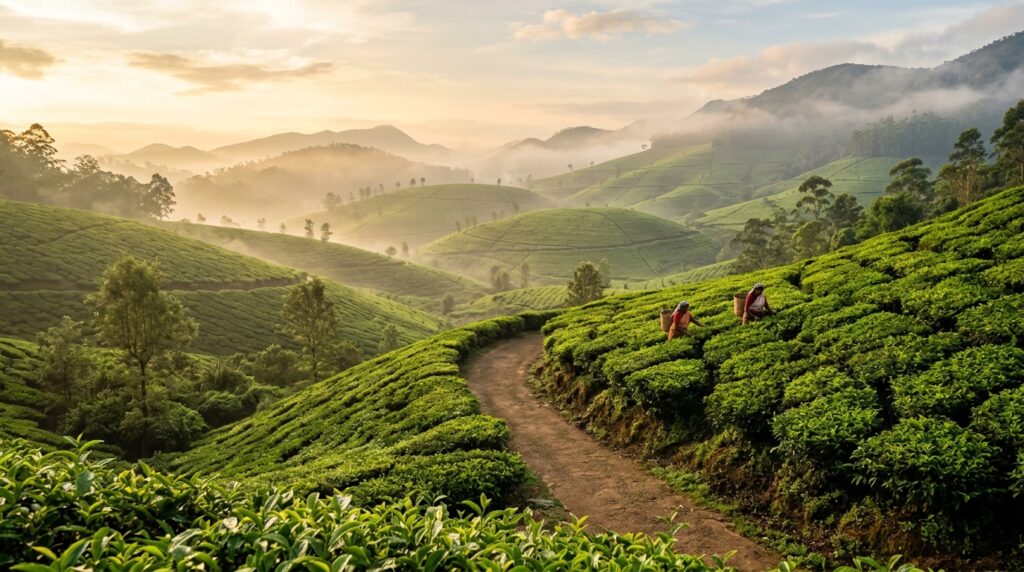
Things to Avoid in Munnar Tea Gardens: Tourist Safety Guidelines
Overview Munnar’s undulating emerald hills, blanketed with manicured tea bushes under shifting mountain mists, rank among South India’s most iconic landscapes. While walking amidst these manicured plantations feels serene, first-time visitors must remember that Munnar’s tea estates—such as those managed by KDHP (Kanan Devan Hills Plantations/Tata Tea), Harrison Malayalam, and Lockhart Estate—are active private agricultural properties and sensitive ecological ecosystems. Navigating these tea slopes safely requires understanding local plantation rules, wildlife movement, microclimates, and physical hazards. From avoiding steep fine penalties for illegal tea leaf plucking and trespassing to protecting yourself against wet-season land leeches, hazardous cliffside selfie spots on Gap Road, and unexpected wild elephant encounters, being informed ensures a seamless holiday. This comprehensive tourist safety guide outlines critical things to avoid in Munnar tea gardens, tailored specifically with practical logistical advice for travelers departing from Indore and Central India. Local Logistical Advice for Indore Travelers Planning a trip to Munnar from Indore requires smooth transit coordination across flights, mountain drives, and climate transitions: Flight Connectivity from Indore: The most efficient route from Indore to Munnar is flying from Devi Ahilyabai Holkar International Airport (IDR) to Cochin International Airport (COK). Major airlines including IndiGo and Air India offer convenient 1-stop connecting flights via Mumbai (BOM), Delhi (DEL), or Bengaluru (BLR), with total transit times averaging 5.5 to 7 hours including layovers. Train Connectivity from Indore: For travelers who prefer rail journeys, the direct Ahilyanagari Express (Train 22645) operates weekly from Indore Junction (INDB) directly to Ernakulam Junction (ERS), covering the distance in approximately 41 hours and 30 minutes. Alternatively, daily superfast connections run from Indore to Mumbai CST/Panvel, linking directly with Kerala-bound express trains like the Mangala Lakshadweep Express. Kochi to Munnar Mountain Drive: Upon arriving at Kochi (COK airport or ERS railway station), Munnar lies 110 km to the east, accessible via a scenic 3.5 to 4-hour uphill drive along National Highway 85 (Kochi-Dhanushkodi Highway) passing through Neriamangalam and Adimali. Climate & Humidity Transition: Departing from the dry, warm environment of the Malwa plateau in Madhya Pradesh, travelers land in Kerala’s warm coastal humidity before ascending into Munnar’s cool mountain microclimate (elevations ranging from 1,500m to 2,695m). Daytime temperatures in Munnar hover between 15°C and 22°C, dropping to 10°C or lower during winter nights (December to February). Pack layered woolens, a windcheater, and sturdy walking shoes. Mobile SIM Connectivity: Unlike travel to union territories like Jammu & Kashmir where outside prepaid SIM cards are blocked, travelers from MP will find that their standard prepaid SIM cards (Airtel, Jio, Vi) work seamlessly across Kerala and Munnar town, though remote estate valleys may experience minor signal dips. For full network details across Kerala destinations, consult our ATM, cash, and mobile connectivity guide. Dietary Comfort for Indoris: If you follow strict dietary preferences, rest assured that custom itineraries arranged by Travel Path Holiday ensure access to hand-vetted vegetarian options and freshly cooked pure vegetarian dishes throughout the mountain transit and estate stays. Complete Details & Practical Guidelines 1. Strict Rules Against Plucking Tea Leaves & Private Estate Trespassing One of the most frequent mistakes tourists make is stepping deep into private tea rows and plucking fresh tea leaves for souvenir photos. Private Property Ownership: Over 90% of the tea cover in Munnar is privately owned estate land managed by corporations such as KDHP, Lockhart Estate, and Harrison Malayalam. Walking off marked public roads into private rows constitutes illegal trespassing. Prohibition on Leaf Plucking: Plucking fresh tea shoots (two leaves and a bud) damages the pruned canopy, disrupts estate yield, and violates plantation protection laws. Estate security guards and field supervisors actively patrol these areas. Penalties & Fines: Violators caught plucking leaves or trespassing past warning boards face instant spot fines ranging from ₹1,000 to ₹5,000, along with potential police reports. Safe Alternative: Visit authorized public entry points such as the KDHP Tea Museum at Nallathanni Estate or the historic Lockhart Tea Factory, where licensed factory tours permit visitors to touch fresh tea leaves under expert supervision and learn about processing techniques legally. For curated day plans, review our weekend itinerary for Munnar tea gardens. 2. Leech Hazards & Insect Protection Protocols During the southwest and northeast monsoon seasons (June to November), damp estate soil and low foliage become breeding grounds for land leeches (*Haemadipsa zeylanica*). Footwear Mistakes to Avoid: Never wear open sandals, flip-flops, slip-on shoes, or canvas sneakers when walking near tea estate trails after rain. Leeches crawl rapidly from grass stems onto exposed skin and thin footwear. Preventive Gear: Wear high-ankle leather or synthetic trekking boots paired with thick cotton socks. Tuck your trousers inside your socks to form a physical barrier. Repellent Application: Spray your shoes, socks, and ankles with eucalyptus oil, tobacco-infused water, or a spray solution of salt and Dettol before heading on walking trails. Correct Removal Technique: If a leech attaches to your skin, do not yank or pull it off forcefully. Plowing a leech off tears its feeding jaws, leaving mouthparts embedded in your skin that cause secondary bacterial infections and persistent bleeding. Instead, sprinkle raw salt, alcohol hand sanitizer, or apply a dab of tobacco powder directly on the leech; it will release its grip and drop off naturally within seconds. Clean the spot with an antiseptic wipe. 3. Hazardous Photography Spots & Cliff Edge Risks Capturing photographs against Munnar’s dramatic mountain backdrops requires strict safety awareness. Certain high-risk spots carry severe injury risks. Gap Road (NH 85) & Lock Heart Gap: The newly widened Gap Road offers breathtaking panoramic views, but the rock faces above are prone to sudden boulder falls during rains. Parking illegally on narrow road bends or climbing over stone crash barriers for reels/selfies can be fatal. Unstable Tea Slopes: Tea bushes grow on steep 30° to 45° hillside gradients. Standing on the edges of tea terraces or jumping onto bushes for photo poses frequently causes soil erosion, trips, and severe falls down sharp rocky slopes. Electric Wildlife Fencing: Many estate boundaries bordering forests feature high-voltage solar electric