
Nepal Honeymoon

Best Time to Visit Pokhara Phewa Lake: Month-by-Month Weather Guide

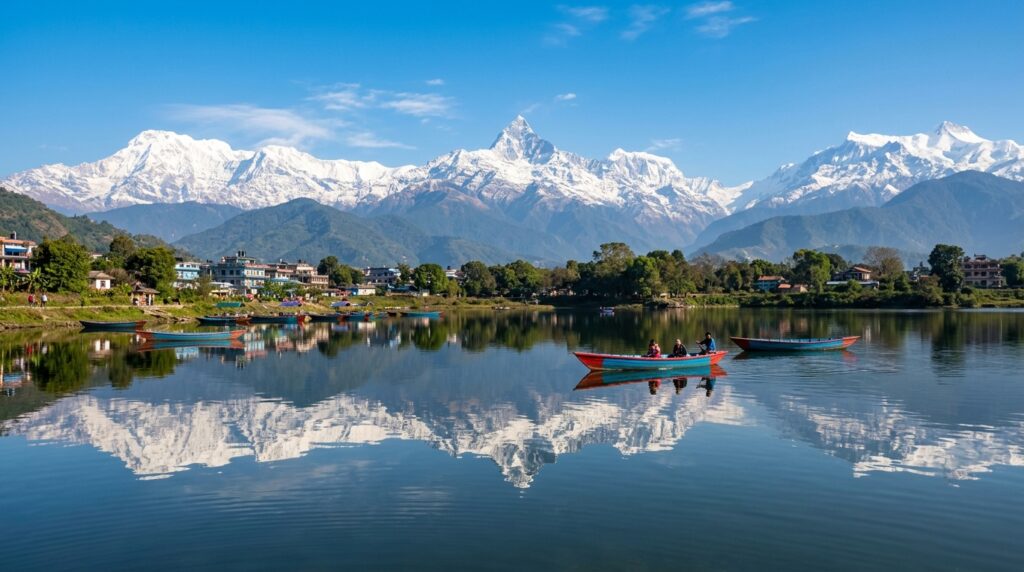
Overview The absolute best time to visit Pokhara and Phewa Lake is during the post-monsoon autumn season from October to November and the spring season from March to April. During autumn, the atmospheric air over the Himalayan foothill valley is washed completely clean by monsoon rains, offering mirror-like reflections of the iconic Mount Machapuchare (Fishtail) and the snow-capped Annapurna range across the tranquil waters of Phewa Lake. Daytime temperatures remain pleasant between 15°C and 25°C, creating ideal conditions for wooden boat rides to Tal Barahi Temple, lakeside walks, and paragliding from Sarangkot. Spring (March–April) brings blooming pink and red rhododendrons, warm sunshine (18°C–28°C), and crystal-clear morning skies. While winter (December to February) brings cold mornings (4°C–8°C) with fog that burns off by midday into sharp mountain panoramas, the monsoon months (June to August) bring torrential downpours exceeding 3,500 mm annually, obscuring mountain peaks and restricting boating activities on the lake. Local Logistical Advice for Indore Travelers Planning a vacation from Indore to Pokhara requires understanding key transit options, climate transitions, and local connectivity protocols: 1. Transit & Route Options from Indore Air Route (Fastest & Most Convenient): Board a morning flight from Indore’s Devi Ahilya Bai Holkar Airport (IDR) to Kathmandu’s Tribhuvan International Airport (KTM) with a seamless layover at New Delhi (DEL) via IndiGo or Air India (total transit time: 6 to 8 hours). From Kathmandu, take a scenic 25-minute domestic flight directly to Pokhara International Airport (PKR) via Yeti Airlines or Buddha Air, offering breathtaking aerial views of the Langtang and Ganesh Himal ranges. Overland & Train Route (Budget-Friendly Scenic Route): Board an overnight train such as the Malwa Express or Gorakhpur Express from Indore Junction (INDB) to Gorakhpur Railway Station (GKP) in Uttar Pradesh. From Gorakhpur, hire a private AC taxi or take a shared cruiser to the Sonauli / Belahiya Indo-Nepal Border (approx. 3 hours). After crossing immigration checkposts, proceed via private cab along the Siddhartha Highway through Palpa to Pokhara (approx. 7 to 8 hours, 180 km). 2. Climate Transition: From Malwa Plateau to Himalayan Valley Travelers departing from Indore’s tropical semi-arid climate (where summers frequently exceed 40°C and winters are mild) will experience a distinct transition in Pokhara. Nestled at an elevation of 827 meters directly beneath the 8,000-meter Annapurna massif, Pokhara has a humid sub-tropical highland climate. Humidity is significantly higher than in Central India, and temperature drops occur swiftly at sunset during winter months. Even in bright sunny weather, high-altitude UV intensity requires adequate sun protection. 3. International Mobile Connectivity & Tourist SIM Card Guidelines Domestic Indian SIM cards (Jio, Airtel, Vodafone-Idea) enter international roaming mode immediately upon crossing the border or landing in Nepal. Standard Indian voice and data plans will not work in Pokhara without activating expensive international roaming packs. Mandatory Tourist SIM Acquisition: Travelers must purchase a local tourist SIM card—Ncell or Nepal Telecom (NTC)—immediately upon arrival at Tribhuvan International Airport (Kathmandu arrivals hall) or at designated telecom counters near Pokhara Lakeside (Baidam). Required Documentation: Carry your original Indian Passport or Voter ID Card, one photocopy of the identity document, and 1 passport-sized photograph. Cost & Packages: A standard tourist SIM costs approximately NPR 300 to NPR 500 (~INR 190 to INR 315) and includes pre-loaded data (10GB to 25GB) valid for 7 to 14 days along with local calling balance for easy driver and hotel coordination. 4. Identity Documents & Currency Guidelines Accepted ID Proofs: Indian citizens do not require a visa for Nepal. However, you must carry either your original Indian Passport (valid for at least 6 months) OR your original Voter Identity Card issued by the Election Commission of India. *Aadhaar cards, PAN cards, and Indian driving licenses are NOT accepted by airport immigration counters.* Currency Usage: Indian Rupee currency notes of INR 100, 50, 20, and 10 are accepted universally across Pokhara hotels, cafes, boat stands, and taxis. Official Nepalese banking regulations restrict the usage of INR 500 notes; carry INR 100 denomination notes or convert currency at authorized bank booths along Lakeside. Complete Details & Practical Guidelines Month-by-Month Weather, Boating & Mountain Clarity Matrix Month Avg Temp (°C) Rain & Humidity Mountain View Clarity Phewa Lake Boating Conditions Key Festivals & Local Events January 4°C – 16°C Dry / Very Low High (Morning fog clears by 10 AM) Calm cold water; crisp afternoon boating Maghe Sankranti (Sweet treats & holy dips) February 7°C – 20°C Dry / Mild High; crystal-clear blue afternoon skies Excellent; gentle breeze, smooth water Maha Shivaratri (Bindhyabasini Temple rites) March 12°C – 25°C Low / Mild Very High; spring bloom in surrounding hills Ideal; warm sunshine, calm surface Holi / Fagu Purnima (Color festival at Lakeside) April 15°C – 29°C Low to Moderate High early morning; slight haze by midday Perfect; early morning reflections of Fishtail Nepali New Year / Navavarsha (Street fairs) May 18°C – 31°C Moderate / Squalls Moderate; pre-monsoon cloud build-up Good in morning; avoid late afternoon winds Buddha Jayanti (World Peace Pagoda rituals) June 20°C – 30°C High (>500 mm) Low; peak clouds obscure high ranges Restricted during rain downpours Roparai / Asar 15 (Paddy Plantation Mud Festival) July 21°C – 29°C Very High (>800 mm) Low; heavy monsoon cover Caution; high lake water levels, rain halts Saune Sankranti & Teej Preparations August 21°C – 29°C Very High (>700 mm) Low to Moderate; lush green landscape Caution; choppy water during thunderstorms Teej (Women’s saris & dancing) & Gai Jatra September 19°C – 28°C Moderate (Tapering) Moderate to High (Clears by end-Sept) Improving; smooth waters returning Indra Jatra & Dashain Festivities onset October 15°C – 26°C Low / Dry Peak 100% Clarity; washed blue skies Pristine mirror reflections; peak boating Dashain Festival (Nepal’s biggest celebration) November 11°C – 22°C Very Low / Dry Peak 100% Clarity; sharp peak contours Tranquil mirror surface; golden hour rides Tihar / Deepawali (Lakeside Light Festival) December 7°C – 19°C Very Low / Cold High; mist over water burns off mid-morning Pleasant afternoon boating; morning mist Pokhara Street Festival (New Year

Nepal Honeymoon

Historical Significance and Architecture of Muktinath Temple

Overview Perched at a breathless altitude of 3,710 meters (12,172 feet) in the Mustang region of Nepal, Muktinath Temple stands as one of the ancient world’s most venerated spiritual sanctuaries. Deeply embedded in Hindu and Tibetan Buddhist traditions, the temple embodies the supreme concept of *Mukti*—spiritual liberation from the endless cycle of rebirth (*Samsara*). For Hindu pilgrims across India and the globe, Muktinath is celebrated as *Mukti Kshetra* (“the arena of salvation”) and holds an exalted position as the 106th among the 108 *Divya Desams*—the sacred abodes of Lord Vishnu praised by the Tamil Azhwar saints, and notably the only *Divya Desam* situated outside the geopolitical borders of India. Simultaneously, Tibetan Buddhists revere the complex as *Chumig Gyatsa*, which translates to “Hundred Waters,” venerating it as a sacred tantric place where the great master Padmasambhava (Guru Rinpoche) meditated on his journey to Tibet in the 8th century. Architecturally, Muktinath Temple is a masterpiece of classical Nepalese pagoda design, featuring a three-tiered brass-gilded roof, intricate wooden fretwork, and a sanctum housing a life-sized bronze idol of Lord Vishnu alongside Sri Devi, Bhoo Devi, and Buddhist deities—a living testament to religious harmony. Behind the main pagoda flow 108 bull-headed stone water spouts (*Mukti Dhara*) spilling ice-cold glacier water from the High Himalayas, while the nearby Jwala Mai Temple houses a subterranean natural gas flame burning continuously over underground water streams. Located along the ancient Kali Gandaki River bed—the exclusive global source of sacred *Shaligram* fossils—Muktinath is not merely a monument, but a living pilgrimage matrix. For travelers departing from Central India, understanding the history of Muktinath Temple, its architectural nuances, ritual protocols, and high-altitude logistics transforms a challenging mountain journey into a smooth, life-affirming pilgrimage. Local Logistical Advice for Indore Travelers Traveling from the plateau of Malwa in Indore to the alpine heights of the Trans-Himalayan Mustang district requires thoughtful transit planning, altitude management, and document preparation. Central Indian travelers moving from Indore’s tropical dry climate (where elevations average 550 meters above sea level) to Muktinath’s alpine, semi-arid environment (3,710 meters) face dramatic variations in air pressure, oxygen density, and daytime temperatures. 1. Air and Road Travel Coordinates from Indore Aerial Transit (Recommended for Comfort): Leg 1 (Indore to New Delhi): Take an early morning direct flight from Indore’s Devi Ahilya Bai Holkar Airport (IDR) to Indira Gandhi International Airport (DEL), New Delhi (approx. 1 hour 30 minutes on IndiGo or Air India). Leg 2 (New Delhi to Kathmandu): Board an international connecting flight from Delhi (DEL) to Tribhuvan International Airport (KTM) in Kathmandu (approx. 1 hour 45 minutes via Air India, IndiGo, or Nepal Airlines). Leg 3 (Kathmandu to Pokhara): Take a short 25-minute domestic flight from Kathmandu to Pokhara Regional International Airport (PKR) or travel via a pre-booked private vehicle along the Prithvi Highway (approx. 6 to 7 hours). Leg 4 (Pokhara to Jomsom & Muktinath): Fly from Pokhara Airport to Jomsom Airport (JMO)—a brief, scenic 20-minute flight through the deep Kali Gandaki Gorge between the Annapurna and Dhaulagiri mountain ranges. From Jomsom, Muktinath (Ranipauwa village) is reached via a 1.5-to-2-hour 4×4 Jeep ride (approx. 25 km). From the Jeep drop-off point, a 20-to-30-minute uphill paved walk or horse/pony ride leads directly to the temple gate. Overland / Train Transit (Budget & Senior-Friendly Highway Route): Take an overnight train from Indore Junction (INDB) to Gorakhpur Junction (GKP) in Uttar Pradesh (such as the Malwa Express or weekly special trains, taking approximately 22 to 26 hours). From Gorakhpur, hire a private taxi to the Sunauli Indo-Nepal border crossing (approx. 95 km, 2.5 hours). Complete Nepal vehicle entry permits (*Bhansar*) and passport/Voter ID verification at the border checkpoint. Drive from Bhairahawa/Sunauli to Pokhara (approx. 180 km, 6 to 7 hours), overnight in Pokhara, and proceed to Jomsom via 4×4 Scorpio or Bolero Jeep along the Beni-Jomsom Highway (approx. 155 km, 8 to 9 hours of rugged mountain driving). 2. Climate & Acclimatization Guidance Indore vs. Mustang Climate Shift: While Indore experiences warm summers (30°C to 42°C) and mild winters (10°C to 25°C), Muktinath experiences alpine mountain conditions. Daytime temperatures in Muktinath range from 10°C to 18°C in spring and autumn, but drop below freezing (-5°C to -12°C) during winter nights. High-Altitude Acclimatization: Going directly from Indore (550m) to Muktinath (3,710m) introduces risk of Acute Mountain Sickness (AMS). Travelers are strongly advised to spend at least one night in Pokhara (820m) and one night in Jomsom (2,743m) before ascending to Muktinath. Stay hydrated (drink 3 to 4 liters of warm water daily), avoid alcohol, and consult your personal physician in Indore regarding preventive medication like Acetazolamide (Diamox). 3. Local Tourist SIM Card & eSIM Connectivity National Roaming Warning: Standard Indian prepaid SIM cards (Airtel, Jio, VI) lose mobile network signals once you cross into Nepal or travel north of Pokhara. Acquiring Local Connectivity: Upon arrival at Kathmandu’s Tribhuvan International Airport (KTM), visit the official telecom counters in the arrival terminal to purchase an Ncell Tourist SIM or Nepal Telecom (NTC) SIM / eSIM. Requirements: Present your original Indian Passport or Voter ID card along with a passport-sized photograph. A 7-day to 14-day tourist data package costs between NPR 500 and NPR 1,200 (approx. INR 310 to INR 750) and provides reliable 4G data coverage in Kathmandu, Pokhara, Jomsom, and around the Muktinath shrine area. 4. Financial Logistics & Currency Rules Currency Acceptance: Indian Rupees (INR) are widely accepted across Nepal. Notes of denomination ₹100 are freely usable everywhere. However, by Reserve Bank of India and Nepal Rastra Bank regulations, Indian banknotes of ₹200, ₹500, and ₹2000 are restricted in Nepal. Currency Exchange: Convert INR into Nepalese Rupees (NPR) at official exchange booths in Kathmandu, Pokhara, or Jomsom for local market transactions. The fixed exchange rate is 1 INR = 1.60 NPR. Complete Details & Practical Guidelines “` MUKTINATH TEMPLE COMPLEX (3,710m) ┌───────┐ │ GAJUR │ (Brass Finial) ├───┬───┤ ┌┴───┴───┴┐ (Three-Tiered Pagoda) ┌┴─────────┴┐ ┌┴───────────┴┐ ┌┴─────────────┴┐ │ SANCTUM (GARBHAGRIHA) │ │ Lord Vishnu / Avalokiteshvara │ └───────────────┘ │ ┌────────────────────────────────────────┴────────────────────────────────────────┐ ▼ ▼ ┌─────────────────────────┐ ┌─────────────────────────┐ │

Nepal Honeymoon

Emergency Numbers, Hospitals & Tourist Police in Sarangkot Sunrise

Overview Navigating emergencies during a high-altitude dawn excursion requires immediate access to verified contacts and clear local protocols. For travelers visiting Sarangkot Sunrise Viewpoint (1,600 meters above sea level) in Pokhara, Nepal, emergency response is anchored by nationwide helplines such as the Nepal Police (100) and Tourist Police Nepal (1144 / +977-61-461087), alongside multi-specialty medical institutions in Pokhara city including Manipal Teaching Hospital (+977-61-526416) and Fishtail Hospital (+977-61-527092). Whether you are navigating early morning mountain fog along narrow hairpin bends, seeking emergency ambulance dispatch (102), or verifying adventure paragliding safety standards, having an active local tourist SIM card and knowing Pokhara’s emergency network ensures complete peace of mind. This comprehensive guide outlines all emergency numbers, hospital facilities, tourist police support, and road safety rules tailored specifically for travelers departing from Indore and Central India. Local Logistical Advice for Indore Travelers Planning an itinerary from Indore to Pokhara and Sarangkot requires careful coordination regarding flight transit, mountain weather adaptations, and international telecom setups: 1. Transit & Route Options from Indore Air Transit (Fastest & Direct Connection): Board a morning flight from Indore’s Devi Ahilya Bai Holkar Airport (IDR) to Kathmandu’s Tribhuvan International Airport (KTM) with a connection at New Delhi (DEL) via IndiGo or Air India (approx. 6 to 8 hours total transit time). From Kathmandu, take a 25-minute domestic connecting flight via Yeti Airlines or Buddha Air to Pokhara International Airport (PKR). Sarangkot is located a 45-minute drive from Pokhara Airport. Overland Train & Highway Route (Budget Choice): Take an overnight train such as the Malwa Express or Gorakhpur Express from Indore Junction (INDB) to Gorakhpur Railway Station (GKP) in Uttar Pradesh. From Gorakhpur, board a private cab to the Sonauli Indo-Nepal Border (3 hours). After completing immigration checkpost verification, hire a private AC cab via the Siddhartha Highway to Pokhara (180 km, approx. 7 to 8 hours). 2. Climate Transition: From Malwa Plateau to Himalayan Sarangkot Ridge Travelers transitioning from Indore’s tropical semi-arid climate (where temperatures frequently exceed 40°C in summer and winters remain gentle) will encounter distinct high-altitude atmospheric shifts at Sarangkot. Perched at 1,600 meters above sea level overlooking the Annapurna range, Sarangkot experiences sharp pre-dawn temperature drops—falling between 2°C and 6°C during winter mornings (December to February) and 12°C to 16°C in spring and autumn. Pre-dawn wind gusts on the open observation tower can induce sudden chills. Packing thermal inner layers, windbreakers, heavy jackets, and gloves is essential for early morning viewing trips. 3. International Mobile Connectivity & Tourist SIM Card Guidelines Standard Indian prepaid SIM cards (Jio, Airtel, Vodafone-Idea) from Madhya Pradesh enter international roaming mode upon entering Nepal. Data plans will not work automatically without expensive international roaming packs, which can leave you disconnected during emergency situations on Sarangkot hill. Mandatory Tourist SIM Acquisition: Secure a local tourist SIM card—Ncell or Nepal Telecom (NTC)—immediately upon landing at Kathmandu Airport (arrivals counter) or at telecom outlets along Pokhara Lakeside (Baidam). eSIM Option: If using an eSIM-compatible smartphone, activate a digital Ncell/NTC tourist eSIM online prior to departure or at Kathmandu airport for instant network access. Required Documents: Carry your original Indian Passport or Voter Identity Card, 1 document photocopy, and 1 passport-sized photograph. Cost: Prepaid tourist packages cost NPR 300 to NPR 600 (~INR 190 to INR 375), providing 10GB to 30GB data valid for 7 to 14 days and local calling minutes for emergency speed-dials. 4. Identity Documents & Currency Guidelines Accepted ID Proofs: Indian nationals do not require a visa to enter Nepal. However, you must carry either your original Indian Passport (valid for a minimum of 6 months) OR your original Voter ID Card issued by the Election Commission of India. *Aadhaar cards, PAN cards, and Indian driving licenses are NOT accepted by airport immigration counters.* Currency Usage: Indian currency notes of INR 100, 50, 20, and 10 are accepted universally across Sarangkot entry booths, Pokhara hotels, cafes, and taxis. Official Nepalese banking rules restrict the usage of INR 500 notes; carry sufficient INR 100 notes or exchange currency at authorized bank exchange booths along Pokhara Lakeside. Complete Details & Practical Guidelines Comprehensive Emergency Numbers Directory for Sarangkot & Pokhara Keep these direct helpline numbers saved in your mobile phone before taking the dawn drive up Sarangkot hill: Emergency Service Direct Helpline Number Alternate Local Contact Operating Hours Nepal Police (National) 100 +977-61-520033 (Pokhara Central) 24/7 Tourist Police Helpline (Nationwide) 1144 +977-1-4247041 (HQ Kathmandu) 24/7 Tourist Police Station (Pokhara – Baidam) +977-61-461087 +977-9856038888 (Duty Officer) 24/7 Ambulance Service (Red Cross Pokhara) 102 +977-61-521102 / +977-61-520102 24/7 Nepal Fire Brigade (Pokhara) 101 +977-61-520101 24/7 Nepal Traffic Police (Pokhara) 103 +977-61-520400 24/7 Manipal Teaching Hospital (Emergency) +977-61-526416 +977-61-526420 24/7 ER & Trauma Fishtail Hospital (Emergency & ICU) +977-61-527092 +977-61-532454 24/7 ER & Ambulance Gandaki Medical College (Emergency) +977-61-526044 +977-61-538595 24/7 ER & Trauma Western Regional Hospital (Government) +977-61-520057 +977-61-524038 24/7 Casualty Desk Sarangkot Primary Health Post +977-61-692122 Local Village Center Desk 8:00 AM – 5:00 PM Armed Police Force SAR (Search & Rescue) 1114 +977-1-4511414 24/7 Emergency SAR Tourist Police Assistance in Pokhara & Sarangkot The Nepal Tourist Police is a dedicated unit operating under the Ministry of Culture, Tourism and Civil Aviation and Nepal Police, specifically trained to assist international travelers. Primary Location: The Pokhara Tourist Police base station is situated at Lakeside, Baidam (near the main tourist strip and police post), approximately 11 km down from Sarangkot. Key Responsibilities & Support Services: Lost Property & Theft Reports: Assisting in filing official police reports for misplaced passports, cameras, wallets, or luggage at Sarangkot view points or hotel rooms. Fraud & Overcharging Resolution: Handling disputes regarding unmetered taxi fares, illegal tour agents, or ticket scalping at sunrise entry gates. Emergency Safety Interventions: Coordinating emergency mountain transfers, road accident responses, and search-and-rescue protocols. Paragliding & Adventure Disputes: Verifying operator permits and addressing safety non-compliance issues with paragliding agencies operating off Sarangkot takeoff points. Major Hospitals & Medical Facilities Serving Sarangkot While Sarangkot village has a small health post capable of providing basic first aid

Nepal Honeymoon

Pre-Wedding Shoot & Couple Photography in Lumbini Birthplace of Buddha

Overview Planning a pre wedding shoot in Lumbini Birthplace of Buddha offers engaged couples and photography enthusiasts an extraordinary blend of spiritual serenity, ancient UNESCO World Heritage architecture, and diverse global monastic designs. Spread across a sprawling 3-square-mile master plan designed by Japanese architect Kenzo Tange, Lumbini presents a tranquil backdrop far removed from crowded, commercialized photo venues. Couples traveling from Indore can frame their romantic journey against the sacred reflections of the Mayadevi Temple Puskarini Pond, the soaring white marble grandeur of the World Peace Pagoda (Vishwa Shanti Stupa), and the ornate international monasteries representing Thailand, Myanmar, Cambodia, Germany, and China. To execute a flawless, high-end pre-wedding photography session in Lumbini, couples must navigate specific local logistics—including obtaining Lumbini Development Trust (LDT) photography permits, respecting strict Civil Aviation Authority of Nepal (CAAN) drone restrictions, adhering to cultural dress codes, and arranging seamless border transit from Central India. This definitive guide details every aspect of couple photography in Lumbini, offering actionable advice on spot selection, lighting schedules, permit fees, crew logistics, and local tourist SIM setup for an unforgettable creative experience. Local Logistical Advice for Indore Travelers Departure Coordinates & Transit Options from Indore For couples and photography crews departing from Indore (IDR), reaching Lumbini in southern Nepal’s Rupandehi District is smooth and accessible via both air and overland routes: 1. Flight Route via Delhi & Bhairahawa / Kathmandu: Take a morning domestic flight from Indore’s Devi Ahilya Bai Holkar Airport (IDR) to Indira Gandhi International Airport in Delhi (DEL) (1 hour 30 minutes). Connect on an international flight from Delhi to Tribhuvan International Airport in Kathmandu (KTM) (1 hour 40 minutes). From Kathmandu, take a brief 35-minute domestic flight (operated by Yeti Airlines or Buddha Air) to Gautam Buddha International Airport (BWA) in Bhairahawa. Bhairahawa Airport is located just 22 kilometers (a 30-minute private cab ride) from the Lumbini Monastic Zone, making it the fastest route for transporting delicate wardrobe trunks and professional camera gear. 2. Train + Dedicated Private Cab Route via Gorakhpur & Sonauli (Recommended for Shoot Crews): Train Segment: Board an overnight train from Indore Junction (INDB) to Gorakhpur Junction (GKP) in Uttar Pradesh (such as the Gorakhpur Express or via Bhopal/Kanpur transit). 2AC and 3AC tickets cost between ₹1,250 and ₹2,200 INR per passenger. Gorakhpur to Sonauli Border: At Gorakhpur Railway Station, board a pre-booked private Innova Crysta or Tempo Traveller arranged by Travel Path Holiday to drive directly to the Sonauli border (95 km; approx. 2.5 to 3 hours). Border Crossing to Lumbini: After completing quick passport/Voter ID verification at Indian Customs and Nepal Immigration in Belahiya, your private vehicle crosses into Nepal and reaches Lumbini Bazaar in just 45 minutes (26 km). Having a dedicated vehicle allows your crew to securely store multiple wardrobe changes, lighting stands, and makeup equipment throughout the shoot days. Climate Transition: Indore Plateau to Terai Subtropical Plains Indore sits elevated on the Malwa plateau (550 meters above sea level) with dry semi-arid weather. Lumbini lies in the fertile Terai plains at an altitude of just 150 meters, creating distinct environmental conditions that impact photography shoot timing: Golden Shoot Season (October to March): Ideal for couple photography. Daytime temperatures hover between a comfortable 20°C and 26°C with clear blue skies and soft sunlight. December and January mornings often feature dense, dreamy mist hanging over the central water canal—perfect for ethereal fog portraits—followed by bright, crisp afternoon sun. Summer Shoot Season (April to June): Temperatures rise to 38°C–40°C with higher humidity. If scheduling a summer pre-wedding shoot, break your production schedule into two shifts: 6:00 AM to 9:00 AM for soft early morning light, and 4:30 PM to 6:30 PM for golden hour sunset shots, reserving mid-day hours for indoor styling and rest in air-conditioned hotel suites. Monsoon Season (July to September): Rainy spells bring vivid greenery and lush reflection puddles around monastic gardens. However, carry rain protection covers for camera lenses and waterproof gear bags. Border Formalities, Passports & Vehicle Bhansar for Indian Crews Identity Proof: Indian nationals do not require a visa to enter Nepal under the 1950 Indo-Nepal Friendship Treaty. However, every team member—including the couple, photographer, makeup artist, and assistants—must carry an original Indian Passport (valid for 6+ months) or an original Voter ID card issued by the Election Commission of India. *Note: Aadhaar Cards, Driving Licenses, and PAN cards are strictly not accepted by Nepalese border control officers.* Vehicle Custom Pass (Bhansar): If your photography team is traveling in a private Indian cab or production vehicle from MP/UP, you must purchase a daily customs pass called Bhansar at the Belahiya border customs booth. The fee is approx. NPR 500 to NPR 650 per day (approx. ₹315 to ₹400 INR) for an Innova or SUV. Ensure the Bhansar permit covers all planned days of your shoot to avoid penalties upon exit. Currency & Payments: Indian Rupee currency notes of ₹10, ₹20, ₹50, ₹100, and ₹500 are freely accepted across Lumbini and Bhairahawa at the fixed official rate of 1 INR = 1.60 NPR (e.g., ₹1,000 INR = NPR 1,600). Keep crisp ₹100 and ₹500 notes for paying local entry fees, e-rickshaw hires, and crew meals. Prepaid Tourist SIM & eSIM Setup on Arrival Standard Indian mobile SIM cards (Jio, Airtel, Vi) automatically lose data connectivity or incur steep international roaming charges upon crossing the Nepal border. Smooth communication between the couple, lead photographer, lighting technicians, and driver across Lumbini’s expansive 3-square-mile park requires instant local cellular service: Purchase Locations: Acquire a Nepalese tourist SIM card from Ncell or Nepal Telecom (NTC) at the Belahiya border immigration office or inside Gautam Buddha International Airport (BWA) upon arrival. Requirements: 1 passport-size color photograph and 1 physical copy of your original Passport or Voter ID. Activation takes roughly 5 to 10 minutes. Cost & Data Packages: A physical SIM card costs NPR 100 to NPR 150 (approx. ₹60 to ₹95 INR). 7-day to 14-day high-speed 4G data packages (15 GB to 25 GB) cost NPR 300 to NPR

Nepal Honeymoon

ATM, Cash & Mobile Connectivity Guidelines in Everest View Point Nagarkot

Overview Perched at an elevation of 2,175 meters (7,136 feet) on the eastern rim of the Kathmandu Valley, Nagarkot stands as Nepal’s premier mountain viewpoint, celebrated for its 360-degree vistas of eight Himalayan ranges, including sunrise views of Mount Everest on clear mornings. While Nagarkot is renowned for its tranquil ridge-top resorts, fresh pine forests, and historic hiking trails, managing practical day-to-day logistics like cash withdrawals, digital payments, and cellular data can prove challenging for unprepared travelers. Because Nagarkot is a secluded mountain destination located 32 kilometers east of Kathmandu, urban banking infrastructure is minimal, and payment methods popular in India operate under strict local limitations. For travelers departing from Central India, navigating the financial and telecommunications landscape in Nagarkot is critical to ensuring a seamless, stress-free Himalayan retreat. Understanding the reliability of the mobile network in Everest View Point Nagarkot, the scarcity of local ATMs, the strict cash requirement at roadside cafes and souvenir stalls, and the limitations of Indian UPI digital wallets will save you from unexpected logistical hassles. This comprehensive guide provides concrete, verified advice on carrying physical currency, activating local tourist SIM cards upon landing at Kathmandu airport, comparing Ncell and NTC coverage, and securing smooth transactions during your stay, backed by the expert local travel team at Travel Path Holiday Indore. Local Logistical Advice for Indore Travelers Planning a smooth international holiday to Nagarkot from Madhya Pradesh requires careful attention to flight connections, high-altitude climate changes, mobile SIM procurement, and currency rules. Below are concrete logistical guidelines tailored specifically for travelers departing from Indore. Flight Coordinates & Transit from Indore (IDR) Flight Connections: Depart from Devi Ahilya Bai Holkar Airport (IDR) in Indore on an early morning domestic flight (operated by IndiGo or Air India) to Indira Gandhi International Airport (DEL) in New Delhi (approx. 1 hour 25 minutes flight time). Connecting Flight to Kathmandu: From Delhi Terminal 3, take a direct international flight to Tribhuvan International Airport (KTM) in Kathmandu via Air India, IndiGo, Vistara, or Nepal Airlines (approx. 1 hour 45 minutes flight time). With a standard 2-to-3-hour Delhi layover, total travel time from Indore to Kathmandu ranges between 5 and 7 hours. Kathmandu Airport to Nagarkot Drive: Upon landing at Tribhuvan International Airport (KTM), Nagarkot lies 32 kilometers to the east. The scenic uphill drive takes approximately 1.5 to 2 hours via the Kathmandu-Bhaktapur Highway (Araniko Highway) and the winding Nagarkot hill road. Travel Path Holiday arranges pre-booked private SUV transfers (such as Toyota Innova Crysta or Mahindra Scorpio) to ensure a comfortable journey. Climate Transition: From Indore Tropics to Nagarkot Alpine Chills Temperature Contrast: Travelers from Indore transition from Malwa’s tropical dry climate (where ambient temperatures frequently range from 25°C to 40°C) to Nagarkot’s cool mountain environment at 2,175 meters altitude. Seasonal Profiles: Autumn (October to November) & Spring (March to April): Clear skies and pleasant daytime temperatures (14°C to 22°C), while early morning pre-dawn temperatures drop to 6°C–10°C. Winter (December to February): Sharp, crystal-clear Himalayan views, but morning and night temperatures drop significantly to between 1°C and 5°C. Monsoon (June to September): Cloud cover and heavy rainfall; view tower panoramas are often obscured, though lush green terraced valleys emerge. Packing Essentials: Heavy woolens, thermal innerwear, a windproof outer jacket, fleece sweaters, warm socks, and gloves are essential for early morning sunrise watches at the Nagarkot View Tower. High-altitude cold weather also drains smartphone batteries rapidly; carry a high-capacity power bank during hikes. Mobile Connectivity & Local Tourist SIM/eSIM on Arrival Local SIM Necessity: Standard Indian prepaid mobile SIM cards (Jio, Airtel, Vi) do not function in Nepal under domestic plans. While international roaming can be enabled, data roaming rates are expensive and signal connectivity on high-altitude ridges can be patchy. Airport Counter Activation: Indian travelers are strongly advised to purchase a local tourist SIM card or eSIM immediately upon arrival at Tribhuvan International Airport (KTM) in Kathmandu. Both Nepal Telecom (NTC) and Ncell operate official tourist desks in the airport arrival lounge. Documentation Needed: Present your physical Indian Passport or original Indian Voter ID card along with one passport-sized photograph. Data Packages: A 7-day or 14-day tourist SIM card with 10 GB to 25 GB of high-speed 4G data costs between NPR 500 and NPR 1,200 (approx. ₹315 to ₹750 INR), providing reliable internet access across Nagarkot’s viewpoints and hiking trails. Currency Regulations & Cash Setup for Central Indian Travelers Indian Rupee (INR) Usage: Indian currency notes of ₹100, ₹50, ₹20, and ₹10 denominations are legally accepted and widely circulated across shops, cafes, and hotels in Nagarkot. However, high-denomination Indian notes (₹200 and ₹500) face legal restrictions in Nepal and are frequently rejected by local vendors and banks. Pegged Exchange Rate: The currency exchange rate is officially pegged at 1 INR = 1.60 NPR (Nepali Rupees), meaning ₹100 INR equals 160 NPR. Nagarkot Community Entry Fee: Foreign tourists and SAARC nationals pay a modest Nagarkot village development fee of NPR 339 per person (approx. ₹212 INR), collected at the road checkpoint entering the Nagarkot municipality. Identification: Indian citizens do not require a visa to enter Nepal, but must carry a valid Indian Passport or original Election Commission Voter ID for airport immigration and hotel check-ins. Complete Details & Practical Guidelines Financial & Cellular Overview of Nagarkot Hill Station “` +—————————————+ Kathmandu Airport Arrival (KTM) – Activate Local Tourist SIM/eSIM – Withdraw NPR Cash / Exchange INR +——————-+——————-+ 32 km Drive +——————-v——————-+ Nagarkot Hill Station (2,175m) +——————-+——————-+ +——————————–+——————————–+ +——–v——–+ +——–v——–+ +——–v——–+ High-End Hotel Local Tea Stall Nagarkot View Credit Cards & Cafes: Cash Tower: Strong (3.5% Fee) Only (NPR/INR) NTC/Ncell 4G +—————–+ +—————–+ +—————–+ “` ATM Availability & Scarcity in Nagarkot Unlike urban centers like Kathmandu, Lalitpur, or Pokhara, Nagarkot has very limited ATM infrastructure. 1. Sole ATM Availability: Nagarkot town currently features only one primary ATM (operated intermittently by Nepal Investment Mega Bank or Nabil Bank) located near the central Nagarkot bus stand intersection. 2. Frequent Outages & Cash Exhaustion: Due to high tourist volumes, power fluctuations, and remote

Nepal Honeymoon

Seniors & Kids Safe Travel Guidelines in Pokhara Phewa Lake

Overview Planning senior citizen travel in Pokhara Phewa Lake along with young children offers one of the most rewarding family vacation experiences in the Himalayas. Nestled in a scenic valley at an altitude of 827 meters, Pokhara provides a temperate climate, level walking promenades, and calm water vistas without high-altitude acclimatization risks. However, travelling with multi-generational family members—ranging from elderly grandparents to toddlers—requires targeted safety protocols. Key priorities include choosing stable boat dispatch points with mandatory fitted life jackets, selecting flat lakeside walking paths along Baidam, maintaining continuous hydration under high-altitude sun, pacing daily itineraries to avoid overexertion on temple staircases, and keeping reliable medical contacts handy. Acquiring a local tourist SIM card or eSIM immediately upon arrival ensures seamless communication across your group. By following these practical safety guidelines, Indori families can enjoy a peaceful, secure, and stress-free holiday in Pokhara. Local Logistical Advice for Indore Travelers Planning a multi-generational family holiday from Central India to Pokhara requires selecting transit routes that maximize physical comfort, managing climate transitions, and securing mobile connectivity before exploring the valley: 1. Transit & Route Options from Indore Air Transit (Recommended for Seniors & Children): Board a morning flight from Indore’s Devi Ahilya Bai Holkar Airport (IDR) to Kathmandu’s Tribhuvan International Airport (KTM) via a short layover in New Delhi (DEL) on IndiGo or Air India (total travel duration: 6 to 8 hours). From Kathmandu, take a 25-minute domestic flight directly to Pokhara International Airport (PKR) via Yeti Airlines, Buddha Air, or Shree Airlines. Opting for the internal flight eliminates the bumpy, 6 to 8-hour highway road trip via the Prithvi Highway, preserving energy for elderly family members and young kids. Overland Train & Private Vehicle Route: For families preferring rail travel, book first-class AC compartments on the Malwa Express or Gorakhpur Express from Indore Junction (INDB) to Gorakhpur Railway Station (GKP). From Gorakhpur, board a private luxury AC SUV (such as a Toyota Innova Crysta) to cross the Sonauli / Belahiya Indo-Nepal Border (approx. 3 hours). After immigration checks, continue along the Siddhartha Highway through Tansen and Palpa to Pokhara (approx. 7 to 8 hours). Plan structured 20-minute rest stops every 2 hours for senior stretch breaks. 2. Climate Transition: From Malwa Plateau to Annapurna Valley Indore travelers accustomed to dry semi-arid weather will experience Pokhara’s humid subtropical highland climate. While Pokhara sits at a comfortable altitude (827m), morning and evening breezes off the Annapurna mountain range can feel surprisingly chilly, especially between November and February when temperatures drop to 5°C–8°C. Midday temperatures remain pleasant (18°C–25°C), but UV intensity is high due to atmospheric clarity near the Himalayas. Senior citizens and children should dress in light breathable layers during daytime and carry windcheaters, warm caps, and high-SPF sunscreen. 3. International Mobile Connectivity & Tourist SIM Card Guidelines Standard Indian prepaid SIM cards (Jio, Airtel, Vi) lose regular network service or incur expensive international roaming rates immediately upon entering Nepal. Continuous connectivity is vital for tracking family members along crowded lake promenades, calling your private driver, or contacting medical facilities. Mandatory Tourist SIM / eSIM Acquisition: Purchase an Ncell or Nepal Telecom (NTC) tourist SIM card or activate an eSIM immediately upon landing at Kathmandu Airport (arrivals hall counters) or from authorized telecom shops along Pokhara Lakeside (Baidam). Required Documents: Carry original Indian Passports or Voter ID Cards, one photocopy per applicant, and 1 passport-sized photograph. Cost & Validity: Standard tourist SIM packages cost NPR 300 to NPR 500 (~INR 190 to INR 315) and include 10GB to 25GB of high-speed data plus local talk-time valid for 7 to 14 days. 4. Mandatory Identity Proofs & Currency Protocols Accepted ID Proofs: Indian citizens do not require a visa for Nepal. Adults must carry either an original Indian Passport (valid for at least 6 months) OR an original Voter Identity Card. For children under 18 travelling without a passport, carry an original School Identity Card along with their official Birth Certificate. *Aadhaar cards, PAN cards, and driving licenses are NOT accepted at airport immigration.* Currency Tips: Indian currency notes of INR 100, 50, 20, and 10 denominations are accepted across Pokhara boat stands, cafes, and taxis. Notes of INR 500 are restricted by Nepalese banking regulations. International debit and credit cards work at major Lakeside ATMs to withdraw Nepalese Rupees (NPR). Complete Details & Practical Guidelines 1. Phewa Lake Boat Ride Safety Checklist for Seniors & Kids Phewa Lake is Pokhara’s centerpiece, but embarking on wooden boats requires strict safety measures when travelling with elderly parents and children: Use Official Boarding Piers: Always board boats from Barahi Ghat or Gaurighat. These primary piers feature wide concrete steps, handrails, and trained station staff who assist passengers. Avoid unpaved or muddy informal embarkation banks. Mandatory Fitted Life Jackets: The Armed Police Force and Pokhara Boatmen Association strictly require all passengers to wear life jackets before launching. Ensure young children are fitted with pediatric life jackets featuring secure crotch straps, and verify that senior citizens have front-zippered adjustable vests fastened properly. Select Stability Over Speed: Choose traditional double-oar wooden boats (*Doonga*) operated by experienced local rowers. Avoid small self-rowed kayaks or paddle boats when accompanied by seniors or kids. Optimal Boating Hours: Schedule boat trips between 7:00 AM and 10:00 AM when the lake surface is mirror-calm and winds are minimal. Avoid late afternoon boating (after 3:30 PM) when thermal mountain squalls can create sudden surface waves. Tal Barahi Island Temple Visit: The boat ride to Tal Barahi Temple takes just 10 minutes from Barahi Ghat. Ensure family members hold onto seniors’ arms when stepping onto the island’s floating dock, as water movement can cause slight swaying. Boat Service Type Standard Capacity Approx. Rate (NPR) Approx. Rate (INR) Safety Notes for Families Wooden Boat with Rower (1 Hour) 4 to 6 Persons NPR 600 – NPR 1,000 INR 375 – INR 625 Sturdy wooden hull; ideal for scenic photo rides Tal Barahi Temple Round-Trip 4 to 6 Persons NPR 500 – NPR 700 INR 310 – INR

Nepal Honeymoon

Local Shopping Guide in Chitwan Jungle Safari: Authentic Souvenirs

Overview Chitwan National Park is renowned worldwide for its thrilling wildlife safaris, misty Rapti River cruises, and rare sightings of the Greater One-Horned Rhinoceros and Royal Bengal Tiger. Beyond its dense Sal forests and riverbanks, Chitwan offers vibrant local markets and indigenous artisan communities rich in cultural heritage. For travelers departing from Indore, exploring the colorful shops of Sauraha village and surrounding indigenous Tharu settlements reveals an array of authentic, eco-friendly souvenirs that reflect the natural and cultural spirit of Nepal’s Terai region. This comprehensive guide details the best authentic souvenirs to buy while shopping in Chitwan Jungle Safari—from hand-carved wooden wildlife sculptures and traditional Tharu woven handicrafts to pure jungle mustard oil, organic wild forest honey, and eco-friendly Lokta handmade paper products. Complete with recommended shopping venues, practical price benchmarks in Nepalese Rupees (NPR) and Indian Rupees (INR), bargaining etiquette, local SIM card setup, and export regulations, this guide ensures Indori travelers return home with genuine memory-filled treasures. With complete offline and online trip planning from Travel Path Holiday (TPH), your safari and shopping experience in Chitwan will be perfectly organized and worry-free. Local Logistical Advice for Indore Travelers Planning a wildlife safari and cultural shopping journey from Central India to Chitwan National Park requires seamless transit coordination, climate awareness, and connectivity setup. Here is essential logistical advice for travelers departing from Indore: Transit Coordinates: Flying & Overland Options from Indore Optimal Flight Route (Fastest & Most Comfortable): Depart from Indore’s Devi Ahilya Bai Holkar Airport (IDR) to New Delhi (DEL) via IndiGo or Air India (approx. 1 hour 30 minutes). Take a connecting international flight from Delhi to Kathmandu’s Tribhuvan International Airport (KTM) (approx. 1 hour 45 minutes). From Kathmandu, take a 25-minute domestic flight directly to Bharatpur Airport (BHR), the primary air gateway to Chitwan. Travel Path Holiday arranges private chauffeured AC vehicle transfers (Innova Crysta or Fortuner) from Bharatpur Airport directly to your safari resort in Sauraha or Kasara (approx. 30 to 40 minutes). Overland Train & Highway Route: For travelers who prefer scenic land travel, take an overnight train from Indore Junction to Gorakhpur (such as the Malwa Express or Gorakhpur Express). From Gorakhpur, hire a private taxi to the Sonauli border crossing into Nepal. After border immigration, a pleasant 4 to 5-hour drive along the Mahendra Highway brings you directly into Sauraha village. Climate & Environmental Shift for Central India Travelers Indore experiences a tropical dry climate with low ambient moisture for most of the year. In contrast, Chitwan lies in Nepal’s sub-tropical Terai floodplain: Winter (November to February): Crisp, cool mornings (8°C to 12°C) transitioning to pleasant, sunny afternoons (20°C to 24°C). Ideal weather for evening strolls through Sauraha’s bazaar without heat exhaustion. Spring & Early Summer (March to May): Warm temperatures ranging between 28°C and 38°C with dry, dusty jungle trails. Carry reusable water bottles and cotton tote bags while shopping. Monsoon Season (June to September): High humidity and frequent rainfall transform the region into lush greenery, though river levels rise. Indoor handicraft workshops and artisan co-ops remain accessible. Mobile Connectivity & Local Tourist SIM Cards on Arrival Standard Indian SIM cards (Airtel, Jio, Vi) transition to expensive international roaming once you enter Nepal. To navigate local markets, verify product authenticity online, and make digital payments: Tourist SIM/eSIM Purchase on Arrival: Obtain a local Nepali tourist SIM card or eSIM (Ncell or Nepal Telecom / NTC) upon landing at Kathmandu Airport’s arrival hall or at authorized mobile distribution outlets along Sauraha Main Road. Required Documents & Cost: Present your original Indian Passport or Voter ID card along with two passport-sized photographs. Data packages ranging from 10 GB to 25 GB valid for 7 to 15 days cost approximately NPR 500 to NPR 1,200 (INR 300 to INR 750), offering reliable 4G coverage throughout Sauraha and surrounding shopping zones. Document & Currency Reminders for Indian Citizens Travel Identification: Indian nationals do not require a visa for Nepal. However, you must carry an original valid Passport or Voter ID Card for airport checks and hotel registrations. (Aadhaar cards and driving licenses are not legally valid travel documents for entry into Nepal). Currency Usage: Indian Rupee notes of INR 100 denominations are widely accepted by shopkeepers across Sauraha and Bachhauli. Indian currency notes of INR 500 denomination are restricted under Nepalese central bank rules. Exchange currency into Nepalese Rupees (NPR) at official exchange counters or banks in Kathmandu or Sauraha (fixed exchange rate: INR 100 = NPR 160) to facilitate seamless cash transactions in small artisan shops. Complete Details & Practical Guidelines 1. Top Authentic Souvenirs to Buy in Chitwan #### A. Tharu Traditional Handicrafts & Hand-Woven Textiles The indigenous Tharu people are the original inhabitants of the Chitwan valley. Their unique cultural heritage is reflected in their distinct arts and crafts: Grass Baskets (*Dhaki* & *Dalla*): Hand-woven from local elephant grass (*Kans*) and bamboo splints, these colorful baskets are traditionally used for storing grains, spices, and ceremonial offerings. They feature intricate geometric patterns and natural vegetable dyes. Traditional Tharu Wooden & Clay Masks: Hand-carved or molded masks representing forest spirits, sacred animals, and folk deities. Used during traditional cultural dance performances, these masks make striking wall hangings. Hand-Woven Textiles & Accessories: Handloom shawls, embroidered tote bags, wall hangings, and table runners featuring indigenous Tharu motifs of peacocks, deer, and river fish. #### B. Hand-Carved Wooden Animal Sculptures Local woodcarvers in Chitwan possess exceptional craftsmanship, carving wildlife figures from sustainably harvested native hardwoods like Sal (*Shorea robusta*) and Sissoo / Rosewood (*Dalbergia sissoo*): One-Horned Rhinoceros Statuettes: The iconic symbol of Chitwan. Available in sizes ranging from 3-inch desk miniatures to 18-inch detailed parlor centerpieces. Royal Bengal Tiger & Elephant Carvings: Finely detailed wooden tigers in stalking poses and working/wild elephant figurines, polished with natural beeswax. Gharial Crocodile Sculptures: Slender, realistic wooden crocodile carvings showcasing the unique long-snouted reptile endemic to the Rapti River. #### C. Pure Organic Chitwan Jungle Wild Honey Chitwan’s lush forest ecosystem and vast mustard fields produce exceptional wild and organic

Nepal Honeymoon

Weekend Getaway from Indore to Kathmandu Durbar Square: Itinerary

Overview Planning a refreshing weekend trip to Kathmandu Durbar Square from Indore is one of the most rewarding international mini-vacations available to Central Indian travelers. Situated at an elevation of 1,400 meters in the heart of the Kathmandu Valley, Nepal’s vibrant capital blends ancient Newari architecture, spiritual sanctuaries, and bustling artisan bazaars into a compact geographic footprint. A customized 3-Day/2-Night weekend itinerary allows travelers departing from Indore to immerse themselves in UNESCO World Heritage sites—including the royal courtyards of Hanuman Dhoka, the hilltop stupa of Swayambhunath, and the sacred ghats of Pashupatinath Temple—without taking extended leave from work. From flying out of Indore’s Devi Ahilya Bai Holkar Airport to acquiring local SIM cards upon arrival, sampling freshly cooked pure vegetarian Newari delicacies, and shopping for authentic Pashmina shawls in Thamel, this comprehensive guide provides complete, step-by-step logistical and cultural advice tailored specifically for Indori travelers. Local Logistical Advice for Indore Travelers Flight and Transit Coordinates from Indore (IDR to KTM) For an efficient 3-day weekend trip, air travel is the fastest and most convenient route from Malwa to the Kathmandu Valley: Connecting Flights via New Delhi or Mumbai: Take an early morning flight from Indore’s Devi Ahilya Bai Holkar Airport (IDR) to Tribhuvan International Airport (KTM) in Kathmandu, with a single seamless layover at Indira Gandhi International Airport (DEL) in New Delhi or Chhatrapati Shivaji Maharaj International Airport (BOM) in Mumbai on IndiGo or Air India. Morning flights departing IDR around 06:00 AM or 07:45 AM connect smoothly with mid-day international legs, getting you to Kathmandu by 01:30 PM to 02:30 PM local time. Overland and Rail Alternatives: For travelers with extended time who prefer rail journeys, train 19037 Avadh Express or 15046 Gorakhpur Express operates from Indore Junction to Gorakhpur, Uttar Pradesh. From Gorakhpur, private AC cabs transport travelers across the Sonauli border crossing into Nepal (approx. 95 km / 2.5 hours), followed by a scenic drive up the Tribhuvan Highway to Kathmandu (approx. 275 km / 8 to 9 hours). However, for a 3-day weekend getaway, air travel is strongly recommended to maximize sightseeing time. Climate Transition: Indore to Kathmandu Valley Travelers from Indore are accustomed to a tropical dry semi-arid climate with warm daytime temperatures throughout most of the year. Kathmandu Valley presents a distinct climatic transition due to its high-altitude valley topography: Autumn & Winter (October to March): Expect crisp, sunny afternoons ranging between 18°C and 24°C, but temperatures drop rapidly after sunset to 3°C–8°C. Pack warm layers, fleece jackets, and thermal innerwear for early morning temple visits. Spring & Summer (April to June): Mild and comfortable with daytime temperatures averaging 25°C to 30°C. UV intensity at higher altitudes is strong; carry SPF 50+ sunblock, wide-brim hats, and sunglasses. Monsoon (July to September): Regular rainfall occurs across the valley. Centuries-old red-brick pavings around Durbar Square and Swayambhunath stone steps become slippery; anti-skid rubber-soled footwear is essential. Tourist SIM & Mobile Connectivity Guidelines Standard Indian prepaid SIM cards (Airtel, Jio, Vi) automatically lose network connectivity upon entering Nepalese airspace unless expensive international roaming packages are activated prior to departure. Airport SIM Card Procurement: It is highly recommended to purchase a local tourist eSIM or physical SIM card immediately upon landing at Tribhuvan International Airport (KTM) in the arrivals hall, or at authorized telecom stores in Thamel. Service Providers & Data Rates: Nepal Telecom (NTC) and Ncell offer special tourist data SIM packages ranging from NPR 100 to NPR 500 for 5GB to 20GB of 4G data, valid for 3 to 7 days. Required Documents: Carry 1 physical photocopy of your Indian Passport or Voter ID card, 1 passport-size photograph, and cash in Nepalese currency (NPR). Having an active local SIM ensures reliable navigation via Google Maps, easy cab bookings, and 24/7 connectivity with your Travel Path Holiday support team. Complete Details & Practical Guidelines Customized 3-Day / 2-Night Kathmandu Weekend Itinerary #### Day 1: Indore Departure, Kathmandu Arrival, Durbar Square Sightseeing & Evening Culture Morning (06:00 AM – 02:00 PM): Depart from Indore (IDR) on a morning connecting flight via Delhi (DEL) to Kathmandu (KTM). Complete immigration formalities at Tribhuvan International Airport. Indian citizens do not require a visa; simply present a valid Indian Passport (valid for at least 6 months) or an original Voter ID card issued by the Election Commission of India. Pick up your local Ncell/NTC SIM card at the arrivals counter. Afternoon (02:30 PM – 03:30 PM): Meet your private driver arranged by Travel Path Holiday for a smooth 30-minute AC transfer to your boutique hotel in Thamel or the Basantapur Durbar Square district. Check in, unpack, and freshen up. Late Afternoon (03:30 PM – 06:30 PM): Begin your exploration at Kathmandu Durbar Square (Hanuman Dhoka), the historic seat of Nepalese royalty. Present your Indian ID at the ticket gate to pay the discounted SAARC national entry fee of NPR 300 (compared to NPR 1,000 for foreign nationals). Highlights include: Kumari Ghar (Kumari Chowk): The carved three-story courtyard home of the Living Goddess (Royal Kumari). Respect cultural traditions—photography is strictly prohibited inside the inner courtyard when the Kumari appears at the carved wooden window. Hanuman Dhoka Palace Complex: Explore Nasal Chowk and Mohan Chowk, admiring centuries-old woodcarvings and royal artifacts. Kasthamandap: The historic wooden pavilion crafted from a single sal tree trunk, beautifully restored after the 2015 earthquake. Kal Bhairav: A striking 12-foot monolithic stone sculpture of Lord Shiva in his fierce manifestation. Taleju Bhawani Temple: The grandest multi-tiered pagoda temple dominating the northern plaza. Evening (06:30 PM – 09:30 PM): Stroll through Freak Street and Basantapur Plaza as evening oil lamps illuminate ancient shrines. Taste freshly cooked pure vegetarian street snacks such as *Sel Roti* (crispy rice flour donuts) and *Yomari* (sweet rice dumplings filled with chaku and sesame). Enjoy a relaxed dinner featuring hand-vetted vegetarian options at a courtyard restaurant in Thamel. Overnight stay in Kathmandu. #### Day 2: Sunrise at Swayambhunath, Sacred Pashupatinath Temple & Local Shopping in Thamel & Indra Chowk Early Morning (06:00 AM – 08:30 AM):

Nepal Honeymoon

Packing Guide for Muktinath Temple: Summer vs Winter Wear

Overview Preparing for a pilgrimage to the revered Muktinath Temple (Mukti Kshetra), situated at an altitude of 3,710 meters (12,172 feet) in the Mustang region of Nepal, requires careful preparation—especially for travelers departing from Indore and Central India. Navigating the sudden climate shift from Indore’s tropical dry warmth to the trans-Himalayan weather of Mustang demands a smart, functional layering strategy. Whether traveling during the pleasant summer months (May to September) or tackling the freezing winter conditions (October to March), your choice of clothing directly impacts your comfort, safety, and overall spiritual experience. The temple climb at Ranipauwa involves navigating roughly 200 to 300 stone steps, enduring afternoon winds sweeping through the Kali Gandaki Valley, and taking the ritual holy dip under the 108 chilled water spouts (*Mukti Dhara*). This ultimate packing list for Muktinath Temple provides detailed recommendations on heavy down jackets, high-grade thermal layers, windcheaters, sturdy high-altitude walking shoes, SPF-rated lip balms, UV-blocking sunglasses, and sacred bathing gear. Local Logistical Advice for Indore Travelers 1. Air and Overland Transit Routes from Indore For travelers starting their journey from Indore’s Devi Ahilya Bai Holkar Airport (IDR), the most convenient route to Muktinath involves flying to Kathmandu’s Tribhuvan International Airport (KTM) via a brief layover in New Delhi (DEL) or Mumbai (BOM) on connecting flights operated by IndiGo or Air India. From Kathmandu, travelers can choose between two main routes: The Flight & Helicopter Route: Take a 25-minute domestic flight from Kathmandu (KTM) to Pokhara Airport (PKR) on Yeti Airlines or Buddha Air. From Pokhara, you can either take a connecting flight to Jomsom Airport (JMO) followed by a 1.5-hour 4WD jeep drive to Ranipauwa, or board a direct charter helicopter from Pokhara straight to the Ranipauwa helipad (just 15 minutes walking distance from the temple gates). The Overland 4WD Highway Route: Fly or take a train from Indore (such as the 19037 Avadh Express or 15046 Gorakhpur Express) to Gorakhpur Junction, cross the border into Nepal at Sonauli, and drive up via Pokhara, Beni, Tatopani, Marpha, and Jomsom along the Kali Gandaki Highway in a rugged 4WD vehicle (Innova Crysta or Mahindra Scorpio). 2. High-Altitude Climate Shock & Acclimatization Indore sits at an elevation of approximately 553 meters above sea level, whereas Muktinath reaches 3,710 meters. This dramatic jump in altitude leads to reduced atmospheric pressure, thinner oxygen, and low humidity. Indori travelers often experience dry throat, chapped skin, and mild altitude discomfort if they ascend too quickly without warm clothing. It is essential to spend at least one night in Pokhara (822m) or Jomsom (2,743m) before ascending to Muktinath. Pack basic altitude care items including hydration salts (ORS), Diamox (upon consulting your physician), and ample warm fluids. 3. Local Tourist SIM / eSIM Setup on Arrival Standard Indian prepaid SIM cards (Jio, Airtel, Vi) do not offer reliable active cellular service in the high-altitude Mustang region without expensive international roaming. Travelers arriving in Nepal should acquire a local tourist SIM or eSIM immediately upon landing at Kathmandu’s Tribhuvan International Airport or Pokhara Airport. Both Ncell and Nepal Telecom (Namaste) offer dedicated 7-day to 15-day tourist SIM packages with 10GB to 25GB of high-speed data for approximately NPR 500 to NPR 1,200 (approx. ₹315 to ₹750 INR). Ncell and Namaste deliver reliable 4G data coverage across Jomsom, Ranipauwa, and the Muktinath temple perimeter, allowing you to stay connected with family back in Indore. 4. Currency and Permit Formalities While Indian Currency notes of ₹100, ₹50, and ₹20 denominations are widely accepted across local shops in Jomsom and Ranipauwa, notes of ₹200, ₹500, and ₹2000 are legally restricted in Nepal. Carry adequate cash in smaller Indian denominations or convert currency to Nepalese Rupees (NPR) at Kathmandu or Pokhara. Ensure you hold a valid Annapurna Conservation Area Permit (ACAP) and a TIMS (Trekkers’ Information Management System) Card, both of which are checked at checkpoints in Tatopani and Jomsom. Complete Details & Practical Guidelines 1. Summer vs Winter Climate Comparison at Muktinath Weather Parameter Summer / Pilgrimage Season (May – Sept) Winter / Cold Season (Oct – March) Daytime Temperatures 10°C to 18°C -2°C to 8°C Nighttime Temperatures 2°C to 6°C -10°C to -15°C Wind Conditions Moderate to Heavy (15–30 km/h) Severe & Freezing (35–60 km/h gusty winds) Precipitation / Snow Light rain / mist in lower valleys Heavy snowfall, frozen ice on steps Key Clothing Priority Layered windbreakers, light thermals, rain protection Heavy down jackets, arctic thermals, fleece linings 2. Heavy Down Jackets & Outerwear Science The extreme wind chill in the trans-Himalayan desert can bring temperatures down dramatically even on sunny days. Winter Outerwear: A heavy down jacket rated for sub-zero temperatures (-10°C to -15°C) with a high fill power (700+ fill power) and a weather-resistant outer shell is mandatory. Look for jackets with adjustable hood drawstrings, elasticized cuffs, and insulated hand pockets. Summer Outerwear: A mid-weight, compressible down jacket or a high-loft synthetic insulated jacket is sufficient for daytime walking, though a warm outer coat is still needed for early morning darshan when temperatures drop near freezing. 3. Windcheaters & Shell Layers for Kali Gandaki Winds The Kali Gandaki River Gorge creates a natural wind tunnel effect. By 11:00 AM every day, fierce, dust-laden winds blow across Jomsom, Kagbeni, and Muktinath. A breathable, water-resistant, and 100% windproof windcheater jacket (Gore-Tex or high-density nylon) should be worn over your down jacket or fleece layer to prevent body heat loss. Ensure your windcheater features a snug-fitting hood to protect your neck and ears. 4. Thermal Innerwear & Multi-Layering Strategy Effective insulation relies on trapping warm air between thin, functional fabric layers rather than wearing a single bulky sweater: 1. Base Layer (Inner Thermals): Pack 2 to 3 sets of full-sleeve thermal tops and bottoms made of merino wool or high-performance synthetic microfleece. Avoid cotton innerwear, as cotton retains sweat and chills the body quickly. 2. Mid Layer (Fleece & Sweaters): Wear a lightweight fleece jacket or full-zip sweater over your thermals to trap body heat. 3. Outer Layer: Cover with your

Nepal Honeymoon

Pony Ride, Cab & Boat Booking Rates in Lumbini Birthplace of Buddha

Overview Securing verified booking rates in Lumbini Birthplace of Buddha is essential for planning a smooth, cost-effective pilgrimage to one of the world’s most sacred UNESCO World Heritage sites. Spread across a sprawling 3-square-mile master plan designed by renowned Japanese architect Kenzo Tange, Lumbini encompasses the Sacred Garden, the historic Ashoka Pillar, the ancient Mayadevi Temple, and an expansive Monastic Zone featuring grand temples built by over two dozen Buddhist nations. Navigating this vast sacred complex requires choosing the right mode of local transport—from eco-friendly central canal electric boats and battery-operated e-rickshaws to classic pedal bicycles, village pony carts (tangas), and private taxi cabs for regional excursions. For travelers departing from Indore and Central India, knowing the exact official tariffs and negotiating benchmarks in both Nepalese Rupees (NPR) and Indian Rupees (INR) eliminates guesswork and prevents overcharging. Official hiring rates inside the Lumbini Master Plan range from NPR 100 to NPR 150 (approx. ₹62 to ₹95 INR) for canal boat rides, NPR 150 to NPR 300 (approx. ₹95 to ₹190 INR) for full-day bicycle rentals, NPR 1,200 to NPR 1,800 (approx. ₹750 to ₹1,125 INR) for full-day e-rickshaw tours, and NPR 1,500 to NPR 3,500 (approx. ₹940 to ₹2,185 INR) for private cabs covering airport transfers and nearby archaeological sites like Kapilvastu (Tilaurakot). This comprehensive guide provides verified pricing, booking procedures, border entry guidelines, and local SIM connectivity tips for an unforgettable trip from Indore. Local Logistical Advice for Indore Travelers Transit Routes & Travel Coordinates from Indore Travelers departing from Indore (IDR) can reach Lumbini efficiently via two primary routes—either by air via Kathmandu/Bhairahawa or through an overland rail-and-road itinerary via Gorakhpur: 1. Flight Connection via Delhi & Kathmandu or Bhairahawa: Indore to Delhi: Board a 1-hour 30-minute nonstop flight from Indore’s Devi Ahilya Bai Holkar Airport (IDR) to Indira Gandhi International Airport, Delhi (DEL). Delhi to Kathmandu: Connect on a 1-hour 40-minute international flight from Delhi to Tribhuvan International Airport, Kathmandu (KTM). Kathmandu to Bhairahawa: Take a 35-minute domestic flight from Kathmandu to Gautam Buddha International Airport (BWA/BHA) in Bhairahawa. Domestic flight fares typically range between NPR 3,500 and NPR 5,200 (approx. ₹2,200 to ₹3,250 INR). Bhairahawa Airport to Lumbini: Gautam Buddha International Airport is situated just 22 km east of Lumbini Bazaar. A pre-booked private sedan cab costs NPR 1,500 to NPR 2,200 (approx. ₹940 to ₹1,375 INR), reaching the Sacred Garden in 30 minutes. 2. Overland Train & Highway Route via Gorakhpur & Sunauli Border (Most Popular for Pilgrims): Train Segment: Board direct or connecting express trains from Indore Junction (INDB) to Gorakhpur Junction (GKP) in Uttar Pradesh (such as the Ahilyanagari Express or INDB-GKP Special). Sleeper class fares cost approx. ₹450 to ₹650 INR, while 3AC tickets cost ₹1,250 to ₹1,550 INR. Gorakhpur to Sunauli Border: From Gorakhpur Railway Station, private cabs or frequent Uttar Pradesh State Road Transport (UPSRTC) buses take travelers to the Sunauli border (95 km; 2.5 to 3 hours; bus fare ₹120 to ₹180 INR; private cab ₹2,000 to ₹2,800 INR). Border to Lumbini: After completing customs routines at the Sunauli (India) and Belahiya (Nepal) border posts, take a local Nepalese taxi or mini-bus directly to Lumbini Bazaar (26 km; 45 minutes; taxi fare NPR 1,800 to NPR 2,500 / approx. ₹1,125 to ₹1,560 INR). Climate Transition: Malwa Plateau to Terai Subtropical Plains Indore sits on the elevated Malwa plateau at 550 meters above sea level, enjoying semi-arid dry heat in summer and crisp, dry winter evenings. In contrast, Lumbini lies in the low-altitude Terai plains of southern Nepal at 150 meters, exhibiting a humid subtropical climate. Winter Season (October to March): Ideal for exploring Lumbini. Daytime temperatures hover between 18°C and 25°C, providing perfect weather for full-day bicycle rides, canal boat trips, and pony cart village tours. Early morning fog is common in December and January. Pack medium woolens for cold mornings and evenings (8°C to 12°C). Summer Season (April to June): Daytime temperatures range from 35°C to 42°C with high humidity. Outdoor walking between 11:00 AM and 3:30 PM can be exhausting. Travelers visiting in summer should hire covered, air-conditioned cabs or shaded e-rickshaws, reserving open-air canal boats and bicycle rides for early mornings (6:00 AM to 9:30 AM) or sunset hours. Monsoon Season (July to September): Tropical downpours rejuvenate the gardens and wetlands around the World Peace Pagoda. Carry sturdy umbrellas and rain covers. E-rickshaws with waterproof side curtains are the best mode of internal transport during sudden rain showers. Immigration Requirements, Customs Pass & Currency Guidelines Identity Documents for Indian Nationals: Under the 1950 Indo-Nepal Treaty of Peace and Friendship, Indian citizens do not require a visa to enter Nepal. However, you must carry either your original Indian Passport (valid for at least 6 months) or your original Voter Photo Identity Card issued by the Election Commission of India. *Important Safety Note: Aadhaar Cards, PAN Cards, and Indian Driving Licenses are not legally accepted by Nepalese border immigration authorities at Belahiya/Sunauli or airports.* Indian Currency Acceptance: Indian Rupee notes of ₹10, ₹20, ₹50, and ₹100 denominations are universally accepted in Lumbini Bazaar, Bhairahawa, and local transport counters. The standard pegged exchange rate is 1 INR = 1.60 NPR (e.g., ₹100 INR equals NPR 160). Indian currency notes of ₹500 denomination are accepted at major hotels and money exchangers, but carrying crisp ₹100 notes is recommended for local e-rickshaws, pony rides, and street vendors. Vehicle Custom Pass (Bhansar) for Private Cabs: If hiring an Indian taxi or driving your personal vehicle from Indore/Gorakhpur into Nepal across the Sunauli border, you must obtain a daily custom permit called Bhansar at the Belahiya border customs office. Bhansar costs approx. NPR 500 to NPR 650 per day (approx. ₹315 to ₹400 INR) for cars and SUVs, plus a nominal green entry tax (NPR 100) at Bhairahawa entry gates. Local Tourist SIM & eSIM Activation on Arrival Indian mobile networks generally lose signal or incur heavy international roaming charges immediately upon crossing the Belahiya border into Nepal. To maintain smooth GPS

You have been successfully Subscribed! Ops! Something went wrong, please try again.

About Us

Travel Path Holiday is a full-service travel company dedicated to delivering seamless, personalized, and memorable travel experiences. We specialize in crafting customized journeys for both corporate and leisure travelers, ensuring every trip is stress-free and enjoyable.

Destinations

Kashmir

Manali

Leh-Ladakh

Nepal

Bhutan

Blog

  • All Post
  • Adventure, Trekking & Road Trips
  • Andaman
  • Bali Honeymoon
  • Bhutan Honeymoon
  • Dubai Honeymoon
  • Family & Leisure
  • Goa Honeymoon
  • Gujarat
  • Himachal Honeymoon
  • Himachal Pradesh
  • Honeymoon & Romance
  • India Travel Guides
  • Kashmir Honeymoon
  • Kerala Honeymoon
  • Nepal Honeymoon
  • Rajasthan Honeymoon
  • Seasonal & Monsoon Specials
  • Sikkim & Northeast
  • Singapore Honeymoon
  • Spiritual & Pilgrimage
  • Thailand
  • Tour Packages & Guides
  • Uttarakhand Honeymoon

Travel Path Holiday, Indore | © 2026 Travel Path Holiday. All Rights Reserved. | Website crafted by Amit Nayak, India

Scroll to Top