
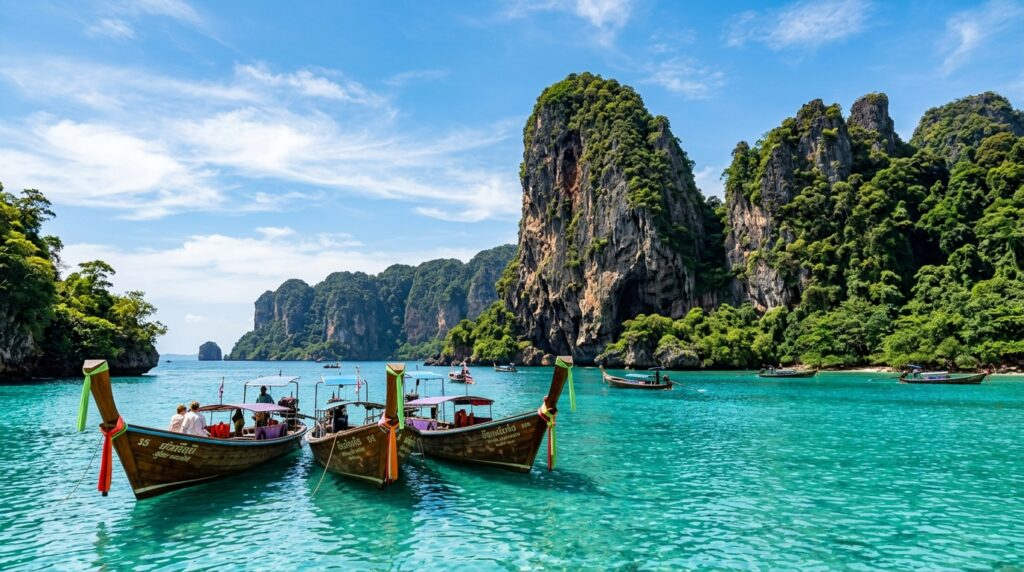
Cultural Etiquette and Traditions in Krabi Four Islands tour
Respecting Local Traditions in Paradise: The Krabi Four Islands Tour—encompassing Koh Poda, Koh Kai (Chicken Island), Koh Tup (Talay Waek sandbar), and Phra Nang Cave Beach—is a world-renowned marine excursion. However, these tropical islands are not merely tourist playgrounds; they are protected marine national parks and sacred spiritual grounds for Southern Thailand’s coastal communities. Understanding local cultural etiquette, shrine customs, marine conservation laws, and boat traditions ensures a respectful, safe, and deeply rewarding island-hopping journey. Overview The Krabi Four Islands Tour is widely considered the crown jewel of day trips in Southern Thailand. Departing daily from Ao Nang, Noppharat Thara, or Railay Pier, this iconic island-hopping itinerary takes travelers across the emerald waters of the Andaman Sea to explore four distinct coastal wonders: the towering limestone monoliths of Koh Poda, the dramatic natural rock formation of Koh Kai (Chicken Island), the famous sandbar bridge connecting Koh Tup and Koh Mor during low tide (*Talay Waek*), and the legendary spirit house nestled inside Phra Nang Cave on the Railay peninsula. For travelers visiting from Indore and Central India, stepping onto Krabi’s white-sand shores opens up a world of vibrant Southern Thai culture, where ancient Buddhist traditions, coastal Malay-Muslim heritage, and maritime sea-spirit beliefs intertw seamlessly. Local Thai islanders take immense pride in their marine environment and sacred heritage. Simple actions—such as dressing modestly when approaching cave shrines, respecting the sacred prow of traditional longtail boats, obeying marine park laws against coral touching, and greeting local captains with a polite *Wai*—build immediate goodwill and elevate your holiday from a basic sightseeing trip to a culturally enriched experience. At Travel Path Holiday (TPH), our mission is to equip Indori travelers with comprehensive, real-world logistical clarity and cultural awareness. This definitive guide covers essential dress codes, sacred shrine customs at Phra Nang, national park environmental guidelines, boat captain etiquette, connectivity recommendations, and tailored vegetarian dining arrangements for an unforgettable trip to Krabi. Local Logistical Advice for Indore Travelers Planning an international coastal getaway from Central India requires seamless transit coordination, smart connectivity choices, and an understanding of regional weather shifts. Here is complete logistical guidance tailored specifically for Indori travelers departing from Indore. 1. Flight & Transit Coordinates from Indore (IDR) to Krabi (KBV) Indore Departure: Begin your trip from Indore Devi Ahilya Bai Holkar Airport (IDR). Connecting Hubs: Connect through major Indian international gateways such as New Delhi (DEL), Mumbai (BOM), or Kolkata (CCU). Airlines such as IndiGo, Air India, and Thai Airways provide smooth connecting flights into Thailand. Thailand Arrival Gateways: You can land at Bangkok (Suvarnabhumi – BKK / Don Mueang – DMK) or Phuket International Airport (HKT). Reaching Krabi: Option A (Domestic Flight): Take a short 1-hour 15-minute domestic flight from Bangkok (BKK/DMK) directly to Krabi International Airport (KBV) via Thai AirAsia, Thai VietJet, or Bangkok Airways. Option B (Scenic Land Transfer): If landing in Phuket (HKT), Travel Path Holiday arranges a private AC Innova Crysta transfer from Phuket Airport across Phang Nga province directly to your Ao Nang hotel in Krabi (approx. 2.5 to 3 hours, 155 km). Pier Transfers: Four Islands speedboat and private longtail boat tours depart from Ao Nang Pier or Noppharat Thara Pier, located just 25–35 minutes from Krabi Airport. 2. Purchasing Local eSIMs / Tourist SIMs Upon Arrival Staying connected is critical for accessing digital offline maps, real-time weather alerts, translation apps when communicating with local boat captains, and instant WhatsApp support with TPH travel managers. Avoid High Roaming Charges: While international roaming packages on Indian networks work under national roaming agreements within India, international data roaming in Thailand can become very expensive. Airport Pickup: Immediately after passing immigration and baggage claim at Bangkok (BKK/DMK), Phuket (HKT), or Krabi Airport (KBV), visit the official telecom kiosks in the arrivals hall. Recommended Operators: Choose AIS (Tourist SIM), DTAC Happy Tourist SIM, or TrueMove H. Packages & Pricing: An 8-day or 15-day unlimited 5G/4G tourist SIM or instant eSIM costs between 299 THB to 499 THB (approx. ₹700 to ₹1,200). The staff will configure your smartphone or scan your eSIM QR code on the spot in under 3 minutes. 3. Climate & Environmental Shift for Indore Travelers Climate Transition: Travelers from Indore transition from a tropical dry continental climate (characteristic of the Malwa plateau with low humidity) to Krabi’s tropical maritime climate. Temperature & Humidity: Krabi experiences temperatures ranging from 26°C to 34°C with year-round high relative humidity (75% to 90%) and continuous salt-laden ocean sea breezes. Seasonal Windows: The dry peak season runs from November to April (calm turquoise seas, clear skies, ideal for the Four Islands tour). The green monsoon season runs from May to October (periodic tropical downpours, occasional high ocean swells; boat departures depend on daily marine safety flags). 4. Cash & Baht Management Currency: Thai Baht (THB). (1 THB ≈ ₹2.35 – ₹2.45 INR). National Park Entry Fee: Cash is required on the day of your Four Islands tour for the Hat Noppharat Thara–Mu Ko Phi Phi National Park fee. Park rangers collect 400 THB per adult and 200 THB per child (ages 3–11) in cash upon landing at Koh Poda or Tup Island. Small Baht Notes: Keep 20 THB, 50 THB, and 100 THB banknotes accessible in a waterproof pouch for island coconut stalls, tip boxes, and boat crew gratuities. Complete Details & Practical Guidelines 1. Respectful Swimwear & Clothing Guidelines While Krabi is a paradise of sun and sea, Thai cultural standards around public modesty differ significantly from Western resort expectations. Adhering to respectful dress codes shows courtesy to local island residents and boat crews. “` +———————————————————————————–+ SWIMWEAR & ATTIRE ETIQUETTE GUIDE +————————————+———————————————-+ LOCATION / SETTING ACCEPTABLE & RESPECTFUL DRESS CODE +————————————+———————————————-+ In Ocean Waters / Snorkeling Standard swimwear, bikinis, swim trunks, (Koh Poda, Chicken Island, Tup) UV rash guards, swim leggings. +————————————+———————————————-+ Walking on Public Sands & Beaches Bikinis/trunks fine; sunbathing topless is strictly illegal and culturally offensive. +————————————+———————————————-+ Approaching Phra Nang Cave Shrine Dry cover-up required: T-shirt/sarong covering & Sacred Cliff Areas shoulders and knees over