
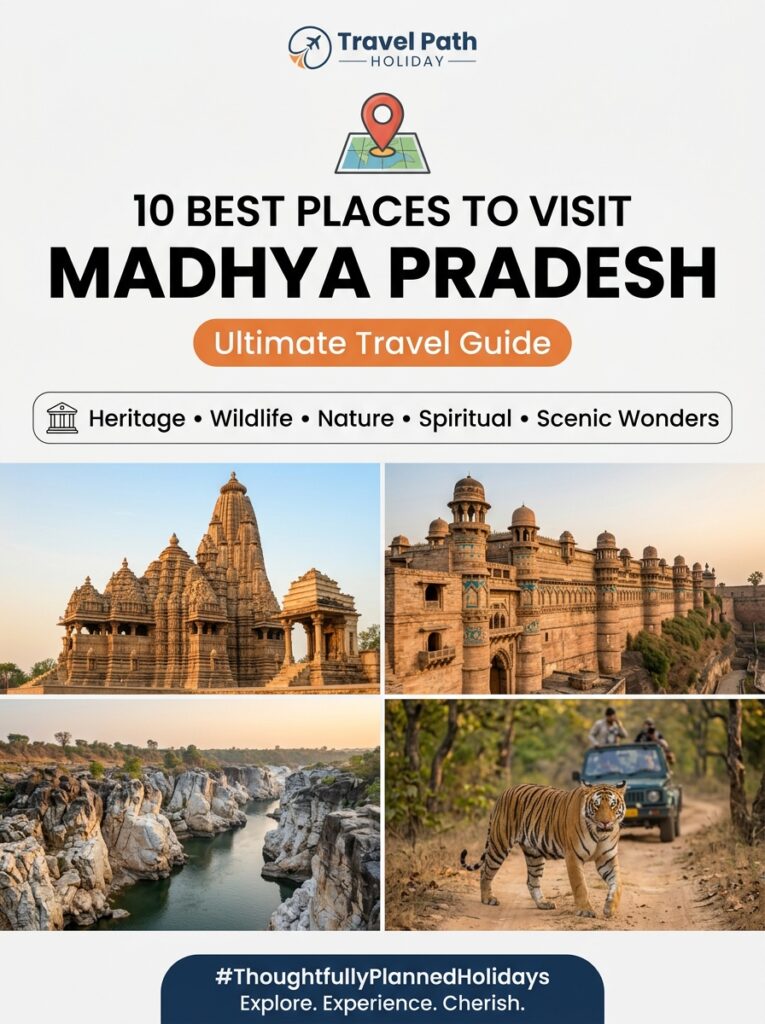
Tour Packages & Guides

Best Honeymoon Resorts in Ujjain Mahakal Lok Corridor for Couples

Overview Ujjain—historically celebrated as Avantika, the eternal city of Mahakal—has rapidly emerged as one of India’s most soul-enriching and romantic destinations for newly married couples. With the grand inauguration of the 900-meter Shri Mahakal Lok Corridor along the tranquil waters of Rudrasagar Lake, the spiritual heartland of Madhya Pradesh now blends ancient sacred heritage with world-class modern hospitality. Newlyweds traveling to Ujjain seek far more than standard sightseeing; they look for a blissful sanctuary where divine blessings at Mahakaleshwar Jyotirlinga unite with riverside luxury, Ayurvedic wellness spas, heritage suites, and intimate candlelit dinners. As Indore locals operating from our head office just ~55 km down the highway, Travel Path Holiday has curated this definitive guide to the top honeymoon resorts in Ujjain near the Mahakal Lok Corridor. Whether you desire a serene 5-star resort with private poolside villas, a boutique property within walking distance of the temple gates, or a tranquil retreat along the Shipra River, this guide details room categories, luxury spa offerings, verified tariffs, dining options, and practical couple itineraries. Local Logistical Advice for Indore Travelers For couples arriving from across India or planning their getaway directly from Central India, Indore serves as the ultimate gateway to Ujjain. Understanding the local transport dynamics ensures your honeymoon begins smoothly without travel fatigue. Highway Travel & Driving Times: The driving distance from Indore city center (Vijay Nagar/Palasia) to Ujjain’s Mahakal Lok Corridor is approximately 55 km. The 4-lane Indore-Ujjain Highway (SH-27) is exceptionally smooth, allowing for a comfortable 60 to 75-minute drive. TPH provides premium chauffeur-driven luxury sedans and Innova Crystas equipped with climate control, bottled water, and music systems for a stress-free highway transfer. Airport Transfers: Devi Ahilya Bai Holkar Airport (IDR) in Indore is the nearest airport, located roughly 53 km from Ujjain. Direct flights connect Indore to major metros including Delhi, Mumbai, Bengaluru, Hyderabad, Ahmedabad, and Kolkata. A private door-to-door transfer from Indore Airport to your Ujjain resort takes just 70 minutes via the Super Corridor and Ujjain Road. Rail Connections: Indore Junction (INDB) offers frequent local shuttles and express trains to Ujjain Junction (UJN), with journey times ranging between 45 and 55 minutes. Ujjain Junction railway station sits conveniently just 1.8 km from the Mahakal Lok Corridor gates. Check-in Strategy & Bhasma Aarti Coordination: Standard resort check-in across Ujjain is 12:00 PM. If your train or flight arrives early in the morning, booking through Travel Path Holiday guarantees prioritized early check-in or access to a luxury day room. Staying within a 10 to 15-minute radius of the corridor is crucial if you hold tickets for the world-famous Bhasma Aarti, which requires couples to assemble at the temple complex by 3:00 AM. Best Time for Romantic Strolls: The Shri Mahakal Lok Corridor opens early in the morning, but its most breathtaking atmosphere unfolds after sunset (between 6:30 PM and 10:00 PM). The 108 grand ornamental pillars, fountains, and intricate stone murals depicting Lord Shiva’s life are bathed in warm golden illumination, creating a magical setting for couple evening walks. Complete Details & Practical Guidelines Top Honeymoon Resorts & Premium Stays in Ujjain #### 1. Rudraksh Club & Resort (Dewas-Ujjain Bypass Road) Vibe & Setting: A premier 5-star resort sprawling across lush green acres, Rudraksh Club & Resort is designed for couples who prioritize absolute privacy, tranquil garden surroundings, and luxury amenities away from urban congestion (~12 km / 20 minutes drive to Mahakal Lok). Honeymoon Room Categories: Executive Pool-View Suites, Presidential Suites with private balconies, and Royal Cottages featuring plush king-size bedding, floral arrangements, and romantic mood lighting. Spa & Wellness: A state-of-the-art wellness center offering couples’ Ayurvedic massage therapies, Panchakarma rejuvenation sessions, private steam/sauna baths, and a sprawling outdoor swimming pool. Dining Highlights: Fine-dining restaurant offering freshly cooked pure vegetarian dishes, candlelit poolside setup upon request, and hand-vetted vegetarian options/dining tailored to personal dietary preferences. Tariff Range: ₹7,500 – ₹18,000 per night (inclusive of breakfast and honeymoon welcome amenities). #### 2. Anjushree Ujjain (Indore-Ujjain Highway) Vibe & Setting: Positioned right on the main Indore Road (~6 km from Mahakal Lok Corridor), Anjushree is an upscale 5-star property known for its grand marble architecture, impeccable service, and convenient proximity to both Indore (~50 km) and central Ujjain. Honeymoon Room Categories: Royal Suites with separate living lounges, Jacuzzi Suites, and Deluxe Pool View Rooms. Spa & Wellness: Full-service luxury spa featuring synchronized couple massage therapies, foot reflexology, aromatherapy, and a temperature-regulated indoor pool. Dining Highlights: *Aroma* pure vegetarian restaurant serving Malwa specialties, North Indian delicacies, and romantic private dining rooms for intimate dinners. Tariff Range: ₹6,500 – ₹15,000 per night. #### 3. Solitaire Resort & Spa (Shipra Bypass Road) Vibe & Setting: Tucked along the scenic green belt near the Kshipra river bypass (~7 km from Mahakal Lok), Solitaire Resort offers boutique cottage-style accommodation surrounded by manicured lawns and bird song. Honeymoon Room Categories: Luxury Garden Cottages, River-Facing Executive Suites, and Honeymoon Villas with private verandas. Spa & Wellness: Outdoor swimming pool, open-air yoga deck for morning couple meditation, and relaxing herbal spa wraps. Dining Highlights: Open-air gazebo dining, romantic candlelit garden tables, and freshly cooked pure vegetarian dishes prepared with seasonal local produce. Tariff Range: ₹5,000 – ₹12,000 per night. #### 4. Hotel Imperial Grand & Anjushree Inn (Near Mahakal Corridor Zone) Vibe & Setting: Upscale boutique properties located within 1.5 km to 2.5 km of the Shri Mahakal Lok Corridor entrance, ideal for couples who want quick 5-minute access to temple rituals without sacrificing modern luxury and comfort. Honeymoon Room Categories: Imperial Heritage Suites, Executive Club Rooms featuring contemporary interior decor and acoustic soundproofing. Spa & Wellness: In-house wellness desk providing post-darshan foot reflexology massages and soothing back therapies for couples. Dining Highlights: Elegant pure vegetarian dining rooms with dedicated room service setups for early morning Bhasma Aarti attendees. Tariff Range: ₹4,500 – ₹9,500 per night. #### 5. MP Tourism Hotel Shipra & Avantika Heritage Stays (Ram Ghat Road) Vibe & Setting: Government-operated MPT heritage properties overlooking the historical Ram Ghat area (~1.2 km from


Tour Packages & Guides

Things to Avoid in Pachmarhi Bee Falls: Tourist Safety Guidelines

Overview Bee Falls, also locally known as Jamuna Prapat, is one of the most stunning and popular water cascades in the hill station of Pachmarhi. However, its natural beauty comes with hidden dangers that every traveler must prepare for. From navigating steep, slippery steps and dealing with aggressive wildlife to avoiding flash floods and managing local guide tricks, knowing the critical things to avoid in Pachmarhi Bee Falls is essential for a safe and memorable holiday. This guide provides comprehensive tourist safety guidelines, specifically tailored for travelers departing from Indore, to ensure a hassle-free journey to this scenic gem. Local Logistical Advice for Indore Travelers For travelers planning a trip from Indore, transit and local regulations in Pachmarhi require careful planning: Transit Options from Indore: Unlike high-altitude tours that demand flights out of Indore (IDR) with long flight layovers at Delhi, Pachmarhi is a direct, scenic overland journey. You can travel by road (a private cab route via Bhopal and Pipariya takes approximately 8 to 9 hours) or book direct trains from Indore Junction to Pipariya (such as the Panchvalley Express), followed by a 1.5-hour local taxi transfer to the hill station. Forest Permits and Gypsy Bookings: Private vehicles registered outside the local authority (including those from Indore) are not allowed to enter the Bee Falls area. You must obtain mandatory forest entry permits from the Pachmarhi Forest Department and hire a registered local open-top 4×4 gypsy at the local stand. It is vital to coordinate these bookings early in the morning to avoid long queues at the ticket counter. Wider Madhya Pradesh Route Integration: If you are combining Pachmarhi with a broader regional tour, remember that national park tiger safari slot bookings for Kanha (Kanha zone) and Bandhavgarh (Tala zone) must be pre-booked online up to 120 days in advance. Likewise, if transiting through the Malwa region, secure your VIP darshan tickets at the Ujjain Mahakal Lok Corridor online to prevent delays. For detailed route plans, refer to our weekend getaway itinerary from Indore to Pachmarhi and learn how to reach Mandu from Indore to build a comprehensive multi-stop itinerary. Complete Details & Practical Guidelines To ensure the safety of your family, seniors, and children, pay close attention to these crucial factors when visiting Bee Falls: 1. Navigating the Steep Steps and Slip Hazards Avoid the Descent if Health Permits Otherwise: The path down to the bottom pool of Bee Falls consists of over 400 steep, uneven, and often wet stone steps. If you are traveling with elderly relatives or family members with joint issues, breathing difficulties, or cardiovascular conditions, avoid climbing all the way down. The climb back up can be strenuous. Do Not Wear Improper Footwear: Standard flip-flops, high heels, or smooth-soled sandals are highly hazardous on these wet stone steps. Always wear sturdy trekking shoes or sports shoes with deep rubber grips to prevent slips and falls. 2. Water Safety at the Pool (Undercurrents and Slippery Rocks) Avoid Going Deep into the Pool: The natural pool beneath the waterfall has unpredictable depths and strong undercurrents. Do not swim or wade into the deeper parts of the pool, even if you are an experienced swimmer. Avoid Standing Directly Under the Waterfall: The sheer volume of water falling from a height of 150 feet exerts massive pressure. Standing directly under the main torrent can lead to serious neck, back, or shoulder injuries. Stick to the designated shallow bathing areas. Watch for Slippery Underwater Rocks: The rocks submerged in the pool are covered in moss and algae. Stepping on them can lead to sudden loss of balance or twisted ankles. 3. Monsoon Travel Warnings Avoid Visiting During Heavy Downpours: The monsoon season (July to September) transforms Pachmarhi into a lush paradise, but it also increases the risk of flash floods at Bee Falls. The local forest department frequently closes access to the pool during heavy rains due to sudden surges in water level. Check local weather reports in Pipariya and Pachmarhi before departing. Stay Clear of Cliff Edges: Monsoon rains make the soil along the trails unstable, increasing the risk of minor mudslides and rockfalls. Always stick to the paved pathways and avoid standing near the edges. 4. Honeybee Hives Caution Avoid Making Loud Noises: The towering rock cliffs surrounding Bee Falls are home to massive, active wild honeybee (Apis dorsata) hives. Loud shouting, screaming, playing music on portable speakers, or throwing stones will agitate the bees, potentially triggering a dangerous swarm attack. Maintain a quiet demeanor while near the falls. Avoid Wearing Strong Perfumes or Scented Cosmetics: Wild honeybees are highly sensitive to sweet, floral, or strong artificial scents. Avoid spraying perfumes, deodorants, or using heavily scented lotions before heading to the falls. Emergency Behavior: In the rare event of a bee disturbance, do not run frantically or wave your arms, as this provokes them further. Instead, cover your face and head with a dark cloth or towel, crouch low to the ground, and remain still until they disperse. 5. Monkey Threats at Viewpoints and Steps Do Not Carry Visible Food or Plastic Bags: The trails and viewpoints leading to Bee Falls are populated by bands of aggressive rhesus macaque monkeys. Carrying visible bags of chips, fruit, soft drink bottles, or plastic shopping bags will make you a target. Monkeys will not hesitate to jump on you to snatch these items. Avoid Direct Eye Contact and Teasing: Making direct eye contact or showing your teeth is interpreted by monkeys as a gesture of aggression. Do not attempt to feed them, tease them, or get close for selfies. Keep all your belongings, cameras, and mobile phones zipped securely inside backpacks. 6. Unofficial Shortcuts and Guide Tricks Avoid Unregistered Guides and Fake “Shortcuts”: You will encounter individuals offering to show you “unofficial shortcuts” to the pool or hidden spots nearby. Avoid these offers entirely. These pathways are unauthorized, bypass forest security, and are physically dangerous due to loose gravel and steep drops. Always stay on the official, well-marked trail

Tour Packages & Guides

Local Food in Khajuraho Western Temples: What and Where to Eat

Overview Khajuraho is globally celebrated for its UNESCO World Heritage-listed Western Group of Temples, where breathtaking 10th-century Chandela stone architecture captures the grand heritage of Central India. However, beyond the soaring spires of Kandariya Mahadeva and Lakshmana temples lies an equally enticing attraction: the rich, authentic culinary traditions of Bundelkhand. Exploring the local food in Khajuraho Western Temples offers travelers an unforgettable sensory journey filled with rustic flavors, traditional wood-fired preparations, and wholesome sweet delicacies. From golden, ghee-drenched Dal Bafla and piping hot Bedmi Puri with spicy amchur aloo to aromatic Kadhai Paneer, saffron-infused Jalebi Rabri, and caramel-flavored Khajuraho Peda, Bundelkhandi cuisine reflects the warmth and hearty soul of regional Madhya Pradesh. As Indore’s premier travel agency, Travel Path Holiday (TPH) brings local Malwa expertise to help you navigate the best food corners, pure vegetarian dhabas, and hygienic rooftop cafes situated just steps away from the ASI Western Group complex. Whether you are seeking quick morning breakfast bites before a temple tour or a relaxed evening dinner after the light & sound show, this comprehensive guide covers everything you need to know about what and where to eat in Khajuraho. Local Logistical Advice for Indore Travelers For travelers embarking on a journey from Indore—the undisputed culinary capital of Central India known for Sarafa Night Market and Chappan Dukan—tasting local food in Khajuraho provides a fascinating contrast. While Malwa cuisine leans towards subtle sweetness and tangy poha-jalebi, Bundelkhandi recipes embrace bold spices, roasted grains, dried mango powder (amchur), garlic-chilli relishes, and pure cow ghee. Key Travel Coordinates & Route Details from Indore By Private Chauffeur Vehicle (Road Distance ~550 to 570 km): Driving from Indore to Khajuraho takes approximately 10 to 11 hours via the Indore – Dewas – Bhopal – Sagar – Chhatarpur highway corridor (NH44 & NH39). The road condition is smooth along major expressways. A private Innova Crysta booking from TPH ensures comfortable highway halts at verified pure vegetarian food plazas near Bhopal or Sagar. By Overnight Train from Indore Junction: The most convenient rail link is Train No. 14115 / 14116 (Dr. Ambedkar Nagar / Indore – Prayagraj Express), which departs Indore Junction in the afternoon/evening and arrives directly at Khajuraho Junction (KURJ) early next morning. This allows you to step off the train fresh and proceed directly to a local eatery near Sevagram Road for a traditional Bedmi Puri breakfast. Connecting Train & Flight Routes: Alternative rail routes connect Indore Junction to Jhansi (VGBJ) or Satna (STA), followed by a 2-hour scenic drive in a pre-arranged TPH vehicle. Flight connectivity options run from Indore (IDR) to Khajuraho Airport (HJR) via Delhi or seasonal direct sectors. Food & Hygiene Considerations for Indore Families Indori travelers are naturally particular about food quality, cleanliness, and authentic vegetarian preparation. The dining options lining the Western Group of Temples perimeter cater exceptionally well to these standards. Travel Path Holiday hand-vets dining establishments near the temple complex to ensure strict hygiene, fresh ingredients, bottled mineral water availability, and customizable onion-garlic-free meals for family members and senior citizens. Complete Details & Practical Guidelines Must-Try Bundelkhandi Culinary Specialties in Khajuraho When exploring the food scene around the Western Group of Temples, make sure to savor these authentic regional specialties: #### 1. Bundelkhandi Dal Bafla Dal Bafla is the undisputed king of Central Indian comfort meals. Coarse wheat flour dough balls are seasoned with carom seeds (ajwain) and turmeric, boiled in boiling water, and then slowly roasted over glowing charcoal embers or traditional cow-dung dung-cakes until golden and crisp. The roasted baflas are cracked open, soaked in hot, fragrant cow ghee, and served alongside: A bowl of spicy tuvar (arhar) dal tempered with cumin, mustard seeds, green chillies, and asafoetida (hing). Fiery red garlic-chilli chutney and tangy lemon pickles. Sweet Churma (coarsely powdered roasted wheat dough mixed with ghee, jaggery, and cardamom). *Local Insight:* Unlike Rajasthani Baati, which is directly baked dry, Bundelkhandi Bafla is boiled before roasting, giving it a remarkably soft melt-in-the-mouth texture underneath its crispy crust. #### 2. Bedmi Puri with Spicy Aloo Sabzi Bedmi Puri is the favorite local breakfast staple across Khajuraho and the wider Bundelkhand region. The puris are crafted from golden wheat flour kneaded with a rich paste of coarsely ground urad dal, fennel seeds, coriander powder, and hing. Deep-fried till puffed and crispy, they are paired with a slow-cooked, unpeeled potato gravy simmered with dry red chillies, mustard oil, and tangy amchur (dried green mango powder). Pair this dish with a cup of hot kulhad chai for the ultimate morning fuel before your temple walking tour. #### 3. Bundelkhandi Kadhai Paneer & Regional Gravies For dinner near the Western Group temples, local cooks prepare rich cottage cheese dishes inside heavy iron kadhais (woks). Bundelkhandi Kadhai Paneer features fresh paneer cubes tossed with whole crushed coriander seeds, dried red chillies, sliced capsicum, and a thick tomato-onion gravy infused with regional spices. Enjoy it with butter-brushed tandoori rotis or missi rotis made from spiced gram flour. #### 4. Traditional Sweets: Khajuraho Peda, Jalebi & Rabri Khajuraho Peda: Bundelkhand is famous for its dense, dark-caramelized khoya pedas. Milk is reduced slowly over wood fires for hours until it caramelizes, then flavored with green cardamom, nutmeg, and saffron. These pedas have a long shelf life, making them ideal culinary souvenirs to take home to Indore. Hot Jalebi with Kulhad Rabri: Early mornings and late evenings feature halwais frying fresh, crisp jalebi spirals dipped in saffron sugar syrup, topped with a dollop of thick, creamy chilled rabri served in clay pots. Where to Eat Near the Western Group of Temples: Top Hand-Vetted Dining Outlets All major dining outlets in Khajuraho are concentrated around the Western Group Temple Gate, Main Bazaar (Gole Market), and Sevagram Road. Here are the top hand-vetted pure vegetarian options and popular cafes: Restaurant / Outlet Name Location / Proximity House Specialties Ideal For Raja Cafe & Rooftop Opposite ASI Western Group Gate Pure Veg Thalis, Wood-Fired Pizza, Herbal Tea, Fresh Juices Rooftop temple view lunches & evening

Tour Packages & Guides

Budget Planning Guide for a Vacation to Maheshwar Ahilya Fort

Planning a weekend escape from the hustle of Indore to the serene banks of the Narmada River? A budget trip to Maheshwar Ahilya Fort is one of the most culturally enriching yet pocket-friendly getaways in Central India. Located just 95 kilometers south of Indore, Maheshwar offers a breathtaking blend of regal Maratha history, stunning temple architecture, world-famous handloom weaving, and peaceful river ghats. Whether you are looking for a quick day trip from Indore or a relaxing overnight stay, managing your expenses is incredibly easy with a little pre-planning. From local bus routes and pocket-friendly guesthouses to boat ride charges and authentic handloom saree shopping, this comprehensive budget planning guide covers everything you need for a memorable, cost-effective pilgrimage and sightseeing tour. Indore to Maheshwar: Local Logistical Advice & Transit Routes For travelers departing from Indore (or arriving via Indore Devi Ahilyabai Holkar Airport – IDR), reaching Maheshwar is seamless and highly customizable based on your budget. 1. The Ultra-Budget Route: Public Buses (Under ₹200 per person) If you want to keep transit costs to a bare minimum, local buses are your best bet: Indore to Dhamnod: Board a state transport or private bus from Sarwate Bus Stand or Gangwal Bus Stand in Indore heading towards Dhamnod (on the Indore-Mumbai NH 52 highway). The ticket costs approximately ₹100 to ₹120 per passenger, and the journey takes about 2 to 2.5 hours. Dhamnod to Maheshwar: Once you alight at Dhamnod, hop onto a shared auto-rickshaw or a local connecting bus to Maheshwar (about 13 km away). This short leg costs just ₹20 to ₹30. 2. The Mid-Range Route: Direct Cab Hire (₹2,500 – ₹3,500 round trip) For families or groups, hiring a private taxi from Indore is highly convenient. It allows you to combine your trip with nearby attractions like Mandu (read our Indore to Mandu Route Guide). Route: Drive via Tejaji Nagar, through the scenic Choral/Ghat section, onto Barwaha, and connect to Dhamnod-Maheshwar road. A private hatchback or sedan round trip for a day trip costs around ₹2,500 to ₹3,000, including toll and driver charges. 3. Self-Drive/Two-Wheeler (₹500 – ₹800 in fuel) A popular weekend choice for young Indori travelers is a road trip on a personal vehicle or motorcycle. NH 52 is highly maintained, though you should exercise caution during the monsoon in the ghat sections. Accommodation: Ahilya Fort Heritage Luxury vs. Budget Guesthouses Your stay will be the biggest variable in your budget. Maheshwar caters to two completely different sets of travelers: heritage luxury seekers and budget-conscious backpackers. The Ultra-Luxury Stay: Ahilya Fort Heritage Hotel Perched majestically overlooking the Narmada River, the Ahilya Fort Heritage Hotel is the actual residence of Maharaja Shivaji Rao Holkar (descendant of Maharani Ahilyabai Holkar). What it costs: Room rates start from ₹30,000 to ₹45,000 per night, including gourmet meals. Is it open to non-guests? The main palace rooms, private courtyards, and gardens are strictly private for staying guests. However, the outer temples, general fort ramparts, and the public ghat areas are completely free to enter for everyone. The Budget-Friendly Alternatives (₹1,000 – ₹2,500 per night) If you are planning a budget trip to Maheshwar Ahilya Fort, skip the fort suites and opt for these vetted, comfortable stays just outside the fort walls: 1. MPT Narmada Retreat (MPTDC): Located right on the riverbank slightly upstream from the fort, this government-run property offers clean AC rooms and cottages starting at ₹2,200 to ₹3,500 per night, complete with lovely gardens and a river view. 2. Labhoo’s Café and Guest House: Built right inside a historic gateway of the fort ramparts, this quirky, highly-rated lodge offers basic heritage-style rooms from ₹1,500 to ₹2,500 per night. 3. Hansa Heritage & Hotel Temple View: Located within walking distance of the Ahilya Ghat, these local guesthouses offer clean, non-AC rooms from ₹800 to ₹1,200 and AC rooms for ₹1,500. Sightseeing and Boating Rates at Ahilya Ghat The beauty of Maheshwar is that most of its iconic sights require zero entry fees. 1. Exploring Ahilya Fort & Temples (Free Entry) Ahilyeshwar Temple, Rajeshwar Temple, and Sahasrarjun Temple: These stunning stone edifices feature intricate carvings and are completely free to visit. Ahilya Rajwada (Museum & Palace Courtyard): The public museum houses the personal belongings, prayer room, and the modest wooden throne of Rajmata Ahilyabai Holkar. Entry is highly nominal: ₹10 to ₹20 per person. Open daily from 7:00 AM to 7:00 PM. 2. Narmada River Boating & Sunset Cruises No trip to Maheshwar is complete without a boat ride on the sacred Narmada. Boats can be hired directly at the Ahilya Ghat. Short Boat Ride (Ghat to Baneshwar Temple & back): A hand-prowed boat for a small group costs around ₹300 to ₹400 (roughly 30 minutes). The Baneshwar Temple sits right in the center of the river and is believed to be the center point of the earth according to ancient Hindu geography. Sunset Motorboat Ride: A full 1-hour motorboat ride that takes you further upstream to watch the sun dip below the Sahastradhara rock formations costs around ₹600 to ₹1,000 per boat (shared among 6-8 people). *Tip:* For detailed price sheets and seasonal hikes, refer to our comprehensive Maheshwar Boat Booking Rates & Regulations. For couples, these boats also double as stunning backdrops for Pre-Wedding Shoots in Maheshwar. Maheshwari Saree Shopping: Supporting Local Weavers Maheshwar is world-renowned for its handwoven Maheshwari sarees, salwar suits, and stoles—characterized by their lightweight texture, silk-cotton blends, and reversible borders inspired by the fort’s stone carvings. 1. REWA Society (Inside the Fort) Established by the Holkar family to revive the local weaving industry, REWA Society is a non-profit cooperative. You can watch weavers at work on traditional wooden looms. Price Range: Authentic sarees start from ₹3,500 to ₹15,000+. Budget Tip: While slightly pricier, every rupee spent here directly supports weaver welfare and guarantees 100% pure silk and cotton threads. 2. Local Weaver Cooperatives (Maheshwar Bazaar & Streets) For budget-conscious shoppers, the lanes leading to the fort are lined with weaver workshops. Price Range: Cotton

Tour Packages & Guides

Luxury Resorts in Bandhavgarh Tiger Reserve: Premium Stays & Villas

Overview Tracking the majestic Royal Bengal Tiger at Bandhavgarh National Park does not mean compromising on world-class comfort. For travelers departing from Indore, a journey to the Vindhya hills is a transition from the bustling commercial capital of Madhya Pradesh to a pristine jungle sanctuary. A curated stay at one of the premier luxury resorts in Bandhavgarh Tiger Reserve ensures that your wilderness adventure is paired with private plunge pools, rejuvenating spa therapies, and gourmet dining. This guide outlines the absolute best luxury accommodations in Bandhavgarh, complete with concrete travel logistics from Indore, booking strategies, and tailored safari insights. Local Logistical Advice for Indore Travelers Planning an ultra-luxury safari vacation from Indore requires careful synchronization of travel times, transfers, and forest department permit schedules. Here is the local route guide and booking roadmap: 1. Transit Routes from Indore to Bandhavgarh By Air & Private SUV (Recommended Luxury Route): Fly from Devi Ahilyabai Holkar Airport in Indore (IDR) to Jabalpur Dumna Airport (JLR) via convenient connecting flights. Upon arrival in Jabalpur, a private luxury SUV (arranged by Travel Path Holiday) will transfer you directly to your resort in Bandhavgarh in approximately 4 hours (170 km) via the smooth Katni-Umaria corridor. By Rail: For an overnight journey, board the Indore – Jabalpur Overnight Express (22191) or the Narmada Express (18233) from Indore Junction. Disembark at Jabalpur Junction (JBP) or Katni Junction (KTE). Katni is only 100 km (a 2.5-hour private cab transfer) from the Tala zone luxury gates. By Private Charter: For VIP travelers, charter flights can land at the Jabalpur Dumna Airport or the Umaria Airstrip (subject to prior government permissions), followed by a short road transfer. 2. High-Demand Safari Booking Strategy Bandhavgarh’s premium safaris are heavily regulated. To ensure a seamless experience, keep the following booking parameters in mind: 120-Day Advance Booking Window: The Madhya Pradesh Forest Department opens online safari bookings exactly 120 days in advance. Tala zone permits—the most premium sector—sell out within minutes. Tala Zone Luxury Gates: The Tala Zone is home to the historical Bandhavgarh Fort and boasts the highest density of tiger sightings. Luxury lodges like Taj Mahua Kothi and Samode Safari Lodge are situated close to the Tala gate, allowing for fast, VIP entry access during early morning drives. Logistical Prep: Ensure you carry the exact government-issued ID (Aadhaar Card or Passport) used during the safari booking. Photocopies or mismatched details will lead to immediate cancellation at the forest check post. Refer to our Kanha ATM & Connectivity Guidelines for similar forest connectivity warnings, as cellular networks are highly erratic around Bandhavgarh’s core zones. Complete Details & Practical Guidelines The Top Luxury Resorts in Bandhavgarh Tiger Reserve Each of these premium stays offers a distinct take on wilderness luxury, combining rustic regional architecture with world-class hospitality, private safaris, and dedicated naturalists. Luxury Resort Key Highlights Best Suited For Proximity to Gates Taj Mahua Kothi 12 private *kutiyas* (traditional cottages), private open-top 4×4 safaris, authentic local culinary experiences. Discerning travelers seeking heritage-infused luxury & expert naturalists. 15 mins to Tala Gate Samode Safari Lodge Independent villa suites, private heated plunge pools, open-air baths, premium spa, and hand-vetted vegetarian options/dining. Couples and families desiring contemporary elegance and private pool villas. 25 mins to Magdhi/Tala Gates Tree House Hideaway 5 exclusive luxury treehouses set in forest canopy, private balconies, rustic premium interior decor. Honeymooners and adventure enthusiasts looking for unique canopy stays. 20 mins to Tala & Magdhi Gates Kings Lodge (Pugdundee) Eco-luxury stilt cottages, massive central swimming pool, wellness spa, organic kitchen gardens. Eco-conscious luxury seekers and multi-generation family groups. 20 mins to Tala Gate Bandhav Vilas 20 premium villas, private walled courtyards, stone outdoor showers, luxury Ayurvedic spa. Travelers prioritizing spacious villa layouts and therapeutic wellness. 10 mins to Tala Gate In-Depth Resort Profiles #### 1. Taj Mahua Kothi (Taj Safaris) Named after the revered Madhuca indica (Mahua) tree, this ultra-luxury lodge spans 40 acres of private forest. The Stay: Accommodation consists of 12 private guest suites called *kutiyas*. Each cottage features high ceilings, wooden beams, terracotta tiles, and local hand-woven textiles, along with private luxury amenities. The Experience: Guests enjoy private open-top 4×4 safari gypsies accompanied by certified Taj naturalists who customize your tracking route. Rejuvenate with Ayurvedic therapies at the in-house spa, or indulge in a signature “baghiya dinner” under the stars. Dining: Hand-vetted vegetarian options are prepared using fresh ingredients harvested directly from the resort’s organic farms. #### 2. Samode Safari Lodge Samode represents the pinnacle of contemporary luxury blended with jungle aesthetics. The Stay: The lodge offers expansive independent villa suites featuring separate living areas, private wooden decks, and spectacular outdoor showers under the forest canopy. The Experience: Spend your afternoons lounging by the heated main swimming pool or undergoing a restorative hot stone massage at the premium spa. Dining: The culinary team specializes in customized menus, providing exceptional hand-vetted vegetarian options/dining prepared in separate kitchen areas to meet specific dietary requirements. #### 3. Tree House Hideaway (Pugdundee Safaris) For a unique perspective of the Vindhyan forest, this resort elevates your stay to the treetops. The Stay: Five beautifully crafted, air-conditioned treehouses built on stilts around massive jungle trees. Each treehouse features modern luxury bathrooms, premium wooden flooring, and private balconies overlooking the forest pathway. The Experience: Spot resident hornbills and flying squirrels right from your balcony. The resort offers curated naturalist walks, private dining in the Machan bar, and exclusive jeep safaris. #### 4. Kings Lodge (Pugdundee Safaris) Set in the quiet village of Ranchha, Kings Lodge is an eco-luxury haven. The Stay: Features 10 cottage rooms and 8 stilt cottages nestled amidst dry-deciduous forests. The interiors boast hand-crafted furniture, eco-friendly luxury toiletries, and large windows that invite the wilderness indoors. The Experience: Relax by the large swimming pool after a dusty morning safari or indulge in a forest-bathing spa session. Dining: The property features a farm-to-table concept, guaranteeing delicious and diverse hand-vetted vegetarian dining sourced directly from the local villages and their own garden plots. #### 5. Bandhav

Tour Packages & Guides

Top 10 Things to Do in Kanha Tiger Reserve: Sightseeing Itinerary

Overview Kanha Tiger Reserve, the lush inspiration behind Rudyard Kipling’s *The Jungle Book*, is the crowning jewel of Central India’s wildlife sanctuaries. Spanning over 940 square kilometers of core forest in the Maikal range of the Satpuras, this park is internationally renowned for its successful conservation of the Southern Swamp Deer (Barasingha) and its thriving Bengal tiger population. If you are seeking the ultimate wilderness adventure, understanding the best things to do in Kanha Tiger Reserve is the first step to planning an unforgettable trip. From thrilling open-jeep safaris in the early morning mist to birdwatching in dense bamboo thickets, Kanha offers an immersive escape into the wild. For travelers departing from Indore, visiting Kanha requires careful logistical planning, as it lies on the eastern side of Madhya Pradesh. In this comprehensive guide, we outline the top ten experiences in Kanha, practical safari details, and the most efficient transit routes from the Malwa region to help you execute a seamless, hassle-free wildlife vacation. Local Logistical Advice for Indore Travelers Connecting the commercial hub of Indore to the deep sal forests of Kanha involves a transition from the rolling plains of Malwa to the rugged Satpura highlands. To maximize your safari time and avoid travel exhaustion, choose one of these hand-vetted transit options: 1. By Train via Jabalpur (Most Popular & Comfortable) The Journey: Board the daily Narmada Express (18233) departing Indore Junction at 5:15 PM, or the Indore – Jabalpur Overnight SF Express (22191) departing at 7:30 PM. Both trains arrive at Jabalpur Junction early the next morning (between 6:00 AM and 6:35 AM). On-Ground Transfer: From Jabalpur, Travel Path Holiday coordinates a private, air-conditioned cab (Innova or Ertiga) to pick you up directly from the station. The road distance is approximately 165 km to the Khatia/Kisli gate (about 4 hours of driving) and 200 km to the Mukki gate (around 4.5 hours). 2. By Flight via Raipur (Fastest Route to Mukki Gate) The Journey: Take a flight from Indore’s Devi Ahilyabai Holkar Airport (IDR) to Swami Vivekananda Airport in Raipur (RPR). While direct flights are occasionally available, standard itineraries connect via Mumbai or Delhi. On-Ground Transfer: Raipur Airport is highly convenient for travelers staying near the Mukki Gate on the southern side of the reserve. TPH arranges a private highway transit from Raipur to the Mukki Gate (approx. 200 km, taking about 4.5 to 5 hours via well-maintained national highways). 3. Flight and Road Combinations via Jabalpur The Journey: Fly from Indore to Jabalpur Dumna Airport (JLR) via connecting flights. From the airport, a private cab transfer takes you straight to the Khatia, Kisli, or Sarhi gates in under 4 hours. Pro-Tips for Indore Travelers: Safari Gate Alignment: Ensure your resort location matches your booked safari gate. Booking a safari in the Mukki zone while staying near the Khatia gate will result in a exhausting 2.5-hour drive through the buffer zones before your safari even begins. Dining Preferences: Recognizing the culinary expectations of families traveling from the Malwa region, Travel Path Holiday partners exclusively with resorts that provide clean, high-quality, and hand-vetted vegetarian options/dining nearby. You can enjoy traditional Indian food tailored to your taste buds without worrying about cross-contamination. Complete Details & Practical Guidelines To help you plan your itinerary, here are the top 10 things to do in Kanha Tiger Reserve, complete with actionable advice and structural guidelines. 1. Embark on a Tiger Jeep Safari in the Core Zones Exploring the core wilderness of Kanha via open 4×4 Gypsies is the ultimate highlight of any trip. The reserve is divided into four highly regulated core safari zones: Kanha Zone: The premium zone, famous for its massive open grasslands, high tiger density, and the historic Kanha Museum. Kisli Zone: Characterized by dense sal forests, scenic hilly terrains, and excellent spots for viewing leopards and wild dogs (dholes). Mukki Zone: Located in the south, featuring tall sal trees, bamboo thickets, and water streams where tigers frequently come to drink. Sarhi Zone: Known for its dry deciduous forest, vast meadows, and sightings of sloth bears and blue bulls (nilgai). *Logistical Tip:* If core zone permits are sold out, reserve a slot in the buffer zones (Khatia, Sijhora, Khapa, or Phen), which often yield surprising tiger and leopard sightings. 2. Spot the Rare Southern Swamp Deer (Barasingha) Kanha is famously home to the Southern Swamp Deer (*Rucervus duvaucelii branderi*), also known as the Hard-Ground Barasingha. This is the only place in the world where this specific subspecies exists. Saved from the brink of extinction through an intense, decades-long conservation program (growing from a critical low of just 66 individuals in 1970 to over 1,000 today), this magnificent animal is the official mascot of the reserve, affectionately named “Bhoorsingh the Barasingha.” Look for them grazing in the swampy grasslands of the Kanha and Kisli zones. 3. Capture the Sunrise and Panoramic Views at Bamni Dadar Known as the Sunset Point, Bamni Dadar is the highest geographic point in Kanha Tiger Reserve. It offers a spectacular, panoramic view of the entire valley below. As the sun goes down, the golden light filters through the dense canopy of sal trees, creating a dreamscape for landscape photographers. Keep an eye out for herbivores like gaur (Indian bison), barking deer, and four-horned antelopes that frequent this plateau. 4. Visit the Kanha Museum (Interpretation Center) Located deep inside the Kanha core zone, the Kanha Museum is a mandatory stop during your morning safari. Housed in a rustic stone building, the museum showcases detailed exhibits on the park’s history, forest food chains, pugmark identification techniques, and skeleton displays of various wildlife species. It offers an educational break where naturalists explain the delicate balance of the central Indian ecosystem. 5. Take a Guided Nature Walk in the Khatia Buffer Zone To experience the jungle at a slower, more intimate pace, embark on a guided nature trail. While walking is strictly prohibited in the core zones, the forest department organizes guided walks in the Khatia buffer zone. Accompanied by

Tour Packages & Guides

How to Reach Mandu Jahaz Mahal from Indore: Flight & Train Routes

Overview Mandu (Mandavgad), the legendary fortress city of joy, is located approximately 90 km from Indore in the Dhar district of Madhya Pradesh. For travelers departing from Indore or transiting through the Indore hub, learning how to reach Mandu Jahaz Mahal from Indore is key to experiencing one of Central India’s most spectacular historic retreats. While Mandu itself does not have an active railway station or airport, it is highly accessible by road. The most practical and direct travel route is a scenic road trip from Indore via Dhar, taking about 2 to 2.5 hours. Whether you are flying into Indore’s Devi Ahilyabai Holkar Airport (IDR), arriving via Indore Junction (INDB) on the Malwa Express, or setting off on a weekend getaway, this comprehensive route guide provides everything you need to plan a seamless journey to Mandu’s iconic monuments, including Jahaz Mahal, Hindola Mahal, and the Rani Roopmati Pavilion. Local Logistical Advice for Indore Travelers Starting your journey from Indore—the commercial capital of Madhya Pradesh—offers great flexibility, but success depends on local logistical coordination: 1. Road Conditions & Route via Dhar The standard road route is Indore to Mandu via Dhar (NH 47 to Dhar, followed by State Highway 31 and Mandav Road). The road quality is excellent. NH 47 is a wide, divided four-lane highway up to the Dhar bypass. From Dhar, the route transitions into a double-laned state highway. As you approach Mandu, the road climbs up the Vindhya Range through a scenic, winding ghat section. The curves are manageable for all vehicle types, but cautious driving is advised during the monsoon when mist can reduce visibility. 2. Local Taxi Union Passes & Entry Fees If you are booking a taxi from Indore, ensure the operator provides a commercial vehicle (yellow number plate) with up-to-date state permit documents. Upon reaching the Mandu fortress gates, local municipal entry taxes and specific taxi union parking passes are required. It is important to clarify with your Indore cab provider whether these union passes and parking fees are included in your quote, as local authorities check these at the monument checkpoints. 3. Flight Connections & Layovers For travelers coming from long-distance cities (such as Delhi, Mumbai, or Bangalore), the best gateway is Devi Ahilyabai Holkar Airport (IDR) in Indore. Direct flights are available from major hubs. If direct options are limited, travelers can book flights with short layovers at Delhi or Mumbai airports. From the Indore airport, you can hire a direct cab to Mandu via the Dhar bypass, avoiding city traffic altogether. 4. Train Routes & Transits For rail passengers, Indore Junction (INDB) is the primary terminal. Popular trains like the *Malwa Express* (connecting Delhi to Indore) and the *Avantika Express* (connecting Mumbai to Indore) offer comfortable overnight journeys. Upon arrival at Indore Junction, travelers can easily transit to Mandu by pre-arranged rental cars or board local buses from the nearby Sarwate Bus Stand. 5. Dining Options: Hand-Vetted Vegetarian Options When traveling along the Indore-Dhar-Mandu route, finding clean, hygienic food is a priority for families. While roadside dhabas are common, we recommend seeking out hand-vetted vegetarian options/dining establishments in both Dhar and Mandu. These select restaurants serve authentic, hygienic Malwi food (such as hot *Dal Bafla* and fresh *Poha*) and traditional North Indian meals prepared to high standards of cleanliness. Complete Details & Practical Guidelines Step-by-Step Travel Modes from Indore to Mandu Travel Mode Nearest Point Distance to Mandu Key Logistics & Transit Advice By Road (Cab/Self-Drive) Direct to Mandu ~90 km Travel via NH 47 and Dhar. Takes 2 to 2.5 hours. Excellent road quality. By Flight Devi Ahilyabai Holkar Airport, Indore (IDR) ~95 km Take a flight to Indore (layovers at Delhi/Mumbai if needed), then a pre-booked cab via Dhar bypass. By Train Indore Junction (INDB) ~90 km Board the Malwa Express or Avantika Express to Indore, then complete the journey via a direct road transfer. By Bus Mandu Bus Stand 0 km Catch a direct state transport bus from Indore’s Gangwal or Sarwate Bus Stand to Dhar, then transfer to a local bus to Mandu. Suggested Weekend Trip Layouts from Indore A weekend trip to Mandu is the perfect getaway from Indore. Here are two popular itineraries: #### Option A: The Classic 2-Day Overnight Weekend Layout Saturday Morning (07:30 AM): Depart from Indore. Enjoy a scenic 2-hour drive via Dhar. Stop for breakfast at a hand-vetted vegetarian dining venue along the highway. Saturday Mid-Day (10:00 AM): Arrive in Mandu. Check into your hotel (e.g., MPT Malwa Retreat). Explore the Royal Enclave starting with the spectacular Jahaz Mahal (Ship Palace), situated between Munj Talao and Kapur Talao, and the neighboring sloping walls of the Hindola Mahal (Swing Palace). Saturday Afternoon (03:30 PM): Visit the historic Hoshang Shah’s Tomb (India’s first marble structure, which inspired the Taj Mahal) and the grand Jama Masjid. Saturday Evening (05:00 PM): Head to the Rani Roopmati Pavilion for a breathtaking sunset view over the Nimar plains and the Narmada River. Sunday Morning (08:30 AM): Visit Baz Bahadur’s Palace and explore local craft shops for Bagh-print fabrics. Sunday Afternoon (01:00 PM): Enjoy a traditional Malwi lunch, then drive back to Indore via Dhar, arriving by late afternoon. #### Option B: The Express 1-Day Sunday Layout 07:00 AM: Start early from Indore to beat the city traffic. 09:30 AM: Arrive at Mandu and visit the Royal Enclave (Jahaz Mahal & Hindola Mahal). 01:00 PM: Lunch at a hand-vetted vegetarian dining outlet in Mandu town. 02:30 PM: Tour Hoshang Shah’s Tomb and Baz Bahadur’s Palace. 05:00 PM: Catch the sunset at Rani Roopmati Pavilion. 06:00 PM: Begin the return drive to Indore, arriving by 08:30 PM. Key Historical Monuments to Explore in Mandu Jahaz Mahal (Ship Palace): Built by Sultan Ghiyas-ud-din Khilji, this double-story palace is flanked by two large artificial lakes, creating the illusion of a ship floating on water. It is a masterpiece of Afghan architecture. Hindola Mahal (Swing Palace): Famous for its massive, sloping outer walls (angled at 77 degrees) that resemble the

Tour Packages & Guides

Best Time to Visit Ujjain Mahakal Lok Corridor: Month-by-Month Weather Guide

Overview Planning a pilgrimage to the holy city of Avantika (Ujjain) requires careful timing, especially with the addition of the grand Shri Mahakal Lok Corridor. The best time to visit Ujjain Mahakal Lok Corridor is during the winter months, from October to March, when the weather is pleasantly cool and comfortable for walking the 900-meter open-air pedestrian pathway. While the corridor is open year-round, seasonal fluctuations significantly affect the temple experience, outdoor walking comfort, and crowd densities. As Indore travelers are uniquely positioned just a short distance away, choosing the right month to plan your road or rail journey ensures you can experience the divine illumination of the corridor and the holy darshan of Lord Mahakaleshwar without the physical toll of extreme weather. Local Logistical Advice for Indore Travelers For travelers starting from Indore, Ujjain is the most popular day-trip or weekend spiritual destination. Here is how you can optimize your travel plans: 1. Transit & Route Options from Indore By Road (Highly Recommended): The distance between Indore and Ujjain is just 55 km. The journey via the smooth, 4-lane Indore-Ujjain Road (SH-27) takes approximately 1.5 hours by private AC cab or self-drive car. It is ideal for families and senior citizens who want a door-to-door transfer. By Train: Several daily trains run between Indore Junction (INDB) and Ujjain Junction (UJN), including the *Avantika Express*, *Malwa Express*, and frequent local DEMU shuttle trains. The rail travel time ranges from 1 to 1.5 hours, making it a budget-friendly option. By Flight: For outstation travelers booking under Indore to Madhya Pradesh Tour Packages, the Devi Ahilya Bai Holkar Airport (IDR) in Indore is the closest airport. You can land in Indore and directly board a pre-arranged cab to Ujjain. 2. VIP Darshan & Bhasma Aarti Booking Guidelines VIP Sheegra Darshan: To avoid standing in long lines that can stretch for 3 to 5 hours on weekends and holidays, you can purchase the Sheegra Darshan tickets (Rs. 250 per person). These can be booked online via the official temple website or at the designated ticket counters near the entrance. Bhasma Aarti Bookings: This sacred ritual occurs daily from 4:00 AM to 6:00 AM. Online booking slots open exactly 30 days in advance at 8:00 AM on the temple’s official portal. It requires uploading valid ID proofs. If you fail to secure an online slot, a limited offline quota is allocated daily at the temple office on a first-come, first-served basis (long queues form from the previous afternoon). Dress Code for Garbhagriha: To enter the sanctum sanctorum (Garbhagriha) for Jal Abhishek or during Bhasma Aarti, men must wear a traditional Dhoti-Sola (dhoti and upper stole), and women must wear a Saree. Traditional clothing is readily available for rent or purchase outside the temple. 3. Food and Rest Stops When travelling with family, finding hygienic dining options is key. The Indore-Ujjain highway features several excellent family restaurants. In Ujjain itself, close to the Mahakal Lok Corridor, you will find multiple options offering hand-vetted vegetarian options/dining and traditional Malwi cuisine like Dal Bafla, ensuring strict culinary compliance for traditional families. Complete Details & Practical Guidelines Month-by-Month Weather & Tourism Breakdown Season & Months Temperature Range Corridor Experience Key Festivals & Crowd Guidelines Winter (October – March) 10°C to 28°C Excellent. Mild, pleasant breeze. Ideal for daytime walks and evening exploration along Rudrasagar Lake. • Kartik Sawari (Nov)• Mahashivratri (Feb/Mar) – heavy crowds.• *Guideline:* Book VIP tickets & rooms 1 month ahead. Summer (April – June) 30°C to 45°C Challenging. Scorching daytime heat. Stone pathway absorbs heat; walking barefoot during the day is extremely difficult. • High summer vacation rush in May.• *Guideline:* Visit the corridor strictly after 6:30 PM to enjoy the lighting and cool breeze. Monsoon (July – September) 22°C to 32°C Scenic but Humid. Lush green surroundings. Rainfall makes walking pleasant but can disrupt outdoor sightseeing. • Shravan (Sawan) Month (Jul-Aug)• Sawan Monday Sawari processions.• *Guideline:* Expect massive crowds; expect local transport diversions. Detailed Seasonal Analysis #### 1. The Peak Winter Window: October to March (Best Time to Visit) This is undeniably the prime season to plan your journey. The day temperatures hover around a pleasant 24°C, while evenings can drop to a chilly 10°C. Why it works: The Mahakal Lok Corridor is an expansive, outdoor, open-sky plaza. Walking along its 900-meter length to view the 108 pillars, majestic sculptures, and fountains depicting Shiv Leela is comfortable at any hour of the day. Crowd Alert: This season coincides with peak wedding and school holiday periods. Weekends are heavily crowded. During Mahashivratri (usually late February or early March), the temple witnesses over a million devotees. If visiting during Mahashivratri, expect strict queue management and travel restrictions. #### 2. The Spiritual Monsoon Window: July to September Monsoons bring heavy rainfall to the Malwa region, painting the landscape green and filling the Kshipra River. The Sawan Experience: The holy month of Shravan (Sawan) falls during July and August. This is the most spiritually vibrant time to visit Ujjain. Every Monday, the deity is carried in a royal chariot (*Mahakal Sawari*) through the streets of the old city. Transit Tip for Indore Travelers: During Sawan Mondays, the local administration enforces strict vehicle barricading. Cabs from Indore are diverted or stopped at outer boundaries (like the Ujjain bypass or Nana Kheda). You will need to take local e-rickshaws to reach the corridor area. #### 3. The Hot Summer Window: April to June (Off-Peak) Summers in Central India are intense, with temperatures frequently touching 42°C to 45°C. Survival Guide: Inside the main temple, devotees must walk barefoot. During summer afternoons, the stone floors of the temple and the Mahakal Lok Corridor become extremely hot. Best Time of Day: If you are traveling in summer, plan your day-trip starting from Indore around 4:00 PM. Arrive in Ujjain by 5:30 PM, complete your Darshan, and enter the Mahakal Lok Corridor by 7:00 PM. The corridor is beautifully illuminated with LED lighting, and the lake breeze makes the evening walk very pleasant.

Tour Packages & Guides

Emergency Numbers, Hospitals & Tourist Police in Bandhavgarh Tiger Reserve

Overview Bandhavgarh Tiger Reserve in Umaria district, Madhya Pradesh, is internationally renowned for its dense tiger population, dramatic Vindhyan topography, and historic ruins. However, traveling into deep sal forests and remote wilderness areas requires proper safety planning and reliable emergency contacts. Whether you are navigating early morning safaris in the Tala, Magdhi, or Khitauli zones, traveling with senior citizens, or managing unexpected medical or mechanical issues, having instant access to emergency helplines, nearby medical facilities, forest department controls, and tourist police is essential. At Travel Path Holiday (TPH), headquartered in Indore, we prioritize traveler safety above all else. This definitive guide provides verified emergency phone numbers, hospital networks spanning Umaria, Katni, and Jabalpur, forest department evacuation protocols, police station contacts, and local logistical advice tailored specifically for travelers embarking from Indore and Central India. Local Logistical Advice for Indore Travelers Traveling from Indore to Bandhavgarh Tiger Reserve covers a distance of approximately 660 to 680 km across the heart of Madhya Pradesh. Because Bandhavgarh is situated in a relatively isolated forest belt in eastern MP, thorough pre-departure medical and emergency planning from Indore ensures a stress-free expedition. Transit Coordinates & Travel Routes from Indore 1. By Road (Private AC Cabs): Route: Indore → Bhopal → Sagar → Damoh → Katni → Umaria → Tala Gate (Bandhavgarh). Drive Time: Approximately 13 to 14 hours. Road Conditions: Smooth 4-lane national highway till Sagar (NH45/NH44), followed by well-maintained 2-lane state highways through Damoh, Katni, and Umaria. Indore Local Tip: When hiring a private vehicle through Travel Path Holiday Indore, we deploy chauffeured Innova Crysta or Fortuner vehicles equipped with GPS tracking, full medical first-aid kits, emergency contact lists, and experienced highway drivers trained in long-haul forest routes. We recommend breaking the long road journey with an overnight halt at Sagar or Damoh, or opting for direct train/flight options. 2. By Train from Indore Junction: Direct Train: The Narmada Express (18233) operates directly from Indore Junction (INDB) to Umaria Railway Station (UMB), which is located just 32 km (~45 minutes) from Tala village gate in Bandhavgarh. Overnight Alternatives: Take an overnight train from Indore Junction to Katni Junction (KTE) (~95 km / 2 hours drive from Tala) or Jabalpur Junction (JBP) (~165 km / 3.5 hours drive). TPH Transfer Service: TPH coordinates pre-arranged private cab pick-ups directly at Umaria, Katni, or Jabalpur railway platforms with 24/7 driver tracking. 3. By Air via Flight Connections: Flight Route: Fly from Indore’s Devi Ahilya Bai Holkar Airport (IDR) to Jabalpur Airport (JLR – Dumna Airport) (direct or via layover in Delhi/Bhopal). Onward Transfer: From Jabalpur Airport, Bandhavgarh is a 165 km (3.5-hour) drive along scenic forest corridors. TPH provides smooth airfield pickups with dedicated air-conditioned vehicles. Pre-Departure Safety Preparation in Indore Medical Kit Stocking: Tala village has basic chemist shops, but specialized prescription medications, anti-allergy medicines, pediatric syrups, and blood pressure/diabetes drugs must be purchased before leaving Indore. Mobile Network Strategy: Mobile connectivity inside the tiger reserve core zones is virtually non-existent. In Tala village, BSNL and Jio offer the most consistent signal strength, while Airtel has spotty coverage. Always save essential emergency numbers offline on your smartphone or print this guide before entering the park belt. Complete Details & Practical Guidelines 1. Forest Department Helplines & Park Administration The Forest Department manages all wildlife safaris, emergency rescues, and hot-zone incidents within Bandhavgarh Tiger Reserve. If a vehicle breakdown, wildlife confrontation, or visitor health issue occurs inside core zones (Tala, Magdhi, Khitauli) or buffer zones (Dhamokhar, Johila, Panpatha), forest officials coordinate immediate assistance via VHF radio networks. Office / Authority Contact Person / Desk Location Contact Number Primary Role Field Director Office Chief Conservator of Forests Umaria HQ +91-7653-222214 / +91-7653-222302 Park Administration & Emergency Directives Deputy Director Office Deputy Director (Research & Ops) Tala Gate +91-7653-222215 Core Zone Operations & Safari Incident Escalation Forest Control Room 24/7 Helpline Desk Umaria HQ +91-7653-222404 / 1800-233-1982 Forest Emergencies, Rescue & Fire Helplines Range Forest Officer (Tala) RFO Tala Range Tala Gate Complex +91-94247-92080 Gate Entry Control & Tala Zone Emergency Evacuation Range Forest Officer (Magdhi) RFO Magdhi Range Gate No. 2 (Magdhi) +91-94247-92082 Magdhi Zone Safari Safety & Patrol Range Forest Officer (Khitauli) RFO Khitauli Range Gate No. 3 (Khitauli) +91-94247-92084 Khitauli Zone Incident Management 2. Tourist Police & Local Police Station Contacts Law enforcement in Bandhavgarh is maintained by the Umaria District Police. Special tourist assistance desks operate near the main entry gates to ensure visitor safety, handle lost property, prevent unauthorized entry, and resolve dispute issues. National Emergency Toll-Free Number: 112 (Single Emergency Response System across MP for Police, Fire, and Ambulance). Police Control Room Umaria: 100 or +91-7653-222100 / +91-7653-222044. Tala Police Outpost (Chowki): Located in Tala Village main square (near Tala Safari Gate). Contact: +91-7653-288210. Dedicated to handling tourist queries, road security, and local emergency calls. Manpur Police Station (Thana): Located ~15 km from Tala on the Umaria-Rewa road. Jurisdiction covers the Magdhi and Khitauli forest outskirts. Contact: +91-7653-288132 / +91-94254-20641. Umaria Superintendent of Police (SP Office): Contact: +91-7653-222026 (Office) for critical law and order emergencies. 3. Medical Facilities & Hospital Network (Tala, Umaria, Katni, Jabalpur) Depending on the severity of a medical issue, healthcare infrastructure is tiered from basic local care in Tala to advanced super-specialty trauma centers in Jabalpur. #### Tier 1: Local Emergency & First Aid (Tala & Manpur) Primary Health Centre (PHC), Tala Village: Located near the main market. Provides immediate basic first aid, fever medication, dressing for minor cuts, and stabilization for heat exhaustion or dehydration. Community Health Centre (CHC), Manpur: Located 15 km from Tala. Equipped with emergency medical officers, anti-snake venom (ASV) injections, basic oxygen cylinders, and 24/7 ambulance service (108). Contact: +91-7653-288120. #### Tier 2: Secondary Emergency & District Care (Umaria – 32 km / 45 mins) District Hospital Umaria: Distance: 32 km from Tala Gate. Facilities: 100-bed facility, Trauma Ward, Emergency Operation Theatre, X-Ray, Blood Bank, ECG, pediatric support, anti-rabies, and anti-venom treatment. Emergency Helpline / ER: +91-7653-222035 / 108. Civil Surgeon Office: +91-7653-222040.

Tour Packages & Guides

Historical Significance and Architecture of Khajuraho Western Temples

Overview The Western Group of Temples in Khajuraho stands as one of humanity’s most sublime artistic achievements and a flagship UNESCO World Heritage Site in Madhya Pradesh. Built between 950 CE and 1050 CE under the patronage of the Chandela Dynasty, this architectural complex represents the absolute zenith of North Indian Nagara-style temple building. While the broader Khajuraho region once housed 85 magnificent temples across 20 square kilometers, the Western Group contains the largest, most ornate, and best-preserved monuments in the region. Highlighted by structural masterpieces such as the Kandariya Mahadeva, Lakshmana, and Vishvanatha temples, these sandstone monuments are celebrated globally for their towering *shikharas* (spires) that evoke the sacred peak of Mount Kailash and their breathtaking exterior reliefs depicting celestial nymphs (*surasundaris*), divine pantheons, courtly processions, and famous *mithuna* (erotic and spiritual harmony) sculptures. Whether you are an architecture enthusiast, a history scholar, or a traveler exploring Central India’s rich cultural tapestry, understanding the historical significance and design philosophy of the Khajuraho Western Temples transforms a routine sightseeing trip into an unforgettable journey through medieval Indian royalty, cosmology, and master craftsmanship. Local Logistical Advice for Indore Travelers As an Indore-headquartered travel agency with our central office at Commercial Plaza, Vijay Nagar (opposite C21 Mall), Travel Path Holiday regularly organizes customized heritage tours from Indore to Khajuraho. Planning a trip across Madhya Pradesh from Central India requires clear logistical foresight to balance comfort, driving hours, and sightseeing schedules. Here is our native expert guidance for traveling from Indore to Khajuraho: Direct Rail Connections from Indore Junction: The most convenient rail option is the Dr. Ambedkar Nagar / Indore – Khajuraho Superfast Express (Train No. 19663 / 19664), which runs directly between Indore Junction (INDB) and Khajuraho Station (KURJ). Departing Indore in the afternoon, it offers a comfortable overnight journey in AC 2-Tier or AC 3-Tier sleeper classes, bringing you directly to Khajuraho early the next morning refreshed and ready for sightseeing. Chauffeur-Driven Road Trips from Indore: The road distance from Indore to Khajuraho is approximately 600 km via NH44 and MP SH 19 / NH34, passing through Dewas, Ashta, Bhopal, Sagar, and Chhatarpur. Driving time takes roughly 11 to 12 hours. We strongly recommend booking a high-comfort vehicle such as an Innova Crysta or Toyota Fortuner with one of TPH’s experienced highway drivers. A popular itinerary includes breaking the journey with an overnight stay in Bhopal or combining the trip with Orchha (170 km from Khajuraho) or Panna National Park (just 45 km away). Flight Options via Indore Airport: Travelers seeking faster transit can take a domestic flight from Devi Ahilya Bai Holkar Airport (IDR) in Indore to Khajuraho Airport (HJR) via a seamless connecting flight through New Delhi (DEL) or seasonal direct regional routes. Optimal Season & Sightseeing Hours: The ideal time to explore the Western Group temples is from October to March, when daytime temperatures range between a comfortable 15°C and 28°C. We advise entering the monument complex at sunrise (around 6:00 AM to 6:30 AM). Morning light illuminates the eastern sandstone facades with a warm golden hue, creating perfect lighting for photography before afternoon heat sets in. Hand-Vetted Vegetarian Dining near the Complex: Indore travelers accustomed to high culinary standards will find excellent hand-vetted vegetarian options and dining setups within walking distance of the Western Group main entrance. Local restaurants offer freshly cooked pure vegetarian dishes, traditional thalis, and hygienic dining setups suitable for families and senior travelers. Complete Details & Practical Guidelines 1. Historical Context: The Rise of the Chandela Dynasty The story of Khajuraho is inextricably linked to the Chandela Dynasty, a prominent Rajput clan that ruled the Bundelkhand region (historically known as *Jejakabhukti*) between the 9th and 13th centuries. Legend attributes the clan’s origin to Hemavati, a beautiful priest’s daughter, and Chandra, the Moon God. Historically, the Chandelas emerged as feudatories of the Gurjara-Pratihara empire before establishing their independence under King Yashovarman in the mid-10th century. Golden Age of Temple Construction (950–1050 CE): During a century of immense wealth, military victory, and cultural flourish, Chandela rulers transformed their religious capital at Khajuraho into a bustling temple complex. Each king sought to construct a magnificent house of worship to commemorate military triumphs, express devotion to Shiva, Vishnu, and Surya, and showcase empire sovereignty. Key Chandela Rulers: King Yashovarman (c. 925–950 CE): Built the monumental Lakshmana Temple to celebrate his independence and victory over the Rashtrakutas. King Dhanga Dev (c. 950–1002 CE): Erected the stunning Vishvanatha and Vaidyanatha temples, consolidating Chandela supremacy across Central India. King Vidyadhara (c. 1003–1035 CE): The most powerful Chandela monarch, who famously repelled the invasions of Mahmud of Ghazni, commissioned the colossal Kandariya Mahadeva Temple as a grand monument of triumph and spiritual gratitude. Preservation and Rediscovery: Following the decline of the Chandelas in the 13th century after attacks by the Delhi Sultanate, Khajuraho was gradually reclaimed by dense central Indian forests. This natural insulation saved the Western Group from widespread destruction. In 1838, British engineer Captain T.S. Burt was guided to the hidden jungle ruins by local villagers, reintroducing these artistic treasures to the global stage. Out of 85 original temples, 25 survive today, with the Western Group standing as the principal concentration. 2. Architectural Blueprint: The Masterclass of Nagara Style The Western Group of Khajuraho represents the *Panchayatan* and *Nagara* style of temple architecture at its zenith. Unlike South Indian Dravidian temples with large outer enclosure walls (*gopurams*), Khajuraho temples are raised on high masonry platforms (*jagati*) and emphasize soaring verticality, geometric precision, and seamless integration between structural walls and relief sculpture. #### Core Architectural Components: 1. Jagati (Plinth): A high, solid granite and sandstone platform that elevates the temple structure above the ground, serving as a circumambulatory path (*pradakshina patha*) around the exterior. 2. Ardhamandapa (Entrance Porch): An open, pillared entrance porch leading visitors into the temple complex. 3. Mandapa (Hall): An intermediate hall with carved ceiling panels used for assembly and devotional gatherings. 4. Maha-Mandapa (Great Hall): A grand central hall, often featuring transepts with projecting

You have been successfully Subscribed! Ops! Something went wrong, please try again.

About Us

Travel Path Holiday is a full-service travel company dedicated to delivering seamless, personalized, and memorable travel experiences. We specialize in crafting customized journeys for both corporate and leisure travelers, ensuring every trip is stress-free and enjoyable.

Destinations

Kashmir

Manali

Leh-Ladakh

Nepal

Bhutan

Blog

  • All Post
  • Adventure, Trekking & Road Trips
  • Andaman
  • Bali Honeymoon
  • Bhutan Honeymoon
  • Dubai Honeymoon
  • Family & Leisure
  • Goa Honeymoon
  • Gujarat
  • Himachal Honeymoon
  • Himachal Pradesh
  • Honeymoon & Romance
  • India Travel Guides
  • Kashmir Honeymoon
  • Kerala Honeymoon
  • Nepal Honeymoon
  • Rajasthan Honeymoon
  • Seasonal & Monsoon Specials
  • Sikkim & Northeast
  • Singapore Honeymoon
  • Spiritual & Pilgrimage
  • Thailand
  • Tour Packages & Guides
  • Uttarakhand Honeymoon

Travel Path Holiday, Indore | © 2026 Travel Path Holiday. All Rights Reserved. | Website crafted by Amit Nayak, India

Scroll to Top