
Tour Packages & Guides

Local Food in Kochi Fort: What and Where to Eat

Overview Fort Kochi is a coastal historic enclave where centuries of international spice trade have shaped an extraordinary culinary culture. Walking through its tree-lined colonial streets, travelers are treated to a blend of native Malabar flavors, Arab spice traditions, Dutch maritime influences, and Portuguese culinary inheritances. From iconic regional dishes like Karimeen Pollichathu (pearl spot fish wrapped in banana leaf) and rich Malabar seafood curries to flaky Kerala Parotta with Veg Kurma and bohemian artistic cafes like Kashi Art Cafe, the neighborhood offers an unforgettable feast for every palate. For travelers arriving from Indore and Central India, exploring local food in Kochi Fort is both an adventurous culinary journey and a delightful cultural experience. Whether you are looking for authentic coastal non-vegetarian delicacies or seeking hand-vetted vegetarian options/dining prepared with strict kitchen hygiene, Fort Kochi delivers an unbelievable array of flavors. This comprehensive guide outlines what to eat, where to eat, price expectations, and essential food logistics tailored specifically for travelers departing from Indore. Local Logistical Advice for Indore Travelers 1. Transit Coordinates from Indore to Kochi Flight Routes & Layovers: The most comfortable way to reach Kochi from Indore is via direct connecting flights departing from Devi Ahilya Bai Holkar Airport (IDR) to Cochin International Airport (COK). Airlines such as IndiGo, Air India, and Vistara offer seamless daily connections with short layovers in Mumbai (BOM, 1h 45m layover), Delhi (DEL, 2h 10m layover), or Bengaluru (BLR, 1h 30m layover). Total flight travel time ranges between 4.5 to 6 hours. Upon landing at COK, Fort Kochi is located approximately 42 kilometers away, reachable in 75 to 90 minutes via private AC taxi pre-arranged by Travel Path Holiday. Train Routes: For travelers preferring scenic rail journeys, direct train options connect Central India to Ernakulam. The Ahilyanagari Express (22645) departs Indore Junction (INDB) every Monday, taking approximately 34 to 36 hours to reach Ernakulam Junction (ERS). Alternatively, the Indore – Kochuveli Weekly SF Express (20932) provides direct connectivity. From Ernakulam Junction, Fort Kochi is a short 12-kilometer drive (25 minutes by taxi or auto-rickshaw). 2. Climate & Humidity Transition (Malwa Plateau to Coastal Kerala) Indore travelers transition from the dry, elevated continental climate of the Malwa region to Fort Kochi’s warm tropical maritime environment, where relative humidity routinely stays between 75% and 90%. Digestive & Food Adaptation Tips: To stay energized while sampling spicy Malabar gravies and coconut-infused dishes, drink plenty of fresh tender coconut water (*Elaneer*), widely sold by street vendors along Fort Kochi Beach for ₹40 to ₹60 per coconut. Balance heavy evening seafood dinners with light, steamed breakfast staples such as *Puttu* (steamed rice cylinders with grated coconut) or *Appam* (fermented rice pancakes). 3. Mobile Data & Connectivity Unlike union territories like Jammu & Kashmir where prepaid mobile SIMs from other states are blocked, standard prepaid SIM cards issued in Madhya Pradesh (Jio, Airtel, Vi) work flawlessly throughout Kerala. High-speed 4G and 5G data roaming remains fully operational across Fort Kochi, Mattancherry, and Ernakulam, making digital payments (UPI) and map navigation effortless. Complete Details & Practical Guidelines Iconic Local Dishes in Fort Kochi: What You Must Eat #### 1. Karimeen Pollichathu (Coastal Specialty) What It Is: Pearl Spot fish (*Karimeen*), native to Kerala backwaters, marinated in a paste of shallots, red chillies, ginger, garlic, curry leaves, and lemon juice. The fish is seared, wrapped tightly in a wilted banana leaf, and slow-cooked on a flat skillet so the aromatic spices infuse deep into the meat. Flavor Profile: Smoky, tangy, and moderately spicy with rich herbal notes from the banana leaf. Average Price: ₹380 to ₹580 per dish (depending on fish size). Best Paired With: Steamed Kerala red Matta rice or hot appams. #### 2. Kerala Parotta with Veg Kurma What It Is: Flaky, multi-layered, ringed flatbread made from refined flour dough kneaded with oil and beaten till paper-thin before rolling and pan-tossing. It is paired with Veg Kurma—a velvety, mildly seasoned coconut curry stewed with diced potatoes, carrots, green beans, and green peas. Flavor Profile: Rich, buttery texture of the parotta perfectly complements the creamy, aromatic, clove-and-cardamom infused veg kurma. Average Price: ₹120 to ₹220 per thali/plate. Ideal For: Pure vegetarian travelers looking for a comforting, satisfying lunch or dinner. #### 3. Traditional Malabar Fish & Veg Curry What It Is: A signature Malabar curry prepared with a base of freshly pressed coconut milk, ground turmeric, coriander, mustard seeds, and *Kudampuli* (Malabar tamarind/brindleberry), which imparts a distinct sour-smoky edge. Available in both fresh sea fish varieties (Kingfish, Seer fish) and vegetarian variations using raw plantain or Yam (*Parippu & Olan* style). Average Price: ₹260 to ₹460 per portion. #### 4. Kochi Coastal Seafood Platter (For Non-Vegetarian Foodies) What It Is: Fresh daily catch including Jumbo Tiger Prawns, Calamari (Squid), and Red Snapper. Ordered either in *Meen Moilee* style (a gentle, creamy white coconut milk gravy with turmeric and ginger) or spicy Malabar pepper fry. Average Price: ₹450 to ₹850 per dish. Hand-Vetted Vegetarian Options & Dining in Fort Kochi For travelers from Indore who maintain strict dietary preferences—including pure vegetarian meals cooked without garlic or onion, or prepared in dedicated vegetarian kitchens—Fort Kochi offers reliable, high-quality choices: Saravana Bhavan & Gokul Oottupura (KB Jacob Road & Fort Kochi Entrance): Established pure vegetarian restaurants offering traditional South Indian thalis, Ghee Roast Dosas, Crispy Medu Vadas, and North Indian vegetarian curries served with phulkas. All items are prepared in strictly vegetarian kitchens with separate utensil standards. Average cost for two: ₹250 to ₹450. Gujarati Street Heritage Dining (Mattancherry – 2 km from Fort Kochi): Mattancherry has been home to a vibrant Gujarati merchant community for over 150 years. Along Gujarati Street, small heritage eateries serve freshly cooked pure vegetarian thalis, dhokla, khakhra, and sweet shrikhand. These spots are exceptional for families seeking wholesome, familiar North Indian and Central Indian vegetarian flavors. Hotel Dining Setup via TPH: When you book through Travel Path Holiday, our team pre-maps restaurants along your daily sightseeing trail to ensure you receive hand-vetted vegetarian options/dining throughout


Tour Packages & Guides

Historical Significance and Architecture of Kochi Fort

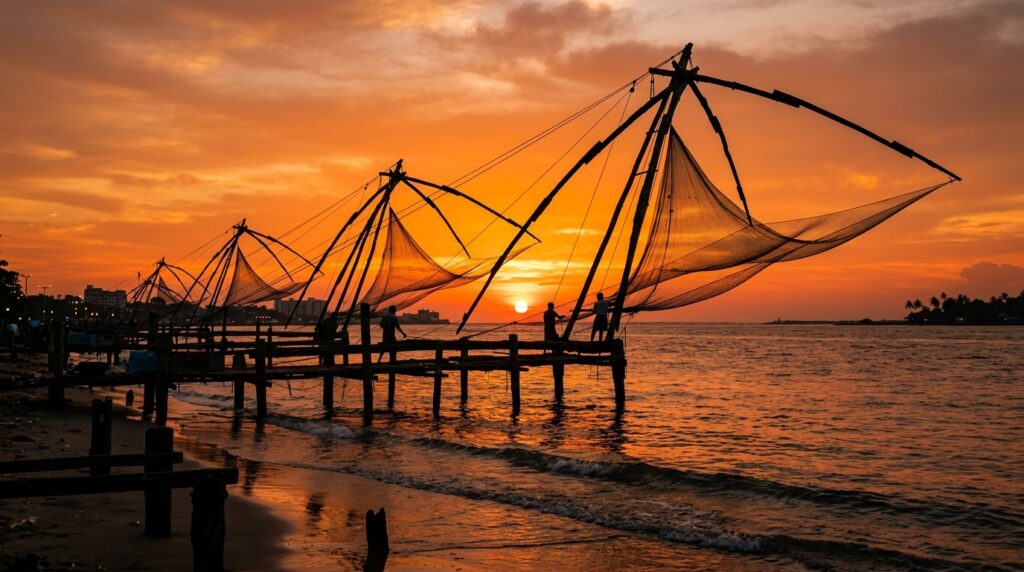
Overview Fort Kochi is a living open-air museum where five centuries of global colonial history meet traditional Malabar maritime heritage. Located along the serene harbor waters of the Arabian Sea in coastal Kerala, this historic enclave is internationally renowned for its extraordinary blend of Portuguese, Dutch, British, and indigenous Kerala architectural styles. The fascinating history of Kochi Fort traces back to 1341, when a massive flood in the Periyar River carved out a natural harbor, transforming an obscure fishing hamlet into Asia’s premier spice hub. Over the next 500 years, Fort Kochi became the very first European colonial settlement in India. In 1503, the Portuguese established Fort Manuel here with the permission of the Rajah of Kochi, constructing grand churches, stone forts, and cobblestone lanes. They were followed in 1663 by the Dutch East India Company (VOC), who re-engineered the town with distinctive gables, heavy bastions, and whitewashed brick masonry, and finally by the British Crown in 1795, who introduced Neoclassical civic architecture, sprawling bungalows, and leafy parade grounds. From the timber-framed nave of St. Francis Church (India’s oldest European church) and the soaring Gothic spires of Santa Cruz Cathedral Basilica to the stone ramparts of Bastion Bungalow and the iconic cantilevered Chinese Fishing Nets (*Cheena Vala*), Fort Kochi offers travelers an unmatched journey through time. For travelers departing from Indore and Central India, exploring Fort Kochi’s architectural landmarks is a rich cultural experience. This comprehensive guide provides deep historical insights, architectural analysis, practical visitor guidelines, and tailored transit logistics for an unforgettable holiday planned by Travel Path Holiday. Local Logistical Advice for Indore Travelers 1. Transit Coordinates from Indore to Kochi Flight Routes & Layovers: The fastest and most convenient connection from Indore to Kerala is via direct connecting flights from Devi Ahilya Bai Holkar Airport (IDR) to Cochin International Airport (COK). Leading carriers such as IndiGo, Air India, and Vistara operate daily flights with short, smooth layovers in Mumbai (BOM, 1h 30m to 2h layover), Delhi (DEL, 2h 10m layover), or Bengaluru (BLR, 1h 40m layover). Total flying and layover duration ranges between 4.5 and 6.5 hours. Upon arrival at Cochin International Airport (Nedumbassery), Fort Kochi is located approximately 42 kilometers to the southwest. Travel Path Holiday arranges private, pre-booked AC sedan or SUV cabs for a comfortable 75 to 90-minute highway drive straight to your heritage hotel in Fort Kochi. Train Routes: For travelers who enjoy long-distance scenic rail journeys through Central and Southern India, direct trains link Indore Junction (INDB) to Ernakulam. The Ahilyanagari Express (22645) departs Indore every Tuesday at 16:45 PM and arrives at Ernakulam Junction (ERS) on Thursday morning at 06:00 AM after a 37-hour journey across Madhya Pradesh, Maharashtra, Andhra Pradesh, Tamil Nadu, and Kerala. Alternatively, the Indore – Kochuveli Weekly SF Express (20932) runs every Tuesday morning. From Ernakulam Junction station, Fort Kochi is just 12 kilometers away (25 minutes by taxi or auto-rickshaw). Travelers can also take the scenic public Ro-Ro water ferry from Ernakulam Marine Drive jetty to Fort Kochi jetty for a nominal fare of ₹6 to ₹10 per passenger. 2. Climate & Humidity Transition (Malwa Plateau to Coastal Kerala) Moving from the dry, elevated continental climate of the Malwa plateau in Indore to the humid coastal climate of Kochi involves an environmental shift. Relative humidity in Fort Kochi averages 75% to 90% year-round, with daily temperatures ranging between 26°C and 34°C. Clothing & Hydration Tips: Pack breathable, lightweight cotton or linen clothing, wide-brimmed sun hats, UV protection sunglasses, and comfortable flat walking shoes or cushioned sandals suitable for cobblestone lanes and heritage stone pathways. Stay well-hydrated throughout your walking tours by enjoying fresh tender coconut water (*Elaneer*), widely available along Fort Kochi Beach and Parade Ground for ₹40 to ₹60. Plan architectural walking tours during the cooler morning hours (8:30 AM to 11:30 AM) or late afternoon (3:30 PM to 6:00 PM). 3. Mobile Data & Connectivity Unlike certain sensitive border regions or union territories like Jammu & Kashmir where out-of-state prepaid mobile SIM cards are blocked, standard prepaid SIM cards issued in Madhya Pradesh (Airtel, Jio, Vi) work flawlessly across Kerala. High-speed 4G and 5G mobile data, GPS navigation, and digital UPI payments remain completely operational throughout Fort Kochi, Mattancherry, and Ernakulam. Complete Details & Practical Guidelines The Historical Evolution of Fort Kochi: Four Distinct Layers The unique architectural skyline of Fort Kochi is the result of four overlapping historical eras: “` +———————————————————————————–+ HISTORICAL TIMELINE OF KOCHI FORT +———————————————————————————–+ 1341 AD Great Periyar Flood creates Kochi natural harbor & spice port 1500–1663 AD Portuguese Era: Fort Manuel built, Catholic churches established 1663–1795 AD Dutch VOC Era: Bastion Bungalow, Dutch gables, urban redesign 1795–1947 AD British Era: Neoclassical bungalows, open parade grounds, trade 1947–Present Heritage Protection Enclave, UNESCO Candidate & Cultural Hub +———————————————————————————–+ “` #### 1. The Pre-Colonial Malabar Era (Before 1500) Prior to European arrival, Kochi was governed by the Rajahs of the Kingdom of Cochin (Perumpadappu Swaroopam). Following the catastrophic flood of 1341 that silted the ancient port of Muziris (Kodungallur), Kochi emerged as the premier natural deep-water harbor on the Malabar Coast. Arab, Chinese, and Jewish merchant fleets established trade ties here, trading Malabar black pepper (“black gold”), cardamom, and cinnamon. Local building methods relied on *Thachu Shastra* (traditional Kerala science of carpentry and architecture)—featuring laterite stone masonry, heavy teakwood timber frameworks, steep sloping hip roofs clad in terracotta clay tiles, and open inner courtyards designed to channel coastal breezes and shed heavy monsoon rains. #### 2. The Portuguese Era (1500 – 1663) Following Vasco da Gama’s landing at Calicut in 1498, Portuguese commander Afonso de Albuquerque arrived in Kochi in 1503. In exchange for helping the King of Kochi against the Zamorin of Calicut, the Portuguese were granted land to build Fort Manuel—the very first European fortress constructed on Asian soil. Architectural Legacy: The Portuguese introduced European ecclesiastical Gothic and Manueline architectural elements to India. They constructed sturdy thick-walled churches, residential quarters with arched arcades, high timber-trussed ceilings, and central plazas. They

Tour Packages & Guides

Packing Guide for Kochi Fort: Summer vs Winter Wear

Overview Planning a getaway from Central India to the historic coastal precinct of Fort Kochi requires a smart strategy when zipping up your luggage. Unlike the dry, continental climate of Malwa—where Indoris experience crisp winters and scorching dry summers—Fort Kochi presents a tropical maritime climate characterized by high humidity, coastal breezes, sudden rain showers, and intense midday sunshine. Whether you are wandering through cobblestone alleys, admiring Dutch and Portuguese heritage villas, dining at bohemian cafes along Princess Street, or watching fishermen operate the iconic Chinese Fishing Nets, what you wear directly dictates your comfort. A well-planned packing list for Kochi Fort ensures you remain cool, stylish, and culturally respectful throughout your stay. Summer in Kochi demands ultra-light, moisture-wicking organic cottons and loose linen silhouettes, while the winter months (October through February) offer pleasant mornings and breezy evenings ideal for smart-casual wear, requiring lightweight layering. Additionally, monsoon travelers must account for sudden tropical downpours with quick-dry apparel and specialized gear. This definitive packing guide breaks down seasonal wardrobe choices, anti-slip footwear for heritage walking tours, high-SPF skincare essentials, tropical mosquito protection, and practical luggage tips tailored specifically for travelers departing from Indore. Local Logistical Advice for Indore Travelers Transit Routes & Flight Connections from Indore Travelers departing from Indore have convenient air and rail connections to reach Cochin International Airport (COK) or Ernakulam Junction (ERS): Air Routes: Devi Ahilya Bai Holkar Airport (IDR) offers daily connecting flights to Cochin International Airport (COK) via major aviation hubs including Mumbai (BOM), Delhi (DEL), and Bengaluru (BLR). Connecting flights operated by IndiGo and Air India typically feature short layover times ranging between 1.5 to 3 hours, bringing your total travel duration to around 4.5 to 6 hours. Rail Options: For those who prefer scenic long-distance train journeys, the direct Ahilyanagari Express (Train No. 22645) connects Indore Junction (INDB) directly to Ernakulam Junction (ERS). Departing Indore on weekly schedules, this train crosses Central and Southern India, taking approximately 36 to 38 hours. Connecting trains via Mumbai Central or Hazrat Nizamuddin are also popular choices. Climate & Humidity Transition Strategy The Malwa-to-Coastal Shift: Indoris leaving behind Indore’s dry atmosphere (where summer humidity drops below 25% and winter temperatures can dip to 8°C) will immediately feel Kochi’s tropical humidity, which remains high year-round between 75% and 90%. Transit Clothing Tip: Wear lightweight, breathable cotton trousers and a layered t-shirt during your flight or train journey. Keep a light jacket or stole in your cabin baggage for cold air-conditioned airport terminals or train coaches, but ensure your main apparel underneath is breezy so you can comfortably step into Kochi’s warm tropical air upon arrival. Mobile Connectivity Note for MP Travelers Travelers from Madhya Pradesh often ask about mobile network roaming restrictions. Rest assured that standard prepaid SIM cards issued in MP (Airtel, Jio, Vi) work seamlessly across Kerala with full 4G/5G data roaming enabled. Unlike regions with security restrictions like Jammu & Kashmir, your domestic prepaid connection will operate smoothly without needing any temporary local SIM cards. Complete Details & Practical Guidelines Seasonal Breakdown: Summer vs. Winter (and Monsoon) Wear #### 1. Summer Wear (March to May) Summer in Fort Kochi is warm and intensely humid, with daytime temperatures hovering between 29°C and 34°C, accompanied by high heat index levels. Apparel Strategy: Pack exclusively natural, breathable fabrics such as 100% pure cotton, khadi, and linen. Loose-fitting cut-sew t-shirts, oversized linen shirts, airy palazzo pants, and cotton shorts are essential. Color Palette: Opt for whites, creams, pastels, and soft earth tones that reflect sunlight rather than absorb heat. Avoid: Synthetic materials like polyester, nylon, tight skinny jeans, and heavy denims, which trap sweat and cause heat rashes in high humidity. #### 2. Winter Wear (October to February) Winter is the peak tourist season in Kochi, featuring pleasant, sunny days (24°C to 30°C) and cooler sea breezes in the late evenings. Apparel Strategy: Pack light cotton smart-casuals for daytime sightseeing. For evenings at waterfront restaurants or cultural Kathakali performances, carry breathable cotton maxi dresses, linen trousers, short-sleeved casual button-downs, and light cotton shrugs. Evening Layering: A lightweight cotton scarf, pashmina stole, or light denim shirt is sufficient for breezy coastal nights along Fort Kochi Beach or air-conditioned dining spaces. Heavy woolen coats, thermals, or leather jackets are completely unnecessary. #### 3. Monsoon Wear (June to September) The South-West Monsoon brings heavy, romantic downpours and dramatic coastal skies, with temperatures averaging 24°C to 28°C. Apparel Strategy: Focus on quick-drying synthetic blends, lightweight polyester shorts, knee-length skirts, or cropped linen trousers that do not drag in rain puddles. Darker colors are recommended to prevent mud splatter visibility. Rain Gear: Carry a compact, wind-resistant umbrella and a high-quality lightweight poncho or breathable raincoat. Avoid heavy waterproof jackets that lock in body heat and cause excessive perspiration inside. Footwear Recommendations for Heritage Walks Fort Kochi is best explored on foot. However, its historic streets feature a mix of cracked stone pavements, unpaved alleyways, cobblestone plazas around Jew Town, and sandy stretches near the beach. Footwear Type Recommended Usage Key Features & Tips Cushioned Walking Sneakers Daytime heritage walking tours, visiting Mattancherry Palace & Jew Town Choose breathable mesh uppers with arch support. Wear thin cotton socks to prevent blisters. Anti-Slip Strapped Sandals Monsoon walks, casual beach strolls, evening cafe visits Water-resistant rubber or EVA soles (brands like Teva or Decathlon) with adjustable straps. Canvas Slip-Ons / Loafers Evening dining, art gallery visits, Kathakali shows Easy to slip off when entering traditional heritage spaces, art centers, or places of worship. Footwear to Leave at Home High heels, formal leather shoes, slick-soled flip-flops High heels get trapped in cobblestone gaps; smooth soles slip on wet heritage tiles and algae-covered sea steps. Sun Protection, Skincare & Tropical Health Essentials The tropical sun in coastal Kerala is strong even on overcast days. Your toiletry kit should prioritize sun defense and hydration: High-SPF Sunscreen: Pack a broad-spectrum SPF 50+ PA++++ sunscreen. Opt for sweat-resistant, non-greasy water-gel formulations that absorb quickly without feeling sticky in high humidity. Reapply every

Tour Packages & Guides

Local Food in Kochi Fort: What and Where to Eat

Overview Fort Kochi is a coastal historic enclave where centuries of international spice trade have shaped an extraordinary culinary culture. Walking through its tree-lined colonial streets, travelers are treated to a blend of native Malabar flavors, Arab spice traditions, Dutch maritime influences, and Portuguese culinary inheritances. From iconic regional dishes like Karimeen Pollichathu (pearl spot fish wrapped in banana leaf) and rich Malabar seafood curries to flaky Kerala Parotta with Veg Kurma and bohemian artistic cafes like Kashi Art Cafe, the neighborhood offers an unforgettable feast for every palate. For travelers arriving from Indore and Central India, exploring local food in Kochi Fort is both an adventurous culinary journey and a delightful cultural experience. Whether you are looking for authentic coastal non-vegetarian delicacies or seeking hand-vetted vegetarian options/dining prepared with strict kitchen hygiene, Fort Kochi delivers an unbelievable array of flavors. This comprehensive guide outlines what to eat, where to eat, price expectations, and essential food logistics tailored specifically for travelers departing from Indore. Local Logistical Advice for Indore Travelers 1. Transit Coordinates from Indore to Kochi Flight Routes & Layovers: The most comfortable way to reach Kochi from Indore is via direct connecting flights departing from Devi Ahilya Bai Holkar Airport (IDR) to Cochin International Airport (COK). Airlines such as IndiGo, Air India, and Vistara offer seamless daily connections with short layovers in Mumbai (BOM, 1h 45m layover), Delhi (DEL, 2h 10m layover), or Bengaluru (BLR, 1h 30m layover). Total flight travel time ranges between 4.5 to 6 hours. Upon landing at COK, Fort Kochi is located approximately 42 kilometers away, reachable in 75 to 90 minutes via private AC taxi pre-arranged by Travel Path Holiday. Train Routes: For travelers preferring scenic rail journeys, direct train options connect Central India to Ernakulam. The Ahilyanagari Express (22645) departs Indore Junction (INDB) every Monday, taking approximately 34 to 36 hours to reach Ernakulam Junction (ERS). Alternatively, the Indore – Kochuveli Weekly SF Express (20932) provides direct connectivity. From Ernakulam Junction, Fort Kochi is a short 12-kilometer drive (25 minutes by taxi or auto-rickshaw). 2. Climate & Humidity Transition (Malwa Plateau to Coastal Kerala) Indore travelers transition from the dry, elevated continental climate of the Malwa region to Fort Kochi’s warm tropical maritime environment, where relative humidity routinely stays between 75% and 90%. Digestive & Food Adaptation Tips: To stay energized while sampling spicy Malabar gravies and coconut-infused dishes, drink plenty of fresh tender coconut water (*Elaneer*), widely sold by street vendors along Fort Kochi Beach for ₹40 to ₹60 per coconut. Balance heavy evening seafood dinners with light, steamed breakfast staples such as *Puttu* (steamed rice cylinders with grated coconut) or *Appam* (fermented rice pancakes). 3. Mobile Data & Connectivity Unlike union territories like Jammu & Kashmir where prepaid mobile SIMs from other states are blocked, standard prepaid SIM cards issued in Madhya Pradesh (Jio, Airtel, Vi) work flawlessly throughout Kerala. High-speed 4G and 5G data roaming remains fully operational across Fort Kochi, Mattancherry, and Ernakulam, making digital payments (UPI) and map navigation effortless. Complete Details & Practical Guidelines Iconic Local Dishes in Fort Kochi: What You Must Eat #### 1. Karimeen Pollichathu (Coastal Specialty) What It Is: Pearl Spot fish (*Karimeen*), native to Kerala backwaters, marinated in a paste of shallots, red chillies, ginger, garlic, curry leaves, and lemon juice. The fish is seared, wrapped tightly in a wilted banana leaf, and slow-cooked on a flat skillet so the aromatic spices infuse deep into the meat. Flavor Profile: Smoky, tangy, and moderately spicy with rich herbal notes from the banana leaf. Average Price: ₹380 to ₹580 per dish (depending on fish size). Best Paired With: Steamed Kerala red Matta rice or hot appams. #### 2. Kerala Parotta with Veg Kurma What It Is: Flaky, multi-layered, ringed flatbread made from refined flour dough kneaded with oil and beaten till paper-thin before rolling and pan-tossing. It is paired with Veg Kurma—a velvety, mildly seasoned coconut curry stewed with diced potatoes, carrots, green beans, and green peas. Flavor Profile: Rich, buttery texture of the parotta perfectly complements the creamy, aromatic, clove-and-cardamom infused veg kurma. Average Price: ₹120 to ₹220 per thali/plate. Ideal For: Pure vegetarian travelers looking for a comforting, satisfying lunch or dinner. #### 3. Traditional Malabar Fish & Veg Curry What It Is: A signature Malabar curry prepared with a base of freshly pressed coconut milk, ground turmeric, coriander, mustard seeds, and *Kudampuli* (Malabar tamarind/brindleberry), which imparts a distinct sour-smoky edge. Available in both fresh sea fish varieties (Kingfish, Seer fish) and vegetarian variations using raw plantain or Yam (*Parippu & Olan* style). Average Price: ₹260 to ₹460 per portion. #### 4. Kochi Coastal Seafood Platter (For Non-Vegetarian Foodies) What It Is: Fresh daily catch including Jumbo Tiger Prawns, Calamari (Squid), and Red Snapper. Ordered either in *Meen Moilee* style (a gentle, creamy white coconut milk gravy with turmeric and ginger) or spicy Malabar pepper fry. Average Price: ₹450 to ₹850 per dish. Hand-Vetted Vegetarian Options & Dining in Fort Kochi For travelers from Indore who maintain strict dietary preferences—including pure vegetarian meals cooked without garlic or onion, or prepared in dedicated vegetarian kitchens—Fort Kochi offers reliable, high-quality choices: Saravana Bhavan & Gokul Oottupura (KB Jacob Road & Fort Kochi Entrance): Established pure vegetarian restaurants offering traditional South Indian thalis, Ghee Roast Dosas, Crispy Medu Vadas, and North Indian vegetarian curries served with phulkas. All items are prepared in strictly vegetarian kitchens with separate utensil standards. Average cost for two: ₹250 to ₹450. Gujarati Street Heritage Dining (Mattancherry – 2 km from Fort Kochi): Mattancherry has been home to a vibrant Gujarati merchant community for over 150 years. Along Gujarati Street, small heritage eateries serve freshly cooked pure vegetarian thalis, dhokla, khakhra, and sweet shrikhand. These spots are exceptional for families seeking wholesome, familiar North Indian and Central Indian vegetarian flavors. Hotel Dining Setup via TPH: When you book through Travel Path Holiday, our team pre-maps restaurants along your daily sightseeing trail to ensure you receive hand-vetted vegetarian options/dining throughout

Tour Packages & Guides

Historical Significance and Architecture of Kochi Fort

Overview Fort Kochi is a living open-air museum where five centuries of global colonial history meet traditional Malabar maritime heritage. Located along the serene harbor waters of the Arabian Sea in coastal Kerala, this historic enclave is internationally renowned for its extraordinary blend of Portuguese, Dutch, British, and indigenous Kerala architectural styles. The fascinating history of Kochi Fort traces back to 1341, when a massive flood in the Periyar River carved out a natural harbor, transforming an obscure fishing hamlet into Asia’s premier spice hub. Over the next 500 years, Fort Kochi became the very first European colonial settlement in India. In 1503, the Portuguese established Fort Manuel here with the permission of the Rajah of Kochi, constructing grand churches, stone forts, and cobblestone lanes. They were followed in 1663 by the Dutch East India Company (VOC), who re-engineered the town with distinctive gables, heavy bastions, and whitewashed brick masonry, and finally by the British Crown in 1795, who introduced Neoclassical civic architecture, sprawling bungalows, and leafy parade grounds. From the timber-framed nave of St. Francis Church (India’s oldest European church) and the soaring Gothic spires of Santa Cruz Cathedral Basilica to the stone ramparts of Bastion Bungalow and the iconic cantilevered Chinese Fishing Nets (*Cheena Vala*), Fort Kochi offers travelers an unmatched journey through time. For travelers departing from Indore and Central India, exploring Fort Kochi’s architectural landmarks is a rich cultural experience. This comprehensive guide provides deep historical insights, architectural analysis, practical visitor guidelines, and tailored transit logistics for an unforgettable holiday planned by Travel Path Holiday. Local Logistical Advice for Indore Travelers 1. Transit Coordinates from Indore to Kochi Flight Routes & Layovers: The fastest and most convenient connection from Indore to Kerala is via direct connecting flights from Devi Ahilya Bai Holkar Airport (IDR) to Cochin International Airport (COK). Leading carriers such as IndiGo, Air India, and Vistara operate daily flights with short, smooth layovers in Mumbai (BOM, 1h 30m to 2h layover), Delhi (DEL, 2h 10m layover), or Bengaluru (BLR, 1h 40m layover). Total flying and layover duration ranges between 4.5 and 6.5 hours. Upon arrival at Cochin International Airport (Nedumbassery), Fort Kochi is located approximately 42 kilometers to the southwest. Travel Path Holiday arranges private, pre-booked AC sedan or SUV cabs for a comfortable 75 to 90-minute highway drive straight to your heritage hotel in Fort Kochi. Train Routes: For travelers who enjoy long-distance scenic rail journeys through Central and Southern India, direct trains link Indore Junction (INDB) to Ernakulam. The Ahilyanagari Express (22645) departs Indore every Tuesday at 16:45 PM and arrives at Ernakulam Junction (ERS) on Thursday morning at 06:00 AM after a 37-hour journey across Madhya Pradesh, Maharashtra, Andhra Pradesh, Tamil Nadu, and Kerala. Alternatively, the Indore – Kochuveli Weekly SF Express (20932) runs every Tuesday morning. From Ernakulam Junction station, Fort Kochi is just 12 kilometers away (25 minutes by taxi or auto-rickshaw). Travelers can also take the scenic public Ro-Ro water ferry from Ernakulam Marine Drive jetty to Fort Kochi jetty for a nominal fare of ₹6 to ₹10 per passenger. 2. Climate & Humidity Transition (Malwa Plateau to Coastal Kerala) Moving from the dry, elevated continental climate of the Malwa plateau in Indore to the humid coastal climate of Kochi involves an environmental shift. Relative humidity in Fort Kochi averages 75% to 90% year-round, with daily temperatures ranging between 26°C and 34°C. Clothing & Hydration Tips: Pack breathable, lightweight cotton or linen clothing, wide-brimmed sun hats, UV protection sunglasses, and comfortable flat walking shoes or cushioned sandals suitable for cobblestone lanes and heritage stone pathways. Stay well-hydrated throughout your walking tours by enjoying fresh tender coconut water (*Elaneer*), widely available along Fort Kochi Beach and Parade Ground for ₹40 to ₹60. Plan architectural walking tours during the cooler morning hours (8:30 AM to 11:30 AM) or late afternoon (3:30 PM to 6:00 PM). 3. Mobile Data & Connectivity Unlike certain sensitive border regions or union territories like Jammu & Kashmir where out-of-state prepaid mobile SIM cards are blocked, standard prepaid SIM cards issued in Madhya Pradesh (Airtel, Jio, Vi) work flawlessly across Kerala. High-speed 4G and 5G mobile data, GPS navigation, and digital UPI payments remain completely operational throughout Fort Kochi, Mattancherry, and Ernakulam. Complete Details & Practical Guidelines The Historical Evolution of Fort Kochi: Four Distinct Layers The unique architectural skyline of Fort Kochi is the result of four overlapping historical eras: “` +———————————————————————————–+ HISTORICAL TIMELINE OF KOCHI FORT +———————————————————————————–+ 1341 AD Great Periyar Flood creates Kochi natural harbor & spice port 1500–1663 AD Portuguese Era: Fort Manuel built, Catholic churches established 1663–1795 AD Dutch VOC Era: Bastion Bungalow, Dutch gables, urban redesign 1795–1947 AD British Era: Neoclassical bungalows, open parade grounds, trade 1947–Present Heritage Protection Enclave, UNESCO Candidate & Cultural Hub +———————————————————————————–+ “` #### 1. The Pre-Colonial Malabar Era (Before 1500) Prior to European arrival, Kochi was governed by the Rajahs of the Kingdom of Cochin (Perumpadappu Swaroopam). Following the catastrophic flood of 1341 that silted the ancient port of Muziris (Kodungallur), Kochi emerged as the premier natural deep-water harbor on the Malabar Coast. Arab, Chinese, and Jewish merchant fleets established trade ties here, trading Malabar black pepper (“black gold”), cardamom, and cinnamon. Local building methods relied on *Thachu Shastra* (traditional Kerala science of carpentry and architecture)—featuring laterite stone masonry, heavy teakwood timber frameworks, steep sloping hip roofs clad in terracotta clay tiles, and open inner courtyards designed to channel coastal breezes and shed heavy monsoon rains. #### 2. The Portuguese Era (1500 – 1663) Following Vasco da Gama’s landing at Calicut in 1498, Portuguese commander Afonso de Albuquerque arrived in Kochi in 1503. In exchange for helping the King of Kochi against the Zamorin of Calicut, the Portuguese were granted land to build Fort Manuel—the very first European fortress constructed on Asian soil. Architectural Legacy: The Portuguese introduced European ecclesiastical Gothic and Manueline architectural elements to India. They constructed sturdy thick-walled churches, residential quarters with arched arcades, high timber-trussed ceilings, and central plazas. They

Tour Packages & Guides

Packing Guide for Kochi Fort: Summer vs Winter Wear

Overview Planning a getaway from Central India to the historic coastal precinct of Fort Kochi requires a smart strategy when zipping up your luggage. Unlike the dry, continental climate of Malwa—where Indoris experience crisp winters and scorching dry summers—Fort Kochi presents a tropical maritime climate characterized by high humidity, coastal breezes, sudden rain showers, and intense midday sunshine. Whether you are wandering through cobblestone alleys, admiring Dutch and Portuguese heritage villas, dining at bohemian cafes along Princess Street, or watching fishermen operate the iconic Chinese Fishing Nets, what you wear directly dictates your comfort. A well-planned packing list for Kochi Fort ensures you remain cool, stylish, and culturally respectful throughout your stay. Summer in Kochi demands ultra-light, moisture-wicking organic cottons and loose linen silhouettes, while the winter months (October through February) offer pleasant mornings and breezy evenings ideal for smart-casual wear, requiring lightweight layering. Additionally, monsoon travelers must account for sudden tropical downpours with quick-dry apparel and specialized gear. This definitive packing guide breaks down seasonal wardrobe choices, anti-slip footwear for heritage walking tours, high-SPF skincare essentials, tropical mosquito protection, and practical luggage tips tailored specifically for travelers departing from Indore. Local Logistical Advice for Indore Travelers Transit Routes & Flight Connections from Indore Travelers departing from Indore have convenient air and rail connections to reach Cochin International Airport (COK) or Ernakulam Junction (ERS): Air Routes: Devi Ahilya Bai Holkar Airport (IDR) offers daily connecting flights to Cochin International Airport (COK) via major aviation hubs including Mumbai (BOM), Delhi (DEL), and Bengaluru (BLR). Connecting flights operated by IndiGo and Air India typically feature short layover times ranging between 1.5 to 3 hours, bringing your total travel duration to around 4.5 to 6 hours. Rail Options: For those who prefer scenic long-distance train journeys, the direct Ahilyanagari Express (Train No. 22645) connects Indore Junction (INDB) directly to Ernakulam Junction (ERS). Departing Indore on weekly schedules, this train crosses Central and Southern India, taking approximately 36 to 38 hours. Connecting trains via Mumbai Central or Hazrat Nizamuddin are also popular choices. Climate & Humidity Transition Strategy The Malwa-to-Coastal Shift: Indoris leaving behind Indore’s dry atmosphere (where summer humidity drops below 25% and winter temperatures can dip to 8°C) will immediately feel Kochi’s tropical humidity, which remains high year-round between 75% and 90%. Transit Clothing Tip: Wear lightweight, breathable cotton trousers and a layered t-shirt during your flight or train journey. Keep a light jacket or stole in your cabin baggage for cold air-conditioned airport terminals or train coaches, but ensure your main apparel underneath is breezy so you can comfortably step into Kochi’s warm tropical air upon arrival. Mobile Connectivity Note for MP Travelers Travelers from Madhya Pradesh often ask about mobile network roaming restrictions. Rest assured that standard prepaid SIM cards issued in MP (Airtel, Jio, Vi) work seamlessly across Kerala with full 4G/5G data roaming enabled. Unlike regions with security restrictions like Jammu & Kashmir, your domestic prepaid connection will operate smoothly without needing any temporary local SIM cards. Complete Details & Practical Guidelines Seasonal Breakdown: Summer vs. Winter (and Monsoon) Wear #### 1. Summer Wear (March to May) Summer in Fort Kochi is warm and intensely humid, with daytime temperatures hovering between 29°C and 34°C, accompanied by high heat index levels. Apparel Strategy: Pack exclusively natural, breathable fabrics such as 100% pure cotton, khadi, and linen. Loose-fitting cut-sew t-shirts, oversized linen shirts, airy palazzo pants, and cotton shorts are essential. Color Palette: Opt for whites, creams, pastels, and soft earth tones that reflect sunlight rather than absorb heat. Avoid: Synthetic materials like polyester, nylon, tight skinny jeans, and heavy denims, which trap sweat and cause heat rashes in high humidity. #### 2. Winter Wear (October to February) Winter is the peak tourist season in Kochi, featuring pleasant, sunny days (24°C to 30°C) and cooler sea breezes in the late evenings. Apparel Strategy: Pack light cotton smart-casuals for daytime sightseeing. For evenings at waterfront restaurants or cultural Kathakali performances, carry breathable cotton maxi dresses, linen trousers, short-sleeved casual button-downs, and light cotton shrugs. Evening Layering: A lightweight cotton scarf, pashmina stole, or light denim shirt is sufficient for breezy coastal nights along Fort Kochi Beach or air-conditioned dining spaces. Heavy woolen coats, thermals, or leather jackets are completely unnecessary. #### 3. Monsoon Wear (June to September) The South-West Monsoon brings heavy, romantic downpours and dramatic coastal skies, with temperatures averaging 24°C to 28°C. Apparel Strategy: Focus on quick-drying synthetic blends, lightweight polyester shorts, knee-length skirts, or cropped linen trousers that do not drag in rain puddles. Darker colors are recommended to prevent mud splatter visibility. Rain Gear: Carry a compact, wind-resistant umbrella and a high-quality lightweight poncho or breathable raincoat. Avoid heavy waterproof jackets that lock in body heat and cause excessive perspiration inside. Footwear Recommendations for Heritage Walks Fort Kochi is best explored on foot. However, its historic streets feature a mix of cracked stone pavements, unpaved alleyways, cobblestone plazas around Jew Town, and sandy stretches near the beach. Footwear Type Recommended Usage Key Features & Tips Cushioned Walking Sneakers Daytime heritage walking tours, visiting Mattancherry Palace & Jew Town Choose breathable mesh uppers with arch support. Wear thin cotton socks to prevent blisters. Anti-Slip Strapped Sandals Monsoon walks, casual beach strolls, evening cafe visits Water-resistant rubber or EVA soles (brands like Teva or Decathlon) with adjustable straps. Canvas Slip-Ons / Loafers Evening dining, art gallery visits, Kathakali shows Easy to slip off when entering traditional heritage spaces, art centers, or places of worship. Footwear to Leave at Home High heels, formal leather shoes, slick-soled flip-flops High heels get trapped in cobblestone gaps; smooth soles slip on wet heritage tiles and algae-covered sea steps. Sun Protection, Skincare & Tropical Health Essentials The tropical sun in coastal Kerala is strong even on overcast days. Your toiletry kit should prioritize sun defense and hydration: High-SPF Sunscreen: Pack a broad-spectrum SPF 50+ PA++++ sunscreen. Opt for sweat-resistant, non-greasy water-gel formulations that absorb quickly without feeling sticky in high humidity. Reapply every

Tour Packages & Guides

Local Food in Kochi Fort: What and Where to Eat

Overview Fort Kochi is a coastal historic enclave where centuries of international spice trade have shaped an extraordinary culinary culture. Walking through its tree-lined colonial streets, travelers are treated to a blend of native Malabar flavors, Arab spice traditions, Dutch maritime influences, and Portuguese culinary inheritances. From iconic regional dishes like Karimeen Pollichathu (pearl spot fish wrapped in banana leaf) and rich Malabar seafood curries to flaky Kerala Parotta with Veg Kurma and bohemian artistic cafes like Kashi Art Cafe, the neighborhood offers an unforgettable feast for every palate. For travelers arriving from Indore and Central India, exploring local food in Kochi Fort is both an adventurous culinary journey and a delightful cultural experience. Whether you are looking for authentic coastal non-vegetarian delicacies or seeking hand-vetted vegetarian options/dining prepared with strict kitchen hygiene, Fort Kochi delivers an unbelievable array of flavors. This comprehensive guide outlines what to eat, where to eat, price expectations, and essential food logistics tailored specifically for travelers departing from Indore. Local Logistical Advice for Indore Travelers 1. Transit Coordinates from Indore to Kochi Flight Routes & Layovers: The most comfortable way to reach Kochi from Indore is via direct connecting flights departing from Devi Ahilya Bai Holkar Airport (IDR) to Cochin International Airport (COK). Airlines such as IndiGo, Air India, and Vistara offer seamless daily connections with short layovers in Mumbai (BOM, 1h 45m layover), Delhi (DEL, 2h 10m layover), or Bengaluru (BLR, 1h 30m layover). Total flight travel time ranges between 4.5 to 6 hours. Upon landing at COK, Fort Kochi is located approximately 42 kilometers away, reachable in 75 to 90 minutes via private AC taxi pre-arranged by Travel Path Holiday. Train Routes: For travelers preferring scenic rail journeys, direct train options connect Central India to Ernakulam. The Ahilyanagari Express (22645) departs Indore Junction (INDB) every Monday, taking approximately 34 to 36 hours to reach Ernakulam Junction (ERS). Alternatively, the Indore – Kochuveli Weekly SF Express (20932) provides direct connectivity. From Ernakulam Junction, Fort Kochi is a short 12-kilometer drive (25 minutes by taxi or auto-rickshaw). 2. Climate & Humidity Transition (Malwa Plateau to Coastal Kerala) Indore travelers transition from the dry, elevated continental climate of the Malwa region to Fort Kochi’s warm tropical maritime environment, where relative humidity routinely stays between 75% and 90%. Digestive & Food Adaptation Tips: To stay energized while sampling spicy Malabar gravies and coconut-infused dishes, drink plenty of fresh tender coconut water (*Elaneer*), widely sold by street vendors along Fort Kochi Beach for ₹40 to ₹60 per coconut. Balance heavy evening seafood dinners with light, steamed breakfast staples such as *Puttu* (steamed rice cylinders with grated coconut) or *Appam* (fermented rice pancakes). 3. Mobile Data & Connectivity Unlike union territories like Jammu & Kashmir where prepaid mobile SIMs from other states are blocked, standard prepaid SIM cards issued in Madhya Pradesh (Jio, Airtel, Vi) work flawlessly throughout Kerala. High-speed 4G and 5G data roaming remains fully operational across Fort Kochi, Mattancherry, and Ernakulam, making digital payments (UPI) and map navigation effortless. Complete Details & Practical Guidelines Iconic Local Dishes in Fort Kochi: What You Must Eat #### 1. Karimeen Pollichathu (Coastal Specialty) What It Is: Pearl Spot fish (*Karimeen*), native to Kerala backwaters, marinated in a paste of shallots, red chillies, ginger, garlic, curry leaves, and lemon juice. The fish is seared, wrapped tightly in a wilted banana leaf, and slow-cooked on a flat skillet so the aromatic spices infuse deep into the meat. Flavor Profile: Smoky, tangy, and moderately spicy with rich herbal notes from the banana leaf. Average Price: ₹380 to ₹580 per dish (depending on fish size). Best Paired With: Steamed Kerala red Matta rice or hot appams. #### 2. Kerala Parotta with Veg Kurma What It Is: Flaky, multi-layered, ringed flatbread made from refined flour dough kneaded with oil and beaten till paper-thin before rolling and pan-tossing. It is paired with Veg Kurma—a velvety, mildly seasoned coconut curry stewed with diced potatoes, carrots, green beans, and green peas. Flavor Profile: Rich, buttery texture of the parotta perfectly complements the creamy, aromatic, clove-and-cardamom infused veg kurma. Average Price: ₹120 to ₹220 per thali/plate. Ideal For: Pure vegetarian travelers looking for a comforting, satisfying lunch or dinner. #### 3. Traditional Malabar Fish & Veg Curry What It Is: A signature Malabar curry prepared with a base of freshly pressed coconut milk, ground turmeric, coriander, mustard seeds, and *Kudampuli* (Malabar tamarind/brindleberry), which imparts a distinct sour-smoky edge. Available in both fresh sea fish varieties (Kingfish, Seer fish) and vegetarian variations using raw plantain or Yam (*Parippu & Olan* style). Average Price: ₹260 to ₹460 per portion. #### 4. Kochi Coastal Seafood Platter (For Non-Vegetarian Foodies) What It Is: Fresh daily catch including Jumbo Tiger Prawns, Calamari (Squid), and Red Snapper. Ordered either in *Meen Moilee* style (a gentle, creamy white coconut milk gravy with turmeric and ginger) or spicy Malabar pepper fry. Average Price: ₹450 to ₹850 per dish. Hand-Vetted Vegetarian Options & Dining in Fort Kochi For travelers from Indore who maintain strict dietary preferences—including pure vegetarian meals cooked without garlic or onion, or prepared in dedicated vegetarian kitchens—Fort Kochi offers reliable, high-quality choices: Saravana Bhavan & Gokul Oottupura (KB Jacob Road & Fort Kochi Entrance): Established pure vegetarian restaurants offering traditional South Indian thalis, Ghee Roast Dosas, Crispy Medu Vadas, and North Indian vegetarian curries served with phulkas. All items are prepared in strictly vegetarian kitchens with separate utensil standards. Average cost for two: ₹250 to ₹450. Gujarati Street Heritage Dining (Mattancherry – 2 km from Fort Kochi): Mattancherry has been home to a vibrant Gujarati merchant community for over 150 years. Along Gujarati Street, small heritage eateries serve freshly cooked pure vegetarian thalis, dhokla, khakhra, and sweet shrikhand. These spots are exceptional for families seeking wholesome, familiar North Indian and Central Indian vegetarian flavors. Hotel Dining Setup via TPH: When you book through Travel Path Holiday, our team pre-maps restaurants along your daily sightseeing trail to ensure you receive hand-vetted vegetarian options/dining throughout

Tour Packages & Guides

Historical Significance and Architecture of Kochi Fort

Overview Fort Kochi is a living open-air museum where five centuries of global colonial history meet traditional Malabar maritime heritage. Located along the serene harbor waters of the Arabian Sea in coastal Kerala, this historic enclave is internationally renowned for its extraordinary blend of Portuguese, Dutch, British, and indigenous Kerala architectural styles. The fascinating history of Kochi Fort traces back to 1341, when a massive flood in the Periyar River carved out a natural harbor, transforming an obscure fishing hamlet into Asia’s premier spice hub. Over the next 500 years, Fort Kochi became the very first European colonial settlement in India. In 1503, the Portuguese established Fort Manuel here with the permission of the Rajah of Kochi, constructing grand churches, stone forts, and cobblestone lanes. They were followed in 1663 by the Dutch East India Company (VOC), who re-engineered the town with distinctive gables, heavy bastions, and whitewashed brick masonry, and finally by the British Crown in 1795, who introduced Neoclassical civic architecture, sprawling bungalows, and leafy parade grounds. From the timber-framed nave of St. Francis Church (India’s oldest European church) and the soaring Gothic spires of Santa Cruz Cathedral Basilica to the stone ramparts of Bastion Bungalow and the iconic cantilevered Chinese Fishing Nets (*Cheena Vala*), Fort Kochi offers travelers an unmatched journey through time. For travelers departing from Indore and Central India, exploring Fort Kochi’s architectural landmarks is a rich cultural experience. This comprehensive guide provides deep historical insights, architectural analysis, practical visitor guidelines, and tailored transit logistics for an unforgettable holiday planned by Travel Path Holiday. Local Logistical Advice for Indore Travelers 1. Transit Coordinates from Indore to Kochi Flight Routes & Layovers: The fastest and most convenient connection from Indore to Kerala is via direct connecting flights from Devi Ahilya Bai Holkar Airport (IDR) to Cochin International Airport (COK). Leading carriers such as IndiGo, Air India, and Vistara operate daily flights with short, smooth layovers in Mumbai (BOM, 1h 30m to 2h layover), Delhi (DEL, 2h 10m layover), or Bengaluru (BLR, 1h 40m layover). Total flying and layover duration ranges between 4.5 and 6.5 hours. Upon arrival at Cochin International Airport (Nedumbassery), Fort Kochi is located approximately 42 kilometers to the southwest. Travel Path Holiday arranges private, pre-booked AC sedan or SUV cabs for a comfortable 75 to 90-minute highway drive straight to your heritage hotel in Fort Kochi. Train Routes: For travelers who enjoy long-distance scenic rail journeys through Central and Southern India, direct trains link Indore Junction (INDB) to Ernakulam. The Ahilyanagari Express (22645) departs Indore every Tuesday at 16:45 PM and arrives at Ernakulam Junction (ERS) on Thursday morning at 06:00 AM after a 37-hour journey across Madhya Pradesh, Maharashtra, Andhra Pradesh, Tamil Nadu, and Kerala. Alternatively, the Indore – Kochuveli Weekly SF Express (20932) runs every Tuesday morning. From Ernakulam Junction station, Fort Kochi is just 12 kilometers away (25 minutes by taxi or auto-rickshaw). Travelers can also take the scenic public Ro-Ro water ferry from Ernakulam Marine Drive jetty to Fort Kochi jetty for a nominal fare of ₹6 to ₹10 per passenger. 2. Climate & Humidity Transition (Malwa Plateau to Coastal Kerala) Moving from the dry, elevated continental climate of the Malwa plateau in Indore to the humid coastal climate of Kochi involves an environmental shift. Relative humidity in Fort Kochi averages 75% to 90% year-round, with daily temperatures ranging between 26°C and 34°C. Clothing & Hydration Tips: Pack breathable, lightweight cotton or linen clothing, wide-brimmed sun hats, UV protection sunglasses, and comfortable flat walking shoes or cushioned sandals suitable for cobblestone lanes and heritage stone pathways. Stay well-hydrated throughout your walking tours by enjoying fresh tender coconut water (*Elaneer*), widely available along Fort Kochi Beach and Parade Ground for ₹40 to ₹60. Plan architectural walking tours during the cooler morning hours (8:30 AM to 11:30 AM) or late afternoon (3:30 PM to 6:00 PM). 3. Mobile Data & Connectivity Unlike certain sensitive border regions or union territories like Jammu & Kashmir where out-of-state prepaid mobile SIM cards are blocked, standard prepaid SIM cards issued in Madhya Pradesh (Airtel, Jio, Vi) work flawlessly across Kerala. High-speed 4G and 5G mobile data, GPS navigation, and digital UPI payments remain completely operational throughout Fort Kochi, Mattancherry, and Ernakulam. Complete Details & Practical Guidelines The Historical Evolution of Fort Kochi: Four Distinct Layers The unique architectural skyline of Fort Kochi is the result of four overlapping historical eras: “` +———————————————————————————–+ HISTORICAL TIMELINE OF KOCHI FORT +———————————————————————————–+ 1341 AD Great Periyar Flood creates Kochi natural harbor & spice port 1500–1663 AD Portuguese Era: Fort Manuel built, Catholic churches established 1663–1795 AD Dutch VOC Era: Bastion Bungalow, Dutch gables, urban redesign 1795–1947 AD British Era: Neoclassical bungalows, open parade grounds, trade 1947–Present Heritage Protection Enclave, UNESCO Candidate & Cultural Hub +———————————————————————————–+ “` #### 1. The Pre-Colonial Malabar Era (Before 1500) Prior to European arrival, Kochi was governed by the Rajahs of the Kingdom of Cochin (Perumpadappu Swaroopam). Following the catastrophic flood of 1341 that silted the ancient port of Muziris (Kodungallur), Kochi emerged as the premier natural deep-water harbor on the Malabar Coast. Arab, Chinese, and Jewish merchant fleets established trade ties here, trading Malabar black pepper (“black gold”), cardamom, and cinnamon. Local building methods relied on *Thachu Shastra* (traditional Kerala science of carpentry and architecture)—featuring laterite stone masonry, heavy teakwood timber frameworks, steep sloping hip roofs clad in terracotta clay tiles, and open inner courtyards designed to channel coastal breezes and shed heavy monsoon rains. #### 2. The Portuguese Era (1500 – 1663) Following Vasco da Gama’s landing at Calicut in 1498, Portuguese commander Afonso de Albuquerque arrived in Kochi in 1503. In exchange for helping the King of Kochi against the Zamorin of Calicut, the Portuguese were granted land to build Fort Manuel—the very first European fortress constructed on Asian soil. Architectural Legacy: The Portuguese introduced European ecclesiastical Gothic and Manueline architectural elements to India. They constructed sturdy thick-walled churches, residential quarters with arched arcades, high timber-trussed ceilings, and central plazas. They

Tour Packages & Guides

Packing Guide for Kochi Fort: Summer vs Winter Wear

Overview Planning a getaway from Central India to the historic coastal precinct of Fort Kochi requires a smart strategy when zipping up your luggage. Unlike the dry, continental climate of Malwa—where Indoris experience crisp winters and scorching dry summers—Fort Kochi presents a tropical maritime climate characterized by high humidity, coastal breezes, sudden rain showers, and intense midday sunshine. Whether you are wandering through cobblestone alleys, admiring Dutch and Portuguese heritage villas, dining at bohemian cafes along Princess Street, or watching fishermen operate the iconic Chinese Fishing Nets, what you wear directly dictates your comfort. A well-planned packing list for Kochi Fort ensures you remain cool, stylish, and culturally respectful throughout your stay. Summer in Kochi demands ultra-light, moisture-wicking organic cottons and loose linen silhouettes, while the winter months (October through February) offer pleasant mornings and breezy evenings ideal for smart-casual wear, requiring lightweight layering. Additionally, monsoon travelers must account for sudden tropical downpours with quick-dry apparel and specialized gear. This definitive packing guide breaks down seasonal wardrobe choices, anti-slip footwear for heritage walking tours, high-SPF skincare essentials, tropical mosquito protection, and practical luggage tips tailored specifically for travelers departing from Indore. Local Logistical Advice for Indore Travelers Transit Routes & Flight Connections from Indore Travelers departing from Indore have convenient air and rail connections to reach Cochin International Airport (COK) or Ernakulam Junction (ERS): Air Routes: Devi Ahilya Bai Holkar Airport (IDR) offers daily connecting flights to Cochin International Airport (COK) via major aviation hubs including Mumbai (BOM), Delhi (DEL), and Bengaluru (BLR). Connecting flights operated by IndiGo and Air India typically feature short layover times ranging between 1.5 to 3 hours, bringing your total travel duration to around 4.5 to 6 hours. Rail Options: For those who prefer scenic long-distance train journeys, the direct Ahilyanagari Express (Train No. 22645) connects Indore Junction (INDB) directly to Ernakulam Junction (ERS). Departing Indore on weekly schedules, this train crosses Central and Southern India, taking approximately 36 to 38 hours. Connecting trains via Mumbai Central or Hazrat Nizamuddin are also popular choices. Climate & Humidity Transition Strategy The Malwa-to-Coastal Shift: Indoris leaving behind Indore’s dry atmosphere (where summer humidity drops below 25% and winter temperatures can dip to 8°C) will immediately feel Kochi’s tropical humidity, which remains high year-round between 75% and 90%. Transit Clothing Tip: Wear lightweight, breathable cotton trousers and a layered t-shirt during your flight or train journey. Keep a light jacket or stole in your cabin baggage for cold air-conditioned airport terminals or train coaches, but ensure your main apparel underneath is breezy so you can comfortably step into Kochi’s warm tropical air upon arrival. Mobile Connectivity Note for MP Travelers Travelers from Madhya Pradesh often ask about mobile network roaming restrictions. Rest assured that standard prepaid SIM cards issued in MP (Airtel, Jio, Vi) work seamlessly across Kerala with full 4G/5G data roaming enabled. Unlike regions with security restrictions like Jammu & Kashmir, your domestic prepaid connection will operate smoothly without needing any temporary local SIM cards. Complete Details & Practical Guidelines Seasonal Breakdown: Summer vs. Winter (and Monsoon) Wear #### 1. Summer Wear (March to May) Summer in Fort Kochi is warm and intensely humid, with daytime temperatures hovering between 29°C and 34°C, accompanied by high heat index levels. Apparel Strategy: Pack exclusively natural, breathable fabrics such as 100% pure cotton, khadi, and linen. Loose-fitting cut-sew t-shirts, oversized linen shirts, airy palazzo pants, and cotton shorts are essential. Color Palette: Opt for whites, creams, pastels, and soft earth tones that reflect sunlight rather than absorb heat. Avoid: Synthetic materials like polyester, nylon, tight skinny jeans, and heavy denims, which trap sweat and cause heat rashes in high humidity. #### 2. Winter Wear (October to February) Winter is the peak tourist season in Kochi, featuring pleasant, sunny days (24°C to 30°C) and cooler sea breezes in the late evenings. Apparel Strategy: Pack light cotton smart-casuals for daytime sightseeing. For evenings at waterfront restaurants or cultural Kathakali performances, carry breathable cotton maxi dresses, linen trousers, short-sleeved casual button-downs, and light cotton shrugs. Evening Layering: A lightweight cotton scarf, pashmina stole, or light denim shirt is sufficient for breezy coastal nights along Fort Kochi Beach or air-conditioned dining spaces. Heavy woolen coats, thermals, or leather jackets are completely unnecessary. #### 3. Monsoon Wear (June to September) The South-West Monsoon brings heavy, romantic downpours and dramatic coastal skies, with temperatures averaging 24°C to 28°C. Apparel Strategy: Focus on quick-drying synthetic blends, lightweight polyester shorts, knee-length skirts, or cropped linen trousers that do not drag in rain puddles. Darker colors are recommended to prevent mud splatter visibility. Rain Gear: Carry a compact, wind-resistant umbrella and a high-quality lightweight poncho or breathable raincoat. Avoid heavy waterproof jackets that lock in body heat and cause excessive perspiration inside. Footwear Recommendations for Heritage Walks Fort Kochi is best explored on foot. However, its historic streets feature a mix of cracked stone pavements, unpaved alleyways, cobblestone plazas around Jew Town, and sandy stretches near the beach. Footwear Type Recommended Usage Key Features & Tips Cushioned Walking Sneakers Daytime heritage walking tours, visiting Mattancherry Palace & Jew Town Choose breathable mesh uppers with arch support. Wear thin cotton socks to prevent blisters. Anti-Slip Strapped Sandals Monsoon walks, casual beach strolls, evening cafe visits Water-resistant rubber or EVA soles (brands like Teva or Decathlon) with adjustable straps. Canvas Slip-Ons / Loafers Evening dining, art gallery visits, Kathakali shows Easy to slip off when entering traditional heritage spaces, art centers, or places of worship. Footwear to Leave at Home High heels, formal leather shoes, slick-soled flip-flops High heels get trapped in cobblestone gaps; smooth soles slip on wet heritage tiles and algae-covered sea steps. Sun Protection, Skincare & Tropical Health Essentials The tropical sun in coastal Kerala is strong even on overcast days. Your toiletry kit should prioritize sun defense and hydration: High-SPF Sunscreen: Pack a broad-spectrum SPF 50+ PA++++ sunscreen. Opt for sweat-resistant, non-greasy water-gel formulations that absorb quickly without feeling sticky in high humidity. Reapply every

Tour Packages & Guides

Local Food in Kochi Fort: What and Where to Eat

Overview Fort Kochi is a coastal historic enclave where centuries of international spice trade have shaped an extraordinary culinary culture. Walking through its tree-lined colonial streets, travelers are treated to a blend of native Malabar flavors, Arab spice traditions, Dutch maritime influences, and Portuguese culinary inheritances. From iconic regional dishes like Karimeen Pollichathu (pearl spot fish wrapped in banana leaf) and rich Malabar seafood curries to flaky Kerala Parotta with Veg Kurma and bohemian artistic cafes like Kashi Art Cafe, the neighborhood offers an unforgettable feast for every palate. For travelers arriving from Indore and Central India, exploring local food in Kochi Fort is both an adventurous culinary journey and a delightful cultural experience. Whether you are looking for authentic coastal non-vegetarian delicacies or seeking hand-vetted vegetarian options/dining prepared with strict kitchen hygiene, Fort Kochi delivers an unbelievable array of flavors. This comprehensive guide outlines what to eat, where to eat, price expectations, and essential food logistics tailored specifically for travelers departing from Indore. Local Logistical Advice for Indore Travelers 1. Transit Coordinates from Indore to Kochi Flight Routes & Layovers: The most comfortable way to reach Kochi from Indore is via direct connecting flights departing from Devi Ahilya Bai Holkar Airport (IDR) to Cochin International Airport (COK). Airlines such as IndiGo, Air India, and Vistara offer seamless daily connections with short layovers in Mumbai (BOM, 1h 45m layover), Delhi (DEL, 2h 10m layover), or Bengaluru (BLR, 1h 30m layover). Total flight travel time ranges between 4.5 to 6 hours. Upon landing at COK, Fort Kochi is located approximately 42 kilometers away, reachable in 75 to 90 minutes via private AC taxi pre-arranged by Travel Path Holiday. Train Routes: For travelers preferring scenic rail journeys, direct train options connect Central India to Ernakulam. The Ahilyanagari Express (22645) departs Indore Junction (INDB) every Monday, taking approximately 34 to 36 hours to reach Ernakulam Junction (ERS). Alternatively, the Indore – Kochuveli Weekly SF Express (20932) provides direct connectivity. From Ernakulam Junction, Fort Kochi is a short 12-kilometer drive (25 minutes by taxi or auto-rickshaw). 2. Climate & Humidity Transition (Malwa Plateau to Coastal Kerala) Indore travelers transition from the dry, elevated continental climate of the Malwa region to Fort Kochi’s warm tropical maritime environment, where relative humidity routinely stays between 75% and 90%. Digestive & Food Adaptation Tips: To stay energized while sampling spicy Malabar gravies and coconut-infused dishes, drink plenty of fresh tender coconut water (*Elaneer*), widely sold by street vendors along Fort Kochi Beach for ₹40 to ₹60 per coconut. Balance heavy evening seafood dinners with light, steamed breakfast staples such as *Puttu* (steamed rice cylinders with grated coconut) or *Appam* (fermented rice pancakes). 3. Mobile Data & Connectivity Unlike union territories like Jammu & Kashmir where prepaid mobile SIMs from other states are blocked, standard prepaid SIM cards issued in Madhya Pradesh (Jio, Airtel, Vi) work flawlessly throughout Kerala. High-speed 4G and 5G data roaming remains fully operational across Fort Kochi, Mattancherry, and Ernakulam, making digital payments (UPI) and map navigation effortless. Complete Details & Practical Guidelines Iconic Local Dishes in Fort Kochi: What You Must Eat #### 1. Karimeen Pollichathu (Coastal Specialty) What It Is: Pearl Spot fish (*Karimeen*), native to Kerala backwaters, marinated in a paste of shallots, red chillies, ginger, garlic, curry leaves, and lemon juice. The fish is seared, wrapped tightly in a wilted banana leaf, and slow-cooked on a flat skillet so the aromatic spices infuse deep into the meat. Flavor Profile: Smoky, tangy, and moderately spicy with rich herbal notes from the banana leaf. Average Price: ₹380 to ₹580 per dish (depending on fish size). Best Paired With: Steamed Kerala red Matta rice or hot appams. #### 2. Kerala Parotta with Veg Kurma What It Is: Flaky, multi-layered, ringed flatbread made from refined flour dough kneaded with oil and beaten till paper-thin before rolling and pan-tossing. It is paired with Veg Kurma—a velvety, mildly seasoned coconut curry stewed with diced potatoes, carrots, green beans, and green peas. Flavor Profile: Rich, buttery texture of the parotta perfectly complements the creamy, aromatic, clove-and-cardamom infused veg kurma. Average Price: ₹120 to ₹220 per thali/plate. Ideal For: Pure vegetarian travelers looking for a comforting, satisfying lunch or dinner. #### 3. Traditional Malabar Fish & Veg Curry What It Is: A signature Malabar curry prepared with a base of freshly pressed coconut milk, ground turmeric, coriander, mustard seeds, and *Kudampuli* (Malabar tamarind/brindleberry), which imparts a distinct sour-smoky edge. Available in both fresh sea fish varieties (Kingfish, Seer fish) and vegetarian variations using raw plantain or Yam (*Parippu & Olan* style). Average Price: ₹260 to ₹460 per portion. #### 4. Kochi Coastal Seafood Platter (For Non-Vegetarian Foodies) What It Is: Fresh daily catch including Jumbo Tiger Prawns, Calamari (Squid), and Red Snapper. Ordered either in *Meen Moilee* style (a gentle, creamy white coconut milk gravy with turmeric and ginger) or spicy Malabar pepper fry. Average Price: ₹450 to ₹850 per dish. Hand-Vetted Vegetarian Options & Dining in Fort Kochi For travelers from Indore who maintain strict dietary preferences—including pure vegetarian meals cooked without garlic or onion, or prepared in dedicated vegetarian kitchens—Fort Kochi offers reliable, high-quality choices: Saravana Bhavan & Gokul Oottupura (KB Jacob Road & Fort Kochi Entrance): Established pure vegetarian restaurants offering traditional South Indian thalis, Ghee Roast Dosas, Crispy Medu Vadas, and North Indian vegetarian curries served with phulkas. All items are prepared in strictly vegetarian kitchens with separate utensil standards. Average cost for two: ₹250 to ₹450. Gujarati Street Heritage Dining (Mattancherry – 2 km from Fort Kochi): Mattancherry has been home to a vibrant Gujarati merchant community for over 150 years. Along Gujarati Street, small heritage eateries serve freshly cooked pure vegetarian thalis, dhokla, khakhra, and sweet shrikhand. These spots are exceptional for families seeking wholesome, familiar North Indian and Central Indian vegetarian flavors. Hotel Dining Setup via TPH: When you book through Travel Path Holiday, our team pre-maps restaurants along your daily sightseeing trail to ensure you receive hand-vetted vegetarian options/dining throughout

You have been successfully Subscribed! Ops! Something went wrong, please try again.

About Us

Travel Path Holiday is a full-service travel company dedicated to delivering seamless, personalized, and memorable travel experiences. We specialize in crafting customized journeys for both corporate and leisure travelers, ensuring every trip is stress-free and enjoyable.

Destinations

Kashmir

Manali

Leh-Ladakh

Nepal

Bhutan

Blog

  • All Post
  • Adventure, Trekking & Road Trips
  • Andaman
  • Bali Honeymoon
  • Bhutan Honeymoon
  • Dubai Honeymoon
  • Family & Leisure
  • Goa Honeymoon
  • Gujarat
  • Himachal Honeymoon
  • Himachal Pradesh
  • Honeymoon & Romance
  • India Travel Guides
  • Kashmir Honeymoon
  • Kerala Honeymoon
  • Nepal Honeymoon
  • Rajasthan Honeymoon
  • Seasonal & Monsoon Specials
  • Sikkim & Northeast
  • Singapore Honeymoon
  • Spiritual & Pilgrimage
  • Thailand
  • Tour Packages & Guides
  • Uttarakhand Honeymoon

Travel Path Holiday, Indore | © 2026 Travel Path Holiday. All Rights Reserved. | Website crafted by Amit Nayak, India

Scroll to Top