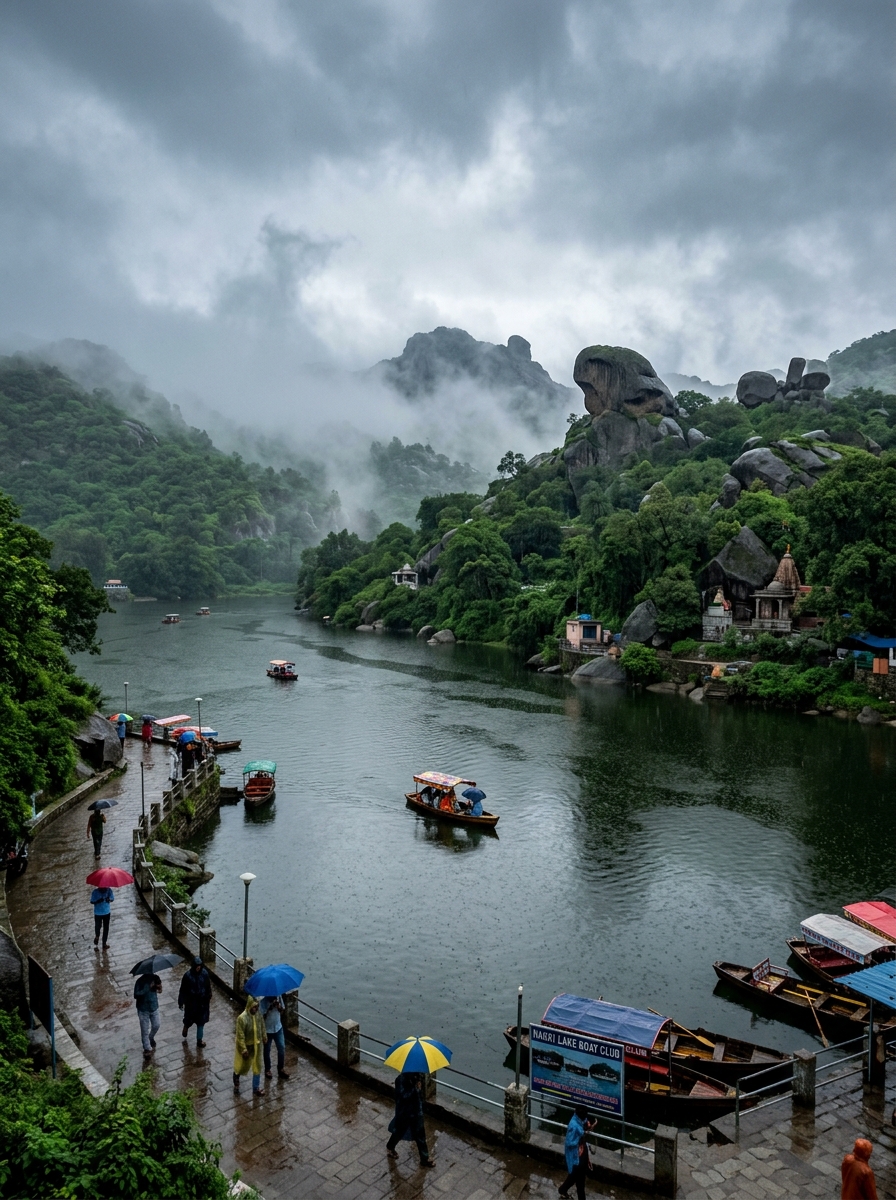
Rajasthan is a land synonymous with sun-kissed sand dunes, majestic palaces baking in summer heat, and dry, desert landscapes. However, tucked away in the southwestern corner of the state, nestled amidst the ancient Aravalli Range, lies a breathtaking exception—Mount Abu.
As Rajasthan’s only hill station, Mount Abu is a delightful retreat year-round. But when the monsoon clouds roll in during the month of July, this granite plateau undergoes a spectacular metamorphosis. The dry rocks are blanketed in thick moss, waterfalls cascade down the mountainsides, lakes fill to the brim, and a heavy shroud of mist envelops the town.
If you are planning to visit Mount Abu in July, you are in for a sensory treat. The temperature drops to a comfortable range of 20°C to 28°C, and the air becomes clean, crisp, and fragrant with wet earth. It is the perfect escape for couples seeking romance, families looking for a weekend getaway, and backpackers wanting to experience nature at its freshest.
In this ultimate monsoon guide, we cover the top places to visit, a custom 3-day itinerary, essential travel tips, and how you can book your dream Mount Abu monsoon tour package with Travel Path holiday.
—
Why You Should Visit Mount Abu in July
1. A Visual Feast of Greenery: The rugged grey cliffs of the Aravallis turn into lush, velvet-green hills. The valleys are filled with drifting clouds, making you feel as though you are walking through the Western Ghats or the Himalayas.
2. Waterfalls in Full Flow: Seasonal waterfalls like the famous Dhrudhiya Waterfalls and numerous unnamed streams come alive, tumbling down the hillsides in white torrents.
3. Misty Viewpoints: High-altitude locations are covered in dense fog. Watching the clouds swallow the valley from Guru Shikhar or Sunset Point is an enchanting experience.
4. Pleasant Weather: The scorching summer heat of Rajasthan and neighboring Gujarat vanishes. The cool mountain breeze combined with gentle rain showers makes sightseeing extremely pleasant.
5. Less Commercial Clutter: While Mount Abu receives travelers from Gujarat due to its proximity, July offers a more relaxed, less-crowded atmosphere compared to the peak winter season, allowing you to enjoy the serenity of nature.
—
Mount Abu 3-Day Itinerary Summary
| Day | Activity Type | Key Highlights | Recommended Accommodation |
|---|---|---|---|
| Day 1 | Arrival & Lake View | Check-in, Nakki Lake Boating, Honeymoon Point | Valley-view Heritage Resort |
| Day 2 | Peaks & Heritage | Guru Shikhar, Dilwara Temples, Trevor’s Tank | Valley-view Heritage Resort |
| Day 3 | Forts & Shopping | Achalgarh Fort, Nakki Lake Market, Departure | – |
—
Top Places to Visit in Mount Abu in July
1. Nakki Lake – Boating in the Mist
Nakki Lake is the beating heart of Mount Abu. According to Hindu mythology, the lake was dug out by the gods using their fingernails (*nakh*), hence the name.
- The Monsoon Experience: In July, the lake is surrounded by mist-laden hills. Boating (in paddle or rowboats) under a light drizzle is incredibly romantic.
- Toad Rock: A massive, natural rock formation resembling a toad about to leap into the water overlooks the lake. You can climb up the steps to Toad Rock for a panoramic view of Nakki Lake draped in clouds.
2. Guru Shikhar – Standing Above the Clouds
At 1,722 meters above sea level, Guru Shikhar is the highest peak of the Aravalli Range.
- The Monsoon Experience: The 15 km drive from the town center to the peak is spectacular, with winding roads cutting through mist-covered pine forests. In July, the peak is literally inside the clouds.
- Temple on the Peak: At the summit is the cave temple of Guru Dattatreya (an incarnation of Brahma, Vishnu, and Shiva). Ringing the temple bell amidst the fog and hearing its echo fade into the silent valleys is a spiritual, otherworldly experience.
3. Dilwara Temples – Intricate Marble Elegance
If it starts raining heavily, the Dilwara Temples are the perfect place to seek shelter while witnessing some of the finest architecture in human history. Built between the 11th and 13th centuries, these five Jain temples are world-famous for their jaw-dropping marble carvings.
- Why Visit: The exterior of the temples is intentionally simple, but the interiors feature marble pillars, doorways, and ceilings carved with such delicate precision that they look like lace rather than stone.
4. Achalgarh Fort and Achaleshwar Mahadev Temple
Located about 11 km from the main town, Achalgarh is a historical treasure built by the Paramara dynasty rulers and later reconstructed by Maharana Kumbha of Mewar.
- Achaleshwar Mahadev: Located at the foot of the fort, this ancient Shiva temple is famous for containing a natural wet pit that is believed to reach the center of the earth, and a footprint of Lord Shiva.
- Mandakini Lake: A beautiful, quiet lake near the fort ruins that looks incredibly serene in the monsoon.
5. Trevor’s Tank – A Forest Haven
Trevor’s Tank is a man-made crocodile breeding sanctuary designed by a British engineer named Trevor.
- The Monsoon Experience: Surrounded by dense deciduous forests, Trevor’s Tank is a haven for bird watchers and wildlife lovers. In July, the forest walks are rich with sightings of grey junglefowl, peacocks, and langurs. The water level in the reservoir is high, and you can spot crocodiles resting on the rocky banks.
6. Sunset Point & Honeymoon Point
- Sunset Point: Located in the southwest of the town, it offers a view of the sun dipping behind the Aravalli hills. In July, instead of a clear sunset, you often witness a dramatic play of colors as the sun’s rays filter through moving rain clouds.
- Honeymoon Point (Anadra Point): Offers a spectacular view of the verdant valley and the plains below. The cool breeze here in the evening is incredibly refreshing.
—
Dilwara Temple Travel Tip: Photography is strictly prohibited inside the Dilwara Temple complex. Visitors must dress modestly, and leather items (wallets, belts, bags) are not allowed inside. We recommend leaving these items in your hotel room or vehicle.
Monsoon Road Safety: The road climbing up from Abu Road railway station to Mount Abu is a steep 28-km winding ghat section. During July, heavy fog can reduce visibility to less than 10 meters. If you are driving, keep your fog lights on, maintain low speeds, and avoid overtaking on sharp curves. Alternatively, book your trip with Travel Path holiday to travel with our expert local drivers.
—
Crafting Your Perfect Mount Abu Monsoon Escape
Mount Abu is highly popular, and the best rooms with valley views and balconies fill up quickly during the monsoon weekends.
At Travel Path holiday, we build custom Mount Abu itineraries tailored to your needs. Whether you want a luxury heritage stay, a budget backpacking trip, or a family vacation, we have you covered.
Our packages include:
- Mist-View Heritage Hotels: Booking cozy rooms with private balconies overlooking the green hills.
- Safe Local Transport: Comfortable AC sedans/SUVs driven by experienced drivers who know how to navigate misty ghat roads safely.
- Guided Excursions: Curated sightseeing to hidden waterfalls and ancient temples.
- Hassle-Free Logistics: Pickups from Abu Road Railway Station or Udaipur Airport.
Ready to watch the rain transform the desert hills into a green paradise?
Get a Free Customized Quote Today!
👉 💬 Chat with a Travel Expert on WhatsApp
👉 Fill out our Quick Trip Planner Form *(Get your personalized Mount Abu itinerary within 24 hours!)*