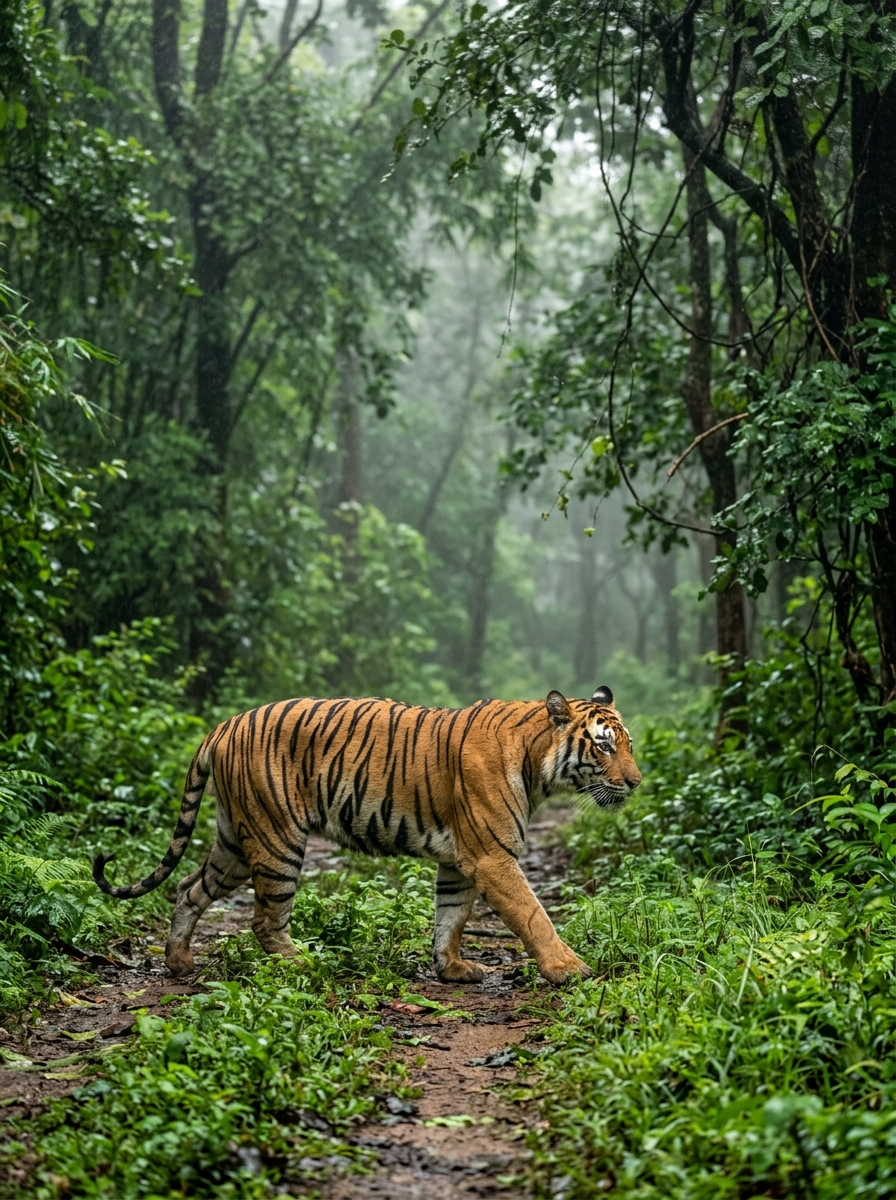
For most wildlife enthusiasts in India, the onset of the monsoon in July marks the end of safari season. A common belief prevails that all national parks lock their gates from July to October. While it is true that the core zones of major tiger reserves close to protect breeding animals and safeguard tourists from washed-out forest roads, the adventure doesn’t stop here.
In recent years, the opening of active buffer zones has revolutionized monsoon wildlife travel. These peripheral forests remain open year-round, offering an entirely different, incredibly lush perspective of India’s wilderness. In July, the parched brown deciduous forests transform into a vibrant, emerald-green paradise. The dust settles, the air is clean, water bodies overflow, and the forest comes alive with the calls of frogs, insects, and birds.
If you are a nature photographer, a bird-watching enthusiast, or someone who simply wants to experience the raw beauty of Indian jungles without the tourist crowds, planning a wildlife safari in monsoon is one of the best travel decisions you can make.
In this comprehensive guide, we explore the best national parks in India that keep their buffer zones active in July, what wildlife you can spot, and how to plan your monsoon safari package with Travel Path holiday.
—
Why Monsoon Wildlife Travel is a Hidden Gem
Before diving into the specific parks, let’s bust some myths and highlight why visiting the jungle under July showers is a magical experience:
- Stunning Green Landscapes: The dry, dusty forests turn into dense, misty green jungles. The contrast of the orange tiger or golden leopard skin against the lush emerald foliage makes for jaw-dropping photography.
- Fewer Crowds, More Peace: The massive rush of summer tourists disappears. You won’t find 20 gypsies crowding around a single animal. You can hear the rustle of leaves, the call of the hornbills, and the roar of the wind in absolute peace.
- Active Herbivores and Birds: Monsoon is the mating season for many deer species, peacock dances are common, and tree frogs, snakes, and monsoon-migratory birds are highly active.
- Lower Tariffs: Luxury wildlife resorts offer massive off-season discounts in July. You can experience premium hospitality at a fraction of the winter cost.
- The Unique Behavior of Animals: Tigers and leopards don’t disappear in the rain. In fact, many big cats prefer walking on dry safari tracks rather than wet, dripping grass, making them surprisingly visible on forest roads.
—
What are Core vs. Buffer Zones?
Understanding the zoning system is essential when planning a monsoon safari:
1. Core Zone: The central forest area where human activity is strictly restricted. These zones close down from July 1st to October 15th due to safety hazards, river overflows, and the breeding season.
2. Buffer Zone: The area surrounding the core zone that acts as a transition space between the wild habitat and human settlements. Buffer zones host rich wildlife populations—tigers do not understand administrative borders and roam freely between core and buffer areas. These zones remain open throughout the monsoon.
—
Summary: Indian National Parks Open in July
| National Park | Location | Active Monsoon Zones | Major Wildlife Sightings | Target Buffer Gates |
|---|---|---|---|---|
| Tadoba Andhari | Maharashtra | Junona, Adegaon, Devada, Agarzari | Tiger, Leopard, Sloth Bear, Wild Dogs | Devada, Madnapur, Junona |
| Jim Corbett | Uttarakhand | Dhela, Jhirna, Kotiraw (Garjia) | Asian Elephant, Tiger, Deer, Reptiles | Dhela Gate, Jhirna Gate |
| Kabini / Nagarhole | Karnataka | Kabini Forest (Boat & Jeep Safaris) | Black Panther, Leopard, Elephant, Tiger | Kabini Safari Lodge |
| Bandhavgarh | Madhya Pradesh | Dhamokhar, Panpatha, Johila | Tiger, Leopard, Spotted Deer, Nilgai | Dhamokhar, Johila |
| Kanha | Madhya Pradesh | Khapa, Phen | Tiger, Barasingha, Gaur, Sloth Bear | Khapa |
| Ranthambore | Rajasthan | Zones 6 to 10 (Buffer Gates) | Tiger, Striped Hyena, Jackal, Crocodile | Kundal, Chikhli |
—
Top 6 National Parks in India with Active Buffer Safaris in July
1. Tadoba Andhari Tiger Reserve (Maharashtra)
Tadoba is legendary for its tiger sightings, and the monsoon does not slow this reserve down. While the core zones are closed, Tadoba boasts excellent buffer zones that are widely considered just as productive as the core.
- Active Buffer Zones: Devada-Adegaon, Madnapur, Junona, and Agarzari.
- Why July is Special: The lakes (like Lake Tadoba and Erai Lake) are full of water. Safaris are conducted on gravel roads that do not wash away easily. Tiger sightings are consistently reported in the buffer areas as they search for dry patches on safari tracks.
- Other Attractions: Great bird-watching and spotting of Sloth Bears digging for termites.
2. Kabini – Nagarhole National Park (Karnataka)
Kabini is perhaps the most famous monsoon wildlife destination in India. Because it is located in the Western Ghats region, it receives heavy rains, transforming the landscape into a misty fantasy.
- The Safaris: Unlike Central Indian parks, Kabini continues both jeep and boat safaris in July (subject to weather).
- The Highlight: A boat safari on the Kabini River in the monsoon rain is unforgettable. You can see herds of Asian elephants grazing along the banks, herds of Gaurs (Indian Bison), and crocodiles.
- The Black Panther: Kabini is home to the famous melanistic leopard “Saya.” The rainy season brings an ethereal light to the forest, making any sighting feel legendary.
3. Jim Corbett National Park (Uttarakhand)
As India’s oldest national park, Jim Corbett is famous for its dense sal forests and the Ramganga River.
- Active Monsoon Zones: The Dhela and Jhirna eco-tourism zones remain open throughout the year. The Garjia (Kotiraw) zone is also partially open.
- The Experience: Corbett in the rains is a dream for landscape lovers. Clouds hang low over the Shivalik hills, and the forest is washed clean. It is one of the best times to see wild elephants bathing in forest streams.
- Caution: Ramganga and Kosi rivers can swell rapidly, so crossing riverbeds during heavy downpours requires expert drivers.
4. Bandhavgarh National Park (Madhya Pradesh)
Known for having the highest density of Royal Bengal Tigers in India, Bandhavgarh maintains a vibrant safari network even in the monsoon.
- Active Buffer Zones: Dhamokhar, Panpatha, and Johila.
- The Experience: Dhamokhar buffer shares its boundary with the premium Tala zone, and tigers frequently cross over. The buffer landscape features rocky hills, meadows, and muddy streams where tigers cool off.
5. Kanha Tiger Reserve (Madhya Pradesh)
The sal and bamboo forests of Kanha inspired Rudyard Kipling’s *The Jungle Book*. The park is known for saving the hard-ground Barasingha (swamp deer) from extinction.
- Active Buffer Zones: Khapa and Phen.
- The Experience: The meadows of Kanha look incredibly beautiful under the rain, covered in a carpet of fresh green grass. You will see herds of Barasingha feeding happily in the wetlands and plenty of bird activity.
6. Ranthambore National Park (Rajasthan)
Ranthambore’s historical ruins and dry deciduous forest take on a mystical character when it rains.
- Active Monsoon Zones: Zones 6, 7, 8, 9, and 10.
- Why Visit: These zones are located on the periphery of the Aravalli and Vindhya hills and feature deep gorges, plateaus, and waterholes. Sightings of tigers like T-101 or T-102 are regularly reported in these outer zones during July.
—
Monsoon Safety Warning: Roads in the jungle can become muddy and slushy. Always book your safaris with registered operators who provide well-maintained 4×4 Gypsy vehicles and experienced drivers. Avoid stepping out of the vehicle, as the forest floor can have active leeches, crawling insects, and slippery patches.
What to Pack for a Monsoon Safari:
* Waterproof Gear: Ponchos, high-quality raincoats, and waterproof covers for your cameras and binoculars.
* Earthy Clothing: Quick-dry clothes in olive green, brown, or khaki. Avoid bright colors that disturb wildlife.
* Footwear: Sturdy, waterproof boots or sandals with good grip.
* Insect Repellent: A must-have to protect against mosquitoes and forest leeches.
* Dry Bags: Zip-lock bags or dry sacks to keep your mobile phones, wallets, and documents safe.
—
How to Book Your Custom Monsoon Wildlife Package
Planning a safari in the monsoon requires careful booking of the right gates and buffer zones, securing permits, and booking resorts that are safe from seasonal water logging.
At Travel Path holiday, we curate custom monsoon safari packages that include:
- Guaranteed Safari Permits: We book the correct active buffer gates for the best chance of wildlife sightings.
- Premium Safaris: Experienced naturalist guides and sturdy 4×4 vehicles.
- Eco-Luxury Accommodations: Handpicked resorts with rain-friendly amenities, forest views, and top-tier hospitality.
- End-to-End Transfers: Hassle-free pickups and drops from the nearest airport or railway station.
Ready to witness the Indian jungle at its greenest? Let our travel experts create a bespoke monsoon itinerary for you.
Get a Free Customized Quote Today!
👉 💬 Chat with a Travel Expert on WhatsApp
👉 Fill out our Quick Trip Planner Form *(Receive a customized itinerary and price quote via email within 24 hours!)*