
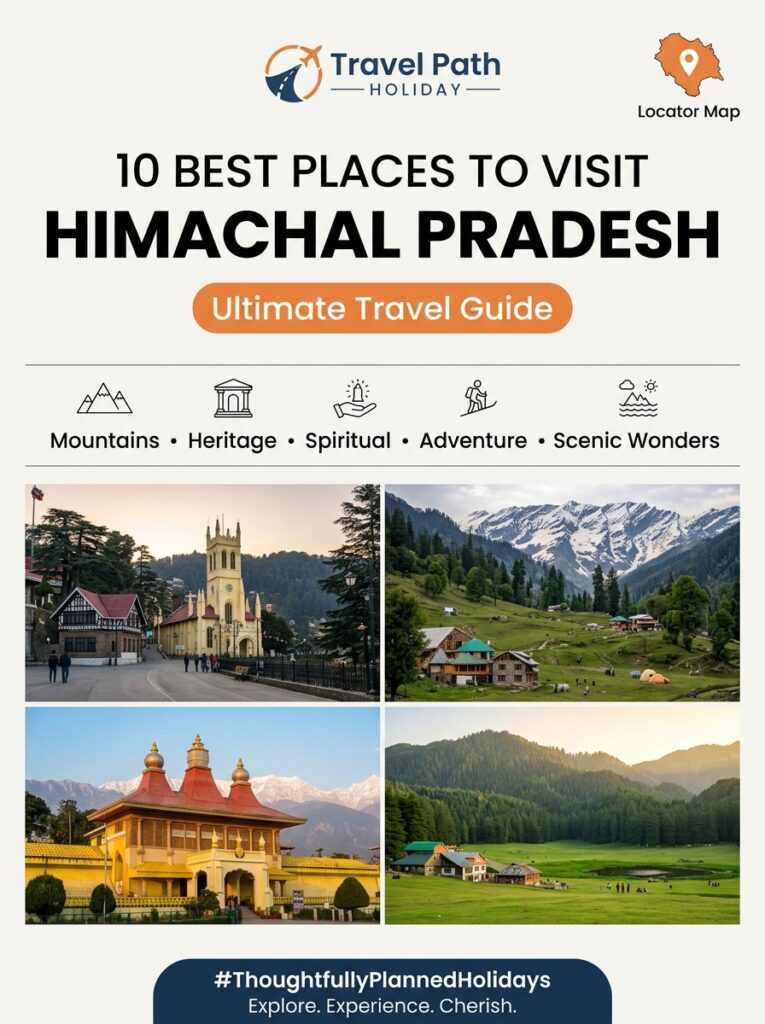
Himachal Pradesh

Local Food in Kufri Snow Adventure: What and Where to Eat

Overview Kufri, situated at a breathtaking elevation of 2,720 meters (8,923 feet) near Shimla, is world-famous for its snow-draped winter slopes, exhilarating tobogganing rides, high-altitude go-karting, and horseback treks to Mahasu Peak. However, after carving through sub-zero snow banks or zip-lining across mountain valleys, nothing revitalizes an adventurer quite like authentic Himachali mountain food. The high-altitude chill demands hearty, slow-cooked, energy-dense dishes that warm you from the inside out. From piping hot *Siddu* slathered in warm desi ghee to aromatic *Chana Madra* and crispy *Babru*, Kufri’s culinary landscape is a paradise for comfort food lovers. For travelers arriving from Indore and Central India, stepping into Kufri’s icy climate calls for a delicious exploration of native Himachali flavours alongside familiar comfort food. Whether you are looking for hand-vetted vegetarian options near adventure park gates, authentic local *Dham* thalis in cozy wooden dhabas, or steaming cups of herbal mountain tea atop Mahasu Peak, this comprehensive dining guide covers every food experience you need during your Kufri snow vacation. Local Logistical Advice for Indore Travelers Planning a mountain adventure from Indore requires careful travel coordination to manage high-altitude transit, sudden climate transitions, and local mobile connectivity. Here is essential logistical guidance tailored specifically for travelers departing from Madhya Pradesh: 1. Transit & Route Coordinates from Indore Flight Routes (Fastest Transit): Book a direct or connecting flight from Indore’s Devi Ahilya Bai Holkar Airport (IDR) to Chandigarh Airport (IXC) (approx. 2 hours direct or via Delhi). From Chandigarh, Kufri is a scenic 125 km drive (approx. 4 to 4.5 hours) via the well-paved NH5 highway via Solan and Shimla Bypass. Alternatively, take a flight from IDR to New Delhi (DEL) and connect to Chandigarh via the Shatabdi Express or hire a private pre-booked cab. Train Routes (Budget & Scenic): Take the Indore–Chandigarh Express (19307) or the daily Malwa Express (12919) from Indore Junction to New Delhi / Kalka. From Kalka Railway Station, transfer to the famous UNESCO World Heritage Kalka–Shimla Toy Train to reach Shimla, followed by a short 16 km private cab ride to Kufri. Local Transfers in Kufri: Kufri’s snow points (Mahasu Peak and adventure parks) are situated on steep uphill trails. Pre-arranging a heated, snow-equipped private vehicle (such as an Innova Crysta) through Travel Path Holiday ensures effortless transit from your Shimla or Kufri resort right to the snow adventure activity bases. 2. Climate Transition & High-Altitude Acclimatization Temperature Shift: Travelers from Indore transition from a warm, tropical Malwa plateau climate (typically 20°C to 35°C) to sub-zero Himalayan mountain weather. During winter (December to February), daytime temperatures in Kufri range between -4°C and 6°C, with icy winds across open ski slopes. Dining Strategy for Altitude: Cold mountain air combined with snow adventure activities burns calories rapidly. Consume warm, calorie-dense Himachali carbohydrates like *Siddu* or hot lentil-stuffed *Babru* during lunch. Avoid heavy fried food immediately before high-adrenaline adventure rides to prevent altitude nausea. Drink plenty of warm water or ginger-tulsi tea to maintain hydration. 3. Mobile Connectivity & Prepaid SIM Cards National Roaming Status: Travelers from Indore often query mobile network validity in the mountains. Unlike Jammu & Kashmir or Ladakh, standard prepaid SIM cards from MP (Madhya Pradesh) work seamlessly under national roaming in Kufri and Himachal Pradesh. Network Strength: Airtel and Reliance Jio provide strong 4G/5G coverage around Kufri Bazaar, Hip Hip Hurray Park, and main highway dhabas. Signal strength may taper down slightly on remote horseback trails near Mahasu Peak, so keeping cash on hand for small local food stalls is highly recommended. Complete Details & Practical Guidelines Must-Try Authentic Himachali Local Dishes in Kufri Himachali cuisine is deeply rooted in local mountain agriculture, utilizing slow-cooking methods, fermented doughs, rich yogurt-based gravies, and aromatic spices to combat the high-altitude cold. Here are the core traditional delicacies you must sav mealtimes: “` +———————————————————————————–+ TOP HIMACHALI DELICACIES IN KUFRI +——————-+—————————————————————+ Dish Name Flavor Profile & Key Ingredients +——————-+—————————————————————+ Siddu Steamed yeast bread stuffed with spiced poppy seed / walnut paste, served hot with liquid pure desi ghee. +——————-+—————————————————————+ Chana Madra White chickpeas slow-cooked in rich, spiced yogurt gravy with green cardamom, cloves, and asafoetida. Pure vegetarian. +——————-+—————————————————————+ Babru Deep-fried flatbread stuffed with black gram (urad dal) paste, paired with sweet tamarind or spicy mint chutney. +——————-+—————————————————————+ Mittha Sweetened basmati rice garnished with saffron, raisins, dry fruits, and aromatic cardamom. +——————-+—————————————————————+ Pahadi Maggi & Tea Butter-tossed noodles with mountain herbs served alongside steaming cups of ginger-tulsi masala chai. +——————-+—————————————————————+ “` #### 1. Siddu (The Ultimate Mountain Energy Bun) What It Is: Siddu is Himachal Pradesh’s most iconic traditional dish—a large, soft, yeast-fermented steamed bread pocket filled with a savory paste of ground poppy seeds (*khaskhas*), roasted walnuts, green chillies, garlic (optional), and local herbs. How It Is Served: The piping hot steamed bun is sliced open and submerged in a generous bath of melted pure desi ghee. Why You Need It: It is nutrient-rich, deeply warming, and extremely satisfying. Eating a hot *Siddu* amidst snow-covered pine trees provides long-lasting energy for hours of skiing and tobogganing. #### 2. Chana Madra (Himachali Dham Signature) What It Is: Madra is the crown jewel of the traditional Himachali feast (*Dham*). Made primarily with white chickpeas (Kabuli Chana) or kidney beans (Rajma), it is slow-cooked in a rich, thickened yogurt-based sauce spiced with green cardamom, cinnamon sticks, cloves, and asafoetida. Dietary Profile: Freshly cooked pure vegetarian dish without egg or heavy commercial cream. The slow fermentation of yogurt with warm spices creates a buttery, soothing gravy that pairs perfectly with steamed basmati rice. #### 3. Babru (Himachali Stuffed Flatbread) What It Is: Babru is the mountain cousin of the Central Indian kachori or stuffed puri. Whole wheat dough is rolled out, stuffed with a coarsely ground, spiced black gram (*urad dal*) paste, and deep-fried to golden perfection. Where to Enjoy: It serves as a crisp, savory morning breakfast or afternoon snack with hot tea near snow park entry gates. #### 4. Mittha (Saffron & Dry Fruit Sweet Rice) What It Is: A classic Himachali dessert


Himachal Pradesh

Luxury Resorts in Kasol Parvati River: Premium Stays & Villas

Overview Kasol, nestled at an altitude of 1,580 meters in the heart of Himachal Pradesh’s Parvati Valley, has dramatically evolved from a quiet backpacker sanctuary into one of Northern India’s most sought-after luxury mountain retreats. Flanked by towering deodar pine forests and the roaring, turquoise waters of the Parvati River, this picturesque Himalayan town offers an unmatched backdrop for high-end leisure travelers seeking tranquility without sacrificing modern comfort. Today, the search for luxury resorts in Kasol Parvati River leads discerning vacationers to exquisite timber chalets, riverfront glass villas, Kathkuni-style heritage estates, and boutique wellness resorts. For travelers departing from Central India—particularly Indore and the Malwa region—a luxury stay along the Parvati River provides a dramatic escape from the urban heat and bustle into crisp alpine air. Premium properties in Kasol, Katagla, Chalal, and Choj elevate the mountain holiday experience through sophisticated climate control, underfloor radiant heating, private open-air Jacuzzis, holistic Himalayan spas, and bespoke dining decks hanging over the rushing waters. Whether you are planning an intimate romantic getaway, a rejuvenated family retreat, or an executive mountain break, choosing the right luxury resort ensures that the wild beauty of Parvati Valley is paired with five-star warmth, impeccable hospitality, and custom culinary care. Local Logistical Advice for Indore Travelers Planning an upscale journey from Indore to the tranquil banks of the Parvati River requires seamless transit planning to transition comfortably from the Malwa plateau to the higher Himalayas. Travel Path Holiday provides specialized transit coordination so Indori travelers can arrive relaxed and refreshed. Flight Coordinates & Air Connections from Indore (IDR) Direct Flight to Chandigarh (IXC): The most popular and convenient route for Indore residents is taking a non-stop or one-stop flight from Indore Devi Ahilya Bai Holkar Airport (IDR) to Chandigarh International Airport (IXC) via IndiGo. From Chandigarh, your private Travel Path Holiday chauffeur in a luxury Innova Crysta or Fortuner picks you up for a smooth 7.5 to 8-hour drive (approx. 275 km) via Mandi, the scenic Aut Tunnel, and Bhuntar into Kasol. Connecting Flights to Bhuntar / Kullu-Manali Airport (KUU): For travelers seeking to minimize road transit, Alliance Air and IndiGo operate regional flights connecting Delhi (DEL) or Chandigarh (IXC) directly to Kullu-Manali Airport at Bhuntar (KUU). Bhuntar is situated just 31 km (approx. 1 to 1.5 hours) from luxury resorts along the Parvati River. Delhi Flight & Chauffeur Transfer: Alternatively, board an early morning flight from Indore (IDR) to Indira Gandhi International Airport, Delhi (DEL), followed by an overnight luxury sleeper vehicle transfer or an early morning private drive via the Delhi-Chandigarh-Mandi expressway route. Train & Road Travel Coordinates Train Routes: Executive travelers preferring rail can board the *Malwa Express (12919)* or *Indore-Chandigarh Express (19307)* from Indore Junction directly to Chandigarh or Ambala Cantt Junction. From Ambala/Chandigarh, private luxury vehicle transfers directly transport you to your riverside resort in Kasol. Self-Drive / Private Chauffeur Route: For those opting for a complete road expedition, the route spans approximately 1,280 km from Indore via NH46 (Gwalior), Agra-Delhi Expressway, NH44 to Chandigarh, and NH21 up to Bhuntar, before entering the Parvati Valley highway. Climate Transition: From Malwa Warmth to Alpine Chill Indore’s tropical dry climate—characterized by warm summers reaching 38°C–42°C and mild winters hovering around 10°C–12°C—contrasts sharply with Kasol’s high-altitude alpine weather: Winter Season (November to March): Night temperatures in Kasol regularly drop below freezing (-3°C to 4°C), accompanied by frost, ice, and occasional snowfall in adjacent villages. Indori travelers must pack heavy thermal innerwear, down jackets, fleece-lined boots, and woolens. Premium resorts equipped with centralized heating or oil-filled radiators are essential during these months. Summer Season (April to June): Day temperatures range between a pleasant 15°C and 26°C with cool evening breezes—an ideal window for outdoor riverside dining and forest walks. Monsoon Season (July to September): Parvati River flows at peak velocity, and rainfall can trigger localized landslides along the Mandi-Bhuntar route. Stays in luxury resorts with secure, elevated riverfront foundations are strongly recommended. Mobile Connectivity & National Roaming Travelers from Madhya Pradesh can rest assured that standard prepaid SIM cards (Jio, Airtel, Vi) function seamlessly under national roaming throughout Himachal Pradesh. High-speed 4G and 5G network coverage is robust across Kasol town, Katagla, and Chalal luxury resort zones. Additionally, all top-tier luxury resorts featured in this guide provide complimentary high-speed optical fiber Wi-Fi across their villas and dining pavilions. Complete Details & Practical Guidelines 1. Premier Luxury Resorts & Riverside Villas in Kasol The following handpicked properties represent the pinnacle of luxury accommodation along the Parvati River, combining architectural elegance, natural serenity, and top-tier amenities. Resort Name Location / Setting Signature Room Types Key Amenities & Heating Average Tariff Range (Per Night) The Himalayan Village Kailash Nagar, Doonkhara (~2 km before Kasol) Machan Cottages, Traditional Kathkuni Luxury Villas Underfloor heating, traditional bukhari fireplace, spa & Jacuzzi, fine dining ₹14,000 – ₹28,000 Echor Riverside Resort Katagla Village (Secluded Parvati River bank) Riverfront Glass Chalets, Premium Wooden Cabins Dual-mode HVAC blowers, river-facing balconies, open dining deck ₹8,500 – ₹16,000 Parvati Kuteer Sanja Vihar, Old Kasol Independent Deodar Log Cabins, Duplex Family Villas Electric bed warmers, oil-filled radiators, private pine lawn, campfire pit ₹7,000 – ₹13,500 Wabi Sabi Resort & Spa Manikaran Road, Kasol Executive River-View Suites, Luxury Glass Domes Indoor heated plunge pool, Swedish massage spa, centralized heating ₹10,500 – ₹20,000 Brick and Wood Cottages Kasol Riverbank Precinct Private Multi-Bedroom Villas, Deluxe Riverside Chalets Radiator heating systems, butler service, private sundeck, custom barbecue ₹12,000 – ₹22,000 Moksha Riverside Cottages Choj Bridge enclave, Kasol Luxury Wooden Cottages, Panorama River Suites Heavy-duty oil heaters, double-glazed soundproof glass, organic garden dining ₹8,000 – ₹15,000 #### Property Profiles & Detailed Architectural Highlights ##### The Himalayan Village (Kailash Nagar) Standing as the benchmark of heritage luxury in the Parvati Valley, The Himalayan Village showcases traditional Kathkuni architecture—a historic Himachali building technique utilizing interlocking deodar timber logs and dry stone without mortar. Villas & Interiors: The resort features independent luxury machans and cottages named after various districts of Himachal Pradesh (such as Lahaul, Kinnaur, and

Himachal Pradesh

Budget Planning Guide for a Vacation to Spiti Valley Kaza

Overview Planning a budget trip to Spiti Valley Kaza is one of the most rewarding high-altitude adventures for Indian travelers, yet it requires meticulous financial and logistical preparation. Nestled high in the Trans-Himalayan desert of Himachal Pradesh at an elevation of 3,800 meters (12,500 feet), Kaza serves as the commercial and administrative heart of Spiti. Unlike commercialized hill stations, Spiti Valley operates on a unique remote ecosystem where costs are dictated by local taxi union tariffs, seasonal homestays, specialized mountain transport, and limited supply lines. Whether you are traveling solo on a backpacker budget, as a couple seeking a cozy mountain escape, or as a family looking for an organized private circuit, understanding the exact financial dynamics—from fuel calculations and homestay pricing to Inner Line Permits and local food costs—ensures a seamless, stress-free Himalayan expedition. Local Logistical Advice for Indore Travelers For travelers embarking from Indore and the Malwa region of Madhya Pradesh, reaching Spiti Valley involves a significant geographical and atmospheric transition. Shifting from Indore’s tropical dry climate (where summer temperatures cross 40°C and winters remain mild at 15°C) to the sub-zero high-altitude cold desert of Spiti demands careful planning for transit, acclimatization, and health. Transit Coordinates from Indore to Spiti 1. Air Route via Delhi or Chandigarh: Flight from Indore (IDR): Board a direct morning flight from Indore’s Devi Ahilya Bai Holkar Airport to New Delhi (DEL) (1 hr 30 min flight time) or Chandigarh International Airport (IXC) (2 hr 15 min flight time via connecting or direct services by IndiGo and Air India). Onward Travel: From Delhi or Chandigarh, hire a private SUV (Innova Crysta) or take an overnight Volvo bus to Shimla (for the Kinnaur-Spiti route) or Manali (for the Atal Tunnel-Kunzum Pass route). 2. Train Route: Malwa Express (12919): Departs Indore Junction (INDB) daily at 12:15 PM, arriving at New Delhi (NDLS) by 04:30 AM the next morning or Ambala Cantonment / Chandigarh. Indore-Chandigarh Express (19307): Departs Indore Junction on weekly schedules, connecting directly to Chandigarh Junction (CDG). From Chandigarh or Ambala, continue by road toward Shimla or Manali. 3. Circuit Selection & Acclimatization Strategy: The Shimla-Kinnaur Circuit (Recommended for First-Timers): Indore → Delhi/Chandigarh → Shimla → Sarahan → Sangla/Kalpa (Kinnaur) → Nako → Tabo → Kaza. This 10-day gradual ascent allows Indori travelers coming from 550 meters elevation to acclimatize safely, dramatically reducing the risk of Acute Mountain Sickness (AMS). The Manali-Atal Tunnel Circuit (Faster Route): Indore → Delhi/Chandigarh → Manali → Atal Tunnel → Batal → Kunzum Pass → Kaza. This route takes you from Manali (2,050m) over Kunzum Pass (4,551m / 14,931 ft) directly into Kaza. It is shorter but presents a steep elevation gain; we advise spending at least one night in Manali before ascending. Mobile Connectivity & Roaming for Central India Travelers Remind travelers that standard prepaid SIM cards from MP work perfectly under national roaming in Himachal Pradesh. However, inside the Trans-Himalayan pockets of Spiti Valley, network infrastructure is localized: BSNL & Jio: Offer the most reliable cellular and 4G connectivity across Kaza town, Tabo, and Peo. Airtel: Provides strong network coverage in main Kaza town, but signal drops in high-altitude villages like Langza, Hikkim, Komic, and Mudh. Data Tip: Download offline Google Maps and pre-save all hotel confirmation details before leaving Recong Peo or Manali. Banking & Cash Precautions Indore travelers accustomed to seamless digital UPI payments must adapt to Spiti’s cash economy: The single SBI ATM in Kaza frequently runs out of cash or experiences satellite link failures. Withdraw sufficient physical currency in Rampur, Recong Peo, or Manali before entering the valley to cover local homestays, dhabas, and taxi payments. Complete Details & Practical Guidelines 1. Overall Cost Breakdown: Budget Categories (7 to 10 Days) Below is an itemized estimate per person for a complete Spiti Valley vacation starting from Chandigarh/Shimla (excluding Indore to Delhi/Chandigarh flight/train tickets): Expense Category Budget / Backpacker (Per Person) Mid-Range Comfort (Per Person) Premium / Luxury (Per Person) Accommodation ₹7,000 – ₹10,000 (Shared Homestays / Hostels) ₹14,000 – ₹22,000 (Private Homestays / Deluxe Hotels) ₹35,000 – ₹55,000 (Boutique Eco-Resorts / Luxury Camps) Transport & Cabs ₹4,500 – ₹7,000 (HRTC Buses / Shared Sumos) ₹12,000 – ₹18,000 (Shared Innova / Private Hatchback) ₹25,000 – ₹38,000 (Dedicated Private Innova Crysta / Fortuner) Food & Dining ₹3,500 – ₹5,500 (Local Dhabas & Thalis) ₹6,500 – ₹10,000 (Cafes & Hotel Dining) ₹12,000 – ₹18,000 (Gourmet Dining & Custom Meal Plans) Permits & Entry Fees ₹300 – ₹500 ₹500 – ₹1,000 ₹1,000 – ₹2,500 (Including Driver Allowances) Buffer & Misc ₹2,000 – ₹3,000 ₹4,000 – ₹6,000 ₹8,000 – ₹12,000 Total Estimated Budget ₹17,300 – ₹26,000 ₹37,000 – ₹57,000 ₹81,000 – ₹1,25,500 2. Accommodation & Homestay Rates Across Spiti Accommodation in Spiti Valley is defined by warm local hospitality in traditional mud-brick homestays, cozy guesthouses, and boutique hotels in Kaza. Traditional Spitian Homestays (Langza, Hikkim, Komic, Mudh, Tabo, Nako): Price Range: ₹1,200 – ₹2,500 per room per night (includes freshly cooked home dinner and breakfast). What to Expect: Solar-heated water, cozy rooms lined with traditional Spitian carpets (Bokh), dry Tibetan toilets or basic western toilets, and authentic interactions with local families. Standard Guesthouses & Budget Hotels (Kaza Town): Price Range: ₹2,000 – ₹4,000 per night. What to Expect: Private attached bathrooms, running hot water (during morning hours), Wi-Fi in common areas, and on-site dining. Boutique Eco-Resorts & Premium Stays (Kaza & Chupup): Price Range: ₹5,500 – ₹12,000 per night. What to Expect: Central wood-stove heating (Bukhari), plush bedding, panoramic views of the Spiti River bed, electric blankets, and multi-cuisine restaurants catering to custom dietary preferences. 3. Local Food, Dining Costs & Vegetarian Options Food in Spiti Valley is simple, wholesome, and perfectly suited to the chilly climate. Average Daily Food Budget: ₹500 – ₹1,000 per person per day. Local Spitian Delicacies & Pricing: *Veg Thukpa / Noodle Soup:* ₹120 – ₹180 per bowl. *Steamed Veg Momos (8 pcs):* ₹120 – ₹200. *Siddu (Local steamed bread with walnut/poppy filling):* ₹100 – ₹150 per piece. *Butter Tea (Gur Gur

Himachal Pradesh

Top 10 Things to Do in Dalhousie Khajjiar: Sightseeing Itinerary

Overview Nestled amidst the pine-forested slopes of the Dhauladhar mountain range in Himachal Pradesh’s Chamba district, Dalhousie and Khajjiar represent one of North India’s most enchanting alpine escapes. For travelers originating from Central India, especially Indore and the Malwa region, this twin-destination circuit offers a striking contrast to the warm tropical plains of Madhya Pradesh. While Dalhousie charms visitors with its colonial Victorian architecture, quiet pine-scented promenades, and historic stone churches, Khajjiar—celebrated as the “Mini Switzerland of India”—captivates with its expansive saucer-shaped green meadow, ancient cedar forests, and calm lake. Whether you are looking to glide over cedar canopies on a paraglider, roll down emerald slopes in a zorbing ball, trek to panoramic mountain peaks, or shop for authentic Himachali craft woolens at bustling mountain bazaars, knowing the best things to do in Dalhousie Khajjiar ensures a perfectly balanced vacation. This comprehensive guide outlines the top ten experiences, offers practical logistical advice for Indori travelers, provides a battle-tested 4-day sightseeing itinerary, and details how Travel Path Holiday Indore handles every detail of your mountain holiday. Local Logistical Advice for Indore Travelers Planning a seamless trip from Indore to the high hills of Chamba requires understanding flight connections, train routes, climate shifts, and local mountain travel dynamics. “` [ Indore (IDR) / Malwa Region ] +————-+————-+ [ Flight via DEL ] [ Train: Malwa Express ] (DHM / ATQ Airport) (Pathankot PTKC / PTK) +————-+————-+ [ Private Cab ] (80 km – 3 hrs) v [ Dalhousie & Khajjiar ] “` 1. Direct & Connecting Transport Options from Indore By Air (Fastest Route): Take a flight from Indore’s Devi Ahilya Bai Holkar Airport (IDR) to Kangra/Gaggal Airport (DHM) via Indira Gandhi International Airport, Delhi (DEL). Gaggal Airport is approximately 108 km from Dalhousie (a scenic 3.5-hour drive via Lahru and Banikhet). Alternatively, fly from Indore to Sri Guru Ram Dass Jee International Airport, Amritsar (ATQ), located 210 km away (a 4.5 to 5-hour private cab journey). By Train (Economical & Popular): Board the direct Malwa Express (Train No. 12919) departing from Indore Junction (INDB) directly to Pathankot Cantt (PTKC). Pathankot is the principal railway gateway for Dalhousie. From Pathankot Railway Station, Dalhousie is just 80 km away, taking approximately 2.5 to 3 hours by private vehicle along the well-paved NH154A. By Private Highway Route: For road trips, the journey spans approximately 1,250 km via the MP-Rajasthan-Haryana-Punjab highway corridor (Indore – Ratlam – Jaipur – Delhi – Jalandhar – Pathankot – Dalhousie). 2. Climate & Packing Guidance for Malwa Travelers Indore sits at an elevation of 553 meters with a tropical dry climate. In contrast, Dalhousie rests at 1,970 meters and Khajjiar at 1,920 meters above sea level. Summer (March to June): Day temperatures range between 15°C and 25°C—offering an ideal respite from Indore’s 40°C+ summer heat. Light woolens and cotton jackets are sufficient. Monsoon (July to September): Misty, green, and lush, but landslide-prone. Carry waterproof jackets and sturdy non-slip footwear. Winter (October to February): Crisp cold with temperatures dropping between -2°C and 10°C. Heavy snowfall covers Khajjiar in white from late December through February. Pack heavy thermal innerwear, down jackets, woolen gloves, and snow boots. 3. Mobile Connectivity & Domestic Roaming Travelers from Madhya Pradesh do not require any special tourist SIM cards. All standard prepaid mobile SIMs (Jio, Airtel, and Vi) registered in MP work seamlessly under national roaming in Dalhousie, Khajjiar, and along the Chamba road routes. High-speed 4G/5G data is widely available in main market areas, though signal strength may dip slightly along forest trails in Kalatop. Complete Details & Practical Guidelines Top 10 Things to Do in Dalhousie & Khajjiar “` +————————————————————————-+ TOP 10 SIGHTSEEING EXPERIENCES +————————————————————————-+ 1. Khajjiar Lake & Meadow Walk 6. Shopping at Gandhi Chowk & Mall 2. Paragliding over Cedar Canopy 7. Boating at Chamera Lake & Dam 3. Zorbing down Green Slopes 8. Panchpula & Subhash Baoli 4. Kalatop Sanctuary Nature Trek 9. Colonial St. John’s & St. Francis 5. Dainkund Peak Trek & Temple 10. Scenic Bakrota Hills Loop Drive +————————————————————————-+ “` #### 1. Explore Khajjiar Lake & Take a Meadow Walk Overview: Recognized globally as the “Mini Switzerland of India” due to its uncanny topographical resemblance to the Swiss countryside, Khajjiar features a saucer-shaped glade surrounded by dense deodar forests with a small natural lake at its center. Location & Distance: 24 km from Dalhousie town center (approx. 1-hour drive). Key Highlights: Walking around the perimeter of the lake, visiting the 12th-century wooden-carved Khajji Nag Temple dedicated to the serpent deity, and photography in traditional Himachali attire. Timings & Fees: Open 24/7. Entry to the meadow is free. Cultural photography costume rental costs ₹100–₹200 per photo session. Indori Travel Tip: Visit early in the morning (around 8:30 AM to 10:00 AM) to enjoy pristine, uncrowded photographic views before day-tour buses arrive. #### 2. Paragliding over Cedar Canopies at Khajjiar & Kalatop Gliding Point Overview: Experience a bird’s-eye view of the snow-capped Pir Panjal mountain range and green pine valleys with tandem paragliding flights operated by certified Himachali pilots. Location: Launch sites are located near Khajjiar meadow and the upper Kalatop gliding slope. Cost & Duration: ₹1,500 to ₹3,000 per person depending on flight duration (7 to 15 minutes air time). HD Go-Pro video recordings are offered for an additional ₹500. Safety Tip: Ensure the operator is licensed by Himachal Pradesh Tourism (HP TDB). Avoid flying during foggy weather or heavy wind conditions. #### 3. Zorbing Down the Emerald Slopes of Khajjiar Overview: Zorbing is one of the most entertaining adventure activities in Khajjiar. Travelers climb inside a giant transparent, inflatable double-walled plastic sphere and roll down the gentle green grassy slopes. Location: Designated adventure zones along the edge of Khajjiar meadow. Cost: ₹300 to ₹500 per turn per person. Best Suited For: Families, young travelers, and kids seeking a fun, low-risk thrill. #### 4. Trekking & Wildlife Spotting at Kalatop Wildlife Sanctuary Overview: Spanning over 30 square kilometers of dense deodar, blue pine, and oak trees, Kalatop Wildlife Sanctuary

Himachal Pradesh

Best Time to Visit Shimla Ridge Mall Road: Month-by-Month Weather Guide

Overview Determining the best time to visit Shimla Ridge Mall Road depends entirely on whether you wish to witness snow-dusted Tudor-Gothic architecture, escape the blistering summer heat of Malwa’s plains, or immerse yourself in vibrant Himalayan cultural festivals. Situated at an altitude of approximately 2,205 meters (7,234 feet) above sea level, The Ridge and Mall Road serve as the pedestrian heart of Shimla. Here, historical colonial structures like Christ Church, the Gaiety Theatre, and Scandal Point frame panoramic vistas of the snow-capped Shivalik and Dhauladhar ranges. For travelers departing from Indore and Central India, Shimla offers an invigorating climatic shift. While the ideal travel window for snow enthusiasts spans from December through February (with temperatures dropping between -2°C and 8°C), families and summer vacationers prefer the pleasant months of March to June (when temperatures hover comfortably between 15°C and 28°C). This month-by-month weather guide details seasonal temperatures, crowd trends, snowfall predictions, festival schedules, and practical logistical advice to help you craft the perfect Himachal getaway with Travel Path Holiday. Local Logistical Advice for Indore Travelers Planning a seamless transition from the tropical dry plateau of Indore (Devi Ahilya Bai Holkar Airport – IDR / Indore Junction – INDB) to the crisp alpine air of Shimla requires strategic transit coordination: Air Transit Options (Fastest Route): Board a direct or connecting flight from Indore (IDR) to Chandigarh International Airport (IXC) via New Delhi (DEL). From Chandigarh Airport, Shimla is located roughly 113 km away. Travel Path Holiday arranges pre-booked, private AC cab transfers (such as Toyota Innova Crysta) up the Himalayan Expressway (NH5), taking approximately 3.5 to 4 hours. Alternatively, fly from Indore to New Delhi (DEL) and take a direct flight connecting Delhi to Shimla’s Jubbarhatti Airport (SLV), though flights to Jubbarhatti are subject to mountain weather conditions. Rail & Toy Train Connections: Board the overnight Malwa Express (12919) or Paschim Express from Indore Junction (INDB) to New Delhi (NDLS) or Ambala Cantt (UMB). From Kalka Junction (KLK), board the UNESCO World Heritage Kalka-Shimla Toy Train (such as the *Shivalik Deluxe Express* or *Himalayan Queen*). This iconic 5.25-hour narrow-gauge journey negotiates 102 tunnels and 864 bridges before arriving at Shimla Railway Station, just 1.5 km below Mall Road. Climate Transition Prep: Central India travelers accustomed to Indore’s hot summers (which often exceed 40°C–42°C in May) will experience an immediate relief upon arriving in Shimla, where peak summer highs rarely exceed 28°C. However, winter departures from Indore require heavy layer preparation; while Indore winters stay mild (10°C–25°C), Shimla drops below freezing (down to -2°C or lower) with ice and snow on paved walkways. Prepaid Mobile SIM Compatibility: Travelers from Madhya Pradesh can rest easy regarding digital connectivity. Standard prepaid mobile SIM cards (Jio, Airtel, Vi) issued in MP operate seamlessly under national roaming throughout Shimla, Mall Road, and surrounding hill stations without requiring special permits or local SIM purchases. Mall Road Pedestrian Access: Vehicle entry onto Mall Road and The Ridge is strictly prohibited to preserve the heritage pedestrian promenade. Travelers arriving via private cabs or luxury Volvo buses drop off at the Tourist Bus Stand or Old Bus Stand. TPH arranges elevator passes via the HP Tourism Lift (connecting Cart Road directly to the upper Mall Road near Combermere Bridge) to save guests from uphill luggage carrying. Complete Details & Practical Guidelines Month-by-Month Weather & Temperature Overview Month Avg Day Temp (°C) Avg Night Temp (°C) Weather Profile & Highlights Crowd Density January 8°C -2°C Peak snowfall season, heavy frost, icy ridges High (Winter Tourism) February 10°C 0°C Crisp winter chill, lingering snow in Kufri & Jakhoo Moderate March 16°C 5°C Spring bloom, clear blue skies, pleasant sunshine Moderate April 21°C 10°C Comfortable sunny days, mild cool evenings Moderate-High May 25°C 13°C Warm pleasant days, peak summer escape season Very High (Peak Crowds) June 26°C 15°C Summer heat relief, Shimla Summer Festival Very High (Peak Crowds) July 22°C 15°C Onset of monsoons, lush green scenery, rain showers Low August 21°C 14°C Heavy rainfall, foggy ridges, romantic misty vibe Low September 21°C 12°C Post-monsoon clarity, washed pine forests Moderate October 18°C 8°C Autumn crispness, golden foliage, pleasant walkability Moderate-High November 14°C 4°C Early winter freeze, clear mountain views Moderate December 10°C 0°C Snowfall onset, Christmas & New Year festivities Extreme High (Peak Festivities) Snow Season Deep Dive (December to February): Winter Magic on The Ridge For travelers seeking a winter wonderland, December through February is the premier window to visit Shimla Ridge and Mall Road: Snowfall Timelines & Expectations: Active snowfall usually commences in late December (around Christmas and New Year) and extends through January into early February. During active snowfall, iconic landmarks like Christ Church, The Ridge gazebo, and the heritage streetlamps along Mall Road are covered in pristine white blankets. Key Sightseeing & Winter Spots: The Ridge & Scandal Point: The open promenade offers unobstructed views of snow-laden Himalayan summits. Jakhoo Temple Walk: Hike or take the aerial ropeway/cable car from Ridge to the 108-foot Hanuman statue at Jakhoo Hill (2,455 m altitude), where snow lingers longest among cedar trees. Excursions to Kufri & Fagu: Located 16 km uphill from Shimla, Kufri receives heavier snowfall and provides opportunities for tobogganing, snow tubing, and horse rides. Winter Footwear & Foot Traffic Safety: Sub-zero night temperatures cause melted snow to freeze into slick “black ice” on the paved slopes of Mall Road and Scandal Point. Travelers are strongly advised to wear non-slip rubber-soled boots or snow grip footwear (available for rent at Lakkar Bazaar). Summer Season (March to June): Ideal Escape for Families & Couples From March to June, Shimla transforms into a bustling hill resort, offering Central Indian travelers respite from scorching summer temperatures: Climatic Comfort: Daylight temperatures hover between 15°C and 26°C, providing perfect conditions for leisurely strolls along Mall Road, coffee breaks at outdoor cafes, and heritage tours of the Gaiety Theatre (built in 1887) and Viceregal Lodge (Rashtrapati Niwas). Mall Road Evening Atmosphere: As twilight sets in, Mall Road glows under heritage street lamps. Visitors gather around

Himachal Pradesh

How to Reach Dharamshala McLeod Ganj from Indore: Flight & Train Routes

Overview Planning a journey from the heart of Madhya Pradesh to the tranquil, pine-forested slopes of the Dhauladhar Himalayas involves navigating a distance of approximately 1,150 to 1,250 kilometers. Whether you are seeking a soul-soothing retreat near the residence of His Holiness the Dalai Lama in McLeod Ganj or looking to explore the vibrant monasteries and tea gardens of Lower Dharamshala, understanding the most efficient transit logistics from Indore is essential for a seamless vacation. Indori travelers have three primary transit options: a swift flight connection from Indore’s Devi Ahilya Bai Holkar Airport (IDR) to Kangra Airport / Gaggal (DHM) via New Delhi; a direct overnight train via the dependable Malwa Express (12919) from Indore Junction to Pathankot Cantt (PTKC) followed by a short scenic cab drive; or a well-planned multi-day highway road trip across Central and North India. This definitive travel guide provides concrete schedules, real-world fares, layover strategies, climate transition advice, and local tips curated specifically for travelers departing from Indore. Local Logistical Advice for Indore Travelers 1. Departure Points & Timing Strategy from Indore Hubs Air Travel Departures: Departures originate from Devi Ahilya Bai Holkar Airport (IDR), situated on Airport Road, easily reachable within 20 to 35 minutes from commercial and residential hubs like Vijay Nagar, Palasia, Saket, or Annapurna Road via the Super Corridor or Ring Road. To catch early morning connecting flights to Gaggal Airport (DHM) via New Delhi (DEL), aim for flights departing IDR between 06:00 AM and 07:30 AM. This guarantees comfortable 2 to 3-hour layovers at Delhi Terminal 2 or 3 before boarding the mid-day mountain flight to Kangra Valley. Rail Travel Departures: Trains leave from Indore Junction (INDB) near Chhoti Gwaltoli. The preferred direct train, Malwa Express (12919), departs daily at 12:15 PM. Travelers residing in Vijay Nagar, AB Road, or Nipania should plan to depart home by 10:45 AM to accommodate city traffic near Regal Square and allow ample time for platform positioning and baggage loading. 2. Flight Layover Strategy at Delhi Airport (DEL) Terminal Navigation: Flight routes connecting Indore to Gaggal Airport (DHM) operated by IndiGo, Alliance Air, or SpiceJet usually require a transit at Indira Gandhi International Airport (DEL) in Delhi. Most flights from Indore arrive at Terminal 2 or Terminal 3. Ensure your booking provides a minimum layover buffer of 1.5 to 2.5 hours at DEL, especially if you need to transfer between T2 and T3 for regional turboprop aircraft operations bound for Kangra Valley. Baggage Thru-Check-In: When booking single PNR tickets (such as IndiGo connecting flights IDR-DEL-DHM), your checked luggage is tagged directly through to Gaggal Airport, allowing you to relax at Delhi Airport’s food courts without retrieving bags. 3. Climate Transition: From Malwa Heat to Alpine Chills Temperature & Weather Shift: Indore enjoys a tropical dry climate with warm summers (32°C to 42°C) and mild winters (10°C to 25°C). In contrast, Dharamshala (elevation 1,457 meters) and McLeod Ganj (elevation 2,082 meters) feature distinct mountain weather. Summer temperatures (April to June) range between a pleasant 15°C and 28°C. Monsoons (July to September) bring heavy downpours across the Dhauladhar range. Winter (November to February) sees temperatures drop to 0°C to 10°C, with sub-zero nights and frequent snowfall across McLeod Ganj, Naddi, and Dharamkot. Smart Transit Packing: Indori travelers departing in light summer attire should pack a light jacket or fleece pullover in their carry-on bag. Air-conditioned flight cabins and the sudden temperature dip upon landing at Gaggal Airport or stepping off the train at Pathankot Cantt require immediate layering. 4. Mobile Network Connectivity & Prepaid SIM Rules National Roaming: Unlike post-paid requirements in Jammu & Kashmir or Ladakh, standard prepaid SIM cards issued in Madhya Pradesh (Airtel, Reliance Jio, Vodafone Idea) work seamlessly across Himachal Pradesh under national roaming with zero extra configuration. Network Performance: Reliance Jio and Airtel provide robust 4G and 5G connectivity throughout Dharamshala, McLeod Ganj Square, Bhagsu Nag, Kotwali Bazaar, and along the Pathankot-Dharamshala highway. Signal strength remains reliable for digital payments and GPS navigation. 5. Dietary Comforts & Pure Vegetarian Dining En Route Transit Dining Options: Malwi travelers accustomed to pure vegetarian meals will find excellent dining facilities along all transit routes. Delhi Airport terminals offer verified pure vegetarian outlets, while major highway halts near Ambala, Ropar, and Una feature popular family dhabas (such as Haveli and Pavitra Bhojnalaya) serving freshly cooked, hygienic vegetarian thalis, parathas, hot tea, and snacks. Complete Details & Practical Guidelines 1. Air Travel Routes: Indore to Dharamshala / McLeod Ganj #### Option A: Direct Connection via Delhi to Kangra Airport / Gaggal (DHM) This is the fastest and most comfortable route for families, senior citizens, and travelers on tight itineraries. Primary Airport: Kangra Airport at Gaggal (DHM), located 13 km south of Lower Dharamshala and 18 km from McLeod Ganj. Flight Sequence: 1. Board morning flight from Indore (IDR) to Delhi (DEL) (Flight duration: ~1 hour 35 mins; e.g., IndiGo 6E-2041 departing IDR at 06:55 AM, landing DEL at 08:30 AM). 2. Transit at Delhi (DEL) (Layover duration: ~2 hours). 3. Board regional flight from Delhi (DEL) to Kangra Gaggal (DHM) (Flight duration: ~1 hour 15 mins to 1 hour 30 mins; e.g., IndiGo 6E-7281 departing DEL at 10:40 AM, landing DHM at 12:10 PM). Total Travel Time: Approx. 5.5 to 7.5 hours from Indore departure to Gaggal landing. Airfare Range: ₹5,500 to ₹11,500 per seat (one-way, depending on booking lead time and travel season). Airport Pick-up & Taxi Transfer: Pre-booked private cabs (Innova Crysta or sedan) from Gaggal Airport take 35 to 40 minutes to reach Lower Dharamshala (Taxi fare: ~₹1,200 – ₹1,500) and 45 to 60 minutes to reach McLeod Ganj Main Square (Taxi fare: ~₹1,600 – ₹2,200). #### Option B: Flight to Chandigarh International Airport (IXC) + Scenic Highway Drive An excellent alternative when Gaggal flight tickets are high or weather causes flight delays at mountain airstrips. Flight Route: Direct or one-stop flights from Indore (IDR) to Chandigarh International Airport (IXC) (Flight duration: ~2 hours non-stop via IndiGo 6E-6421 or ~4 hours via

Himachal Pradesh

Historical Significance and Architecture of Kufri Snow Adventure

Overview Nestled at an imposing altitude of 2,720 meters (8,923 feet) above sea level in the Shimla district of Himachal Pradesh, Kufri is renowned across India as a premier destination for winter sports, high-altitude tobogganing, and snow-draped alpine panoramas. However, beyond its modern identity as a snow adventure park, Kufri possesses a rich historical heritage dating back to the 19th-century British Raj. Originally a quiet mountain hamlet—its name derived from *’kufr’*, meaning a pond or lake in the local Pahari dialect—Kufri evolved from a secluded colonial summer retreat into the birthplace of Himalayan skiing in Northern India during the 1930s. The architectural fabric of Kufri reflects a unique convergence of British colonial country retreats and traditional Himachali *Kath-Kuni* timber-and-stone craftsmanship. Built to withstand sub-zero winter temperatures and heavy Himalayan snowfall, these historic structures feature steep gabled roofs, stone fireplaces, and glass-encased sun verandas. Complemented by the sprawling Himalayan Nature Park and protected deodar reserve forests, Kufri seamlessly balances historical charm, winter sports legacy, and environmental preservation. For travelers departing from Indore and Central India, exploring the history of Kufri Snow Adventure offers an enriching journey into high-altitude mountain heritage, colonial history, and Himalayan winter sports traditions. Local Logistical Advice for Indore Travelers Planning a vacation from Indore to Kufri requires careful travel preparation to manage transit connections, rapid altitude changes, and seasonal climate shifts. Below is practical logistical advice tailored specifically for travelers departing from Madhya Pradesh: 1. Transit & Route Coordinates from Indore Flight Routes (Fastest Transit): Book a flight from Indore’s Devi Ahilya Bai Holkar Airport (IDR) to Chandigarh Airport (IXC) (approx. 2 hours direct or via New Delhi). From Chandigarh, Kufri is a scenic 125 km drive (approx. 4 to 4.5 hours) via the well-paved NH5 national highway passing through Solan, Kandaghat, and the Shimla Bypass. Alternatively, fly from IDR to Indira Gandhi International Airport, New Delhi (DEL) and take the Kalka Shatabdi Express to Kalka or transfer to a pre-booked private cab. Train Routes (Budget & Heritage Experience): Board the Indore–Chandigarh Express (19307) or the daily Malwa Express (12919) from Indore Junction to Kalka Railway Station. From Kalka, board the UNESCO World Heritage Kalka–Shimla Toy Train to Shimla Railway Station, followed by a short 16 km private cab ride to Kufri. Private Vehicles & Mountain Driving: The ascent from Shimla to Kufri involves steep mountain curves and icy road patches during peak winter (December to February). Booking a private, heated Innova Crysta or Fortuner with Travel Path Holiday guarantees an experienced local mountain driver equipped for high-altitude snow transit. 2. Climate Transition & Acclimatization Guidelines Temperature Shift: Travelers from Indore transition from the tropical dry Malwa plateau climate (typically 20°C to 35°C) to crisp alpine conditions. Summer temperatures in Kufri range between 12°C and 22°C, while winter brings sub-zero weather ranging from -5°C to 8°C with heavy snowfall. High-Altitude Acclimatization: Due to Kufri’s elevation of 2,720 meters, visitors should take it easy during their first few hours in the mountains. Stay hydrated with warm herbal teas, wear multi-layered thermal clothing, and avoid sudden physical exertion immediately after arriving from lower altitudes. 3. Mobile Connectivity & Prepaid SIM Cards National Roaming Status: Travelers often inquire about mobile SIM compatibility in Himachal Pradesh. Unlike restricted border zones, standard prepaid SIM cards from MP (Madhya Pradesh) operate smoothly under national roaming across Kufri and the entire Shimla district. Network Reliability: Airtel and Reliance Jio provide strong 4G/5G mobile signals across Kufri Bazaar, luxury resort zones, and adventure park entrances. While signals may fluctuate slightly on forest nature trails inside the Himalayan Nature Park, digital UPI payments and voice calls remain dependable across major tourist hubs. Complete Details & Practical Guidelines The Historical Origins of Kufri & British Era Retreats The history of Kufri is intertwined with the British imperial history of Shimla, which was declared the Summer Capital of British India in 1864. While Shimla developed into a bustling administrative center, British officers, survey engineers, and viceregal guests sought quieter, higher-elevation sanctuaries nearby. “` +———————————————————————————–+ KUFRI HISTORICAL TIMELINE & EVOLUTION +——————-+—————————————————————+ Historical Period Significant Developments & Milestones +——————-+—————————————————————+ Pre-1800s Small Pahari agricultural hamlet named after a local pond (‘Kufr’) along ancient mountain trade routes. +——————-+—————————————————————+ 1860s – 1900s British Raj officers establish summer retreats, hunting lodges, and sanatoriums due to crisp alpine climate. +——————-+—————————————————————+ 1930s Modern skiing introduced on Mahasu Ridge slopes; Kufri becomes Northern India’s pioneer winter sports destination. +——————-+—————————————————————+ 1960s – 1980s Himachal Tourism and National Skiing Clubs formalize winter sports festivals and amateur skiing courses. +——————-+—————————————————————+ 1990s – Present Establishment of Himalayan Nature Park (1992) and modern snow adventure parks, balancing tourism with forest ecology. +——————-+—————————————————————+ “` #### 1. Discovery as a Colonial Sanatorium In the mid-19th century, British medical officers identified Kufri’s dense pine forests and oxygen-rich alpine air as ideal for summer sanatoriums. British officers suffering from the oppressive heat of the Indo-Gangetic plains retreated to Kufri to recuperate in rustic wooden bungalows and secluded country houses. #### 2. The Legacy of Wildflower Hall & Mahasu Estate Located just 3 km from Kufri towards Shimla, the historic Wildflower Hall estate played a pivotal role in popularizing the region. Originally the country residence of Lord Kitchener (Commander-in-Chief of the British Indian Army in the early 1900s), the estate hosted high-ranking British dignitaries who frequented Kufri for horseback riding, nature walks, and winter excursions. Today, the rebuilt Wildflower Hall stands as a world-renowned luxury resort that retains colonial-era elegance. Architectural Heritage: Colonial Retreats & Kath-Kuni Style The architectural landscape of Kufri showcases two distinct structural influences: 19th-century British Colonial architecture and traditional Himachali *Kath-Kuni* timber-and-stone masonry. Both styles were engineered specifically to endure severe Himalayan weather conditions. “` +———————————————————————————–+ ARCHITECTURAL COMPARISON IN KUFRI +———————–+—————————–+—————————–+ Architectural Element British Colonial Retreats Traditional Kath-Kuni Style +———————–+—————————–+—————————–+ Primary Materials Imported pine, brick, slate Deodar logs, slate tiles, tiles, and cast-iron fixtures dry-stacked river stones. +———————–+—————————–+—————————–+ Structural Design Gabled roofs, wide verandas, Interlocking wood-and-stone brick chimneys, solariums. layers built without mortar. +———————–+—————————–+—————————–+ Thermal Insulation Double-brick walls & indoor Air gaps

Himachal Pradesh

Emergency Numbers, Hospitals & Tourist Police in Kasol Parvati River

Overview Kasol and the surrounding Parvati Valley—stretching from the river confluence at Bhuntar up to Manikaran, Tosh, and the high Himalayan alpine trails of Kheerganga—is renowned for its dramatic natural grandeur, dense deodar pine forests, and roaring glacial rivers. Positioned at an altitude of approximately 1,580 meters (5,180 feet) in the Kullu district of Himachal Pradesh, Kasol attracts thousands of vacationers, mountain trekkers, and leisure travelers each year. However, navigating this rugged Himalayan landscape requires more than just sightseeing itineraries; having instant access to a reliable emergency helpline in Kasol Parvati River, knowing local hospital coordinates, understanding tourist police procedures, and following strict river safety protocols are essential for a safe, stress-free vacation. For travelers journeying from Central India—especially families, couples, and group travelers departing from Indore and the Malwa region—the mountain terrain presents unique environment and logistics challenges. From swift glacial river currents and narrow cliffside driving corridors to high-altitude sickness (AMS) and sudden weather shifts, being prepared with critical safety information ensures that unexpected situations are managed swiftly. Travel Path Holiday has compiled this definitive, practical emergency directory and safety guide, featuring verified phone contacts for Kullu District Police, Kasol Police Outpost, local Primary Health Centres (PHCs), regional trauma care centers, mountain search-and-rescue teams, and 24/7 road assistance networks. Local Logistical Advice for Indore Travelers Planning a journey from the Malwa plateau in Madhya Pradesh to the deep gorges of Parvati Valley requires clear transit logistics and safety awareness. Travel Path Holiday ensures Indori travelers enjoy smooth coordination from their doorstep to the mountains. Transit Coordinates from Indore (IDR) to Kasol Air Routes via Delhi / Chandigarh: Take a non-stop flight from Indore’s Devi Ahilya Bai Holkar Airport (IDR) to Chandigarh International Airport (IXC) via IndiGo, followed by a comfortable 7.5 to 8-hour private vehicle drive (approx. 275 km) via Swarghat, Mandi, and the Aut Tunnel to Bhuntar and Kasol. Alternatively, connect through Indira Gandhi International Airport, Delhi (DEL) to fly directly into Kullu-Manali Airport at Bhuntar (KUU), located just 31 km (approx. 1 to 1.5 hours) from Kasol town. Train & Highway Routes: Executive travelers can board the *Malwa Express (12919)* or *Indore-Chandigarh Express (19307)* from Indore Junction directly to Chandigarh or Ambala Cantt Junction. From the railway terminal, Travel Path Holiday arranges private luxury vehicle transfers (Innova Crysta or Fortuner) driven by hill-certified mountain chauffeurs. Self-Drive & Private Chauffeur Route: The road journey covers approximately 1,280 km from Indore via NH46 to Gwalior, Agra-Delhi Expressway, NH44 up to Chandigarh, and NH21 (Chandigarh-Manali Highway) up to Bhuntar, where you branch right onto the narrow Bhuntar-Manikaran road along the Parvati River. Climate Transition: From Malwa Warmth to Alpine Weather Indore’s tropical dry climate—with hot summers reaching 38°C–42°C and mild winters around 10°C–12°C—contrasts sharply with Parvati Valley’s high-altitude climate: Winter Travel (November to March): Night temperatures in Kasol regularly plunge below zero (-3°C to 4°C), causing heavy frost and occasional road ice. Travelers must carry heavy thermal layers, windproof down jackets, insulated gloves, and winter footwear. Monsoon Caution (July to September): High rainfall causes river surges and occasional rockfalls along the Mandi-Bhuntar-Kasol corridor. Travelers should monitor live weather updates and maintain emergency contacts. Summer Comfort (April to June): Day temperatures remain between 15°C and 25°C, making it pleasant, though cool evening winds require light woolens and jacket layers. Mobile Network Coverage & Prepaid SIM Roaming Travelers from Indore will find that standard prepaid SIM cards issued in Madhya Pradesh (Jio, Airtel, Vi, BSNL) function without any restriction under national roaming throughout Himachal Pradesh. High-speed 4G and 5G signals are available in Kasol town, Katagla, Jari, and Manikaran. Signal strength degrades on remote trekking trails such as the upper Tosh route and the Kheerganga forest path, making it vital to note hardline emergency contacts and offline maps before trekking. Complete Details & Practical Guidelines 1. Essential Emergency Helplines & Tourist Police Directory When traveling through Kasol and Parvati Valley, store these official government emergency contacts directly into your mobile phone prior to departure. Service / Authority Helpline Number / Phone Contact Location / Jurisdiction Operating Hours Himachal Unified Emergency Services 112 (Toll-Free National Emergency) Statewide (Police, Fire, Ambulance) 24 Hours / 365 Days Ambulance Service (EMRI) 108 Statewide Emergency Response 24 Hours Kullu District Police Control Room 01902-222722 / 100 District HQ, Kullu 24 Hours Kasol Police Outpost (Chowki) 01902-273822 Main Road, Kasol Market 24 Hours Manikaran Police Post 01902-273724 Manikaran Taxi Stand Precinct 24 Hours Fire Station (Kullu / Bhuntar) 101 / 01902-222201 Regional Dispatch, Kullu 24 Hours District Disaster Management (DDMA Kullu) 1077 / 01902-225630 DC Office Complex, Kullu 24 Hours State Disaster Response Force (SDRF HP) 0177-2812344 / 112 Himachal Pradesh Command 24 Hours Himachal Tourist Helpline / Support 0177-2625924 / 01902-222405 HPTDC Tourist Office, Kullu 10:00 AM – 5:00 PM #### Role of Kasol Tourist Police Outpost The Kasol Police Outpost operates under the jurisdiction of the Kullu District Police Administration. Located centrally in Kasol town along the Manikaran main road, the police outpost assists travelers with: Lost Belongings & Identity Documents: Assisting tourists with lost passports, wallets, or luggage filing official police loss reports (FIR copies needed for insurance or SIM reissue). Trekker Safety & Missing Persons Reporting: Maintaining track of trekking groups heading towards high-altitude passes (Pin Parvati Pass, Sar Pass, Malana Cliff trails). Traffic Management & Highway Emergencies: Clearing vehicle congestions along narrow single-lane bridges near Kasol, Choj, and Manikaran. Traveler Protection & Dispute Resolution: Handling landlord, hotel, or local vendor disputes and enforcing zero-tolerance policies on illegal substance trade to maintain visitor safety. 2. Medical Infrastructure & Hospitals in Parvati Valley Medical facilities in Parvati Valley range from basic Primary Health Centres (PHCs) for minor illnesses to large government hospitals in Kullu equipped for severe trauma and medical procedures. “` PARVATI VALLEY MEDICAL TRANSIT CORRIDOR [Tosh / Manikaran] ──► [CHC Manikaran] ──► [PHC Kasol] ──► [PHC Jari] ──► [Regional Hospital Kullu (RHK)] (High Alt/Remote) (Basic Emergency) (First Aid/O2) (Mid-Valley) (Trauma, ICU, Surgeries – 35km) “` #### Primary & Community Health Facilities

Himachal Pradesh

Pre-Wedding Shoot & Couple Photography in Spiti Valley Kaza

Overview Planning a pre-wedding shoot in Spiti Valley Kaza is the ultimate romantic adventure for couples seeking raw, otherworldly, and breathtaking cinematic frames. Located high in the Trans-Himalayan desert of Himachal Pradesh at an elevation of 3,800 meters (12,500 feet), Kaza and its surrounding high-altitude villages present an unprecedented landscape for couple photography. Moving far beyond conventional palace courtyards and manicured resort gardens, Spiti offers dramatic 1,000-year-old cliffside monasteries, deep canyon suspension bridges, ancient high-altitude post offices, vibrant seated Buddha statues set against perpetual snow peaks, and crystal-clear night skies lit by the Milky Way. However, executing a seamless, comfortable, and visually stunning pre-wedding shoot in this remote mountain desert requires specialized logistical planning. From managing altitude acclimatization and winter wardrobe layering to adhering to monastery photography etiquette, obtaining local drone clearances, and securing dedicated high-clearance transport from Indore, this comprehensive guide provides everything couples, photographers, and styling crews need to create timeless mountain portraiture. Local Logistical Advice for Indore Travelers For couples and photography teams traveling from Indore and Central India, journeying to Spiti Valley involves a dramatic transition in geography, climate, and elevation. Leaving behind Indore’s tropical dry climate (where ambient temperatures range from 25°C to 40°C at an elevation of 550 meters), you will ascend into a high-altitude cold desert where oxygen levels are roughly 30% to 40% lower, and temperatures can plummet below freezing even during summer evenings. Thorough preparation ensures your creative crew remains healthy, energetic, and fully operational throughout the shoot. Transit Coordinates & Air Routes from Indore 1. Flight Connections via Delhi or Chandigarh: Indore to Delhi / Chandigarh: Board a direct flight from Indore’s Devi Ahilya Bai Holkar Airport (IDR) to New Delhi (DEL) (1 hour 30 minutes flight time) or Chandigarh International Airport (IXC) (2 hours 15 minutes flight time via IndiGo or Air India). Indore to Kullu-Bhuntar Airport (KUU): For couples seeking a faster transit via the Manali route, take a connecting flight from IDR to Kullu-Bhuntar Airport via Delhi. Onward Crew Transit: From Chandigarh or Delhi, hire a dedicated private SUV (Innova Crysta or 4×4 Fortuner) to comfortably carry your photography equipment, lighting reflectors, heavy designer gowns, suit carriers, makeup kits, and crew members across the mountains. 2. Overnight Train Options from Indore: Malwa Express (12919): Departs Indore Junction (INDB) daily at 12:15 PM, arriving at New Delhi (NDLS) by 04:30 AM the next morning or Ambala Cantonment / Chandigarh Junction. Indore-Chandigarh Express (19307): Departs Indore Junction on weekly schedules, connecting directly to Chandigarh Junction (CDG). 3. Circuit Selection for Photography Crews: The Shimla-Kalpa-Kaza Circuit (Recommended for Shoot Logistics): Indore → Delhi/Chandigarh → Shimla → Kalpa (Kinnaur) → Nako → Tabo → Kaza. This 10-day gradual ascent allows couples coming from Central India to acclimatize effortlessly while capturing bonus pre-wedding frames among the apple orchards of Kalpa and Kinnaur. The Manali-Atal Tunnel-Kaza Route (Faster Express Route): Indore → Chandigarh → Manali → Atal Tunnel → Batal → Kunzum Pass → Kaza. Shorter in distance, but requires spending at least 2 nights in Manali and Kaza before commencing active shoot days. Mobile Connectivity & Roaming Guidelines Standard prepaid SIM cards from Madhya Pradesh work seamlessly under national roaming across Himachal Pradesh. However, within the Trans-Himalayan Spiti region, cellular network dynamics shift: BSNL (Prepaid & Postpaid): Delivers the most consistent voice and cellular coverage across Kaza town, Tabo, Hikkim, and Langza. Jio & Airtel: Offer reliable 4G data coverage in main Kaza town, but signal drops significantly when shooting in high-altitude villages like Langza, Hikkim, Komic, and Mudh. Crew Communication Tip: Equip your production team with offline GPS maps and portable handheld walkie-talkies for seamless communication between the photographer, drone operator, and couple during wide-angle landscape shots. Acclimatization & Health Safeguards for Posing Couples Posing for photos, holding poses in windy conditions, walking uphill in heavy lehengas, or doing quick outfit changes outdoors can trigger rapid exhaustion at 12,000–14,500 feet if you are not fully acclimatized. Mandatory 48-Hour Rest Period: Spend the first 2 full days after arriving in Kaza relaxing, taking light village walks, and drinking plenty of fluids before scheduling high-intensity shoot sessions. Emergency Oxygen Kits: Always keep portable oxygen canisters (such as Oxygize or 10-liter medical cylinders) in your dedicated tour cab during every outdoor shoot location. Complete Details & Practical Guidelines 1. Top Scenic Couple Photography & Pre-Wedding Spots in Spiti Valley #### A. Key Monastery (Ki Gompa) Landscape Backdrop Elevation: 4,166 meters (13,668 feet). Visual Appeal: Perched dramatically on a conical hill overlooking the wide, braided Spiti River bed, the 1,000-year-old Key Monastery is the most iconic visual landmark of the valley. Best Photography Framing: *Wide Riverbed View:* Position the couple on the open gravel plains across the Spiti River (along the Kibber road link) to capture a breathtaking wide-angle shot showing the fort-like monastery rising sharply against towering barren mountains. *Courtyard & Prayer Flags:* Capture romantic candid portraits near the monastery’s whitewashed outer walls and colorful fluttering Buddhist prayer flags. Best Lighting Window: Golden hour during early morning (07:00 AM – 08:30 AM) when the rising sun illuminates the monastery’s red and gold sanctum towers against a crisp deep-blue sky. #### B. Hikkim Highest Post Office Postbox Elevation: 4,440 meters (14,567 feet). Visual Appeal: Home to the world’s highest post office, Hikkim offers a charming, rustic village aesthetic characterized by traditional mud-stone homes, winding dirt paths, and the iconic bright red postbox. Creative Concept Shots: Capture intimate candid frames of the couple writing handwritten postcards or romantic love letters to each other and mailing them directly through the historic postbox. Styling Advice: Cozy winter knits, vibrant woolen scarves, stylish trench coats, and boots perfectly complement the authentic, cozy mountain village setting. #### C. Chicham Bridge Heights Elevation: 4,145 meters (13,596 feet). Visual Appeal: Known as Asia’s highest bridge suspension span, Chicham Bridge spans a dizzying 150-meter deep canyon gorge connecting Kibber to Chicham village. Best Photography Framing: Capture dramatic leading-line portraits of the couple walking hand-in-hand down the center of the striking yellow bridge

Himachal Pradesh

ATM, Cash & Mobile Connectivity Guidelines in Dalhousie Khajjiar

Overview Navigating the tranquil pine forests, colonial promenades of Dalhousie, and the picturesque emerald meadows of Khajjiar requires smart financial and digital preparation. While Dalhousie is a well-established hill station equipped with modern banking infrastructure, mobile towers, and high-speed 4G/5G data coverage, traveling through high-altitude valleys, dense deodar sanctuaries, and remote meadow hamlets introduces unique connectivity dynamics. For travelers departing from Indore and the wider Malwa region, knowing where to find operational ATMs along Dalhousie’s Mall Road, understanding cash requirements for adventure activities in Khajjiar, evaluating UPI transaction reliability, and selecting the best mobile network (Jio, Airtel, Vi, or BSNL) is essential for a seamless holiday. This definitive guide by Travel Path Holiday (TPH) provides comprehensive, actionable insights into financial logistics, cellular signal strength, emergency cash buffers, and digital tools tailored specifically for Central Indian tourists. Local Logistical Advice for Indore Travelers Transit Coordinates from Indore (IDR): By Flight + Cab: Board a morning non-stop or quick connecting flight from Indore’s Devi Ahilya Bai Holkar Airport (IDR) to Indira Gandhi International Airport in Delhi (DEL) (approx. 1 hour 30 minutes). From Delhi, take a connecting flight to Gaggal Airport (DHM) in Kangra/Dharamshala (approx. 1 hour), followed by a 3.5-hour private cab drive (110 km) to Dalhousie via the Chamba highway. Alternatively, fly from Indore to Sri Guru Ram Dass Jee International Airport in Amritsar (ATQ) or Chandigarh Airport (IXC), and take a comfortable 4.5 to 5-hour drive (190 km from Amritsar via Pathankot) in a pre-arranged TPH private vehicle. By Train: Book reserved berths on the direct Malwa Express (12919) departing Indore Junction (INDB) at 12:15 PM and arriving at Pathankot Cantt Railway Station (PTKC) the next morning at 11:45 AM. From Pathankot Cantt, Dalhousie is a convenient 80 km uphill drive taking approximately 2.5 to 3 hours. By Road: Driving from Malwa via NH44 through Gwalior, Agra, Delhi bypass, Ambala, and Pathankot covers roughly 1,250 km. TPH arranges customized multi-day road itineraries with comfortable overnight halts in Delhi or Chandigarh. Climate & Battery Performance Adaptation: Departing from Indore’s tropical dry Malwa climate (summer peaks of 35°C–42°C and mild dry winters of 12°C–25°C) for the crisp mountain air of Dalhousie (1,970 meters) and Khajjiar (1,920 meters) brings noticeable atmospheric changes. Summer temperatures (April to June) remain pleasant between 15°C and 25°C, while winter months (December to February) experience sub-zero temperatures and heavy snowfall. Sub-zero mountain cold causes smartphone and power bank lithium-ion batteries to discharge 30% to 40% faster than in Indore. Keeping devices inside inner jacket pockets close to body heat prevents sudden battery drain. Prepaid SIM Cards & Roaming Status: Travelers carrying standard prepaid SIM cards registered in Madhya Pradesh (Jio, Airtel, Vodafone Idea, or BSNL) can rest easy: standard domestic prepaid SIM cards work perfectly under national roaming across Himachal Pradesh without requiring local SIM cards or special documentation. Voice calls, SMS, and mobile data function smoothly as long as your home pack includes active national roaming. Complete Details & Practical Guidelines 1. ATM Availability & Cash Logistics in Dalhousie & Surrounding Valleys While digital payment adoption is growing rapidly across Himachal Pradesh, physical cash remains king in high-altitude meadows, local handicraft stalls, taxi unions, and remote mountain trails. Dalhousie Town Centre (High Reliability): Gandhi Chowk & Subhash Chowk: The primary commercial hubs of Dalhousie feature multiple fully functional nationalized and private bank ATMs. Key operational cash points include State Bank of India (SBI), Punjab National Bank (PNB), HDFC Bank, ICICI Bank, and Axis Bank ATMs near Gandhi Chowk and along Mall Road. Uptime & Withdrawal Limits: These ATMs are regularly replenished during normal weekdays and maintain excellent uptime. Standard per-transaction withdrawal limits range between ₹10,000 and ₹20,000 depending on your card issuer. Peak Season Cash Crunch Warning: During peak summer holiday months (May to June) and heavy winter snow weekends (Christmas through New Year), high tourist inflows can lead to long ATM queues or temporary cash exhaustion at Gandhi Chowk. It is strongly advised to withdraw adequate physical cash immediately upon arriving in Dalhousie or during your transit halt at Pathankot. Khajjiar Meadow & En-Route Transit (Extremely Limited Cash Points): Khajjiar Village: Unlike Dalhousie, Khajjiar has extremely limited banking infrastructure. While there is a single SBI ATM point near the main bus stop, it frequently experiences technical downtime, link failure, or cash shortages during peak tourist hours. Why Cash is Mandatory in Khajjiar: Local outdoor adventure operators (paragliding, zorbing, horse riding, pony handlers), local tea dhabas, roadside photography rentals (Pahadi traditional dress photos), and handicraft vendors operating in the center of the meadow operate almost exclusively on cash. Always carry at least ₹2,000 to ₹3,500 per person in physical cash when taking day trips from Dalhousie to Khajjiar. Spiti Valley & Remote Chamba Valley Transits (Kaza Comparison): For travelers extending their Himachal tour from Dalhousie towards high-altitude circuits like Spiti Valley (Kaza) or remote Chamba districts (Bharmour and Pangi Valley), banking connectivity drops drastically. The world’s highest ATM operated by SBI at Kaza (3,800 meters) and ATMs in Chamba town often face multiday link disruptions due to landlines being severed by landslides or snow. Travelers heading toward Kaza or inner Chamba routes MUST carry 100% of their anticipated budget in physical cash withdrawn in major towns like Pathankot, Dharamshala, or Dalhousie. 2. UPI & Credit/Debit Card Reliability Dalhousie Urban Core (80%–90% Digital Acceptance): Hotels & Restaurants: Established 3-star and 4-star resorts, heritage hotels, fine dining establishments (such as Kwality Restaurant, Cafe Dalhousie, and Moti Mahal near Mall Road), and woollen garment showrooms accept credit cards, debit cards, and standard UPI apps (Google Pay, PhonePe, Paytm, BHIM). POS Terminal Stability: Card swipe machines work smoothly over high-speed Wi-Fi and 4G networks. However, minor delays can occur during heavy evening rainfall or thunderstorm-induced network fluctuations. Khajjiar & Offbeat Trails (40%–50% Digital Acceptance): QR Code Scans in Meadows: While QR code placards are displayed at many roadside eateries and souvenir shops surrounding Khajjiar Lake, weak mobile signal in dense tree clusters often causes payment timeouts or delayed SMS

You have been successfully Subscribed! Ops! Something went wrong, please try again.

About Us

Travel Path Holiday is a full-service travel company dedicated to delivering seamless, personalized, and memorable travel experiences. We specialize in crafting customized journeys for both corporate and leisure travelers, ensuring every trip is stress-free and enjoyable.

Destinations

Kashmir

Manali

Leh-Ladakh

Nepal

Bhutan

Blog

  • All Post
  • Adventure, Trekking & Road Trips
  • Andaman
  • Bali Honeymoon
  • Bhutan Honeymoon
  • Dubai Group Tour
  • Dubai Honeymoon
  • Family & Leisure
  • Goa Honeymoon
  • Gujarat
  • Himachal Honeymoon
  • Himachal Pradesh
  • Honeymoon & Romance
  • India Travel Guides
  • Kashmir Honeymoon
  • Kerala Honeymoon
  • Nepal Honeymoon
  • Rajasthan Honeymoon
  • Seasonal & Monsoon Specials
  • Sikkim & Northeast
  • Singapore Honeymoon
  • Spiritual & Pilgrimage
  • Thailand
  • Tour Packages & Guides
  • Uttarakhand Honeymoon

Travel Path Holiday, Indore | © 2026 Travel Path Holiday. All Rights Reserved. | Website crafted by Amit Nayak, India

Scroll to Top