
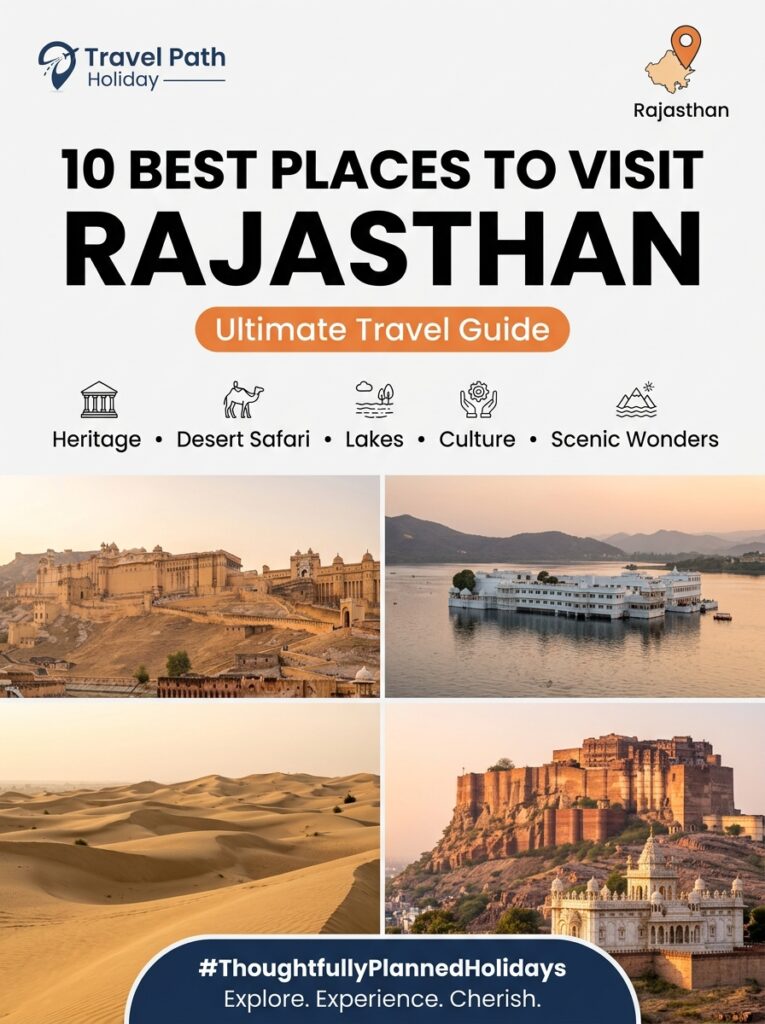
Rajasthan Honeymoon

Budget Planning Guide for a Vacation to Pushkar Lake

Overview Planning a budget trip to Pushkar Lake offers one of the most rewarding spiritual and cultural escapes in Rajasthan without stretching your wallet. Tucked away on the edge of the Thar Desert beside the sacred Aravalli hills, Pushkar is famous for its 52 holy bathing ghats, the rare 14th-century Jagatpita Brahma Temple, world-renowned Rabdi Malpuas, and the vibrant annual Pushkar Camel Fair (Kartik Mela). For travelers departing from Central India—especially Indore and neighboring Malwa regions—Pushkar is easily accessible, culturally familiar, and exceptionally budget-friendly. Whether you are a solo backpacker looking for heritage hostel dorms, a couple seeking a cozy lakeside courtyard stay, or a family planning a spiritual pilgrimage, calculating your hotel costs, food expenses, transportation options, and local ritual guidelines ensures a hassle-free vacation. This definitive guide breaks down every rupee of your Pushkar itinerary, offering concrete price points, cost-saving hacks, priest etiquette tips, and smooth travel logistics tailored specifically for Indori travelers. Local Logistical Advice for Indore Travelers Traveling from Malwa’s commercial hub of Indore to Pushkar involves straightforward, well-connected transit routes across state borders. Here are the precise logistical coordinates, transit budgets, climate transitions, and connectivity facts you need before departing: Direct Highway & Road Trip Route Distance & Duration: Indore to Pushkar is approximately 490 km to 510 km depending on the highway route chosen. Driving via NH52 (Indore → Ujjain → Agar Malwa → Jhalawar → Kota → Ajmer → Pushkar) takes roughly 9.5 to 10.5 hours. An alternative route via Ratlam and Chittorgarh via NH48 takes around 10 hours. Fuel & Toll Expense: A round-trip road trip by private hatchback or sedan costs around ₹7,000–₹9,000 in fuel (petrol/diesel) plus approximately ₹750–₹950 in highway toll taxes. Overnight Sleeper Buses: Direct AC Sleeper buses operated by private operators and RSRTC run daily from Indore’s Sarwate Bus Stand, Chhotigwaltoli, and Vijay Nagar (AICTSL hubs) to Ajmer/Pushkar. Ticket prices range between ₹650 and ₹1,400 per seat/sleeper berth each way. Express Train Connections (Indore to Ajmer Junction) Ajmer Junction (AII) serves as the primary railway hub for Pushkar, located just 14 km away across the Nag Pahar mountain pass. Key Train Options: *Indore–Jaipur Express (12973)* and *Indore–Udaipur Express (19329)* provide seamless connectivity. *Ranthambore Express (12465)* connects Indore Junction (INDB) with nearby junction stops. *Malwa Express (12919)* connects up to North-Central junctions with easy transfers to Ajmer. Train Fare Estimates: Sleeper Class (SL): ₹320 – ₹420 per passenger. Third AC (3A): ₹850 – ₹1,150 per passenger. Second AC (2A): ₹1,250 – ₹1,650 per passenger. Ajmer to Pushkar Transfer: From Ajmer Junction, local RSRTC buses depart every 15 minutes from the Ajmer Bus Stand (₹25–₹40 per person). Private auto-rickshaws through Nag Pahar cost ₹350–₹500, while private cabs charge ₹700–₹1,000. Flight Connections (Indore to Jaipur Airport) Route: Board a flight from Indore’s Devi Ahilya Bai Holkar Airport (IDR) to Jaipur International Airport (JAI), available via direct flights or short single-stop layovers through Mumbai (BOM) or Delhi (DEL). Airfare Range: ₹3,800 – ₹6,500 per person one-way if booked 3–4 weeks in advance. Jaipur to Pushkar Taxi Transfer: From Jaipur Airport, Pushkar is 145 km (approx. 2.5 to 3 hours via NH48). A private AC sedan cab booking costs ₹2,800–₹3,500. Climate & Pack List (Indore vs. Pushkar) Weather Shift: Indore enjoys a moderate tropical climate, whereas Pushkar features extreme semi-arid desert fringe weather. *Winter (October to February):* Brisk, clear days (20°C–26°C) but nighttime temperatures drop sharply to 5°C–10°C. Pack warm woolens, thermal layers, and shawls for evening lake ghat aartis. *Summer (March to June):* Scorching afternoons exceeding 40°C–43°C. Avoid daytime walking; pack linen clothing, wide-brim hats, and UV-protection sunglasses. *Monsoon (July to September):* Mild rainfall recharges Pushkar Lake; temperatures remain humid between 28°C and 35°C. Prepaid SIM Card & Connectivity: Standard prepaid mobile SIM cards issued in Madhya Pradesh (Jio, Airtel, Vi) operate seamlessly in Pushkar with full 4G/5G data roaming. No special telecom documentation or post-paid conversion is required. Complete Details & Practical Guidelines 1. Hotel & Accommodation Pricing Breakdown Pushkar offers accommodation options for every budget level, ranging from economical backpacker dormitories and sacred dharamshalas to historic heritage mansions and desert resort retreats. Accommodation Category Expected Rate per Night Recommended Neighborhoods Key Amenities Included Budget Hostels & Dorms ₹400 – ₹900 (per bed) Jamni Kund Road, Panch Kund, Choti Basti Free Wi-Fi, communal rooftop, lockers, social cafes Economical Guest Houses ₹1,000 – ₹1,800 (private room) Main Bazaar, Sadar Bazaar, Near Brahma Temple Attached bath, hot water, rooftop lake views Mid-Range Heritage Hotels ₹2,500 – ₹5,000 (double occupancy) Varaha Ghat, Parikrama Marg, Lake View Side Heritage courtyard, swimming pool, AC, room service Luxury Resorts & Glamping ₹8,000 – ₹22,000 (per night) Pushkar Bypass, Motisar Road, Ganehera Private pool, desert view, full spa, fine dining Pushkar Camel Fair Price Surge: During the annual Pushkar Fair (Kartik Purnima, falling in late October or November), hotel prices spike by 200% to 400%. Standard ₹1,500 rooms can cost ₹5,000+, and luxury tents range from ₹15,000 to ₹35,000 per night. Always reserve your stay 2 to 3 months early through Travel Path Holiday to lock in contract rates. 2. Daily Food Costs & Iconic Culinary Highlights Pushkar is a strictly sacred town where meat, poultry, and alcohol are completely prohibited by municipal law. This pure vegetarian environment keeps food costs exceptionally low while delivering rich local flavors. #### Must-Try Local Delicacies & Price Tags Famous Rabdi Malpua at Halwai Gali: No budget trip to Pushkar Lake is complete without visiting the iconic *Halwai Gali* near Sadar Bazaar. Legendary sweet shops like *Radhey Shyam Sweets* serve piping-hot, crispy-edged malpuas soaked in saffron sugar syrup and topped with thick, velvety rabdi. *Cost:* ₹35 – ₹50 per piece / ₹360 – ₹420 per kg. Rajasthani Thali (Dal Baati Churma): Indoris accustomed to Dal Baati will love Pushkar’s ghee-laden thalis served with spiced lentils, baked baatis, ker sangri, and churma. *Cost:* ₹180 – ₹350 per unlimited thali at local dining halls like *Halwai Ki Thali* or *Shri Venkatesh Thali*. Boondi Ladoo & Poha-Kachori Breakfast: Crisp pyaaz kachoris and sweet boondi

Rajasthan Honeymoon

Top 10 Things to Do in Jodhpur Mehrangarh Fort: Sightseeing Itinerary

Overview Jodhpur, affectionately known as the “Blue City” and the “Sun City” of Rajasthan, stands as one of India’s most captivating heritage destinations. Dominating its skyline is the majestic Mehrangarh Fort, an architectural marvel perched on a perpendicular cliff 410 feet above the surrounding city. For travelers seeking an extraordinary blend of royal history, adrenaline-pumping adventure, vibrant bazaars, and exquisite Rajasthani hospitality, Jodhpur offers a rich tapestry of experiences. From soaring across fort ramparts on an aerial zipline with Flying Fox to wandering through the cobalt-blue alleyways of Navchokiya, admiring white marble royal cenotaphs at Jaswant Thada, and exploring the grand Art Deco halls of Umaid Bhawan Palace, this guide details the top 10 things to do in Jodhpur and Mehrangarh Fort. Designed specifically with practical travel logistics for visitors departing from Central India, this comprehensive itinerary ensures a perfectly timed, hassle-free royal holiday. Local Logistical Advice for Indore Travelers Planning a seamless trip from Indore to Jodhpur requires clear transit details, climate awareness, and local operational knowledge. Here is what travelers departing from Malwa need to know: 1. Direct Transit Options from Indore (IDR to JDH) By Train (Most Popular & Direct): The Ranthambore Express (12465) offers a direct daily connection from Indore Junction (INDB) straight to Jodhpur Junction (JU). Departing Indore early morning at 06:00 AM, it arrives in Jodhpur at 22:15 PM, making it an ideal daytime train journey across Madhya Pradesh and Rajasthan. Alternatively, travelers can take the Indore–Jaipur Express (12973) or Indore–Udaipur Express (19329) and connect smoothly via intercity express trains or private highway transfers. By Flight: Fly from Devi Ahilya Bai Holkar Airport, Indore (IDR) to Jodhpur Airport (JDH) via single-layover connecting flights operated by IndiGo or Air India through Mumbai (BOM) or Delhi (DEL). Total travel time ranges between 4.5 to 6.5 hours. Alternatively, take a 1-hour direct flight from Indore to Jaipur (JAI) and enjoy a scenic 5-hour private cab drive to Jodhpur via Ajmer and Pali. By Private Cab (Road Trip Route): Driving from Indore to Jodhpur spans approximately 620 km via NH52 and NH162 (passing through Ratlam, Mandsaur, Neemuch, Chittorgarh, and Pali). The journey takes around 11 to 12 hours on smooth, 4-to-6-lane national highways. Travel Path Holiday arranges private, air-conditioned sedan and SUV rentals (Innova Crysta, Ertiga) complete with verified highway drivers experienced in interstate routes. 2. Climate Shift: Malwa Plateau to Desert Citadel Indore’s moderate, tropical dry climate contrasts sharply with Jodhpur’s desert climate at the edge of the Thar Desert. Winter Season (October to March): Ideal for sightseeing. Daytime temperatures range between 20°C and 28°C under bright, clear skies. However, night temperatures drop sharply to 8°C–12°C. Indori travelers should pack light woolens, jackets, and evening wraps. Summer Season (April to June): Daytime temperatures spike to 40°C–45°C. Sightseeing must be restricted to early morning hours (8:00 AM to 11:30 AM) and late afternoons. Hydration, high-SPF sunblock, hats, and UV-protection sunglasses are essential. 3. Prepaid Mobile SIM Connectivity Unlike travel to Jammu & Kashmir or sensitive border regions, standard prepaid mobile SIM cards issued in Madhya Pradesh (Airtel, Reliance Jio, Vi) work seamlessly throughout Rajasthan without national roaming disruptions. Strong 4G and 5G connectivity is available across Jodhpur city and atop Mehrangarh Fort. Complete Details & Practical Guidelines Here is the definitive, curated list of the top 10 things to do in Jodhpur and Mehrangarh Fort, complete with operational timings, entry fees, and insider tips: “` +———————————————————————————–+ JODHPUR SIGHTS AT A GLANCE +————————————+———————–+———————-+ Attraction Recommended Time Approx. Entry Fee +————————————+———————–+———————-+ 1. Mehrangarh Fort & Palace Museum 2.5 – 3.0 Hours ₹200 (Ind) / ₹600 (Fr) 2. Ziplining (Flying Fox Jodhpur) 1.5 – 2.0 Hours ₹1,700 – ₹2,000 3. Jaswant Thada Cenotaph 45 Mins – 1 Hour ₹30 (Ind) / ₹50 (Fr) 4. Blue City Walking Tour 1.5 – 2.0 Hours Free / Guided ₹800 5. Toorji Ka Jhalra Stepwell 30 – 45 Mins Free 6. Umaid Bhawan Palace & Museum 1.0 – 1.5 Hours ₹30 (Ind) / ₹100 (Fr) 7. Mandore Gardens & Devals 1.5 – 2.0 Hours Free (Museum ₹20) 8. Rao Jodha Desert Rock Park 1.5 Hours ₹100 (Walk) 9. Jodhpuri Food Exploration Ongoing / Meal Times Varies by spot 10. Sardar Market & Clock Tower 1.5 – 2.0 Hours Free entry +————————————+———————–+———————-+ “` 1. Explore Architectural Wonders & Royal Museums at Mehrangarh Fort Founded in 1459 by Rao Jodha, Mehrangarh Fort stands as one of India’s largest and most impeccably maintained fortresses. Enclosed by thick, towering walls, the fort is accessed through seven historic gates, including Jayapol (Victory Gate built by Maharaja Man Singh) and Loha Pol (Iron Gate), which retains the tragic handprints of royal satis who immolated themselves on the funeral pyres of their husbands. “` [ Jayapol (Entry Gate) ] [ Loha Pol (Sati Handprints) ] +————+————+ [Palace Galleries] [Royal Armory & Howdahs] +————+————+ [ Sheesh & Phool Mahal ] [ Chamunda Mata Temple (Ramparts) ] “` Palace Collections: Walk through opulent royal apartments including Sheesh Mahal (Hall of Mirrors decorated with intricate glass work), Phool Mahal (Palace of Flowers with gold-leaf ceiling filigree), Moti Mahal (Palace of Pearls with polished plaster walls), and Daulat Khana. Museum Highlights: The Mehrangarh Museum displays one of Rajasthan’s finest collections of royal memorabilia: *Palanquins (Palkis):* Including the exquisite gilt Mahadol palanquin captured in battle in 1730. *Elephant Howdahs:* Featuring silver-plated ceremonial seats, including one presented by Mughal Emperor Shah Jahan. *Royal Armory:* Rare swords inlaid with gold and jade, including personal weapons belonging to Akbar and Rao Jodha. *Royal Cradles & Miniature Paintings:* Intricately painted wooden cradles and Marwar school miniature artworks. Operational Details: *Timings:* 09:00 AM to 05:00 PM daily. *Entry Fee:* ₹200 for Indian nationals, ₹600 for foreign tourists. Audio guide rental is ₹250. *Elevator Service:* An elevator is available near the entrance for senior citizens and mobility-assisted travelers (₹50 round-trip). 2. Experience Ziplining Over Fort Ramparts (Flying Fox Jodhpur) For thrill-seekers, the Flying Fox Zipline experience at Mehrangarh Fort is an unmissable adventure. Suspended on high-tensile steel cables, participants zip high above

Rajasthan Honeymoon

How to Reach Jaisalmer Sand Dunes from Indore: Flight & Train Routes

Overview Planning a getaway from the heart of Malwa to the golden sands of the Thar Desert is one of the most rewarding travel experiences for Indori travelers. Reaching the legendary Sam Sand Dunes or the serene Khuri Sand Dunes in Jaisalmer from Indore involves traveling a distance of roughly 820 to 860 kilometers across Madhya Pradesh and Rajasthan. Whether you prefer the swift convenience of connecting flights, the scenic charm of long-distance trains, or an epic self-drive road trip through Marwar, understanding your transit options ensures a seamless journey. This comprehensive guide covers all practical travel routes from Indore to Jaisalmer—including seasonal flights via Delhi, Mumbai, or Jaipur, direct and connecting express trains through Jodhpur and Jaipur, highway navigation via Chittorgarh, and reliable local dune taxi connections. By tailoring your itinerary to Malwa’s travel preferences, Travel Path Holiday helps you navigate desert weather transitions, prepaid mobile connectivity, and authentic dining options with absolute ease. Local Logistical Advice for Indore Travelers Departing from Indore requires choosing transit modes that balance travel duration, budget, and physical comfort. Travelers starting from prominent Indore hubs—such as Vijay Nagar, Palasia, Saket, or Annapurna—can easily access Devi Ahilya Bai Holkar Airport (IDR), Indore Junction (INDB), or Laxmi Bai Nagar Station (LMNR). Below is the concrete logistical breakdown for each transit mode. 1. Air Travel Options (Indore to Jaisalmer / Jodhpur) While direct commercial flights between Indore (IDR) and Jaisalmer Airport (JSA) operate primarily on a seasonal basis (typically October through March via carrier layovers), travelers have two highly efficient air routes year-round: Option A: Indore to Jaisalmer Flight (Via Delhi or Mumbai): Route: Board a morning IndiGo or Air India flight from Indore (IDR) to Indira Gandhi International Airport, Delhi (DEL) or Chhatrapati Shivaji Maharaj International Airport, Mumbai (BOM), followed by a connecting flight into Jaisalmer Airport (JSA). Total Travel Time: Approximately 5.5 to 7.5 hours (including layover). Post-Flight Transfer: Jaisalmer Airport is located about 12 km from the main Golden City and 45 km from Sam Sand Dunes. Pre-booked private cabs take around 50 minutes directly from JSA to the desert camps. Option B: Indore to Jodhpur Flight + Highway Dune Drive (Recommended Year-Round): Route: Fly from Indore (IDR) to Jodhpur Airport (JDH) via 1-stop connections in Delhi or Mumbai. Total Travel Time: 4 to 5 hours flight time + 4.5 hours road drive. Post-Flight Transfer: Hire an air-conditioned private taxi (such as an Innova or Ertiga) directly from Jodhpur Airport to Sam Sand Dunes via NH11 (285 km). This route allows you to enjoy smooth four-lane highway cruising through Pokhran straight to the dunes without staying overnight in Jaisalmer city first. Option C: Indore to Jaipur Direct Flight + Express Train Connection: Route: Take a direct 1-hour 15-minute flight from Indore (IDR) to Jaipur International Airport (JAI), then board an overnight train (like the Leelan Express 12468 or Howrah-Jaisalmer Express 12371) from Jaipur Railway Station to Jaisalmer. 2. Rail Travel Routes (Indore Junction / Laxmi Bai Nagar to Rajasthan) For families and groups who prefer rail travel, direct and well-connected sleeper and AC trains connect Indore to major junction stations in Rajasthan: Indore-Jodhpur Express (Train No. 14802 / 20487): Schedule & Route: Departs Indore Junction (INDB) and travels via Ratlam, Chittorgarh, and Ajmer to reach Jodhpur Junction (JU). Connecting Train to Jaisalmer: From Jodhpur, transfer to the Jodhpur – Jaisalmer Express (Train No. 14810) or the Ranikhet Express (Train No. 15014). Total Rail Duration: Around 18 to 21 hours total travel time. Ranthambore Express (Train No. 12465): Schedule & Route: Departs Indore Junction (INDB) daily at 06:00 AM, traveling through Ujjain, Nagda, Kota, and Sawai Madhopur to Jaipur Junction (JP). Connecting Train to Jaisalmer: From Jaipur, catch the overnight Jaisalmer Express (Train No. 14659) or Runicha Express (Train No. 14087), arriving in Jaisalmer early the next morning. Indore-Jaipur Express (Train No. 12973 / 19712): Schedule & Route: Overnight direct service from Indore to Jaipur. Allows a relaxing day stopover in Jaipur before boarding the evening desert express train to Jaisalmer. Indore-Udaipur City Express (Train No. 19329): Schedule & Route: Departs Indore Junction (INDB) in the evening, arriving at Udaipur City (UDZ) early morning. From Udaipur, travelers can hire a private SUV cab or take a sleeper bus across the scenic Mewar-Marwar highway to Jaisalmer (490 km, 8.5 hours). 3. Self-Drive & Private Cab Highway Routes Driving from Indore to the Thar Desert is a favorite among road-trip enthusiasts across Malwa. The recommended highway alignment offers well-paved four-lane roads and heritage stopovers: Primary Highway Route (860 km | 15–16 Hours): Path: Indore $\rightarrow$ Ratlam $\rightarrow$ Jaora $\rightarrow$ Chhotisadri $\rightarrow$ Chittorgarh $\rightarrow$ Bhilwara $\rightarrow$ Beawar $\rightarrow$ Jodhpur $\rightarrow$ Pokhran $\rightarrow$ Jaisalmer City $\rightarrow$ Sam Sand Dunes (via RJ SH-87). Road Conditions: Excellent smooth tarmac along the Ratlam-Chittorgarh highway and NH11 between Jodhpur and Jaisalmer. Recommended Overnight Breakpoint: Halting overnight at Jodhpur or Chittorgarh splits the drive into two comfortable 7-to-8-hour legs, preventing driver fatigue. 4. Climate Transition: Malwa Plateau to the Thar Desert Travelers from Indore are accustomed to Malwa’s moderate tropical dry climate. However, Rajasthan’s Thar Desert experiences sharp temperature extremes that require specific preparation: Winter Season (October to February): Daytime temperatures in Jaisalmer are pleasant and sunny (20°C to 25°C). However, once the sun sets over the Sam Sand Dunes, temperatures plummet rapidly to between 3°C and 8°C due to sand radiation loss. Indori travelers must pack heavy woolens, thermal innerwear, windproof jackets, and moisturizing lotions. Summer Season (March to June): Day temperatures frequently exceed 42°C to 46°C with harsh desert sun and dry *Loo* winds. Sand dune activities during these months are strictly restricted to late evening (after 5:30 PM) or early morning sunrise. High-SPF sunscreen, polarized sunglasses, and hydration fluids are essential. 5. Mobile Connectivity & SIM Card Validity Travelers frequently ask about mobile network functionality in border desert zones: Prepaid SIM Functionality: Standard prepaid SIM cards issued in Madhya Pradesh (Airtel, Reliance Jio, Vi) work perfectly across Rajasthan without requiring special roaming activations or postpaid conversions. Desert Signal Strength:

Rajasthan Honeymoon

Best Time to Visit Jaipur Amer Fort: Month-by-Month Weather Guide

Overview The ideal period to visit Jaipur and explore the majestic Amer Fort (Amber Fort) is during the winter season, spanning from October to March. During these winter months, temperatures range comfortably between 8°C and 26°C, offering pleasant daytime sunshine and crisp, cool evenings perfect for scaling Amer Fort’s grand stone ramparts, enjoying royal elephant rides up to Jaleb Chowk, and wandering through the historic Pink City. While winter provides peak sightseeing conditions, Jaipur offers distinct charm and travel advantages across all seasons. The monsoon season (July to September) brings moderate rainfall, refreshing the surrounding Aravalli hills and filling Maota Lake below Amer Fort, creating a picturesque, crowd-free setting for culture enthusiasts and photographers. Conversely, the summer months (April to June) experience extreme desert heat reaching 38°C to 45°C, requiring early morning monument visits but offering significant low-season discounts for budget-conscious travelers. This comprehensive month-by-month guide breaks down weather conditions, festival schedules, Amer Fort elephant ride operations, and crowd densities to help you plan an unforgettable trip. Local Logistical Advice for Indore Travelers For travelers departing from Indore and the broader Malwa region, planning a trip to Jaipur requires understanding both transit logistics and environmental changes. Moving from Indore’s tropical dry Malwa plateau climate to Jaipur’s semi-arid desert climate introduces noticeable weather shifts, particularly in winter when nocturnal temperatures in Jaipur drop significantly lower than in Indore. Transit Coordinates from Indore to Jaipur By Direct Flight: The fastest way to reach the Pink City from Indore is via direct flight from Devi Ahilya Bai Holkar Airport (IDR) to Jaipur International Airport (JAI). IndiGo operates daily direct flights taking approximately 1 hour 15 minutes. Alternatively, connecting flights via Mumbai (BOM) or Delhi (DEL) provide flexible morning and evening departure times. By Express Train: Several direct overnight trains connect Indore Junction (INDB) to Jaipur Junction (JP). The Indore–Jaipur Express (12973) departs Indore in the late evening and arrives in Jaipur early the next morning (approx. 10 hours 30 minutes). Another convenient rail connection is the Ranthambore Express (12465), which runs daily between Indore and Jaipur via Sawai Madhopur. Travelers visiting Southern Rajasthan first can also take the Indore–Udaipur Express (19329) before continuing overland to Jaipur. By Highway / Self-Drive: Driving from Indore to Jaipur covers roughly 520 km via National Highway 52 (NH52), passing through Dewas, Jhalawar, Kota, and Bundi. The smooth 4-lane highway route typically takes 9 to 10 hours of driving time. Essential Travel Tips for Malwa Travelers 1. Weather & Clothing Adjustments: If traveling during winter (November to February), pack heavy woolens, thermal layers, and warm jackets. While Indore winters remain mild, Jaipur experiences sharp nighttime temperature drops down to 5°C to 8°C. For summer trips, light breathable cotton wear, UV-protection sunglasses, wide-brimmed hats, and high-SPF sunscreen are mandatory. 2. Mobile Connectivity & Prepaid SIM Cards: Travelers carrying standard prepaid SIM cards issued in Madhya Pradesh (Airtel, Reliance Jio, Vi) will experience full network functionality across Rajasthan without any national roaming restrictions or extra setup. 3. Dietary Considerations: Indori foodies accustomed to pure vegetarian dining will feel completely at home in Jaipur. The city is renowned for authentic Rajasthani vegetarian gastronomy, including Dal Baati Churma, Ker Sangri, and Gatte ki Sabzi. Travel Path Holiday arranges curated itineraries featuring hand-vetted vegetarian options/dining and freshly cooked pure vegetarian dishes throughout your stay. Complete Details & Practical Guidelines Month-by-Month Weather & Sightseeing Guide for Jaipur & Amer Fort #### 1. January: Crisp Winter & Grand Festivities Average Temperatures: Daytime 20°C – 23°C | Nighttime 7°C – 9°C. Weather Conditions: Dry, crisp winter days with brilliant morning sunshine. Occasional early morning fog. Amer Fort Dynamics: Exceptional sightseeing weather. Climbing the cobbled path or taking the morning elephant ride is highly comfortable. Elephant Ride Timings: 8:00 AM to 11:30 AM. Arrive by 7:15 AM to join the queue, as demand is extremely high. Festival Highlights: International Kite Festival (Makar Sankranti – January 14) fills the Jaipur sky with thousands of colorful kites; Jaipur Literature Festival (JLF) often takes place in late January at Hotel Clarks Amer. Crowd Density: Peak Season (Extremely High). Advance booking for hotels and monument entry is essential. #### 2. February: Perfect Climate & Romantic Evenings Average Temperatures: Daytime 24°C – 27°C | Nighttime 10°C – 12°C. Weather Conditions: Mild, pleasant weather with clear blue skies and comfortable daytime temperatures. Amer Fort Dynamics: Ideal conditions for walking tours through Sheesh Mahal, Diwan-i-Aam, and Jaigarh Fort. The Light & Sound Show at Amer Fort (English: 6:30 PM, Hindi: 7:30 PM) is spectacular under cool evening skies. Elephant Ride Timings: 8:00 AM to 11:30 AM (80 to 100 elephants operational daily). Festival Highlights: Cultural music events, rose garden blooms at Ram Niwas Garden. Crowd Density: High. Heavy footfall from domestic and international tourists. #### 3. March: Spring Warmth & Color Celebrations Average Temperatures: Daytime 30°C – 33°C | Nighttime 15°C – 18°C. Weather Conditions: Warm afternoons with comfortable mornings and nights. Humidity remains low. Amer Fort Dynamics: Morning monument visits between 8:00 AM and 11:00 AM offer the best comfort before mid-day heat sets in. Elephant Ride Timings: 8:00 AM to 11:30 AM. Festival Highlights: Elephant Festival (on the eve of Holi) and Gangaur Festival (late March/early April), featuring royal processions of Goddess Gauri starting from City Palace through Tripolia Bazaar. Crowd Density: Moderate to High. A popular window for spring holidaymakers. #### 4. April: Onset of Summer & Bright Skies Average Temperatures: Daytime 36°C – 38°C | Nighttime 21°C – 24°C. Weather Conditions: Transition into dry summer heat. Direct sunlight becomes intense by noon. Amer Fort Dynamics: Sightseeing is best done early in the morning (8:00 AM opening) or late afternoon. Carry bottled water and sun protection. Elephant Ride Timings: 8:00 AM to 11:00 AM (rides may be cut short on exceptionally hot days for animal safety). Festival Highlights: Regional Gangaur celebrations continue in early April. Crowd Density: Moderate to Low. Tourist numbers decline noticeably. #### 5. May: Peak Summer Heat & Off-Season Savings Average Temperatures: Daytime 40°C – 43°C |

Tour Packages & Guides

Historical Significance and Architecture of Kochi Fort

Overview Fort Kochi is a living open-air museum where five centuries of global colonial history meet traditional Malabar maritime heritage. Located along the serene harbor waters of the Arabian Sea in coastal Kerala, this historic enclave is internationally renowned for its extraordinary blend of Portuguese, Dutch, British, and indigenous Kerala architectural styles. The fascinating history of Kochi Fort traces back to 1341, when a massive flood in the Periyar River carved out a natural harbor, transforming an obscure fishing hamlet into Asia’s premier spice hub. Over the next 500 years, Fort Kochi became the very first European colonial settlement in India. In 1503, the Portuguese established Fort Manuel here with the permission of the Rajah of Kochi, constructing grand churches, stone forts, and cobblestone lanes. They were followed in 1663 by the Dutch East India Company (VOC), who re-engineered the town with distinctive gables, heavy bastions, and whitewashed brick masonry, and finally by the British Crown in 1795, who introduced Neoclassical civic architecture, sprawling bungalows, and leafy parade grounds. From the timber-framed nave of St. Francis Church (India’s oldest European church) and the soaring Gothic spires of Santa Cruz Cathedral Basilica to the stone ramparts of Bastion Bungalow and the iconic cantilevered Chinese Fishing Nets (*Cheena Vala*), Fort Kochi offers travelers an unmatched journey through time. For travelers departing from Indore and Central India, exploring Fort Kochi’s architectural landmarks is a rich cultural experience. This comprehensive guide provides deep historical insights, architectural analysis, practical visitor guidelines, and tailored transit logistics for an unforgettable holiday planned by Travel Path Holiday. Local Logistical Advice for Indore Travelers 1. Transit Coordinates from Indore to Kochi Flight Routes & Layovers: The fastest and most convenient connection from Indore to Kerala is via direct connecting flights from Devi Ahilya Bai Holkar Airport (IDR) to Cochin International Airport (COK). Leading carriers such as IndiGo, Air India, and Vistara operate daily flights with short, smooth layovers in Mumbai (BOM, 1h 30m to 2h layover), Delhi (DEL, 2h 10m layover), or Bengaluru (BLR, 1h 40m layover). Total flying and layover duration ranges between 4.5 and 6.5 hours. Upon arrival at Cochin International Airport (Nedumbassery), Fort Kochi is located approximately 42 kilometers to the southwest. Travel Path Holiday arranges private, pre-booked AC sedan or SUV cabs for a comfortable 75 to 90-minute highway drive straight to your heritage hotel in Fort Kochi. Train Routes: For travelers who enjoy long-distance scenic rail journeys through Central and Southern India, direct trains link Indore Junction (INDB) to Ernakulam. The Ahilyanagari Express (22645) departs Indore every Tuesday at 16:45 PM and arrives at Ernakulam Junction (ERS) on Thursday morning at 06:00 AM after a 37-hour journey across Madhya Pradesh, Maharashtra, Andhra Pradesh, Tamil Nadu, and Kerala. Alternatively, the Indore – Kochuveli Weekly SF Express (20932) runs every Tuesday morning. From Ernakulam Junction station, Fort Kochi is just 12 kilometers away (25 minutes by taxi or auto-rickshaw). Travelers can also take the scenic public Ro-Ro water ferry from Ernakulam Marine Drive jetty to Fort Kochi jetty for a nominal fare of ₹6 to ₹10 per passenger. 2. Climate & Humidity Transition (Malwa Plateau to Coastal Kerala) Moving from the dry, elevated continental climate of the Malwa plateau in Indore to the humid coastal climate of Kochi involves an environmental shift. Relative humidity in Fort Kochi averages 75% to 90% year-round, with daily temperatures ranging between 26°C and 34°C. Clothing & Hydration Tips: Pack breathable, lightweight cotton or linen clothing, wide-brimmed sun hats, UV protection sunglasses, and comfortable flat walking shoes or cushioned sandals suitable for cobblestone lanes and heritage stone pathways. Stay well-hydrated throughout your walking tours by enjoying fresh tender coconut water (*Elaneer*), widely available along Fort Kochi Beach and Parade Ground for ₹40 to ₹60. Plan architectural walking tours during the cooler morning hours (8:30 AM to 11:30 AM) or late afternoon (3:30 PM to 6:00 PM). 3. Mobile Data & Connectivity Unlike certain sensitive border regions or union territories like Jammu & Kashmir where out-of-state prepaid mobile SIM cards are blocked, standard prepaid SIM cards issued in Madhya Pradesh (Airtel, Jio, Vi) work flawlessly across Kerala. High-speed 4G and 5G mobile data, GPS navigation, and digital UPI payments remain completely operational throughout Fort Kochi, Mattancherry, and Ernakulam. Complete Details & Practical Guidelines The Historical Evolution of Fort Kochi: Four Distinct Layers The unique architectural skyline of Fort Kochi is the result of four overlapping historical eras: “` +———————————————————————————–+ HISTORICAL TIMELINE OF KOCHI FORT +———————————————————————————–+ 1341 AD Great Periyar Flood creates Kochi natural harbor & spice port 1500–1663 AD Portuguese Era: Fort Manuel built, Catholic churches established 1663–1795 AD Dutch VOC Era: Bastion Bungalow, Dutch gables, urban redesign 1795–1947 AD British Era: Neoclassical bungalows, open parade grounds, trade 1947–Present Heritage Protection Enclave, UNESCO Candidate & Cultural Hub +———————————————————————————–+ “` #### 1. The Pre-Colonial Malabar Era (Before 1500) Prior to European arrival, Kochi was governed by the Rajahs of the Kingdom of Cochin (Perumpadappu Swaroopam). Following the catastrophic flood of 1341 that silted the ancient port of Muziris (Kodungallur), Kochi emerged as the premier natural deep-water harbor on the Malabar Coast. Arab, Chinese, and Jewish merchant fleets established trade ties here, trading Malabar black pepper (“black gold”), cardamom, and cinnamon. Local building methods relied on *Thachu Shastra* (traditional Kerala science of carpentry and architecture)—featuring laterite stone masonry, heavy teakwood timber frameworks, steep sloping hip roofs clad in terracotta clay tiles, and open inner courtyards designed to channel coastal breezes and shed heavy monsoon rains. #### 2. The Portuguese Era (1500 – 1663) Following Vasco da Gama’s landing at Calicut in 1498, Portuguese commander Afonso de Albuquerque arrived in Kochi in 1503. In exchange for helping the King of Kochi against the Zamorin of Calicut, the Portuguese were granted land to build Fort Manuel—the very first European fortress constructed on Asian soil. Architectural Legacy: The Portuguese introduced European ecclesiastical Gothic and Manueline architectural elements to India. They constructed sturdy thick-walled churches, residential quarters with arched arcades, high timber-trussed ceilings, and central plazas. They

Kerala Honeymoon

Emergency Numbers, Hospitals & Tourist Police in Varkala Cliff Beach

Overview Varkala Cliff Beach is one of India’s most breathtaking coastal destinations, renowned for its towering red laterite cliffs overlooking the Arabian Sea, natural mineral springs, and golden sandy beaches. However, because Varkala’s unique landscape features steep cliff edges, ocean undercurrents, and narrow pedestrian pathways, having immediate access to a verified emergency helpline in Varkala Cliff Beach is vital for every visitor. Whether you need urgent medical care at a nearby hospital, assistance from the Kerala Tourist Police, or guidance from local lifeguards on beach safety flags, being prepared ensures your coastal holiday remains safe, stress-free, and memorable. This official emergency response and safety guide—curated by Travel Path Holiday specifically for travelers departing from Central India—delivers verified emergency contact numbers, detailed hospital locations, cliff edge safety rules, ocean lifeguard protocols, and practical security tips. Local Logistical Advice for Indore Travelers Planning a seamless and safe journey from Indore to Varkala requires understanding travel coordinates, transport options, medical connectivity, and climate adjustments when transitioning from the dry Malwa plateau to Kerala’s humid coastline. Air Connections from Indore (IDR) to Varkala The fastest way to reach Varkala from Indore is flying into Trivandrum International Airport (TRV), located just 50 kilometers south of Varkala Cliff. Connecting Flight Routes: Daily connecting flights operate from Devi Ahilya Bai Holkar Airport (IDR) in Indore to Trivandrum (TRV) with smooth layovers at Mumbai (BOM), Bengaluru (BLR), or Delhi (DEL) via IndiGo and Air India. Optimal Layover Windows: Choose flights with layovers between 1.5 and 2.5 hours at Mumbai (BOM) or Bengaluru (BLR). Total travel time ranges from 5.5 to 7.5 hours. Alternative Airport (Kochi – COK): Flying into Cochin International Airport (COK) is also convenient, located 175 kilometers north of Varkala (a 4.5-hour drive via private AC cab or a 3.5-hour train journey). Airport Transfer to Varkala: From Trivandrum Airport (TRV), a pre-booked private AC cab arranged by Travel Path Holiday reaches Varkala Cliff in approximately 1 hour 15 minutes. Alternatively, travelers can take a 15-minute taxi to Trivandrum Central Railway Station (TVC) and catch an express train to Varkala Sivagiri Railway Station (VAK), taking about 45 minutes. Direct & Connecting Train Routes from Indore For travelers who enjoy long-distance train journeys through scenic landscapes, Varkala is well connected to Central India by rail. Direct Train Route: The *Ahilyanagari Superfast Express* (Train No. 22645) runs directly from Indore Junction (INDB) to Varkala Sivagiri (VAK), eliminating the need for train transfers. Connecting Train Routes: Travelers can also take the *Avantika Express* (12962) from Indore to Mumbai Central, and board Kerala-bound express trains such as the *Netravati Express* (16345) or *Kochi Rajdhani Express* (12432) halting directly at Varkala Sivagiri (VAK). Climate & Humidity Transition Guidelines Atmospheric & Temperature Shift: Indore travelers moving from Central India’s dry continental weather will experience tropical coastal humidity (75% to 90%) in Varkala. Hydration & Sun Safety: High humidity causes rapid fluid loss during cliff walks. Stay hydrated with fresh tender coconut water (*Karikku*), available at local stalls for ₹40–₹50, alongside ORS electrolyte packets. Apply eco-friendly SPF 50 sunscreen to prevent sunburn. Attire: Pack lightweight, breathable organic linen and cotton attire. Avoid heavy synthetic fabrics that retain heat and sweat. Mobile Connectivity Reminder: Unlike northern Union Territory travel routes (such as Jammu & Kashmir or Ladakh) which enforce strict postpaid-only SIM restrictions, standard prepaid SIM cards issued in Madhya Pradesh (Jio, Airtel, Vi) function seamlessly across Varkala, Papanasam, and Trivandrum with reliable 4G and 5G network coverage. Emergency helpline numbers (112, 108) can be dialed directly from any MP mobile network. Complete Details & Practical Guidelines 1. Essential Emergency Helpline Numbers & Contacts When traveling along Varkala’s North and South Cliffs, save these official emergency contacts on your mobile phone for immediate assistance: “` +————————————————————————–+ VARKALA EMERGENCY HELPLINE DIRECTORY +————————————————————————–+ Emergency Response Support System (ERSS): 112 (Police, Fire, Ambulance) Kerala Tourist Police Control Room: 0471-2320100 / 9497990000 Varkala Local Police Station: 0470-2602333 National Ambulance Service: 108 Fire & Rescue Station Varkala: 0470-2602001 / 101 Government Taluk Hospital Varkala: 0470-2602344 / 0470-2602244 Kerala Tourism 24×7 Helpline: 1800-425-4747 Indian Coast Guard Search & Rescue: 1554 / 0471-2500414 +————————————————————————–+ “` Integrated Emergency Number (112): Dialing 112 connects directly to the Emergency Response Support System (ERSS) in Kerala, routing your call to local police, fire, or ambulance dispatch based on your GPS location. Kerala Tourist Police (0471-2320100 / 9497990000): Dedicated tourist welfare police officers trained to handle visitor inquiries, safety concerns, lost documents, and language assistance. Local Varkala Police Station (0470-2602333): Located at Varkala Town (Maithanam Junction), approximately 2.5 km from North Cliff. Kerala Tourism 24×7 Helpline (1800-425-4747): Toll-free helpline offering verified travel information, tourist aid post locations, and emergency guidance in English and Hindi. 2. Hospitals, Medical Centers & 24/7 Pharmacies Near Varkala Cliff In case of medical emergencies, sudden illnesses, cliff injuries, or heat exhaustion, Varkala offers reliable local healthcare centers as well as quick access to advanced super-specialty hospitals in Trivandrum. “` +————————————————————————–+ HEALTHCARE INFRASTRUCTURE NETWORK [North / South Cliff] –(2.5 km / 8 mins)–> [Government Taluk Hospital] +————(3.0 km / 10 mins)-> [SN Mission Hospital] +————(50 km / 75 mins)–> [KIMSHEALTH Trivandrum] (Super-Specialty / Trauma) +————————————————————————–+ “` #### Local Hospitals in Varkala Town 1. Government Taluk Hospital, Varkala Location: Maithanam Junction, Varkala Town (2.5 km from North Cliff). Facilities: 24/7 Emergency Casualty Department, basic trauma management, minor surgical care, ambulance service, and essential diagnostic laboratory. Contact: 0470-2602344 / 0470-2602244. Best For: Immediate first aid, minor cliff cuts/sprains, snakebite or jellyfish sting care, and basic emergency stabilization. 2. Sree Narayana Mission Hospital (S N Mission Hospital) Location: Court Road, Varkala (3.0 km from North Cliff). Facilities: Multi-specialty private hospital featuring a 24-hour Emergency Room, ICU, Operation Theatre, X-ray, Ultrasound, Pharmacy, and private patient rooms. Contact: 0470-2602269 / 0470-2603200. Best For: Advanced medical consultations, diagnostic imaging, pediatric emergencies, and acute illness treatment. 3. Sree Gokulam Medical College & Hospital Location: Venjaramoodu / Attingal corridor (~25 km from Varkala, a 35-minute drive). Facilities: Comprehensive tertiary medical care, 24/7 Trauma Care Center, multi-disciplinary ICUs, and emergency cardiac

Kerala Honeymoon

Pre-Wedding Shoot & Couple Photography in Wayanad Hills

Overview Wayanad Hills, anchored in the elevated Western Ghats of northern Kerala, has emerged as one of South India’s most enchanting destinations for pre-wedding shoots and romantic couple photography. Featuring emerald green tea estates rolling over misty mountains, natural heart-shaped lakes, majestic earthen dams, ancient bamboo groves, and cascading waterfalls, Wayanad offers a dramatic canvas for couples seeking timeless visual storytelling. Whether you desire cinematic gown photography amidst foggy plantation trails or vibrant traditional couple portraits against pristine lake reflections, Wayanad provides diverse natural studio settings within close proximity of each other. This detailed guide covers top shoot locations, permit procedures, local photographer hire versus bringing your home team, wardrobe styling, lighting windows, and practical travel logistics for couples traveling from Central India. Local Logistical Advice for Indore Travelers Planning a high-stakes pre-wedding photography trip from Indore requires seamless logistical coordination so that couples, photographers, wardrobe luggage, and delicate camera equipment arrive refreshed and on schedule. Air Travel Connections: The fastest route from Indore is flying from Devi Ahilyabai Holkar International Airport (IDR) to Kozhikode Calicut International Airport (CCJ) or Kannur International Airport (CNN) via connecting hubs like Mumbai (BOM), Bengaluru (BLR), or Delhi (DEL). Layover times typically range from 1.5 to 3 hours. Kozhikode Airport (CCJ) is situated just 85 km (approx. a 2.5-hour drive) from Kalpetta and Vythiri in Wayanad via the picturesque Thamarassery Ghat Pass (NH 766). Alternatively, Cochin International Airport (COK) is 215 km (approx. 6 hours drive) and serves as an optional entry point if combining Wayanad with Alleppey houseboats. Direct Rail Routes: For couples and crew carrying heavy photography lighting rigs and multiple outfit trunks, train travel offers generous baggage capacity. The Ahilyanagari Express (Train No. 22645) provides direct weekly connectivity from Indore Junction (INDB) to Kozhikode (CLT) and Ernakulam (ERS). Alternatively, connect via Mumbai or Hazrat Nizamuddin to board the daily Mangala Lakshadweep Express (12618) to Kozhikode. Climate & Elevation Transition: Travelers from Malwa (Indore) transition from a dry inland climate to Wayanad’s high-altitude (700m to 2,100m above sea level) tropical highland climate. Morning temperatures range between 18°C and 22°C with high morning humidity (75%–90%) and thick mist layer coverage—ideal for atmospheric shots. Afternoon temperatures stay pleasant at 24°C–28°C. Mobile Connectivity & Roaming: Unlike union territory travel destinations like Jammu & Kashmir, standard prepaid mobile SIM cards from Madhya Pradesh (Airtel, Jio, Vi) work seamlessly across Kerala with full 4G/5G data roaming enabled. Photographers can upload live client previews, stream location maps, and coordinate with ground teams without purchasing local SIM cards. Pure Vegetarian Dining Logistics: Indore couples with specific culinary preferences can enjoy complete peace of mind. Major Wayanad hubs like Kalpetta, Vythiri, and Sulthan Bathery feature hand-vetted vegetarian options/dining and freshly cooked pure vegetarian dishes (including North Indian thalis, Indori-style Poha breakfasts, and fresh South Indian tiffins prepared without onion/garlic upon request). Complete Details & Practical Guidelines 1. Top Scenic Pre-Wedding Shoot Locations in Wayanad #### A. Chembra Peak & The Heart-Shaped Lake (Hridaya Saras) Visual Appeal: Located at an altitude of 2,100 meters, Chembra Peak is famous for its naturally shaped heart lake (Hridaya Saras) nestled halfway up the mountain amidst evergreen high-altitude grasslands. The lake never dries up and offers a breathtaking romantic backdrop surrounded by rolling cloud masses. Location & Access: Situated near Meppadi, 17 km south of Kalpetta. Trekking permits must be secured from the South Wayanad Forest Division Office at Meppadi or the forest check post at the base. Best Shooting Window: Early morning (07:00 AM to 10:30 AM). Mist clears periodically to reveal the heart lake while keeping the ambient light soft and even. Permit & Trekking Guidelines: The Forest Department allows a limited number of trekkers daily. Standard group trek permits cost ₹1,000 for up to 5 persons, plus nominal camera entry fees (₹150–₹300). Commercial drone usage is strictly prohibited on forest land without prior Chief Wildlife Warden clearance. Heavy bridal gowns are impractical during the 3.5 km uphill trek; couples are advised to wear comfortable trekking gear and change into lightweight flowy dresses or formal attire at designated resting points near the lake. #### B. Banasura Sagar Dam & Reservoir Hillocks Visual Appeal: As the largest earth dam in India and the second largest in Asia, Banasura Sagar impounds the Karamanathodu tributary of the Kabini River. The reservoir is dotted with submerged hillock islands, set against the backdrop of the Banasura hills. Key Frames: Speedboat couple shots gliding over turquoise backwaters, sunrise silhouette framing on the stone embankments, manicured botanical garden lawns, and sunset reflections over the earthen spillway. Best Shooting Window: Golden Hour (04:15 PM to 06:15 PM) for warm orange horizon hues reflecting on the water sheet. Permits & Charges: Entry ticket is ₹40 per head. Still camera permit costs ₹100, while commercial photography permissions range between ₹1,500 and ₹3,000. Private 15-minute couple speedboat charters cost ₹1,200 to ₹1,800. #### C. Vythiri & Meppadi Rolling Tea Estates Visual Appeal: Endless waves of emerald tea bushes contoured over undulating hill slopes, punctuated by tall silver oak trees wrapped in pepper vines. Best Shooting Window: Morning Golden Hour (06:15 AM to 08:45 AM). Dewdrops on tea leaves create a sparkling bokeh effect in backlit portraits. Access & Permissions: Estates like Harrison Malayalam, Ripon, and private plantations attached to luxury resorts (e.g., Vythiri Village, Wayanad Wild, Windflower) offer dedicated shooting trails. Resort-attached tea gardens often grant complimentary access to in-house guests, while independent commercial shoots incur permission fees of ₹2,000 to ₹5,000 per slot. Wardrobe Synergy: Vibrant primary colors—crimson red, deep royal blue, emerald green, and canary yellow—contrast stunningly against the rich green tea foliage. #### D. Kuruva Island & Kabini Bamboo Groves Visual Appeal: A 950-acre protected river delta on the Kabini River comprising dense evergreen bamboo forests, natural river streams, and traditional wooden bamboo rafts. Best Shooting Window: Mid-morning (09:00 AM to 11:30 AM) when morning sunlight filters through the dense bamboo canopy, casting dramatic light rays (“God rays”). Permits & Logistics: Accessible via DTPC bamboo raft ferries. Still camera fee

Kerala Honeymoon

ATM, Cash & Mobile Connectivity Guidelines in Kovalam Beach

Navigating payments and staying connected while holidaying at Kovalam Beach is straightforward once you understand local beachside logistics. Famous for its trio of crescent-shaped beaches—Lighthouse Beach, Hawa Beach (Eve’s Beach), and Samudra Beach—Kovalam blends upscale cliffside resorts with casual shoreline shacks and rustic wooden catamaran rides. While digital India initiatives have made UPI payments widespread across Kerala, beachfront micro-vendors, sunbed operators, and oceanfront shacks still rely heavily on cash transactions. Furthermore, mobile signal strength varies depending on whether you are standing atop Lighthouse Hill or relaxing under a beach umbrella near the shore. This guide provides practical guidelines on cash necessity, ATM availability, card/UPI reliability, and mobile network performance in Kovalam Beach, tailored specifically for travelers departing from Indore and Central India. Local Logistical Advice for Indore Travelers Planning a seamless coastal getaway from Central India requires understanding the transit routes, climate transitions, and mobile roaming setup before you land on Kerala’s southwestern coast. Flight Connections from Indore: Travelers from Indore (IDR) can reach Kovalam conveniently by flying into Trivandrum International Airport (TRV), which is situated just 15 km (approx. 30 minutes drive) north of Kovalam Beach. Premium connecting flights operate daily from Indore via Mumbai (BOM) or Bengaluru (BLR) on IndiGo and Air India, with smooth layovers ranging from 1 hour 45 minutes to 3 hours. Alternatively, if flying into Cochin International Airport (COK), you can enjoy a scenic drive down the National Highway 66 (NH66) or board the fast Vande Bharat Express from Ernakulam Junction to Trivandrum Central (TVC). Train Routes: Direct train options include the popular Ahilyanagari Express (Train No. 22645), departing weekly from Indore Junction (INDB) straight to Trivandrum Central (TVC). Another comfortable option is taking the Malwa Express or Express trains to New Delhi or Mumbai, connecting to the Kerala Express. Climate & Humidity Transition: Moving from Malwa’s dry tropical heat or mild winter air into Kerala’s coastal climate involves a significant humidity shift. Expect relative humidity levels between 75% and 88% along Kovalam Beach. Keep your smartphones and power banks in splash-proof pouches when walking along the wet sands to protect electronics from salt-laden sea breezes. Mobile Network Roaming Note: Unlike destinations with strict prepaid roaming restrictions like Jammu & Kashmir, standard prepaid SIM cards issued in Madhya Pradesh (Indore, Bhopal, Ujjain) work seamlessly across Kovalam and all of Kerala. National roaming activates automatically without requiring additional permissions or SIM card replacements. Complete Details & Practical Guidelines 1. Cash Necessity for Local Beach Shacks & Water Activities While higher-end oceanfront hotels and established multi-cuisine restaurants readily process digital payments, physical Indian Rupee (INR) cash remains essential for daily beachside experiences in Kovalam: Beach Shacks & Coconut Vendors: Fresh tender coconuts (₹40 to ₹60), local banana fritters (*pazham pori*), and casual beachside fruit platters are sold mostly by independent local vendors who require cash. Sunbed & Umbrella Rentals: Beachboys managing sun loungers and umbrellas along Lighthouse Beach charge around ₹100 to ₹200 per hour (or ₹300 to ₹500 for a full day). Almost all sunbed operators require cash payments upfront. Catamaran Rides & Local Water Sports: Traditional wooden catamaran rides off Hawa Beach and Vizhinjam coast (priced between ₹300 and ₹600 per head) are operated by local fishermen who strictly accept physical cash. Seashell & Souvenir Stalls: Small shops selling shell jewelry, bamboo handicrafts, handmade sarongs, and beachwear along the narrow Lighthouse promenade prefer cash due to frequent network lag on digital QR terminals right at the water’s edge. Recommended Daily Cash Carry: We advise Indori families and couples to keep ₹2,500 to ₹4,000 in physical cash split into smaller denominations (₹50, ₹100, ₹200, and ₹500 notes). Vendors often struggle to provide change for ₹2,000 or ₹500 notes during early morning hours. 2. Location & Reliability of ATMs in Kovalam Cash machines along the immediate shoreline can occasionally run dry during peak holiday weekends (November through February) or festival seasons. Knowing exact ATM locations ensures you never run out of currency. Location Bank ATMs Available Distance from Shoreline Operational Reliability & Notes Lighthouse Beach Promenade State Bank of India (SBI) ~50 meters (Near Lighthouse Access Steps) High footfall; frequently experiences cash outages on Saturday/Sunday evenings. Best for morning withdrawals. Kovalam Junction & Bus Stand SBI, HDFC Bank, ICICI Bank ~400 meters inland (Top of Kovalam Road) Highly reliable; refilled daily. Features air-conditioned glass kiosks and multi-card acceptance. Hawa Beach Approach Road Axis Bank ATM, Canara Bank ~250 meters inland Moderate reliability. Good fallback if Lighthouse Beach SBI ATM is out of service. Vizhinjam Harbor Area Federal Bank, Canara Bank, SBI ~2 km south of Kovalam Beach Very dependable; used primarily by locals and harbor merchants. Ideal when coastal Kovalam ATMs are depleted. Pro Tip for Indore Travelers: Withdraw adequate cash upon landing at Trivandrum International Airport (TRV) arrival lounge ATMs or near Kovalam Junction before checking into your beachfront hotel. Shoreline ATMs often encounter extended downtime due to humid saline air affecting card reader sensors. 3. Card & UPI Acceptance Matrix in Kovalam Venue / Vendor Category Card Acceptance (Visa/MasterCard/RuPay) UPI Acceptance (Google Pay / PhonePe / Paytm) Practical Advice Luxury Resorts & Cliffside Dining 100% Accepted 100% Accepted Smooth card swipe terminals with zero surcharges at major properties. Mid-Range Beach Promenade Cafes Accepted (2% extra surcharge on some cards) Widely Accepted Verify UPI QR signal before placing orders; signal can drop inside covered thatched roofs. Beach Shacks & Sunbed Operators Not Accepted 30%–40% Accepted (Subject to signal) Always carry physical cash backup for beach loungers and casual snacks. Local Taxi & Auto Rickshaws Not Accepted 60% Accepted Auto drivers around Kovalam Junction accept UPI, but cash is preferred for late-night airport drops. 4. Mobile Data Signals & Telecom Performance in Kovalam Mobile coverage across Kovalam Beach is generally strong, but physical terrain—such as steep rocky headlands, coconut groves, and thick concrete cliffside construction—can affect data speeds. “` [ Lighthouse Hill / Promenade ] –> Strong 5G / 4G (Airtel & Jio: 100+ Mbps) [ Shoreline Sand & Water Line ] –> Moderate 4G

Kerala Honeymoon

Local Shopping Guide in Thekkady Wildlife Safari: Authentic Souvenirs

Overview Nestled in the lush Cardamom Hills of the Western Ghats, Thekkady (bordering the vibrant market town of Kumily) is the undisputed spice capital of Kerala. Beyond its famous Periyar Tiger Reserve boat safaris and jungle treks, Thekkady offers one of the most rewarding shopping experiences in South India. The air here is filled with the intoxicating aroma of crushed green cardamom, fresh Tellicherry black pepper, star anise, cinnamon quills, and aromatic eucalyptus oil. For travelers visiting from Malwa and Central India, shopping in Thekkady is an essential cultural highlight—allowing you to bring home farm-fresh, chemical-free spices, single-origin high-range teas, pure essential oils, and hand-carved wooden souvenirs directly from the source. Navigating the bustling markets of Kumily can feel overwhelming due to the sheer density of spice shops and roadside stalls. Distinguishing export-grade organic cardamom from artificially dyed pods or pure Ceylon cinnamon from cheap cassia bark requires local insight. This comprehensive guide provides actionable tips, government-certified shop recommendations, authenticity test methods, realistic price benchmarks, flight luggage packing guidelines, and logistical advice tailored specifically for travelers departing from Indore. Local Logistical Advice for Indore Travelers Planning a trip from Indore to the spice hills of Thekkady involves key logistical considerations regarding flight connections, climate transitions, telecom connectivity, and luggage handling. Flight & Train Connections from Indore: By Air: The most efficient route from Indore (IDR) to Thekkady is taking a morning connecting flight via Mumbai (BOM) or Bengaluru (BLR) to Cochin International Airport (COK). Airlines like IndiGo and Air India operate daily schedules, with layover times ranging between 1 hour 15 minutes to 2.5 hours. From Kochi airport, your private tourist cab booked through Travel Path Holiday will take you on a scenic 140 km drive up the Western Ghats along National Highway 183, reaching Kumily/Thekkady in roughly 3.5 to 4 hours. By Rail: For travelers who prefer train journeys, the Ahilyanagari Express (22645) provides a direct weekly connection from Indore Junction (INDB) to Ernakulam Junction (ERS). Alternatively, book berths on the INDB-KCVL Express (20932). The closest major railway station to Thekkady is Kottayam (KTYM), located 114 km away (a 3-hour cab ride from the station to Kumily). Climate & Moisture Acclimatization: Indore’s dry tropical climate differs significantly from the humid, high-altitude rainforest environment of Thekkady (elevated at 900–1,200 meters above sea level). While temperatures in Kumily remain comfortable (18°C to 25°C), relative humidity is elevated due to dense canopy foliage. When purchasing whole spices, tea leaves, or dried herbs, ensure they are vacuum-packed or sealed in airtight containers immediately to prevent moisture absorption during your stay. Mobile Connectivity & Telecom Note: Unlike North Indian high-altitude border destinations such as Jammu & Kashmir or Ladakh—where prepaid SIM cards issued outside the state are blocked—standard prepaid SIM cards from Madhya Pradesh (Airtel, Reliance Jio, VI) work seamlessly across Kerala. Mobile data coverage in Kumily town and along the shopping strips is excellent (4G/5G), making UPI digital payments (Google Pay, PhonePe, Paytm) quick and convenient at almost all certified spice outlets and handicraft stores. Airline Luggage Security Rules: If you are flying back from Kochi to Indore, remember that airline security regulations prohibit carrying liquid essential oils, body massage oils, or large quantities of powdered spices in your hand luggage. Store all liquid aromatic oils (in leak-proof bottles) and sealed spice packages inside your checked baggage. Kept securely in checked bags, whole cardamom, pepper, and cinnamon will pass security screening smoothly without any hassle. Complete Details & Practical Guidelines 1. What to Buy: The Ultimate Thekkady Souvenir Checklist Thekkady’s spice trade dates back millennia to when ancient Arab, Roman, and European traders sailed to Malabar for black gold. Today, Kumily’s markets offer an array of fresh agricultural produce and artisanal crafts. “` ┌─────────────────────────────────────────────────────────┐ │ THEKKADY SOUVENIR CHECKLIST │ └────────────────────────────┬────────────────────────────┘ │ ┌─────────────────┬─────────────┴───────┬──────────────────┐ ▼ ▼ ▼ ▼ ┌─────────┐ ┌───────────────┐ ┌──────────────────┐ ┌────────────┐ │ SPICES │ │ TEA & COFFEE │ │ AROMATIC OILS │ │HANDICRAFTS │ └────┬────┘ └───────┬───────┘ └────────┬─────────┘ └─────┬──────┘ │ │ │ │ ├─ Cardamom ├─ CTC & Orthodox ├─ Eucalyptus ├─ Rosewood ├─ Tellicherry ├─ Green Tea ├─ Lemongrass ├─ Kathakali ├─ Ceylon Cinnamon ├─ Arabica Coffee ├─ Sandalwood ├─ Brass Lamp └─ Cloves/Nutmeg └─ Robusta Beans └─ Vetiver Oil └─ Banana Fiber “` #### A. Premium Organic Spices Straight from Spice Gardens Green Cardamom (Elaichi): Known as the “Queen of Spices,” Thekkady cardamom is world-renowned. Look for Grade 8mm+ (Jumbo Extra Bold) pods. Superior pods are plump, deep green, tightly closed, and packed with fragrant, sticky black seeds inside. Avoid unnaturally bright neon-green pods, which may have been treated with chemical dyes. Tellicherry Black Pepper (Kali Mirch): Ask specifically for TGSEB (Tellicherry Garbled Special Extra Bold). These are the largest, highest-quality black peppercorns harvested from mature vines, boasting intense pungent oil and robust aroma compared to commercial kitchen pepper. Ceylon Cinnamon (Dalchini): Genuine Ceylon cinnamon consists of soft, paper-thin, multi-layered tan rolls that crumble easily between your fingers. It possesses a sweet, subtle aroma. Do not confuse it with Cassia (cheap cinnamon substitute), which is thick, dark brown, hollow, single-layered, and hard as wood. Cloves (Laung), Nutmeg (Jaiphal) & Mace (Javitri): High-grade cloves should have full, unbroken crowned heads and release oil when pressed with a fingernail. Fresh nutmeg is sold encased in its fiery crimson-red lattice of mace—purchasing whole nutmeg with mace attached ensures maximum freshness and shelf life. Star Anise, Vanilla Beans & Dry Ginger: You can buy whole star anise heads, sun-dried ginger roots (Sonth), and supple, oily black organic vanilla pods (ideal for baking and gourmet desserts). #### B. Highrange Tea & Single-Origin Coffee Vandiperiyar & Peermade Teas: The hill slopes surrounding Thekkady produce exceptional Highrange teas. Select loose-leaf Orthodox black teas for a refined morning cup, CTC (Crush, Tear, Curl) teas for rich Indori-style masala chai, or fragrant cardamom-infused tea blends. Organic Green Tea and White Tea leaves are also widely available. Idukki Robusta & Arabica Coffee: Grown under the shade of spice garden trees, Thekkady coffee beans absorb subtle spice undertones. You can buy whole

Kerala Honeymoon

Seniors & Kids Safe Travel Guidelines in Alleppey Houseboat

An overnight backwater cruise on an Alleppey houseboat (*kettuvallam*) across Vembanad Lake is a bucket-list experience for families traveling from Indore. However, when traveling with senior citizens—who may have mobility challenges, joint issues, or specific dietary requirements—and energetic toddlers or infants, safety and comfort require meticulous planning. From inspecting deck safety rail height to securing infant-certified life jackets, customizing onion-garlic free pure vegetarian meals, and understanding air conditioning timings, this comprehensive guide covers every practical safety guideline for a worry-free backwater voyage. Local Logistical Advice for Indore Travelers Traveling from Central India to coastal Kerala involves transitions in climate, altitude, and culinary traditions. Here is essential logistical advice for families departing from Indore: Flight Routes & Layover Management: Take a convenient morning flight from Devi Ahilya Bai Holkar Airport, Indore (IDR) to Cochin International Airport (COK) via connecting hubs like Mumbai (BOM), Delhi (DEL), or Bengaluru (BLR). Selecting layover windows of 1.5 to 2.5 hours ensures senior travelers can walk comfortably without rushing and allows parents to feed toddlers. From Kochi Airport (COK), Alleppey Jetty is approximately 75 km away—a smooth 2 to 2.5-hour journey in a pre-booked AC Innova Crysta or Tempo Traveller arranged by Travel Path Holiday. Direct Rail Connections: For families preferring train journeys, the Ahilyanagari Express (22645) offers direct weekly connectivity from Indore Junction (INDB) to Ernakulam Junction (ERS) and Alappuzha (ALLP). Alternative daily options operate via Mumbai or Delhi with comfortable 2AC and 1AC sleeper accommodations. Seamless Mobile Connectivity: Unlike border state destinations like Jammu & Kashmir where prepaid mobile connections stop working, standard prepaid SIM cards from Madhya Pradesh (Jio, Airtel, Vi) function seamlessly across Kerala and along Alleppey’s backwater channels. You do not need to convert your SIM card to postpaid for this trip. Climate & Humidity Transition: Moving from Malwa’s dry climate to Kerala’s tropical humidity (65–85%) requires extra care for vulnerable travelers. Keep seniors and young kids hydrated with mineral water or fresh tender coconut water at the jetty. Pack breathable cotton clothing, light sweaters for chilled AC bedrooms, mosquito repellent creams, and all essential medications in accessible hand luggage. Complete Details & Practical Guidelines 1. Houseboat Structure & Deck Safety Railings Safety on board starts with evaluating the physical design and safety features of the vessel: Rail Height & Mesh Protection: Standard houseboats may have low or widely spaced decorative wooden railings. For senior citizens with balance concerns and active toddlers, opt for luxury single-deck or double-deck houseboats featuring continuous, sturdy safety railings at least 3.5 feet (1.05 meters) high, fitted with protective safety netting or closely spaced vertical spindles. Anti-Skid Flooring & Single-Level Decks: Wooden decks become slick when wet. Ensure the boat features rubberized anti-skid floor runners or matte teak wood finishes. For seniors dealing with knee pain or arthritis, request single-level houseboats where bedrooms and dining areas are on the ground deck, eliminating the need to climb steep wooden staircases. Boarding Gangplank Safety: Boarding at Punnamada or Finishing Point jetties requires walking across a wooden gangplank. Ensure the crew provides a wide board with anti-slip rubber treads and double handrails, along with crew assistance for seniors and parents holding toddlers. 2. Mandatory Life Jackets: Infant, Child & Senior Sizing While houseboat operators carry standard adult life jackets by maritime regulation, these are often oversized and unsafe for infants or fragile seniors: Infant & Child-Specific Life Vests: Standard boat inventory rarely includes Type II/III pediatric life jackets for infants under 15 kg. Travel Path Holiday pre-arranges certified infant and child life vests equipped with crotch straps and neck support head collars prior to check-in. Senior Fit & Immediate Accessibility: Verify that senior family members try on adjustable vest-style life jackets upon boarding to ensure a comfortable fit. Life jackets must be stored on visible wall hooks inside the air-conditioned cabin rather than locked inside under-deck storage hatches. 3. Custom Dietary Setups: Pure Vegetarian & Sensitive Digestion Providing nutritious, clean, and customized meals for elderly family members and infants during an overnight cruise is a top priority: Onion-Garlic Free & Pure Veg Options: Kerala houseboat menus traditionally center around spicy local fish and meat curries. For Indori families, Travel Path Holiday pre-books houseboats with dedicated pure vegetarian cooks. Dishes are prepared in freshly sanitized cookware using separate cutting boards, serving onion-garlic free meals, mild vegetable curries (*Avial*, *Thoran*, *Kalan*), fresh *Phulka* rotis, yellow *Dal Fry*, and steamed rice. Infant Food & Storage: Houseboats come equipped with clean kitchen facilities and refrigerators. You can request warm milk, boiled mashed potatoes, plain rice porridge (*kanji*), or banana puree to be prepared fresh for infants at any time during the voyage. Water Hygiene: Require the crew to use sealed 20-liter branded mineral water containers (such as Bisleri or Kinley) for drinking, cooking, and tea preparation. Avoid unsealed ice cubes in drinks. 4. Air Conditioning Timings & Power Management Air conditioning schedules play a vital role in preventing heat exhaustion in seniors and ensuring restful naps for toddlers: Deluxe vs. Premium/Luxury AC Schedules: Deluxe Category: Air conditioning operates *only* during night hours (typically 9:00 PM to 6:00 AM) inside bedrooms. During day cruising (12:00 PM to 5:30 PM), living areas rely on natural breezes and ceiling fans, which can feel warm during summer months (March–May). Premium & Luxury Category: Provides 24-hour continuous AC coverage across bedrooms and glass-enclosed living/dining lounges. Powered by silent dual generators, this option is highly recommended for families traveling with infants or seniors who need cool indoor rest during afternoon cruising hours. Medical Equipment Power Backup: Ensure the boat carries a reliable dual-generator setup so medical devices like CPAP machines for senior sleep apnea or bottle warmers operate without disruption. 5. Medical Backup, Emergency Services & Lake Evacuation Having a clear medical emergency protocol provides complete peace of mind while cruising remote backwater channels: Key Emergency Contacts: Alappuzha General Hospital (District Hospital): +91 477 225 3324 (Located near Alleppey town, 15–20 minutes from main jetties). Kerala Emergency Ambulance Service: 108 Alleppey Tourist Police Station: +91 477 225 3670

You have been successfully Subscribed! Ops! Something went wrong, please try again.

About Us

Travel Path Holiday is a full-service travel company dedicated to delivering seamless, personalized, and memorable travel experiences. We specialize in crafting customized journeys for both corporate and leisure travelers, ensuring every trip is stress-free and enjoyable.

Destinations

Kashmir

Manali

Leh-Ladakh

Nepal

Bhutan

Blog

  • All Post
  • Adventure, Trekking & Road Trips
  • Andaman
  • Bali Honeymoon
  • Bhutan Honeymoon
  • Dubai Honeymoon
  • Family & Leisure
  • Goa Honeymoon
  • Gujarat
  • Himachal Honeymoon
  • Himachal Pradesh
  • Honeymoon & Romance
  • India Travel Guides
  • Kashmir Honeymoon
  • Kerala Honeymoon
  • Nepal Honeymoon
  • Rajasthan Honeymoon
  • Seasonal & Monsoon Specials
  • Sikkim & Northeast
  • Singapore Honeymoon
  • Spiritual & Pilgrimage
  • Thailand
  • Tour Packages & Guides
  • Uttarakhand Honeymoon

Travel Path Holiday, Indore | © 2026 Travel Path Holiday. All Rights Reserved. | Website crafted by Amit Nayak, India

Scroll to Top