
Bhutan Honeymoon

Photography and Sunset Spots in Punakha Suspension Bridge: Guide

Overview The Punakha Suspension Bridge—stretching 180 meters across the rush of the turquoise Pho Chhu river—is one of the most iconic landscape and sunset photography spots in the Kingdom of Bhutan. Draped in hundreds of fluttering prayer flags (*Lungta*) and set against the dramatic backdrop of the Punakha Valley’s terraced hills, this historic footbridge offers photographers an extraordinary palette of texture, color, and depth. Located just a short drive from the majestic Punakha Dzong (*Pungtang Dechen Photrang Phodrang*), the area surrounding the bridge and the river confluence provides golden hour lighting, crystal-clear water reflections, and authentic cultural perspectives. For photography enthusiasts, content creators, and travelers seeking breathtaking visual memories, mastering the angles, timing, exposure settings, and local aviation regulations around Punakha is essential. This guide covers prime photography vantage points across Punakha Suspension Bridge and Punakha Dzong, exact camera settings for capturing silky river reflections, golden hour timing, cultural photography etiquette, and strict drone laws enforced in Bhutan. Local Logistical Advice for Indore Travelers Planning a photography expedition to Bhutan from Central India requires structured travel coordinates. Departures from Indore demand clear alignment between flight legs, overland road journeys, climate adjustments, and mobile connectivity. Direct Transit Options from Indore (IDR) to Paro (PBH) Air Route via Delhi or Kolkata: Fly from Indore’s Devi Ahilya Bai Holkar Airport (IDR) to Indira Gandhi International Airport (DEL) in New Delhi or Netaji Subhash Chandra Bose International Airport (CCU) in Kolkata. From Delhi or Kolkata, catch connecting international flights operated by Drukair (Royal Bhutan Airlines) or Bhutan Airlines directly into Paro International Airport (PBH). Overland Route via Bagdogra: Take a domestic flight from Indore to Bagdogra Airport (IXB) in West Bengal or an express train to New Jalpaiguri (NJP) or Hasimara. From Bagdogra, hire a pre-arranged private vehicle for a 4-hour scenic drive to the Indian border town of Jaigaon, crossing into Phuntsholing, Bhutan, to clear regional entry permits. Driving Route & Distance to Punakha Valley From Paro International Airport or the capital city of Thimphu, Punakha is accessed via a scenic drive along the East-West Highway: Distance: Approximately 125 km from Paro (or 75 km from Thimphu). Travel Time: 3.5 to 4 hours by private vehicle. Dochula Pass Transit: The drive crosses the famous Dochula Pass (3,100 meters), home to 108 memorial chortens (*Druk Wangyal Chortens*). On clear days, Dochula offers panoramic views of the snow-capped Eastern Himalayas—an ideal morning photography stop en route to Punakha. Climate Transition: Indore vs. Punakha Valley Travelers transitioning from Indore’s tropical dry savanna climate (where temperatures range from 30°C to 42°C in summer and 12°C to 28°C in winter) will find Punakha’s climate distinctly comfortable: Elevation: Punakha sits at a lower altitude of approximately 1,200 to 1,300 meters, making it significantly warmer than Thimphu or Paro. Spring (March to May): Day temperatures range between 18°C and 26°C. Purple jacaranda trees bloom around Punakha Dzong in April and May, creating stunning color contrast against the white fortress walls. Autumn (September to November): Crisp skies, pleasant sunshine (16°C to 24°C), and crystal-clear river waters ideal for reflection photography. Winter (December to February): Mild daytime temperatures (14°C to 18°C) with cool evenings (4°C to 8°C). Warm layered clothing and heavy jackets are recommended for golden hour sessions along the riverbanks. Bhutan Sustainable Development Fee (SDF) & Entry Permits SDF for Indian Nationals: Under Bhutanese regulations, Indian passport and voter ID holders pay a Sustainable Development Fee (SDF) of ₹1,200 per adult per night (children aged 6 to 12 pay ₹600 per night). Permit Clearance: Entry permits are issued online in advance or at the entry checkpoints in Phuntsholing and Paro. Carry original valid passports or Voter Cards along with passport-sized color photographs. Mobile Connectivity & Local Prepaid SIMs Standard Indian prepaid SIM cards (Airtel, Jio, Vi registered under the MP telecom circle) do not operate under domestic national roaming in Bhutan. To upload high-resolution photographs, access navigation, and keep in touch: Purchase a local tourist prepaid SIM or eSIM from TashiCell or B-Mobile upon arrival at Paro International Airport or the Phuntsholing entry gate. Packages cost approximately Nu/INR 200 to Nu/INR 500 and provide generous 4G data allowances valid across the Punakha Valley. Complete Details & Practical Guidelines Prime Photography & Sunset Spots in Punakha “` [ Punakha Valley Vantage Overview ] +——————————————————-+ Punakha Suspension Bridge (180m length, prayer flags, high-angle river) +—————————+—————————+ v Pho Chhu River (Male) +—————————+—————————+ Pho Chhu Pebble Riverbanks & Shorelines (Low-angle long-exposures & framing under bridge) +—————————+—————————+ v +—————————+—————————+ Pho Chhu & Mo Chhu Confluence (Sangam Point) (Punakha Dzong reflections, Jacarandas, Golden Hour) +——————————————————-+ “` #### 1. The Western Bridgehead of Punakha Suspension Bridge Vantage Point: Standing at the western wooden ramp of the bridge looking across toward the village of Shengana. Compositional Elements: The wooden planks and steel cables create natural leading lines that pull the viewer’s eye through the frame. Flanking lines of colorful Buddhist prayer flags add vibrant reds, blues, greens, yellows, and whites. Best Time: Early morning (7:00 AM – 8:30 AM) when wind speeds are low (minimizing bridge motion and flag flutter) and soft directional sunlight lights up the valley floor. #### 2. Pebble Riverbanks of the Pho Chhu (Below the Bridge) Vantage Point: Follow the marked footpath down to the gravel and pebble riverbanks directly beneath the suspension bridge. Compositional Elements: Shoot looking upward to capture the dramatic span of the bridge towering high above the turquoise water. Position smooth river boulders in the foreground for added depth. Best Time: Mid-to-late afternoon (3:30 PM – 4:45 PM), when side-lighting illuminates the bridge structure and accentuates water ripples. #### 3. Pho Chhu & Mo Chhu Confluence (Sangam & Punakha Dzong Sunset Spot) Vantage Point: Positioned along the eastern embankment where the Pho Chhu (male river) merges with the Mo Chhu (female river), approximately 1.2 km downstream from the suspension bridge. Compositional Elements: The majestic Punakha Dzong sits gracefully at the point of confluence. During golden hour, the low sun casts a warm amber glow across the whitewashed fortress walls,

Bhutan Honeymoon

Things to Avoid in Paro Tigers Nest: Tourist Safety Guidelines

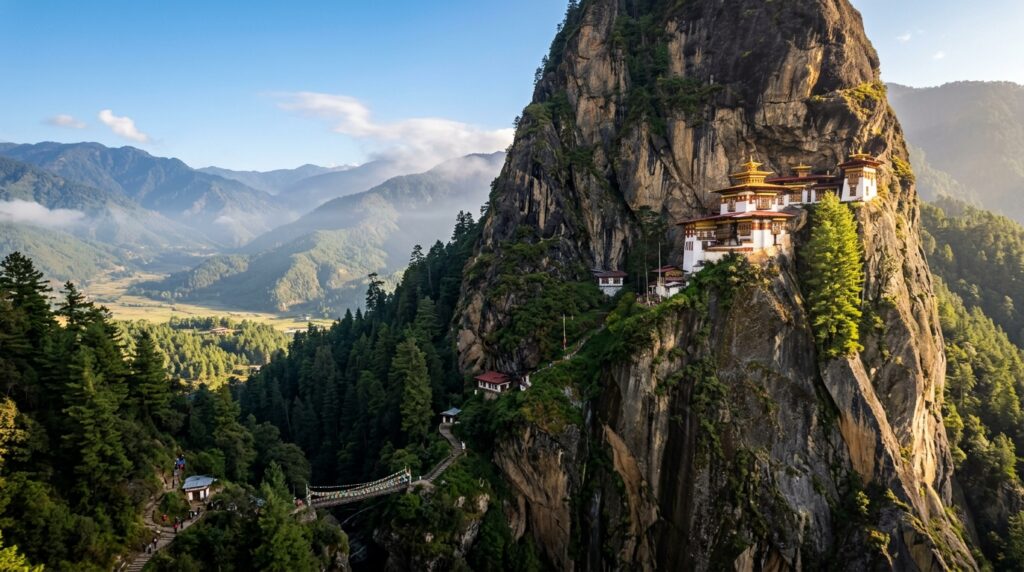
Overview Perched on a sheer granite cliff face 900 meters above the pine-scented Paro Valley (at an elevation of 3,120 meters above sea level), Taktsang Palphug Monastery, world-renowned as Tiger’s Nest, stands as Bhutan’s most iconic spiritual sanctuary and trekking experience. According to 8th-century Himalayan lore, Guru Rinpoche (Padmasambhava) flew to this cave on the back of a tigress to meditate, consecrating the mountain as sacred ground. While ascending to this architectural marvel is a bucket-list dream for travelers departing from Central India, the high-altitude terrain, steep cliffside pathways, and strict monastic decorum require careful physical preparation and cultural awareness. Mistakes such as rushing the 9-kilometer round-trip hike without proper acclimatization, improper pony usage on steep declines, wearing inadequate footwear, violating sacred temple dress codes, or taking unauthorized interior photographs can turn a spiritual pilgrimage into a hazardous or distressing experience. As Indore’s premier custom travel advisory, Travel Path Holiday (TPH) has crafted this definitive safety guide detailing the critical things to avoid at Paro Tiger’s Nest. Designed specifically for Indori travelers, this guide provides essential advice on high-altitude safety, trail logistics, monastic etiquette, and climate adjustments to ensure your journey is safe, comfortable, and deeply rewarding. Local Logistical Advice for Indore Travelers 1. Flight & Transit Coordinates from Indore For travelers departing from Indore’s Devi Ahilya Bai Holkar Airport (IDR), reaching Paro involves crossing international borders into a high-altitude alpine environment: Air Routes via Delhi or Kolkata: Take a early morning connection from Indore (IDR) to Indira Gandhi International Airport in Delhi (DEL) or Netaji Subhash Chandra Bose International Airport in Kolkata (CCU). From DEL or CCU, board an international connecting flight operated by Bhutan’s national carriers—Drukair or Bhutan Airlines—into Paro International Airport (PBH). Single-PNR Booking Advantage: Always ensure your flights from Indore to Paro are ticketed under a single PNR or coordinated with adequate buffer windows. This guarantees that your checked luggage is seamlessly transferred and protects you against missed connections caused by domestic flight delays. Overland Train/Road Option: Travelers who prefer ground transit can board the *Malwa Express* or connecting express trains from Indore Junction (INDB) to Hasimara Railway Station in West Bengal. From Hasimara, a short 30-minute taxi ride brings you to the border town of Phuentsholing, where you complete immigration before driving 4 to 5 hours up the scenic mountain highways to Paro. 2. Climate & Altitude Transition (Indore to Paro) Indore lies in the Malwa plateau at an altitude of approximately 553 meters, characterized by a warm, dry tropical climate. In contrast, Paro town sits at 2,250 meters, and the Tiger’s Nest summit reaches 3,120 meters above sea level. Oxygen & Temperature Drop: As you ascend from Indore’s ambient warmth to Paro’s high altitude, air density and oxygen pressure decrease significantly. Morning temperatures on the trail frequently drop below 5°C during spring and autumn, while winter temperatures can dip near freezing. Acclimatization Rule: NEVER schedule the Tiger’s Nest hike on Day 1 or Day 2 of your Bhutan itinerary. Attempting a 3,120-meter trek immediately after arriving from Central India increases the risk of altitude sickness. Travel Path Holiday structures your tour to place the Taktsang hike on Day 4 or Day 5, after you have acclimatized during lower-elevation sightseeing in Thimphu (2,320 m) and Punakha (1,300 m). 3. Prepaid SIM Cards & Mobile Connectivity No Domestic Indian Roaming: Standard prepaid SIM cards from Airtel, Jio, or Vi issued in Madhya Pradesh will not work under standard Indian domestic tariffs in Bhutan. Upon crossing the border or landing in Paro, they automatically switch to expensive international roaming rates. Buy a Local Tourist SIM: Upon arrival at Paro International Airport or the Phuentsholing immigration gate, purchase a local tourist SIM or eSIM from TashiCell or B-Mobile. A 30-day tourist data card costs approximately Nu. 500 (~INR 500) and provides reliable 4G connectivity across Paro Valley and the lower sections of the Tiger’s Nest trail. 4. Sustainable Development Fee (SDF) Clearances All Indian nationals visiting Bhutan must pay the official Sustainable Development Fee (SDF) of INR 1,200 per adult per night (children aged 6 to 12 receive a 50% discount; children under 6 are exempt). Travel Path Holiday pre-clears all SDF permits and entry vouchers before your departure from Indore, eliminating paperwork delays at airport immigration. 5. Pure Vegetarian Dining Logistics Bhutanese local cuisine relies heavily on local spices, chilies (*Ema Datshi*), and non-vegetarian stews. For Indori travelers who prefer hand-vetted vegetarian options or freshly cooked pure vegetarian dishes prepared without onion or garlic, TPH coordinates directly with partner resort kitchens in Paro. We arrange hot thermoses of herbal ginger-lemon tea and fresh vegetarian energy packs for your trekking day. Complete Details & Practical Guidelines “` =================================================================================== TAKTSANG (TIGER’S NEST) TRAIL PROFILE =================================================================================== Trailhead (Ramthangkha) Mid-Way Cafeteria Monastery Summit Elevation: 2,600 m Elevation: 2,940 m Elevation: 3,120 m ———————– ———————- ——————- [START] —> 2.0 km Uphill —> [REST & PONY STOP] —> 700 Stone Steps —> [TEMPLE] (Dirt Switchbacks) (Cliff Gorge & Bridge) =================================================================================== “` 1. Steep Climbing & Trail Hazards: Critical Mistakes to Avoid The trail to Tiger’s Nest covers approximately 4.5 kilometers uphill (9 kilometers round trip) with a total vertical elevation gain of over 550 meters. The terrain transitions from dusty pine-forest dirt tracks to rocky slopes, ending in a flight of over 700 narrow stone steps cut directly into the cliff side. Avoid Rushing the Ascent: Pushing a rapid pace during the initial dirt switchbacks causes sudden exhaustion, elevated heart rates, and muscle strain. Maintain a steady, rhythmic breathing pace. Take small, measured steps and schedule 2-minute standing breaks every 20 minutes. Avoid Wearing Casual or Smooth-Soled Shoes: DO NOT attempt this hike in flat sneakers, canvas shoes, slip-ons, or un-broken-in leather footwear. The trail contains loose gravel, exposed tree roots, and damp mud. Wear sturdy, ankle-high trekking boots with deep rubber lug soles (Vibram treads) to prevent slipping and protect your ankles from roll injuries. Avoid Trekking Without Walking Poles: Hiking without trekking poles places excessive impact on your knees and

Bhutan Honeymoon

Best Honeymoon Resorts in Thimphu Dzong for Couples

Overview Thimphu Dzong (the capital valley of the Kingdom of Bhutan) offers an enchanting blend of ancient Himalayan serenity, vibrant royal heritage, and breathtaking high-altitude mountain scenery, making it one of the world’s most romantic honeymoon destinations. For newly married couples seeking an intimate escape away from crowded commercial hill stations, Thimphu presents an extraordinary array of luxury honeymoon resorts and heritage retreats. Nestled amidst whispering blue-pine forests, overlooking the winding Wangchu River or facing the majestic illuminated fortress of Tashichho Dzong, these properties redefine romance. From ultra-exclusive sanctuaries featuring private infinity reflection pools and centuries-old traditional wood-burning *Bukhari* stoves to modern five-star havens equipped with hydronic central heating and radiant underfloor warmth, staying in Thimphu Dzong ensures uncompromised comfort even during chilly Himalayan nights. Couples can indulge in traditional Bhutanese *Dotsho* (herbal hot stone baths), private starlit candlelight dining featuring hand-vetted vegetarian options, and private monastic blessings for a prosperous union. This definitive guide details the top honeymoon resorts in Thimphu Dzong, complete with room amenities, heating capabilities, candlelight dining setups, tariff breakdowns, and seamless travel logistics tailored for couples departing from Central India. Local Logistical Advice for Indore Travelers Planning an international honeymoon from Indore to the Land of the Thunder Dragon requires smooth transit coordination, climate acclimatization, and mobile connectivity setup. Here are concrete, actionable travel guidelines for couples traveling from Madhya Pradesh: Flight and Overland Route Coordinates from Indore (IDR) Air Transit via Kolkata/Delhi: The fastest and most comfortable route from Indore is flying from Devi Ahilya Bai Holkar Airport (IDR) to Netaji Subhash Chandra Bose International Airport, Kolkata (CCU) or Indira Gandhi International Airport, Delhi (DEL) via early morning flights (operated by Air India or IndiGo). From Kolkata or Delhi, board an international connecting flight on Drukair (Royal Bhutan Airlines) or Bhutan Airlines directly into Paro International Airport (PBH). Upon landing in Paro, your private chauffeured vehicle arranged by Travel Path Holiday will take you on a scenic 1.5-hour drive (approx. 50 km) along the paring river highways straight into Thimphu Valley. Overland Scenic Entry: Alternatively, couples planning a relaxed multi-stop journey can travel by air or train (such as the Malwa Express or Ahilya Nagari Express connecting routes) to Bagdogra Airport (IXB) or New Jalpaiguri (NJP) / Hashimara (HSA) in West Bengal. From there, a private 4-hour drive brings you to the Indian border town of Jaigaon and Phuentsholing, Bhutan. After smooth immigration clearance, enjoy a stunning 4.5-hour mountain highway drive (165 km) past pine-clad peaks directly into Thimphu Dzong. Climate Transition & Winterization Essentials Temperature Shift: Travelers departing from Indore’s dry, tropical climate (where daytime temperatures often exceed 30°C to 35°C for much of the year) will experience an immediate transition upon reaching Thimphu’s altitude of 2,320 meters (7,612 feet). Seasonal Conditions: Spring (March to May) and Autumn (September to November) offer crisp, clear days with temperatures ranging between 10°C and 22°C, while evening temperatures drop swiftly to 4°C–8°C. Winters (December to February) bring severe mountain chills, with night temperatures frequently plunging below freezing (-5°C to 3°C). Heating Importance: Selecting a resort with verified central radiator heating, double-pane insulated windows, and radiant underfloor heating is essential. For winter departures, packing layered thermals, cashmere scarves, and windproof outer jackets ensures you remain warm during evening outdoor candlelight dinners. For comprehensive weather patterns throughout the year, review our detailed guide on the Best Time to Visit Thimphu Dzong. International SIM Cards & Mobile Connectivity Roaming Status: Standard Indian prepaid mobile SIM cards issued in Madhya Pradesh (such as Airtel, Jio, or Vi) do not operate in Bhutan under regular national roaming. Local Tourist SIM Setup: Upon arrival at Paro International Airport’s main terminal or the Phuentsholing entry gate, couples should purchase a local Bhutanese Tourist SIM or eSIM from B-Mobile (Bhutan Telecom) or TashiCell. A 15-day tourist SIM card costs between Nu/INR 500 and Nu/INR 1,100 ($6 to $13), providing robust 4G data coverage across Thimphu Dzong to easily share your honeymoon photos and stay connected with family back in Indore. Custom Vegetarian Meal Arrangements Dietary Comfort: Indori travelers accustomed to pure vegetarian meals will find Bhutanese luxury resorts exceptionally accommodating. Top properties in Thimphu Dzong offer hand-vetted vegetarian options/dining, featuring freshly cooked pure vegetarian dishes, light sattvik preparation options without onion or garlic upon prior request, and authentic North Indian flatbreads prepared by specialized in-house chefs. Complete Details & Practical Guidelines 1. Top Luxury & Heritage Honeymoon Resorts in Thimphu Dzong #### A. Six Senses Thimphu (“Palace in the Sky”) Perched grandly on the mountainside of Chunimading, Six Senses Thimphu is affectionately nicknamed the “Palace in the Sky.” Overlooking the timbered valley of Thimphu and the distant majestic outline of Tashichho Dzong, this ultra-luxury resort combines traditional Dzong-inspired grand timber architecture with sleek modern minimalism. Honeymoon & Romantic Features: Floor-to-ceiling glass windows in every suite offering panoramic mountain vistas, private infinity reflection pools that merge into the horizon, outdoor fire pits for romantic starlit evenings, and couple’s treatment suites in the world-renowned Six Senses Spa. Heating & Climate Control: Comprehensive radiant underfloor heating, automated central hydronic climate control, and double-glazed floor-to-ceiling thermal glass panels ensuring cozy indoor warmth regardless of outdoor sub-zero chills. Candlelight & Culinary Dining: Private candlelit dining setups floating over the reflection pond or held inside a secluded pine forest pavilion. The culinary team crafts bespoke multi-course menus, including exquisite hand-vetted vegetarian options/dining paired with non-alcoholic artisanal botanical elixirs or fine international wines. Tariff Range: ₹95,000 – ₹1,65,000 per night (subject to 10% service charge and applicable taxes). #### B. Amankora Thimphu Set within a secluded blue-pine forest in the upper Motithang area of Thimphu Dzong, Amankora Thimphu is a sanctuary of peace, understated luxury, and deep Bhutanese heritage. Built in the style of a traditional Dzong fortress with whitewashed rammed-earth walls and soaring timber roofs, it offers couples complete privacy and serenity. Honeymoon & Romantic Features: Intimate suite layouts featuring terrazzo soaking tubs placed alongside expansive window seats, secluded forest courtyards, guided private morning forest walks, and customized couple’s

Bhutan Honeymoon

Luxury Resorts in Dochula Pass: Premium Stays & Villas

Planning a Luxury Bhutan Getaway from Indore? Dochula Pass sits at an elevation of 3,100 meters (10,170 feet) along the mountain highway between Thimphu and Punakha. Staying in a luxury resort or alpine villa around this pass offers uninterrupted views of the snow-capped Eastern Himalayas, including Bhutan’s highest peak, Gangkar Puensum (7,570m). Travel Path Holiday arranges complete high-end packages featuring pre-cleared SDF permits, flight bookings from Indore, luxury heated vehicle transfers, and hand-picked resort reservations with central heating. > * Call TPH Indore: Consult Travel Path Holiday Indore * Primary Destination Hub: Explore our customized Indore to Bhutan Tour Packages Overview Perched at a commanding altitude of 3,100 meters (10,170 feet) on the mountain highway connecting Thimphu and Punakha, Dochula Pass is celebrated worldwide for its 108 memorial stupas—the Druk Wangyal Chortens—and its mesmerizing, 180-degree panoramic vista of the snow-capped Himalayan ranges. While many day-tourists stop briefly at the pass for photographs before descending down to Punakha or returning to Thimphu, discerning travelers choose to anchor their Bhutanese vacation in the luxury resorts, mountain lodges, and high-altitude private villas situated in and around the Dochula Pass corridor. Staying near Dochula Pass places you in the heart of Bhutan’s tranquil cloud forests and pine-forested ridges. Awakening to sub-zero alpine mists yielding to brilliant morning sunlight over 7,000-meter peaks is an experience matched by very few mountain destinations on earth. However, due to the high elevation and mountain winds, temperatures at Dochula Pass often hover between 5°C and 15°C during spring and autumn, dropping well below freezing (-5°C to 2°C) during winter nights. To ensure absolute warmth and refined comfort, top-tier accommodations around Dochula Pass and its surrounding ridges feature state-of-the-art climate control systems—ranging from hydronic underfloor radiant heating and double-glazed floor-to-ceiling panoramic glass walls to traditional Bhutanese *bukhari* (wood-burning stove) fireplaces. This comprehensive guide covers the finest luxury stays, villa categories, room amenities, night tariffs, and essential logistical advice tailored for travelers departing from Indore and Central India. Local Logistical Advice for Indore Travelers Planning a seamless luxury holiday from Indore to the high-altitude terrain of Dochula Pass requires careful flight routing, climate adjustments, SIM card management, and local currency preparation. Below are actionable coordinates compiled by Travel Path Holiday’s local travel advisors. 1. Flight & Transit Routes from Indore (IDR) to Bhutan Travelers departing from Indore’s Devi Ahilya Bai Holkar Airport (IDR) have two primary entry choices to reach Bhutan: Option A: Direct Air Route via Delhi/Kolkata (Recommended) Segment 1: Board an early morning domestic flight from Indore (IDR) to New Delhi (DEL) or Kolkata (CCU) via IndiGo or Air India. Segment 2: Catch a connecting international flight operated by Drukair (Royal Bhutan Airlines) or Bhutan Airlines from Delhi or Kolkata to Paro International Airport (PBH). Ground Transfer to Dochula: From Paro Airport, your private chauffeur in a luxury SUV (such as a Toyota Innova Crysta or Fortuner) will drive you through Thimphu to Dochula Pass—a scenic 2-hour drive (approx. 65 km) over smooth tarmac winding through blue pine forests. Option B: Air-cum-Overland Route via Bagdogra (IXB) Segment 1: Fly from Indore (IDR) to Bagdogra Airport (IXB) in West Bengal (connecting through Delhi). Segment 2: Take a private chauffeured transfer from Bagdogra across the border into Phuentsholing, Bhutan (approx. 4.5 hours drive). Segment 3: Ascend from Phuentsholing up the mountain highway to Thimphu and Dochula Pass (approx. 5.5 to 6 hours drive). Sustainable Development Fee (SDF) & Entry Permits: Indian citizens are required to pay the Sustainable Development Fee (SDF) of INR 1,200 per adult per night (children aged 6 to 12 pay INR 600/night). Travel Path Holiday pre-pays your SDF and clears your entry permits prior to your departure from Indore, eliminating queue times at Paro Airport or Phuentsholing border control. 2. Altitude Transition & Climate Preparedness Indore lies on the Malwa Plateau at an elevation of approximately 550 meters, characterized by warm to dry tropical weather for most of the year. Transitioning to Dochula Pass at 3,100 meters (10,170 feet) involves a dramatic shift in altitude and climate. Acclimatization Strategy: We recommend spending your first 1 or 2 nights at Paro (2,250m) or Thimphu (2,320m) before overnighting at high-altitude pass resorts (3,100m). This gradual ascent ensures smooth acclimatization without altitude discomfort. Packing for Altitude Chill: Even during summer months (May–July), evening temperatures at Dochula Pass drop to 10°C–12°C. For autumn and winter trips (October–February), heavy thermal baselayers, down jackets, cashmere scarves, and thermal socks are mandatory. 3. Prepaid SIM Cards & Mobile Connectivity Standard Indian mobile SIM cards (Airtel, Jio, Vi) cease domestic roaming upon crossing the Bhutanese border unless international roaming packages are activated prior to departure. Local Tourist SIM / eSIM: Upon arrival at Paro International Airport or the Phuentsholing immigration office, travelers can easily obtain a local tourist SIM card or eSIM from TashiCell or B-Mobile. Cost & Packages: A tourist SIM card costs approximately BTN / INR 500, which includes 10 GB to 15 GB of high-speed 4G data valid for 7 to 14 days. Resort Wi-Fi: All luxury resorts near Dochula Pass provide complimentary high-speed Wi-Fi across their guest rooms, villas, and public lounges, ensuring seamless connectivity with family back in MP. 4. Currency & Financial Logistics The local currency is the Bhutanese Ngultrum (BTN), which is officially pegged 1:1 with the Indian Rupee (INR). Indian Rupee currency notes of ₹100 and ₹500 are widely accepted across all shops, restaurants, and resorts in Bhutan. Luxury resorts accept international credit cards (Visa/Mastercard), but carrying ₹15,000 to ₹25,000 in cash is advisable for tipping driver-guides and purchasing authentic local handicrafts along the pass. Complete Details & Practical Guidelines Top Luxury Resorts, Eco-Lodges & Premium Cottages Near Dochula Pass Choosing the right accommodation near Dochula Pass depends on your preference for immediate pass proximity versus luxury mountain ridge sanctuaries situated along the Thimphu-Dochula-Punakha highway corridor. Here is an in-depth review of the top high-end stay options: “` +———————————————————————————–+ DOCHULA PASS LUXURY RESORT BELT [ Thimphu Valley ] [ Dochula Pass (3,100m) ] [ Punakha Valley

Bhutan Honeymoon

How to Reach Punakha Suspension Bridge from Indore: Flight & Train Routes

Overview Spanning 160 meters across the roaring turquoise waters of the Pho Chhu River, the Pakha Suspension Bridge (commonly known as the Punakha Suspension Bridge) is one of the longest and most breathtaking suspension bridges in Bhutan. Connecting the historic Punakha Dzong with the scenic agricultural villages of Shengana, Samdingkha, and Punakha Valley, walking across this suspension bridge draped in colorful Buddhist prayer flags (*lungta*) offers an unforgettable alpine experience. For travelers departing from Indore and Central India, reaching this iconic landmark requires navigating air or rail gateways into Eastern India, crossing the Himalayan border at Phuntsholing or landing at Paro, and taking a spectacular mountain drive across the 3,100-meter Dochula Pass. This comprehensive guide outlines every logistical detail from Indore to the Punakha Suspension Bridge—including flight schedules, train connections, entry permits, road routes, and practical travel guidelines. Local Logistical Advice for Indore Travelers Traveling from the Malwa plateau to the serene valleys of Bhutan requires well-coordinated travel itineraries across air, rail, and mountain road networks. 1. Air Travel Routes from Indore (IDR) Flying is the quickest and most convenient way for Indori travelers to reach Bhutan: Option A: Indore to Paro via Kolkata (Most Preferred) Flight 1 (Domestic): Board a morning flight from Devi Ahilya Bai Holkar Airport (IDR) to Netaji Subhash Chandra Bose International Airport, Kolkata (CCU). Direct or 1-stop flights operate daily via IndiGo and Air India (approx. 2 to 3.5 hours). Flight 2 (International): From Kolkata (CCU), take a direct flight operated by Drukair (Royal Bhutan Airlines) or Bhutan Airlines to Paro International Airport (PBH). Flight duration is approximately 1 hour 15 minutes. Onward Drive to Punakha: From Paro Airport, hire a private SUV to Punakha via the Thimphu-Punakha Highway (approx. 125 km / 4 to 4.5 hours drive). Option B: Indore to Paro via New Delhi Flight 1 (Domestic): Fly from Indore (IDR) to Indira Gandhi International Airport, New Delhi (DEL) (approx. 1 hour 30 minutes direct flight). Flight 2 (International): Board a non-stop Drukair or Bhutan Airlines flight from Delhi (DEL) to Paro (PBH) (approx. 2 hours 20 minutes). Option C: Indore to Bagdogra (Fly + Border Road Route) Flight: Fly from Indore (IDR) to Bagdogra Airport (IXB) in West Bengal via a connecting flight in Kolkata or Delhi. Road Connection: Take a pre-booked taxi from Bagdogra to the Indo-Bhutan border at Jaigaon / Phuntsholing (approx. 170 km / 4.5 to 5 hours drive). After immigration clearance at Phuntsholing, continue by road to Thimphu and Punakha. 2. Train Travel Routes from Indore (INDB) For travelers who prefer rail journeys across North and Eastern India: Option A: Indore to Hasimara (Nearest Railway Station to Bhutan Border) Leg 1: Board the Indore-Howrah Shipra Express (Train No. 22911/12295) from Indore Junction (INDB) to Kolkata (Howrah). Leg 2: From Howrah or Sealdah Station, board the Kanchankanya Express (13149) or Uttarbanga Express to Hasimara Railway Station (HSA) in West Bengal. Hasimara is located just 18 km (30–40 minutes auto/taxi drive) from the Jaigaon-Phuntsholing border gate. Option B: Indore to New Jalpaiguri (NJP) Take a train connection from Indore (INDB) to New Jalpaiguri Junction (NJP) via Kolkata or New Delhi rail corridors. From NJP Station, hire a private cab or shared taxi to Jaigaon/Phuntsholing (approx. 125 km / 3.5 to 4 hours drive). 3. Highway Road Coordinates: Phuntsholing to Punakha If entering Bhutan via the land border at Phuntsholing, your road journey to the Punakha Suspension Bridge covers two major legs: Leg 1: Phuntsholing to Thimphu (165 km / 5.5 to 6 hours) winding through steep subtropical mountains, waterfalls, and immigration checkpoints at Gedu and Chukha. Leg 2: Thimphu to Punakha (74 km / 2.5 to 3 hours) ascending to Dochula Pass (3,100 meters elevation) before descending into the warm, subtropical Punakha Valley (1,200 meters elevation). Total Border-to-Bridge Distance: Approx. 240 km (8 to 9 hours scenic mountain drive). 4. Climate Transition & Packing Essentials Indore rests on the Malwa plateau at ~550 meters elevation with a dry, tropical climate. Traveling to Bhutan brings significant elevation changes: Paro & Thimphu Valleys: Elevated between 2,200 and 2,350 meters, offering crisp, cool mountain air. Dochula Pass: High mountain pass at 3,100 meters elevation where winds are chilly and temperatures drop significantly (especially from October to March). Punakha Valley: Sits at a lower elevation of 1,200 meters with a warmer, semi-tropical microclimate. Clothing Advice: Indori travelers should dress in layers—thermal innerwear and a heavy windproof jacket for the mountain pass, paired with breathable cotton shirts for Punakha Valley walks. Sturdy, closed-toe walking shoes with non-slip rubber soles are essential for crossing the swaying suspension bridge safely. 5. Mobile Connectivity & Tourist SIM Cards Standard Indian domestic SIM cards (Jio, Airtel, Vi) automatically switch to international roaming upon crossing the border or landing in Paro: Local Tourist SIMs: Obtain a local TashiCell or B-Mobile tourist SIM card or eSIM upon arrival at Paro International Airport or the Phuntsholing Pedestrian Terminal. Cost & Activation: A 30-day tourist SIM costs approximately Nu. 200 to Nu. 500 (₹200 to ₹500) and includes generous mobile data bundles (5GB to 15GB). Carry a physical photocopy of your Indian Passport or Voter ID and approved entry permit for instant activation. Complete Details & Practical Guidelines 1. Permit Clearance & SDF Regulations for Indian Passport Holders Indian nationals enjoy special travel privileges in Bhutan, but must strictly abide by entry permit regulations: Mandatory Travel Documents: Indian citizens must present an Original Indian Passport (with at least 6 months remaining validity) OR an Original Voter Identity Card issued by the Election Commission of India. *Note: Aadhar cards, PAN cards, and driving licenses are NOT accepted for immigration entry permits.* Children under 18 without a passport must carry an original birth certificate along with a valid school identity card. Sustainable Development Fee (SDF): All Indian tourists must pay an SDF of ₹1,200 (Nu. 1,200) per adult per night. Children aged 6 to 12 receive a 50% concession (₹600 per night), while children below 6 years are exempt. Entry Permit: Issued at Paro

Bhutan Honeymoon

Best Time to Visit Thimphu Dzong: Month-by-Month Weather Guide

Overview The best time to visit Thimphu Dzong (officially known as *Tashichho Dzong*), the majestic fortress and administrative seat of Bhutan’s capital, is during the autumn months of September to November and the spring months of March to May. During autumn, Thimphu experiences brilliant azure skies, daytime temperatures between 15°C and 22°C, crisp mountain air, and the celebrated Thimphu Tshechu festival, where monks and laymen perform sacred masked Cham dances in the dzong’s grand courtyard. Spring brings mild weather, daytime temperatures around 18°C, and spectacular floral blooms of wild rhododendrons and magnolias across the surrounding Wangchu river valley. While Thimphu Dzong is open year-round to visitors outside of government office hours, choosing the right month significantly influences your experience. Winter (December to February) brings cold, sunny days and sub-zero nights with zero tourist crowds, whereas the summer monsoon (June to August) brings heavy afternoon downpours and lush green valley vistas. This comprehensive month-by-month weather, temperature, festival, and logistics guide helps travelers plan an unforgettable Himalayan journey to Bhutan’s grandest monastic fortress. Local Logistical Advice for Indore Travelers Traveling from the dry, tropical plains of Malwa in Madhya Pradesh to the high-altitude Himalayan valley of Thimphu (situated at 2,320 meters / 7,610 feet above sea level) requires careful logistical planning. Here are concrete, actionable travel coordinates for Indori travelers: Flight and Transit Routes from Indore 1. Air Route via New Delhi (DEL) or Kolkata (CCU): Depart from Indore Devi Ahilya Bai Holkar Airport (IDR) on an early morning flight to Indira Gandhi International Airport, New Delhi (DEL) or Netaji Subhash Chandra Bose International Airport, Kolkata (CCU). Board connecting international flights operated by Bhutan’s national carrier Drukair or Bhutan Airlines to Paro International Airport (PBH). Total flight transit time from Indore to Paro is typically 8 to 12 hours including layovers. From Paro Airport, Thimphu Dzong is a comfortable 1.5-hour drive (50 km) along the scenic Paro-Thimphu highway. 2. Overland Route via Hasimara / Phuentsholing: Take a long-distance express train from Indore Junction (such as the Ahilyanagari Express or connecting trains via Howrah) to Hasimara Railway Station (WB) or New Jalpaiguri (NJP). Alternatively, fly from Indore (IDR) to Bagdogra Airport (IXB) near Siliguri. Proceed by taxi to the Jaigaon-Phuentsholing border gate (approx. 4 hours from Bagdogra). After clearing immigration at Phuentsholing, complete a scenic 4.5-hour uphill drive (165 km) via Gedu and Chhuzom to reach Thimphu. Climate & Altitude Transition Temperature Shift: Indore experiences hot summers exceeding 40°C and mild winters around 10°C to 28°C. In contrast, Thimphu sits in an alpine mountain valley where daytime temperatures rarely exceed 26°C even in summer, and winter night temperatures routinely plunge to -2°C or lower. Acclimatization Tip: Indori travelers should carry layered thermal wear, windproof jackets, moisture-wicking inner layers, and UV protection sunblock. Even during pleasant autumn afternoons (20°C), temperatures drop precipitously as soon as the sun dips behind the surrounding ridges of Tashichho Dzong at 5:00 PM. Mobile Connectivity & Prepaid SIM Cards National Roaming Advisory: Standard Indian prepaid SIM cards (Jio, Airtel, Vi) do not operate under national roaming once you enter Bhutanese territory. Local SIM / eSIM Purchase: Upon landing at Paro International Airport or arriving at the Phuentsholing border office, purchase a local tourist SIM card or eSIM from TashiCell or B-Mobile. Registration requires presenting your Indian Passport or Voter Identity Card along with a nominal fee of ~100 to 200 Nu (including data talktime packages). High-speed 4G data works reliably throughout Thimphu town and Tashichho Dzong grounds. Currency Parity & Card Usage Indian Rupee Acceptance: The local currency is the Bhutanese Ngultrum (Nu), which is pegged 1:1 with the Indian Rupee (INR). Cash INR notes of ₹100 and ₹500 denomination are accepted everywhere in Thimphu for souvenirs, dining, and taxis. However, INR ₹2,000 notes are not accepted. Credit/debit cards incur a 3% to 5% international transaction surcharge, so carrying adequate cash INR is strongly advised. Complete Details & Practical Guidelines Sustainable Development Fee (SDF) & Entry Regulations Bhutan enforces a “High Value, Low Impact” tourism policy to preserve its delicate Himalayan ecosystems and rich cultural heritage. All international visitors must pay the Sustainable Development Fee (SDF): SDF Rate for Indian Passport Holders: Indian nationals (holding a valid Indian Passport with minimum 6 months validity or an original Voter ID card) pay a concessional Sustainable Development Fee of ₹1,200 INR per night per adult. Child Concessions: Children aged 6 to 12 receive a 50% discount (₹600 INR per night), while children under 6 years of age are exempt from the SDF. International Travelers (Non-Indian Passports): Non-Indian foreign tourists pay an SDF of $100 USD per night per adult (reduced from the previous rate of $200 USD), plus entry visa processing fees. Entry Permits: Indian tourists must obtain an online Entry Permit before travel or at the Phuentsholing/Paro immigration counters, supported by pre-confirmed hotel vouchers, SDF payment proof, and certified local guide bookings. Where SDF Money Goes: The fee directly finances Bhutan’s free national healthcare system, free public education, green carbon-neutral infrastructure, and the meticulous restoration of heritage monuments like Thimphu Dzong. Visiting Hours & Cultural Etiquette for Thimphu Dzong Tashichho Dzong serves a dual purpose: it houses the throne room and offices of His Majesty the King of Bhutan, government ministries, and the summer headquarters of the central monastic body (*Dratshang*). Visiting Hours for Tourists: Monday to Friday: 5:00 PM to 6:00 PM (Winter: 5:00 PM to 6:00 PM; Summer: 5:30 PM to 6:30 PM) after government administrative offices close. Saturdays, Sundays & National Holidays: 9:00 AM to 5:00 PM. Flag Lowering Ceremony: Visitors arriving between 5:00 PM and 5:30 PM can witness the formal retreat and flag-lowering ceremony conducted by royal military guards accompanied by traditional horn calls. Strict Dress Code: Guests must wear formal, modest attire. Full-length trousers or formal skirts covering knees, collared long-sleeve shirts or jackets are mandatory. Sleeveless tops, shorts, mini-skirts, caps, hats, umbrellas, and flip-flops/open sandals are strictly prohibited inside the dzong complex. Bhutanese locals wear traditional attire (*Gho* for men with white

Bhutan Honeymoon

Bhutan Tour Packages from Indore

Experience the Land of Happiness! Travel Path Holiday handles all the complex logistics of international travel to Bhutan. We pre-clear your Sustainable Development Fee (SDF) permits, book Paro flights, and arrange professional English-speaking local guides. Plan Your Custom Bhutan Trip or WhatsApp: 7869926222 | Instagram: instagram.com/travelpathholiday 1. Hero Section: Welcome to the Land of the Thunder Dragon The Hook: Leave the visa and permit stress to us. We design complete custom Bhutan tour packages from Indore featuring flight transits via Delhi/Kolkata, boutique resort stays, and private local transport. The Inclusions: SDF permit clearances, Paro flights, traditional boutique hotels, private local SUV, and certified local guides. The Action: Request Your Free Custom Itinerary Quote 2. Key Benefits of Booking with Us Hassle-Free SDF Processing: We calculate and pre-pay the Sustainable Development Fee (SDF) of INR 1,200 per night for your entire stay, ensuring your entry permits are issued without delays. Tiger’s Nest Trek Planning: We schedule the steep Taktsang Monastic hike at the end of your trip so your body is acclimatized to the altitude. We can pre-book mountain pony rides for the first half of the trail. Direct International Flights: We coordinate your flights from Indore (IDR) to Paro Airport (PBH) via Delhi, managing single-PNR baggage clearances. 3. Why Choose Travel Path Holiday Indore? Certified Bhutanese Guides: We assign local, licensed guides who share deep insights into Bhutanese culture, Buddhism, and history. Boutique Heritage Hotels: Stay in hotels featuring authentic wood carvings, hot stone baths, and modern amenities. Jain & Vegetarian Food Maps: We map out daily dining stops at verified restaurants serving pure vegetarian and Jain meals. 4. What is Included in Your Bhutan Tour Package? Included Services Excluded Services ✓ Return flight coordinates from Indore to Paro ✗ Sustainable Development Fee (SDF) of INR 1,200/night ✓ 5 Nights traditional boutique stays ✗ Personal travel insurance ✓ Certified local English-speaking guide ✗ Entry tickets to monument sights ✓ Private AC SUV for all local transits ✗ Laundry, phone calls, and shopping ✓ Daily breakfast and dinner at all resorts ✗ Porter and horse rental tips 5. Testimonials from Indore Couples “We chose Travel Path Holiday for our honeymoon in Bhutan. They handled the complex SDF permits and booked our flights via Delhi. The resort in Punakha had beautiful views of the valley, and our guide Tenzin was highly professional. A truly memorable experience!” — Amit & Neha Goel, *Vijay Nagar, Indore* “Their itinerary for Tiger’s Nest was perfectly planned. They advised us to hike on Day 5, which gave us plenty of time to acclimatize in Thimphu. The pony ride they arranged for my mother was highly convenient.” — Priya Mahajan, *Palasia, Indore* “As pure vegetarians, we were worried about finding food. TPH mapped out restaurants serving delicious Indian and Jain meals throughout our journey in Thimphu and Paro. Outstanding service.” — Rajesh Shah, *Saket, Indore* 6. Frequently Asked Questions (FAQs) Q1: Is a passport mandatory for Indian tourists visiting Bhutan? Yes. Indian nationals must carry a valid Passport (with at least 6 months validity) or their original Voter Identity Card to clear immigration at the border or airport. Q2: What is the Sustainable Development Fee (SDF) for Indian tourists? Indian tourists must pay an SDF of INR 1,200 per adult per night (children aged 6 to 12 receive a 50% discount; children under 6 are exempt). This fee goes toward local development and ecological preservation. Q3: What currency is accepted in Bhutan? The local currency is the Bhutanese Ngultrum, which is pegged to the Indian Rupee. Indian Rupee notes of INR 100 and INR 500 are widely accepted across Bhutan. Plan Your Bhutan Vacation Today Visit our office in Vijay Nagar, Indore, or contact our travel planners online to receive your free custom itinerary: WhatsApp: 7869926222 Instagram: instagram.com/travelpathholiday Office Address: 201, Commercial Plaza, Vijay Nagar (Opposite C21 Mall), Indore, MP 452010 Request Quote: Consult Our Customized Holidays Desk Explore More Destinations & Guides Homepage: Return to Travel Agency in Indore and browse all holiday packages. Contact Us: Reach our experts at Travel Agency Contact Indore to request custom quotes. Related Destinations: Explore our customized Meghalaya Tour Package from Indore. Explore our customized Himachal Pradesh Tour Package from Indore. Explore our customized Uttarakhand Tour Package from Indore. Relevant Travel Blogs: Read our guide on Best Time to Visit Thimphu Dzong: Month-by-Month Weather Guide. Read our guide on How to Reach Punakha Suspension Bridge from Indore: Flight & Train Routes. Read our guide on Top 10 Things to Do in Phobjikha Valley cranes: Sightseeing Itinerary.

You have been successfully Subscribed! Ops! Something went wrong, please try again.

About Us

Travel Path Holiday is a full-service travel company dedicated to delivering seamless, personalized, and memorable travel experiences. We specialize in crafting customized journeys for both corporate and leisure travelers, ensuring every trip is stress-free and enjoyable.

Destinations

Kashmir

Manali

Leh-Ladakh

Nepal

Bhutan

Blog

  • All Post
  • Adventure, Trekking & Road Trips
  • Andaman
  • Bali Honeymoon
  • Bhutan Honeymoon
  • Dubai Honeymoon
  • Family & Leisure
  • Goa Honeymoon
  • Gujarat
  • Himachal Honeymoon
  • Himachal Pradesh
  • Honeymoon & Romance
  • India Travel Guides
  • Kashmir Honeymoon
  • Kerala Honeymoon
  • Nepal Honeymoon
  • Rajasthan Honeymoon
  • Seasonal & Monsoon Specials
  • Sikkim & Northeast
  • Singapore Honeymoon
  • Spiritual & Pilgrimage
  • Thailand
  • Tour Packages & Guides
  • Uttarakhand Honeymoon

Travel Path Holiday, Indore | © 2026 Travel Path Holiday. All Rights Reserved. | Website crafted by Amit Nayak, India

Scroll to Top