Tour Packages & Guides

Local Food in Chele La Pass: What and Where to Eat

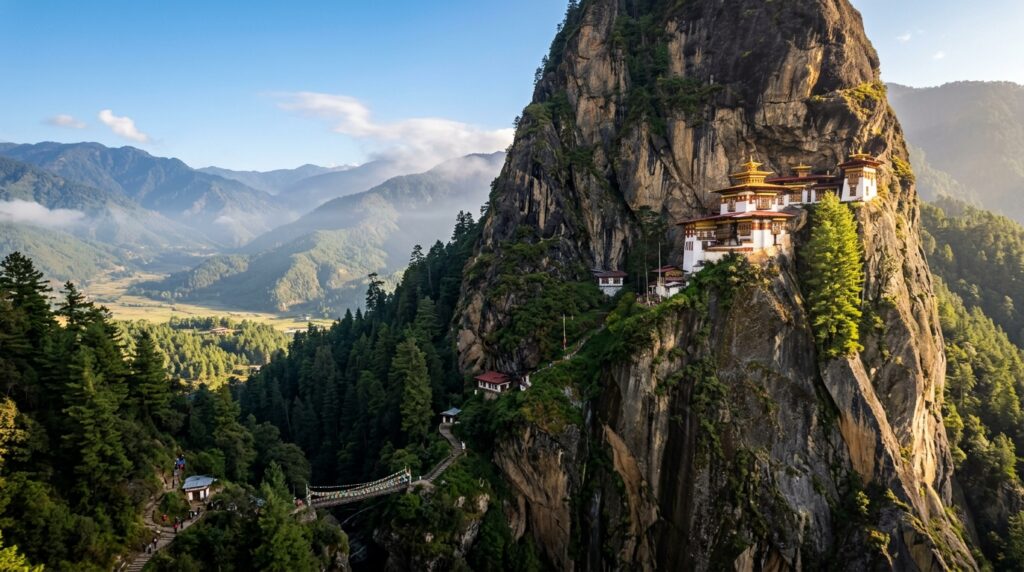
Overview Standing at an altitude of 3,988 meters (13,084 feet) above sea level, Chele La Pass is the highest motorable road pass in Bhutan, offering jaw-dropping panoramic vistas of the snow-capped Mount Jomolhari and the lush valleys of Paro and Haa. Beyond its misty prayer flags and mountain breezes, exploring the local food in Chele La Pass is an unforgettable culinary adventure. The mountain air, biting wind chill, and high altitude naturally work up a hearty appetite, making rustic Bhutanese comfort food a warm necessity. Visitors can indulge in traditional staples such as Ema Datshi (spicy green chillies cooked in rich cheese broth), Kewa Datshi (comforting potato cheese curry), organic Bhutanese Red Rice, steamed Haa Hoentay (buckwheat dumplings), and piping-hot Suja (salted mountain butter tea). Whether you are stopping at high-altitude summit food vans or cozy traditional timber cafes along the Paro-Haa highway, discovering what and where to eat around Chele La Pass ensures your high-altitude journey is both culturally enriching and thoroughly delicious, with plentiful hand-vetted vegetarian options/dining suited for travelers from Central India. Local Logistical Advice for Indore Travelers Planning a high-altitude mountain trip to Bhutan from Indore requires thoughtful logistical preparation, especially regarding flight connections, climate adaptation, mobile connectivity, and meal arrangements. Here is practical advice for travelers departing from Madhya Pradesh: Flight Coordinates & Transit Routing from Indore: Travelers departing from Indore will fly out of Devi Ahilya Bai Holkar Airport (IDR). Because Paro International Airport (PBH) is Bhutan’s sole international airport, seamless layovers are booked via Indira Gandhi International Airport, New Delhi (DEL) or Netaji Subhash Chandra Bose International Airport, Kolkata (CCU). A typical itinerary features a morning flight from IDR to DEL (approx. 1 hour 40 minutes on IndiGo or Air India), followed by a direct Drukair or Bhutan Airlines flight to Paro (approx. 2 hours 20 minutes). Travel Path Holiday arranges single-PNR tickets to guarantee smooth baggage transfer across transits. Drastic Climate & Altitude Shift: Indore lies in a tropical dry zone at an elevation of roughly 550 meters, with daytime temperatures usually ranging between 28°C and 40°C. In sharp contrast, Chele La Pass soars to nearly 4,000 meters. Daytime temperatures at the summit remain crisp even in summer (8°C to 14°C) and plummet well below freezing (-5°C to -15°C) with biting wind chill during winter months. Layering is non-negotiable—pack thermal base layers, a windproof fleece or down jacket, woolen caps, and insulated gloves. Altitude Acclimatization & Meal Timing Strategy: Because driving directly from Indore’s low elevation to 3,988 meters can trigger Acute Mountain Sickness (AMS), spend at least two consecutive nights acclimatizing in Paro town (2,200 meters) before embarking on the 35 km serpentine drive up Chele La Highway. Eat light, carbohydrate-heavy meals like Bhutanese red rice and Kewa Datshi prior to the climb, and avoid heavy overeating right before negotiated mountain curves. Prepaid SIM Card & Mobile Connectivity Notice: Standard Indian prepaid SIM cards (Jio, Airtel, Vi registered in MP) do not operate under regular domestic roaming once you cross into Bhutan. International travelers must either activate an international roaming pack prior to departure or purchase a local TashiCell or B-Mobile tourist SIM card upon landing at Paro Airport or in Paro town center. Carrying a valid passport and your Bhutan SDF entry permit is mandatory for instant SIM activation. Hand-Vetted Vegetarian Dining Preparedness: For Indori travelers who adhere strictly to vegetarian dietary practices, Bhutan is exceptionally welcoming. Traditional Bhutanese cuisine is naturally centered around fresh farm produce, wild mountain mushrooms, cheese, and red rice. Travel Path Holiday pre-arranges hand-vetted vegetarian options/dining at trusted mountain eateries along the route to guarantee clean, un-contaminated, pure vegetarian meals cooked in separate kitchen setups. Complete Details & Practical Guidelines 1. Signature Bhutanese Traditional Foods at Chele La Pass Eating at nearly 13,000 feet altitude is a uniquely sensory experience. The intense mountain cold makes rich, spicy, and steaming hot dishes taste extraordinarily comforting. Here are the top traditional dishes you must taste around Chele La Pass: #### Ema Datshi (Chilli Cheese) What It Is: Ema Datshi is Bhutan’s celebrated national dish. “Ema” means chilli and “Datshi” means cheese. Fresh green or dried red mountain chillies are split open and simmered in a warm, flavorful broth of local yak or cow milk cheese, garlic, and butter. Flavor Profile: Fiery, creamy, and deeply aromatic. For Indian Palates: Indori food lovers who appreciate spicy food will love authentic Ema Datshi. If you prefer milder heat, local pass vendors can prepare a “mild chilli” version using thick, non-spicy bell peppers or sweet green chillies. #### Kewa Datshi (Potato Cheese Curry) What It Is: “Kewa” translates to potato. Sliced mountain potatoes are stewed slowly with local cheese, onions, butter, and a touch of green chilli. Flavor Profile: Mild, rich, savory, and immensely comforting. Why Try It: It is one of the most popular hand-vetted vegetarian options for families and children, providing essential carbohydrates for high-altitude energy. #### Bhutanese Red Rice (Yufam) What It Is: Medium-grain unpolished red rice grown in the mineral-rich glacial soil of Paro Valley. Flavor Profile: Slightly nutty, firm-textured, and reddish-pink in color. Nutritional Value: Packed with complex carbohydrates and minerals, red rice is the foundational base for all Bhutanese Datshi gravies and digests easily in alpine mountain weather. #### Haa Hoentay (Buckwheat Dumplings) What It Is: A rare culinary specialty originating from the adjoining Haa Valley, frequently served fresh at Chele La Pass stalls. These heart-shaped dumplings are crafted from organic buckwheat dough and stuffed with dried turnip greens, cottage cheese, amaranth seeds, and fragrant mountain herbs. Preparation: Available steamed or light pan-fried. Vegetarian Note: Hoentay is 100% vegetarian, incredibly flavorful, and pairs brilliantly with local chilli salsa. #### Shamu Datshi (Mushroom Cheese Stew) What It Is: Wild forest mushrooms (such as chanterelles or local oyster mushrooms) cooked in traditional cheese gravy. Flavor Profile: Earthy, creamy, and rich in natural umami. #### Suja (Bhutanese Salted Butter Tea) What It Is: Made from brick tea leaves churned with fresh mountain yak butter or cow butter
Tour Packages & Guides

Budget Planning Guide for a Vacation to Haa Valley

Planning a Budget Trip to Haa Valley from Indore? Haa Valley is Bhutan’s most authentic, pristine, and culturally preserved district. Traveling on a budget to Haa Valley requires clear financial planning around the Sustainable Development Fee (SDF), local homestay bookings, transport across Chele La Pass, and hiking permits. Travel Path Holiday helps Indori travelers optimize every rupee for an unforgettable Himalayan getaway. Overview Planning a budget trip to Haa Valley offers travelers from Indore an unparalleled window into Bhutan’s untouched high-mountain culture, sacred monasteries, and alpine pine forests without inflating travel expenses. Tucked away in the western corner of Bhutan near the border of Tibet, Haa Valley was only opened to foreign tourists in 2002, making it one of the least commercialized valleys in the Kingdom. For budget-conscious travelers, Haa is a hidden sanctuary: authentic village homestays replace pricey luxury resorts, local farmhouse dining replaces expensive hotel buffets, and scenic alpine trails offer free, breathtaking adventures. With proper financial planning—spanning the Sustainable Development Fee (SDF) of INR 1,200 per night, shared or private SUV transport across the stunning Chele La Pass (3,988 meters), cozy traditional homestay tariffs, and regional permits—an immersive 3-day to 4-day excursion into Haa Valley can easily fit within a practical budget. This comprehensive guide covers exact cost breakdowns, local dining expenses, transit strategies from Indore, hiking permit guidelines, and money-saving travel advice. Local Logistical Advice for Indore Travelers 1. Air and Overland Transit Options from Indore Traveling from Malwa’s commercial hub in Indore to the serene heights of Haa Valley involves two major travel routes: Flight Route (Fastest & Convenient): Take an early morning flight from Indore’s Devi Ahilya Bai Holkar Airport (IDR) to Indira Gandhi International Airport, Delhi (DEL) or Netaji Subhash Chandra Bose International Airport, Kolkata (CCU). From Delhi or Kolkata, connect on a direct international flight operated by Drukair or Bhutan Airlines to Paro International Airport (PBH). *Pro-tip for Indori Travelers:* Book your IDR-DEL/CCU flight on a single PNR or allow at least 3 to 4 hours layover to clear luggage transfer before catching the morning flight to Paro. From Paro Airport, Haa Valley is roughly 65 km away via the scenic Chele La Pass (approx. 2.5 to 3 hours drive by private cab). Train & Overland Route (Maximum Budget Savings): Board an express train from Indore Junction (INDB) to Howrah / Kolkata or New Jalpaiguri (NJP) / Hasimara Railway Station. From Hasimara or NJP, take a short road transfer (cab or local bus) to the Indo-Bhutan border town of Phuentsholing. After completing border entry clearance at Phuentsholing, travel overland via the Phuentsholing–Chhukha–Thimphu–Haa highway (approx. 165 km, 6 to 7 hours drive). 2. Climate Transition: From Indore’s Heat to High-Altitude Alpine Chills Indore’s tropical dry climate features warm summers reaching 38°C–42°C and mild winters. Haa Valley, situated at an altitude of over 2,700 meters (8,900 feet), experiences cool alpine weather year-round: Summer (May to August): Daytime temperatures range between 15°C and 22°C, accompanied by frequent high-altitude rains. Soft thermals and lightweight waterproof jackets are essential. Autumn (September to November): Crisp, crystal-clear mountain skies with daytime temps around 10°C to 16°C and night temperatures dropping to 2°C–5°C. Heavy woolens are mandatory. Winter (December to February): Severe sub-zero temperatures (0°C to -8°C) with occasional snowfall over Chele La Pass. Heavy thermal layers, down jackets, and insulated gloves are non-negotiable. 3. Prepaid Tourist SIM Cards & Connectivity Standard Indian prepaid SIM cards (Airtel, Jio, Vi from MP circle) cease operating once you cross into Bhutan under national roaming limits. Local Tourist SIM Purchase: Upon arrival at Paro Airport or Phuentsholing border immigration, purchase a local tourist SIM card or eSIM from TashiCell or B-Mobile. Cost: Standard tourist SIM packs cost approximately BTN/INR 200 to INR 500, which includes 5GB to 15GB of 4G data valid for 7 to 14 days. Coverage in Haa: TashiCell and B-Mobile provide solid 4G/LTE connectivity in Haa town and major village homestays, though signal strength may dip along high mountain trekking trails. International roaming packages can also be activated prior to departing Indore, but local tourist SIMs remain far more economical. Complete Details & Practical Guidelines 1. Sustainable Development Fee (SDF) Guidelines for Indian Travelers The Sustainable Development Fee is mandatory for all foreign tourists visiting Bhutan, designed to preserve the country’s pristine environment and cultural heritage. Standard Tariff for Indian Nationals: INR 1,200 per adult per night. Child Concessions: Children aged 6 to 12 receive a 50% discount (INR 600 per night). Children under 6 years of age are completely exempt from the SDF. Pre-Payment & Permits: The SDF must be pre-paid online during the entry permit application process. Travel Path Holiday handles all pre-payment logistics and permit approvals directly so your entry documents are ready before departure from Indore. Budget Impact: For a 3-night stay in Haa Valley, the SDF totals INR 3,600 per adult. Factoring this fee into your initial itinerary budget avoids any last-minute surprises. 2. Haa Valley Homestay Pricing & Accommodations Staying in a traditional Bhutanese homestay is the single best way to keep your trip affordable while experiencing authentic Bhutanese village life. Unlike expensive luxury resorts in Paro or Thimphu, Haa Valley’s homestays offer warm hospitality, wood-fired *bukhari* heaters, and home-cooked meals. Budget Homestays (INR 1,500 – INR 2,500 per night for 2 adults): *Features:* Cozy wooden rooms, shared or attached traditional bathrooms, complimentary hot Tibetan tea, and stunning views of the Haa Chu river or surrounding apple orchards. *Top Recommended Villages:* Dumchoe Village, Noba Village, and Katsho Village. Mid-Range Heritage Homestays (INR 2,800 – INR 4,200 per night): *Features:* Private en-suite bathrooms, traditional hot stone bath availability (on request for ~INR 800–1,200 per session), and spacious wood-paneled rooms with handcrafted Bhutanese textiles. Inclusions: Most homestay tariffs include home-cooked breakfast and traditional dinner, significantly slashing your daily food expenditures. 3. Food & Dining Costs in Haa Valley Dining in Haa Valley is centered around fresh mountain produce, buckwheat specialties, and hearty winter broths. Average Meal Cost: INR 250 – INR 450 per meal per

Bhutan Honeymoon

Luxury Resorts in Dochula Pass: Premium Stays & Villas

Planning a Luxury Bhutan Getaway from Indore? Dochula Pass sits at an elevation of 3,100 meters (10,170 feet) along the mountain highway between Thimphu and Punakha. Staying in a luxury resort or alpine villa around this pass offers uninterrupted views of the snow-capped Eastern Himalayas, including Bhutan’s highest peak, Gangkar Puensum (7,570m). Travel Path Holiday arranges complete high-end packages featuring pre-cleared SDF permits, flight bookings from Indore, luxury heated vehicle transfers, and hand-picked resort reservations with central heating. > * Call TPH Indore: Consult Travel Path Holiday Indore * Primary Destination Hub: Explore our customized Indore to Bhutan Tour Packages Overview Perched at a commanding altitude of 3,100 meters (10,170 feet) on the mountain highway connecting Thimphu and Punakha, Dochula Pass is celebrated worldwide for its 108 memorial stupas—the Druk Wangyal Chortens—and its mesmerizing, 180-degree panoramic vista of the snow-capped Himalayan ranges. While many day-tourists stop briefly at the pass for photographs before descending down to Punakha or returning to Thimphu, discerning travelers choose to anchor their Bhutanese vacation in the luxury resorts, mountain lodges, and high-altitude private villas situated in and around the Dochula Pass corridor. Staying near Dochula Pass places you in the heart of Bhutan’s tranquil cloud forests and pine-forested ridges. Awakening to sub-zero alpine mists yielding to brilliant morning sunlight over 7,000-meter peaks is an experience matched by very few mountain destinations on earth. However, due to the high elevation and mountain winds, temperatures at Dochula Pass often hover between 5°C and 15°C during spring and autumn, dropping well below freezing (-5°C to 2°C) during winter nights. To ensure absolute warmth and refined comfort, top-tier accommodations around Dochula Pass and its surrounding ridges feature state-of-the-art climate control systems—ranging from hydronic underfloor radiant heating and double-glazed floor-to-ceiling panoramic glass walls to traditional Bhutanese *bukhari* (wood-burning stove) fireplaces. This comprehensive guide covers the finest luxury stays, villa categories, room amenities, night tariffs, and essential logistical advice tailored for travelers departing from Indore and Central India. Local Logistical Advice for Indore Travelers Planning a seamless luxury holiday from Indore to the high-altitude terrain of Dochula Pass requires careful flight routing, climate adjustments, SIM card management, and local currency preparation. Below are actionable coordinates compiled by Travel Path Holiday’s local travel advisors. 1. Flight & Transit Routes from Indore (IDR) to Bhutan Travelers departing from Indore’s Devi Ahilya Bai Holkar Airport (IDR) have two primary entry choices to reach Bhutan: Option A: Direct Air Route via Delhi/Kolkata (Recommended) Segment 1: Board an early morning domestic flight from Indore (IDR) to New Delhi (DEL) or Kolkata (CCU) via IndiGo or Air India. Segment 2: Catch a connecting international flight operated by Drukair (Royal Bhutan Airlines) or Bhutan Airlines from Delhi or Kolkata to Paro International Airport (PBH). Ground Transfer to Dochula: From Paro Airport, your private chauffeur in a luxury SUV (such as a Toyota Innova Crysta or Fortuner) will drive you through Thimphu to Dochula Pass—a scenic 2-hour drive (approx. 65 km) over smooth tarmac winding through blue pine forests. Option B: Air-cum-Overland Route via Bagdogra (IXB) Segment 1: Fly from Indore (IDR) to Bagdogra Airport (IXB) in West Bengal (connecting through Delhi). Segment 2: Take a private chauffeured transfer from Bagdogra across the border into Phuentsholing, Bhutan (approx. 4.5 hours drive). Segment 3: Ascend from Phuentsholing up the mountain highway to Thimphu and Dochula Pass (approx. 5.5 to 6 hours drive). Sustainable Development Fee (SDF) & Entry Permits: Indian citizens are required to pay the Sustainable Development Fee (SDF) of INR 1,200 per adult per night (children aged 6 to 12 pay INR 600/night). Travel Path Holiday pre-pays your SDF and clears your entry permits prior to your departure from Indore, eliminating queue times at Paro Airport or Phuentsholing border control. 2. Altitude Transition & Climate Preparedness Indore lies on the Malwa Plateau at an elevation of approximately 550 meters, characterized by warm to dry tropical weather for most of the year. Transitioning to Dochula Pass at 3,100 meters (10,170 feet) involves a dramatic shift in altitude and climate. Acclimatization Strategy: We recommend spending your first 1 or 2 nights at Paro (2,250m) or Thimphu (2,320m) before overnighting at high-altitude pass resorts (3,100m). This gradual ascent ensures smooth acclimatization without altitude discomfort. Packing for Altitude Chill: Even during summer months (May–July), evening temperatures at Dochula Pass drop to 10°C–12°C. For autumn and winter trips (October–February), heavy thermal baselayers, down jackets, cashmere scarves, and thermal socks are mandatory. 3. Prepaid SIM Cards & Mobile Connectivity Standard Indian mobile SIM cards (Airtel, Jio, Vi) cease domestic roaming upon crossing the Bhutanese border unless international roaming packages are activated prior to departure. Local Tourist SIM / eSIM: Upon arrival at Paro International Airport or the Phuentsholing immigration office, travelers can easily obtain a local tourist SIM card or eSIM from TashiCell or B-Mobile. Cost & Packages: A tourist SIM card costs approximately BTN / INR 500, which includes 10 GB to 15 GB of high-speed 4G data valid for 7 to 14 days. Resort Wi-Fi: All luxury resorts near Dochula Pass provide complimentary high-speed Wi-Fi across their guest rooms, villas, and public lounges, ensuring seamless connectivity with family back in MP. 4. Currency & Financial Logistics The local currency is the Bhutanese Ngultrum (BTN), which is officially pegged 1:1 with the Indian Rupee (INR). Indian Rupee currency notes of ₹100 and ₹500 are widely accepted across all shops, restaurants, and resorts in Bhutan. Luxury resorts accept international credit cards (Visa/Mastercard), but carrying ₹15,000 to ₹25,000 in cash is advisable for tipping driver-guides and purchasing authentic local handicrafts along the pass. Complete Details & Practical Guidelines Top Luxury Resorts, Eco-Lodges & Premium Cottages Near Dochula Pass Choosing the right accommodation near Dochula Pass depends on your preference for immediate pass proximity versus luxury mountain ridge sanctuaries situated along the Thimphu-Dochula-Punakha highway corridor. Here is an in-depth review of the top high-end stay options: “` +———————————————————————————–+ DOCHULA PASS LUXURY RESORT BELT [ Thimphu Valley ] [ Dochula Pass (3,100m) ] [ Punakha Valley

Tour Packages & Guides

Top 10 Things to Do in Phobjikha Valley cranes: Sightseeing Itinerary

Overview Nestled at an elevation of 3,000 meters (9,800 feet) in the Wangdue Phodrang district of central Bhutan, Phobjikha Valley (also widely known as Gangtey Valley) is a breathtaking, U-shaped glacial valley that feels worlds away from urban life. Famous globally as the winter nesting sanctuary of the rare, endangered Black-necked Cranes (*Grus nigricollis*), this serene alpine wetland combines untouched nature, 17th-century Buddhist spirituality, and traditional Bhutanese valley life. Every year between late October and mid-March, hundreds of majestic cranes migrate here from the high Tibetan Plateau, circling the historic Gangtey Monastery three times upon arrival and departure as if performing a sacred *kora*. For travelers from Central India seeking an authentic, off-the-beaten-path Himalayan retreat, Phobjikha Valley offers an enchanting itinerary. From walking the famed Gangtey Nature Trail and visiting the Crane Conservation Centre to experiencing traditional hot stone baths (*Dotsho*) and staying in wooden farmhouses warmed by *bukhari* stoves, Phobjikha presents a rare blend of eco-tourism and cultural immersion. This definitive guide curated by Travel Path Holiday outlines the top 10 things to do in Phobjikha Valley, along with practical logistical advice tailored specifically for travelers departing from Indore. Local Logistical Advice for Indore Travelers Planning a journey from the flat plateau of Malwa to the high-altitude glacial meadows of Phobjikha requires strategic transit planning, climate adjustments, and permit management. Here is everything Indori travelers need to know before embarking on this Himalayan trip. 1. Reaching Bhutan & Phobjikha Valley from Indore Air Travel Route (Fastest Option): Board a direct flight from Indore’s Devi Ahilya Bai Holkar Airport (IDR) to Kolkata (CCU) or New Delhi (DEL). From Kolkata or Delhi, take a connecting flight operated by Drukair (Royal Bhutan Airlines) or Bhutan Airlines directly into Paro International Airport (PBH). Overland Route via West Bengal Border: For travelers preferring a scenic rail-and-road trip, take the *Malwa Express* or *Karma Bhumi Express* from Indore Junction to Howrah/New Jalpaiguri or Hasimara Railway Station (located just 18 km from the Indo-Bhutan border at Jaigaon/Phuentsholing). After completing entry immigration at Phuentsholing, hire a private driver to travel inland. On-Ground Highway Transit to Phobjikha: From Paro Airport, Phobjikha Valley is approximately 165 km away (a 6.5 to 7-hour mountain drive via Dochula Pass and Wangdue Phodrang). From Thimphu, it is 135 km (5 hours), and from Punakha, it is 78 km (3 hours). Vehicles must cross the scenic Lawala Pass (3,300m) before descending into the tranquil Phobjikha bowl. 2. Climate Shift & High-Altitude Preparedness Indore’s tropical dry climate (with pleasant winter averages around 15°C to 28°C) contrasts sharply with Phobjikha’s sub-alpine conditions. At 3,000 meters, Phobjikha experiences sub-zero night temperatures (-1°C to -8°C) between November and February, with frost covering the valley floor each morning. Summer temperatures (May to August) range between a cool 10°C and 18°C. Packing Essentials: Central Indian travelers should pack thermal base layers, heavy down jackets, woolen caps, thermal socks, windproof jackets, and comfortable waterproof hiking boots for nature trails. 3. SIM Cards & Mobile Connectivity Warning Mobile Network Notice: Indian prepaid SIM cards (Airtel, Jio, Vi) from Madhya Pradesh do not work under national roaming anywhere in Bhutan. Upon arrival at Phuentsholing border or Paro Airport, purchase a local Bhutanese tourist SIM card (TashiCell or B-Mobile). A standard 14-day tourist SIM with 5GB to 10GB of data costs approximately Nu./₹500. Internet connectivity in Phobjikha Valley is available in major lodges and farmstays, though speeds may fluctuate in remote trail areas. 4. Sustainable Development Fee (SDF) & Entry Permits Indian passport holders are required to pay a Sustainable Development Fee (SDF) of ₹1,200 per adult per night (and ₹600 per child aged 6–12 per night). Additionally, traveling east beyond Thimphu and Punakha into the Wangdue Phodrang region requires a regional route permit. Travel Path Holiday arranges all SDF clearances, route permits, and private luxury vehicle approvals (Innova Crysta or Fortuner) seamlessly prior to your departure from Indore. 5. Currency & Payment Guidelines The Bhutanese Ngultrum (Nu.) is pegged 1:1 with the Indian Rupee (INR). Indian currency notes (₹100, ₹200, ₹500) are accepted across all farmstays, shops, and restaurants in Phobjikha Valley. Note that digital UPI payments (GPay, PhonePe) used in Indore do not operate directly in Bhutan, so carrying adequate physical INR cash is recommended. Complete Details & Practical Guidelines Top 10 Things to Do in Phobjikha Valley #### 1. Visit the Black-necked Crane Information Centre & Birdwatching Sanctuary Located in Gangtey, the Royal Society for Protection of Nature (RSPN) Crane Centre is the focal point for eco-tourism in the valley. The facility features informative exhibits detailing the migratory patterns of the Black-necked Cranes (*Grus nigricollis*), roosting ecology, and local conservation initiatives. Key Highlights: The centre houses high-powered spotting scopes and optical telescopes pointing toward the roosting wetlands below. Visitors can watch a gripping 15-minute conservation documentary film and meet “Karma,” a rescued resident crane cared for by sanctuary naturalists. Best Time for Spotting: Mid-November to mid-February, early mornings and late afternoons when cranes fly between feeding grounds and roosting marshlands. Entry Fee: Nu./₹150 per person. Operating Hours: 9:00 AM – 5:00 PM (Daily). #### 2. Hike the Scenic Gangtey Nature Trail (Tenkhor Hike) The Gangtey Nature Trail is arguably the most famous and accessible day hike in Bhutan. Starting from the hilltop courtyard of Gangtey Monastery, this gentle 5.5-kilometer trail winds downhill through flower-filled meadows, dense blue pine forests, and bamboo groves, offering uninterrupted vistas of the vast open valley floor. Route Details: Gangtey Monastery → Semchubara Village → Blue Pine Forest → Khewang Lhakhang. Difficulty & Duration: Easy; approximately 1.5 to 2 hours of easy walking. Suitable for families, seniors, and casual walkers. Highlights: Panoramic photo viewpoints overlooking the crane roosting area, wooden footbridges crossing mountain streams, and fresh alpine air. #### 3. Explore the 17th-Century Gangtey Monastery (Gangteng Sanga Choeling) Perched on a forested ridge overlooking the entire expanse of Phobjikha Valley, Gangtey Monastery is a masterwork of traditional Bhutanese architecture and the principal seat of the Pema Lingpa tradition of Nyingma Buddhism. Founded in 1613 by

Bhutan Honeymoon

How to Reach Punakha Suspension Bridge from Indore: Flight & Train Routes

Overview Spanning 160 meters across the roaring turquoise waters of the Pho Chhu River, the Pakha Suspension Bridge (commonly known as the Punakha Suspension Bridge) is one of the longest and most breathtaking suspension bridges in Bhutan. Connecting the historic Punakha Dzong with the scenic agricultural villages of Shengana, Samdingkha, and Punakha Valley, walking across this suspension bridge draped in colorful Buddhist prayer flags (*lungta*) offers an unforgettable alpine experience. For travelers departing from Indore and Central India, reaching this iconic landmark requires navigating air or rail gateways into Eastern India, crossing the Himalayan border at Phuntsholing or landing at Paro, and taking a spectacular mountain drive across the 3,100-meter Dochula Pass. This comprehensive guide outlines every logistical detail from Indore to the Punakha Suspension Bridge—including flight schedules, train connections, entry permits, road routes, and practical travel guidelines. Local Logistical Advice for Indore Travelers Traveling from the Malwa plateau to the serene valleys of Bhutan requires well-coordinated travel itineraries across air, rail, and mountain road networks. 1. Air Travel Routes from Indore (IDR) Flying is the quickest and most convenient way for Indori travelers to reach Bhutan: Option A: Indore to Paro via Kolkata (Most Preferred) Flight 1 (Domestic): Board a morning flight from Devi Ahilya Bai Holkar Airport (IDR) to Netaji Subhash Chandra Bose International Airport, Kolkata (CCU). Direct or 1-stop flights operate daily via IndiGo and Air India (approx. 2 to 3.5 hours). Flight 2 (International): From Kolkata (CCU), take a direct flight operated by Drukair (Royal Bhutan Airlines) or Bhutan Airlines to Paro International Airport (PBH). Flight duration is approximately 1 hour 15 minutes. Onward Drive to Punakha: From Paro Airport, hire a private SUV to Punakha via the Thimphu-Punakha Highway (approx. 125 km / 4 to 4.5 hours drive). Option B: Indore to Paro via New Delhi Flight 1 (Domestic): Fly from Indore (IDR) to Indira Gandhi International Airport, New Delhi (DEL) (approx. 1 hour 30 minutes direct flight). Flight 2 (International): Board a non-stop Drukair or Bhutan Airlines flight from Delhi (DEL) to Paro (PBH) (approx. 2 hours 20 minutes). Option C: Indore to Bagdogra (Fly + Border Road Route) Flight: Fly from Indore (IDR) to Bagdogra Airport (IXB) in West Bengal via a connecting flight in Kolkata or Delhi. Road Connection: Take a pre-booked taxi from Bagdogra to the Indo-Bhutan border at Jaigaon / Phuntsholing (approx. 170 km / 4.5 to 5 hours drive). After immigration clearance at Phuntsholing, continue by road to Thimphu and Punakha. 2. Train Travel Routes from Indore (INDB) For travelers who prefer rail journeys across North and Eastern India: Option A: Indore to Hasimara (Nearest Railway Station to Bhutan Border) Leg 1: Board the Indore-Howrah Shipra Express (Train No. 22911/12295) from Indore Junction (INDB) to Kolkata (Howrah). Leg 2: From Howrah or Sealdah Station, board the Kanchankanya Express (13149) or Uttarbanga Express to Hasimara Railway Station (HSA) in West Bengal. Hasimara is located just 18 km (30–40 minutes auto/taxi drive) from the Jaigaon-Phuntsholing border gate. Option B: Indore to New Jalpaiguri (NJP) Take a train connection from Indore (INDB) to New Jalpaiguri Junction (NJP) via Kolkata or New Delhi rail corridors. From NJP Station, hire a private cab or shared taxi to Jaigaon/Phuntsholing (approx. 125 km / 3.5 to 4 hours drive). 3. Highway Road Coordinates: Phuntsholing to Punakha If entering Bhutan via the land border at Phuntsholing, your road journey to the Punakha Suspension Bridge covers two major legs: Leg 1: Phuntsholing to Thimphu (165 km / 5.5 to 6 hours) winding through steep subtropical mountains, waterfalls, and immigration checkpoints at Gedu and Chukha. Leg 2: Thimphu to Punakha (74 km / 2.5 to 3 hours) ascending to Dochula Pass (3,100 meters elevation) before descending into the warm, subtropical Punakha Valley (1,200 meters elevation). Total Border-to-Bridge Distance: Approx. 240 km (8 to 9 hours scenic mountain drive). 4. Climate Transition & Packing Essentials Indore rests on the Malwa plateau at ~550 meters elevation with a dry, tropical climate. Traveling to Bhutan brings significant elevation changes: Paro & Thimphu Valleys: Elevated between 2,200 and 2,350 meters, offering crisp, cool mountain air. Dochula Pass: High mountain pass at 3,100 meters elevation where winds are chilly and temperatures drop significantly (especially from October to March). Punakha Valley: Sits at a lower elevation of 1,200 meters with a warmer, semi-tropical microclimate. Clothing Advice: Indori travelers should dress in layers—thermal innerwear and a heavy windproof jacket for the mountain pass, paired with breathable cotton shirts for Punakha Valley walks. Sturdy, closed-toe walking shoes with non-slip rubber soles are essential for crossing the swaying suspension bridge safely. 5. Mobile Connectivity & Tourist SIM Cards Standard Indian domestic SIM cards (Jio, Airtel, Vi) automatically switch to international roaming upon crossing the border or landing in Paro: Local Tourist SIMs: Obtain a local TashiCell or B-Mobile tourist SIM card or eSIM upon arrival at Paro International Airport or the Phuntsholing Pedestrian Terminal. Cost & Activation: A 30-day tourist SIM costs approximately Nu. 200 to Nu. 500 (₹200 to ₹500) and includes generous mobile data bundles (5GB to 15GB). Carry a physical photocopy of your Indian Passport or Voter ID and approved entry permit for instant activation. Complete Details & Practical Guidelines 1. Permit Clearance & SDF Regulations for Indian Passport Holders Indian nationals enjoy special travel privileges in Bhutan, but must strictly abide by entry permit regulations: Mandatory Travel Documents: Indian citizens must present an Original Indian Passport (with at least 6 months remaining validity) OR an Original Voter Identity Card issued by the Election Commission of India. *Note: Aadhar cards, PAN cards, and driving licenses are NOT accepted for immigration entry permits.* Children under 18 without a passport must carry an original birth certificate along with a valid school identity card. Sustainable Development Fee (SDF): All Indian tourists must pay an SDF of ₹1,200 (Nu. 1,200) per adult per night. Children aged 6 to 12 receive a 50% concession (₹600 per night), while children below 6 years are exempt. Entry Permit: Issued at Paro

Bhutan Honeymoon

Best Time to Visit Thimphu Dzong: Month-by-Month Weather Guide

Overview The best time to visit Thimphu Dzong (officially known as *Tashichho Dzong*), the majestic fortress and administrative seat of Bhutan’s capital, is during the autumn months of September to November and the spring months of March to May. During autumn, Thimphu experiences brilliant azure skies, daytime temperatures between 15°C and 22°C, crisp mountain air, and the celebrated Thimphu Tshechu festival, where monks and laymen perform sacred masked Cham dances in the dzong’s grand courtyard. Spring brings mild weather, daytime temperatures around 18°C, and spectacular floral blooms of wild rhododendrons and magnolias across the surrounding Wangchu river valley. While Thimphu Dzong is open year-round to visitors outside of government office hours, choosing the right month significantly influences your experience. Winter (December to February) brings cold, sunny days and sub-zero nights with zero tourist crowds, whereas the summer monsoon (June to August) brings heavy afternoon downpours and lush green valley vistas. This comprehensive month-by-month weather, temperature, festival, and logistics guide helps travelers plan an unforgettable Himalayan journey to Bhutan’s grandest monastic fortress. Local Logistical Advice for Indore Travelers Traveling from the dry, tropical plains of Malwa in Madhya Pradesh to the high-altitude Himalayan valley of Thimphu (situated at 2,320 meters / 7,610 feet above sea level) requires careful logistical planning. Here are concrete, actionable travel coordinates for Indori travelers: Flight and Transit Routes from Indore 1. Air Route via New Delhi (DEL) or Kolkata (CCU): Depart from Indore Devi Ahilya Bai Holkar Airport (IDR) on an early morning flight to Indira Gandhi International Airport, New Delhi (DEL) or Netaji Subhash Chandra Bose International Airport, Kolkata (CCU). Board connecting international flights operated by Bhutan’s national carrier Drukair or Bhutan Airlines to Paro International Airport (PBH). Total flight transit time from Indore to Paro is typically 8 to 12 hours including layovers. From Paro Airport, Thimphu Dzong is a comfortable 1.5-hour drive (50 km) along the scenic Paro-Thimphu highway. 2. Overland Route via Hasimara / Phuentsholing: Take a long-distance express train from Indore Junction (such as the Ahilyanagari Express or connecting trains via Howrah) to Hasimara Railway Station (WB) or New Jalpaiguri (NJP). Alternatively, fly from Indore (IDR) to Bagdogra Airport (IXB) near Siliguri. Proceed by taxi to the Jaigaon-Phuentsholing border gate (approx. 4 hours from Bagdogra). After clearing immigration at Phuentsholing, complete a scenic 4.5-hour uphill drive (165 km) via Gedu and Chhuzom to reach Thimphu. Climate & Altitude Transition Temperature Shift: Indore experiences hot summers exceeding 40°C and mild winters around 10°C to 28°C. In contrast, Thimphu sits in an alpine mountain valley where daytime temperatures rarely exceed 26°C even in summer, and winter night temperatures routinely plunge to -2°C or lower. Acclimatization Tip: Indori travelers should carry layered thermal wear, windproof jackets, moisture-wicking inner layers, and UV protection sunblock. Even during pleasant autumn afternoons (20°C), temperatures drop precipitously as soon as the sun dips behind the surrounding ridges of Tashichho Dzong at 5:00 PM. Mobile Connectivity & Prepaid SIM Cards National Roaming Advisory: Standard Indian prepaid SIM cards (Jio, Airtel, Vi) do not operate under national roaming once you enter Bhutanese territory. Local SIM / eSIM Purchase: Upon landing at Paro International Airport or arriving at the Phuentsholing border office, purchase a local tourist SIM card or eSIM from TashiCell or B-Mobile. Registration requires presenting your Indian Passport or Voter Identity Card along with a nominal fee of ~100 to 200 Nu (including data talktime packages). High-speed 4G data works reliably throughout Thimphu town and Tashichho Dzong grounds. Currency Parity & Card Usage Indian Rupee Acceptance: The local currency is the Bhutanese Ngultrum (Nu), which is pegged 1:1 with the Indian Rupee (INR). Cash INR notes of ₹100 and ₹500 denomination are accepted everywhere in Thimphu for souvenirs, dining, and taxis. However, INR ₹2,000 notes are not accepted. Credit/debit cards incur a 3% to 5% international transaction surcharge, so carrying adequate cash INR is strongly advised. Complete Details & Practical Guidelines Sustainable Development Fee (SDF) & Entry Regulations Bhutan enforces a “High Value, Low Impact” tourism policy to preserve its delicate Himalayan ecosystems and rich cultural heritage. All international visitors must pay the Sustainable Development Fee (SDF): SDF Rate for Indian Passport Holders: Indian nationals (holding a valid Indian Passport with minimum 6 months validity or an original Voter ID card) pay a concessional Sustainable Development Fee of ₹1,200 INR per night per adult. Child Concessions: Children aged 6 to 12 receive a 50% discount (₹600 INR per night), while children under 6 years of age are exempt from the SDF. International Travelers (Non-Indian Passports): Non-Indian foreign tourists pay an SDF of $100 USD per night per adult (reduced from the previous rate of $200 USD), plus entry visa processing fees. Entry Permits: Indian tourists must obtain an online Entry Permit before travel or at the Phuentsholing/Paro immigration counters, supported by pre-confirmed hotel vouchers, SDF payment proof, and certified local guide bookings. Where SDF Money Goes: The fee directly finances Bhutan’s free national healthcare system, free public education, green carbon-neutral infrastructure, and the meticulous restoration of heritage monuments like Thimphu Dzong. Visiting Hours & Cultural Etiquette for Thimphu Dzong Tashichho Dzong serves a dual purpose: it houses the throne room and offices of His Majesty the King of Bhutan, government ministries, and the summer headquarters of the central monastic body (*Dratshang*). Visiting Hours for Tourists: Monday to Friday: 5:00 PM to 6:00 PM (Winter: 5:00 PM to 6:00 PM; Summer: 5:30 PM to 6:30 PM) after government administrative offices close. Saturdays, Sundays & National Holidays: 9:00 AM to 5:00 PM. Flag Lowering Ceremony: Visitors arriving between 5:00 PM and 5:30 PM can witness the formal retreat and flag-lowering ceremony conducted by royal military guards accompanied by traditional horn calls. Strict Dress Code: Guests must wear formal, modest attire. Full-length trousers or formal skirts covering knees, collared long-sleeve shirts or jackets are mandatory. Sleeveless tops, shorts, mini-skirts, caps, hats, umbrellas, and flip-flops/open sandals are strictly prohibited inside the dzong complex. Bhutanese locals wear traditional attire (*Gho* for men with white

Spiritual & Pilgrimage

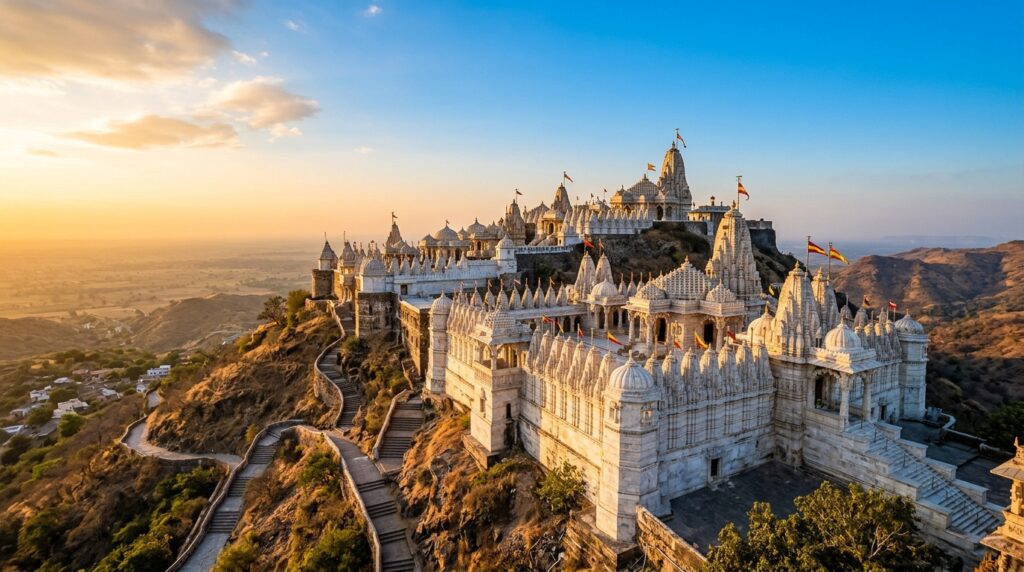
Jain Temple Circuit Tour Packages from Indore: Shikharji & Palitana

Overview For the devout Jain community in Indore, embarking on a tirth yatra (pilgrimage) to the most sacred sites of Jainism is a life-defining spiritual milestone. Our specially curated Jain temple circuit tour packages from Indore offer a seamless, deeply respectful journey connecting Madhya Pradesh to the premier centers of spiritual devotion across India. This pilgrimage circuit takes you to the holy heights of Shikharji in Jharkhand, where twenty Jain Tirthankaras attained moksha, and the majestic hills of Palitana in Gujarat, the world’s only mountain with over 800 temples. Designed specifically for families, senior citizens, and sanghs departing from Indore, these packages ensure that your spiritual focus remains uninterrupted by logistical challenges. From reserving doli (palki) services for the elderly to ensuring access to authentic meals prepared in accordance with sacred vows, Travel Path Holiday manages every detail. Whether you depart from Indore Junction or Devi Ahilya Bai Holkar Airport (IDR), this sacred journey promises deep peace, flawless execution, and profound devotion. Key Logistical Details from Indore Embarking on a multi-state spiritual circuit requires meticulous planning, especially when coordinating travel between Central, Western, and Eastern India. Travel Path Holiday has mapped out the most efficient routes and transit options for Indore travelers. 1. Departures via Indore Junction (Train Routes) For travelers who prefer the steady pace of rail travel, Indore Junction (INDB) offers direct and connected trains: To Shikharji (Parasnath): The Shipra Express (22911) departing from Indore Junction is the most direct rail connection to Parasnath Station (PNME), the gateway to Madhuban (the base of Shikharji). Alternatively, express trains to Jabalpur or Katni provide connections to East-bound trains. To Gujarat (Palitana, Dilwara, & Ranakpur): Multiple daily trains connect Indore to Ahmedabad Junction (ADI) and Vadodara. From Ahmedabad, Palitana is easily reachable via a 4-hour private taxi drive or local regional trains to Bhavnagar. 2. Departures via Devi Ahilya Bai Holkar Airport (IDR) (Flight Routes) For pilgrims looking to minimize travel time and maximize comfort, air travel from Indore’s IDR airport is highly recommended: To Shikharji: Fly from Indore (IDR) to Ranchi Airport (IXR) or Patna Airport (PAT) with quick layovers in Delhi or Mumbai. From Ranchi, a scenic 3.5-hour road transfer in a private SUV brings you directly to Madhuban. To Palitana: Catch a direct or one-stop flight from Indore to Ahmedabad (AMD). Travel Path Holiday arranges a private, air-conditioned vehicle to pick you up at the airport and drive you straight to the foothills of Shatrunjaya in Palitana. To Shravanabelagola: Fly direct from Indore to Bengaluru (BLR), followed by a smooth 3-hour drive along the national highway to Hassan district. 3. Holy Dining & Stay Arrangements We understand that maintaining strict dietary vows is paramount during a Jain pilgrimage. Therefore, all our itineraries guarantee hand-vetted vegetarian options/dining (specifically, pure vegetarian food cooked according to traditional rules, including no root vegetables, onions, or garlic, and served before sunset/Chauvihar). We partner exclusively with dedicated dharamshalas and hotels that respect these requirements, ensuring peace of mind for every pilgrim. Deep Dive Explanation The Jain temple circuit covers several of the most architecturally brilliant and spiritually charged locations in India. Our customized packages from Indore are structured to cover these holy sites: 1. Shikharji (Parasnath Hills, Jharkhand) Sammed Shikharji is the crown jewel of Jain pilgrimage sites. Situated on the highest peak of Jharkhand, it is here that 20 out of the 24 Jain Tirthankaras, including Bhagwan Parsvanath, attained salvation. The Experience: The core of this pilgrimage is the Shikharji Parasnath peak trek, a sacred 27-kilometer walk that takes devotees through dense forests to the various tonks (shrines dedicated to the Tirthankaras). Logistics: The trek begins at Madhuban in the early hours of the morning (around 3:00 AM) to avoid the midday sun. For elderly pilgrims or those with physical limitations, Travel Path Holiday pre-arranges professional doli (palki) services, ensuring a safe and respectful journey up and down the mountain. 2. Palitana (Shatrunjaya Hills, Gujarat) Palitana is revered as the place where millions of saints, including Adinath (the first Tirthankara), attained liberation. It is considered the most sacred temple complex in Gujarat. The Experience: The Palitana Shatrunjaya hills climb consists of climbing approximately 3,800 stone steps. At the peak, you are greeted by an awe-inspiring fortress of over 860 white marble temples. The main Adishwar Temple is a masterpiece of architectural design. Sacred Rules: In keeping with ancient traditions, no one is allowed to remain on the hill after sunset, and consumption of food or water on the sacred hill is strictly prohibited. Our packages align seamlessly with these rules, arranging early morning ascents and evening accommodation at the foothills. 3. Dilwara Temples (Mount Abu, Rajasthan) Tucked away in the lush forests of Rajasthan’s only hill station, the Dilwara Jain Temples are globally renowned for their unparalleled architectural beauty. The Experience: The Dilwara marble carvings near Mount Abu represent the pinnacle of medieval stone craftsmanship. Built between the 11th and 13th centuries, these five temples feature ceilings, pillars, and arches decorated with marble work so fine that it appears translucent. Logistics: Our packages combine Mount Abu with Gujarat itineraries, making it a perfect, cool retreat for families after completing the intense climbs of Palitana. 4. Ranakpur Jain Temple (Rajasthan) Located in a quiet valley of the Aravalli Range near Udaipur, the Ranakpur Temple is dedicated to Tirthankara Adinath and is an architectural wonder of the world. The Experience: The temple is famous for its Ranakpur pillars—a total of 1,444 uniquely carved marble pillars supporting the massive structure. Remarkably, no two pillars are carved alike, and the design allows an unobstructed view of the main deity from any corner of the temple. Logistics: Easily accessible by road from Udaipur, we include private transfers and guided architectural tours to help you appreciate the spiritual mathematics behind this structural marvel. 5. Shravanabelagola (Karnataka) For a complete national circuit, our extended packages take you to Southern India’s most important Jain heritage site. The Experience: Standing tall on Vindhyagiri hill is the Shravanabelagola Bahubali monolithic statue (Gommateshwara).

Spiritual & Pilgrimage

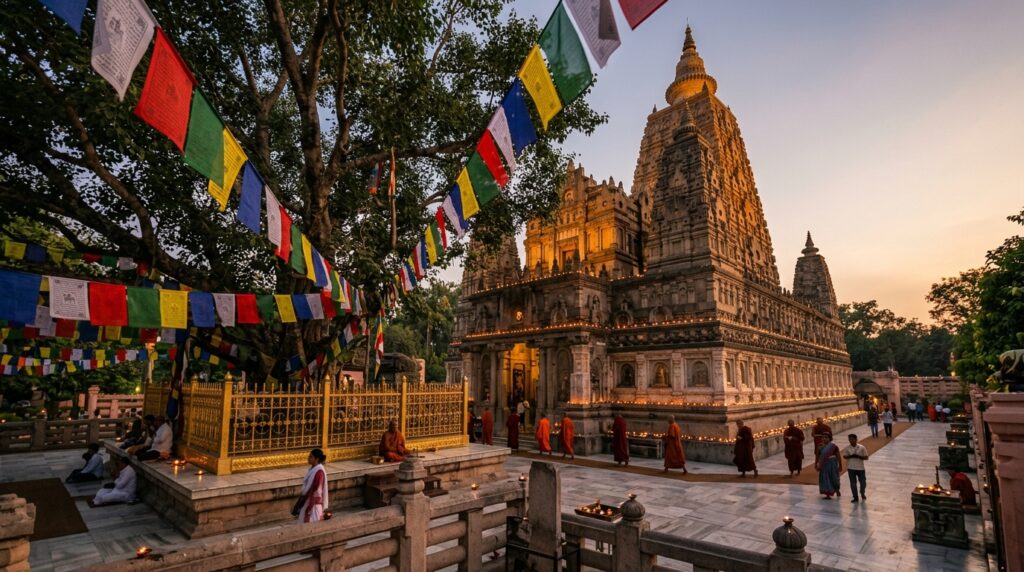
Indore to Bodh Gaya Spiritual Tour Packages: Mahabodhi Temple Guide

Overview Bodh Gaya is the place where Siddhartha Gautama attained enlightenment under the Bodhi Tree and became the Buddha. For residents of Indore seeking a profound spiritual journey, our custom “Indore to Bodh Gaya tour packages” offer a seamless and deeply enriching pilgrimage. This comprehensive guide covers everything an Indore traveler needs to know about visiting the sacred Mahabodhi Temple, the historic Bodhi Tree, and other spiritual highlights, ensuring a peaceful, well-planned journey from the heart of Madhya Pradesh. Key Logistical Details from Indore Embarking on a spiritual quest from Indore to Bodh Gaya requires thoughtful logistical planning. Here are the most convenient transit options tailored for Indore-based travelers: By Air (Fastest Route) While Gaya Airport (GAY) receives limited domestic flights, the most practical flight route from Indore’s Devi Ahilya Bai Holkar Airport (IDR) is to fly to Patna’s Jay Prakash Narayan Airport (PAT). Indore to Patna Flights: Multiple airlines (including IndiGo and Air India) operate connecting flights from IDR to PAT, typically with a short layover in New Delhi, Mumbai, or Kolkata. Patna to Bodh Gaya Transit: Upon landing in Patna, you can hire a private prepaid taxi or book a comfortable AC coach for the 115 km drive to Bodh Gaya, which takes approximately 3 to 4 hours via the well-maintained Patna-Gaya highway. Alternative Air Route: Connect from IDR to Gaya Airport (GAY) via seasonal flights or connecting flights through Kolkata or Delhi. Gaya Airport is located just 12 km from Bodh Gaya, offering immediate taxi transfers to the temple complex. By Train (Scenic Route) For those who prefer the rhythmic journey of Indian Railways, the Gaya Junction (GAY) railway station is highly connected: Direct & Connecting Trains: You can board direct or connecting trains from Indore Junction (INDB) or nearby Ujjain Junction (UJN) and Bhopal Junction (BPL) to Gaya Junction. Prominent trains like the Shipra Express or other superfast trains passing through Jabalpur/Prayagraj connect Central India to Gaya. Station to Temple: Gaya Junction is approximately 16 km away from Bodh Gaya. Auto-rickshaws, e-rickshaws, and private cabs are readily available outside the station to take you directly to your hotel or the Mahabodhi Temple complex in about 35–45 minutes. Dietary & Comfort Notes for Indore Travelers We understand that Indoreans appreciate high culinary standards. Throughout the journey, we provide hand-vetted vegetarian options/dining, ensuring pure, delicious, and hygienic meals that cater to traditional tastes. Deep Dive Explanation Bodh Gaya is not just a destination; it is a repository of absolute peace. The spiritual landscape is anchored by several must-visit sites: The Sacred Mahabodhi Temple (UNESCO World Heritage Site) Standing tall at over 180 feet, the Mahabodhi Temple is a masterpiece of ancient Indian brick architecture. Dating back to the Emperor Ashoka era and heavily restored, its grand pyramidal tower houses a colossal gilded statue of the Buddha in the *Bhumisparsha Mudra* (earth-touching gesture). The serene energy inside the inner sanctum is palpable, drawing thousands of devotees who chant and meditate. The Sacred Bodhi Tree Directly behind the main temple structure lies the revered Bodhi Tree (specifically a direct descendant of the original Ficus religiosa), beneath which Siddhartha Gautama sat in deep meditation for 49 days to attain supreme enlightenment. The stone platform surrounding the tree, known as the *Vajrasana* (the Diamond Throne), marks the exact spot of enlightenment. Spending an afternoon here, listening to the rustling leaves and the soft chants of monks, is the spiritual peak of the tour. The Great Buddha Statue Standing at an impressive height of 80 feet, this colossal statue depicts the Buddha in a meditative posture (Dhyana Mudra) sitting on a lotus. Unveiled by the XIVth Dalai Lama, it was crafted from red granite and sandstone blocks and is surrounded by ten smaller sculptures of Buddha’s prominent disciples. International Monasteries Bodh Gaya is a beautiful tapestry of global Buddhist cultures. Within walking distance of the main temple, you can explore distinct monasteries built by different Buddhist nations: Royal Thai Monastery: Famous for its stunning gold-leaf slopes, curved roofs, and serene gardens. Japanese Temple (Indosan Nipponji): Showcases minimalist wooden architecture, housing a beautiful gallery of paintings depicting the life of Buddha. Tibetan Monastery, Bhutanese Temple, and Vietnamese Temple: Each offers a unique glimpse into regional architecture, deity representation, and spiritual traditions. Meditation Centres For those seeking internal peace, Bodh Gaya is home to world-renowned meditation centres. From structured Vipassana courses to silent reflection retreats at the Root Institute, visitors can learn ancient mindfulness practices from experienced resident guides. Local Recommendation Planning a trip across states from Madhya Pradesh to Bihar can be logistically challenging, especially when coordinating flights, train tickets, reliable local transfers, and proper accommodations. Booking your pilgrimage through a dedicated local operator like Travel Path Holiday Indore makes your entire trip hassle-free. We curate custom itineraries featuring: Pre-booked flight and train reservations from Indore. Reliable private taxi arrangements from Patna Airport or Gaya Junction. Carefully selected premium accommodations close to the Mahabodhi Temple. Hand-vetted vegetarian options/dining throughout your stay so you never have to worry about meal quality. Knowledgeable local guides who help you navigate the rich history of the international monasteries and secure meditation slots. Let us handle the details while you focus entirely on your inner spiritual journey. Need help with your travel bookings? Consult Travel Path Holiday Indore Explore More with Travel Path Holiday Destination Guide: Plan your trip with our custom Ujjain & Omkareshwar Tour Packages from Indore. All Packages: Discover our complete list of Tour Packages from Indore. Contact Us: Customize your itinerary via our Travel Agency Contact Indore.

Spiritual & Pilgrimage

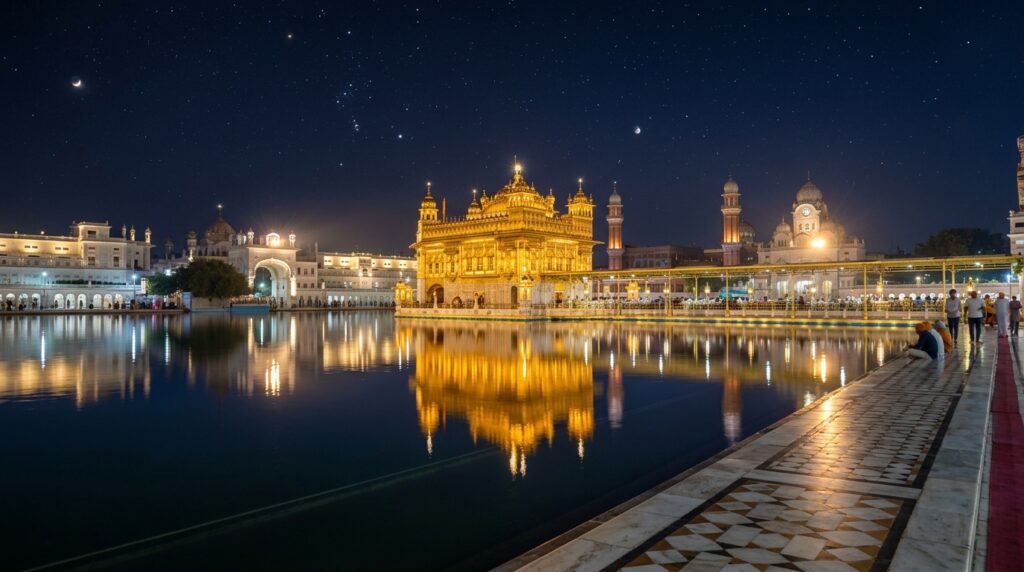
Indore to Golden Temple Amritsar: Custom 3-Day Weekend Tour Packages

Are you looking to escape the hustle of Indore for a spiritually enriching and patriotic weekend? A journey from the heart of Madhya Pradesh to the holy city of Amritsar offers the perfect blend of divine serenity, moving historical narratives, and high-energy patriotism. Travel Path Holiday Indore offers meticulously crafted 3-day weekend packages designed specifically for travelers from Malwa, ensuring a smooth, culturally respectful, and completely hassle-free pilgrimage. From the sacred halls of the Golden Temple (Harmandir Sahib) to the thunderous cheers at the Wagah-Attari Border, this weekend itinerary is tailored to fit the travel preferences, dietary requirements, and timelines of Indore families, couples, and senior citizens. Overview Amritsar, the spiritual heart of Sikhism, is a city that resonates with devotion, valor, and culinary excellence. For travelers based in Indore, a short 3-day weekend trip is an ideal duration to cover the key highlights of the city without requiring extensive leave. This curated itinerary covers the serene Sri Harmandir Sahib, the poignant Jallianwala Bagh, the energetic border ceremony at Wagah, and the mouthwatering local food scene. With everything planned from Indore, you can embark on a seamless spiritual journey. Key Logistical Details from Indore Reaching the northern frontier from Indore is highly convenient, with multiple transit options tailored to fit a compact 3-day weekend schedule. By Air (Recommended for Weekend Tours) To maximize your time in Amritsar, flying is the most efficient choice: Departure: Depart from Devi Ahilya Bai Holkar Airport, Indore (IDR). Arrival: Arrive at Sri Guru Ram Dass Jee International Airport, Amritsar (ATQ). Connections: While there are no direct non-stop flights between IDR and ATQ, leading airlines like IndiGo and Air India operate frequent connecting flights via Delhi (Indira Gandhi International Airport). A typical flight with a short layover takes between 4.5 to 6 hours, allowing you to depart Indore in the morning and begin sightseeing in Amritsar by afternoon. By Train (For a Leisurely Journey) If you prefer train travel, direct rail connections link Indore to Amritsar: Indore – Amritsar Express (19325): This train departs from Indore Junction (INDB) twice a week, offering a direct route to Amritsar Junction (ASR). Alternative Route: For more flexible scheduling, you can take a fast train (like the Malwa Express or Vande Bharat) from Indore to New Delhi, and then board the rapid Shatabdi Express directly from New Delhi to Amritsar. Ground Transportation in Amritsar Upon landing at Amritsar airport or arriving at the railway station, our pre-arranged private AC cars will pick you up. Navigating the crowded lanes of the old city can be challenging, but our dedicated local drivers ensure seamless transfers to your hotel, the Golden Temple, and the Wagah Border. Deep Dive Explanation Here is your detailed guide to experiencing the very best of Amritsar on a tight weekend schedule. The Spiritual Sanctuary: Harmandir Sahib (Golden Temple) The focal point of your tour is the Sri Harmandir Sahib, globally renowned as the Golden Temple. Standing in the center of a holy tank (sarovar), the gilded structure is a beacon of peace and equality. Head Covering and Footwear Rules: Head Covering: Both men and women must cover their heads at all times inside the temple complex. You can carry your own clean scarf or bandana, or use the headscarves provided free of charge at the entry gates. Footwear Rules: Footwear is strictly prohibited. You must deposit your shoes at the free shoe-keeping counters (Joda Ghar) at the entrance. Washing Feet: Before stepping onto the marble plaza, you must walk through a shallow pool of water to wash your feet. The Langar Service: A visit to the Golden Temple is incomplete without experiencing the Guru ka Langar. This is the world’s largest community kitchen, serving free, hot, nutritious vegetarian meals to over 100,000 visitors every single day, regardless of caste, creed, or religion. The experience of sitting cross-legged on the floor (pangat) and sharing a meal cooked entirely by volunteers (sevadars) is deeply humbling. Walking Through History: Jallianwala Bagh Located just a short walk from the Golden Temple plaza, Jallianwala Bagh is a poignant national memorial. This historical garden is the site of the tragic 1919 massacre. The Garden Walk: Walk down the narrow entrance passage where General Dyer placed his troops. Today, the garden is beautifully landscaped but retains its solemn atmosphere. Historical Relics: You can see the original brick walls marked with white circles highlighting the bullet impacts, the Martyr’s Well where dozens jumped to save themselves from the gunfire, and the flame of liberty (Amar Joti) burning in memory of the martyrs. High-Octane Patriotism: Wagah Border Beating Retreat Ceremony Located about 30 kilometers from Amritsar, the Attari-Wagah border is the international boundary between India and Pakistan. Every evening, military forces from both sides (BSF on the Indian side) perform a coordinated, highly synchronized Beating Retreat Ceremony. Retreat Ceremony Timings: The ceremony generally starts around 4:15 PM in winter and 5:15 PM in summer. However, due to tight security checks and the massive crowds, it is highly recommended to leave Amritsar by 2:30 PM and arrive at the border stadium by 3:30 PM. What to Expect: Experience a stadium filled with thousands chanting national slogans, marching soldiers executing high kicks, and the ceremonial lowering of the national flags as the sun sets. Pure Vegetarian Amritsari Culinary Delights Food is an integral part of the Amritsari culture. For Indore food lovers who are passionate about authentic flavors, Amritsar is a culinary paradise. Amritsari Kulcha: These are crisp, clay-oven flatbreads stuffed with spiced potatoes, cauliflower, or paneer, generously brushed with homemade butter, and served with tangy chole (chickpea curry) and sweet imli chutney. Hand-Vetted Vegetarian Options/Dining: We understand that travelers from Indore often look for specific dining standards. We have carefully curated a list of hand-vetted vegetarian options/dining establishments where you can enjoy authentic Punjabi cuisine prepared under strict hygienic and traditional pure-vegetarian conditions. Local Recommendation Planning a quick 3-day trip across state lines can be overwhelming, particularly when dealing with tight flight schedules and the high footfall

Spiritual & Pilgrimage

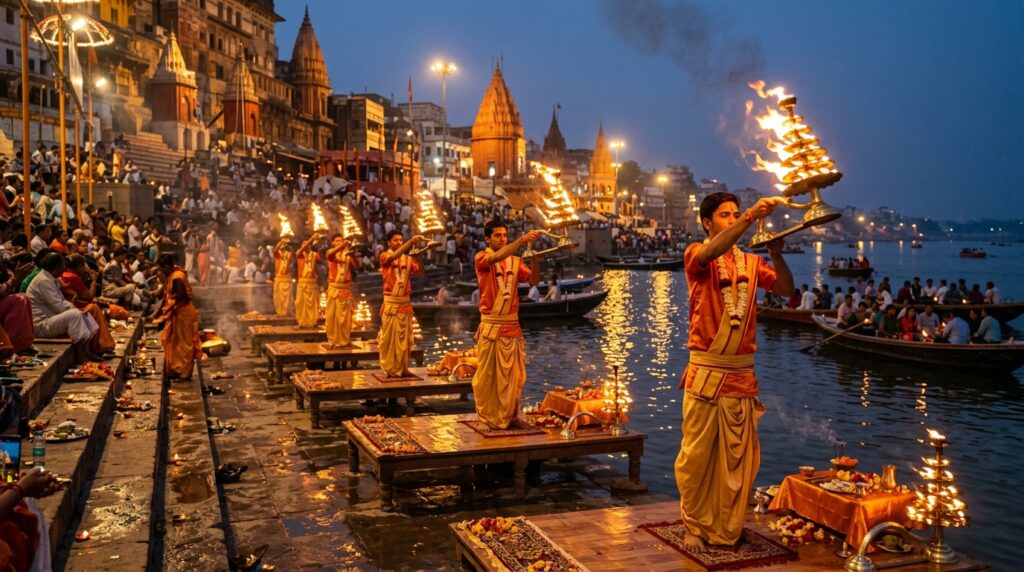
Indore to Kashi Varanasi Spiritual Tour Packages: Ganga Aarti Guide

Varanasi, historically known as Kashi, is the spiritual capital of India, calling millions of devotees to its sacred ghats and ancient temples. For travelers from Indore, this journey is not just a holiday but a profound pilgrimage. A deep historical connection binds the two cities—the iconic Kashi Vishwanath Temple was rebuilt in 1780 by the visionary queen of Indore, Maharani Ahilyabai Holkar. Planning a hassle-free trip requires careful coordination of travel, temple timings, boat rides, and dietary requirements. This comprehensive guide details the best travel routes from Indore, must-visit spiritual sites, evening Ganga Aarti bookings, local culinary experiences, and authentic shopping hubs, helping you plan the perfect Varanasi itinerary. Key Logistical Details from Indore Reaching Varanasi from Indore is highly convenient, with multiple travel options tailored to different budgets and time constraints. 1. Traveling by Air Indore’s Devi Ahilya Bai Holkar Airport (IDR) offers seamless connecting flights to Lal Bahadur Shastri International Airport (VNS) in Varanasi. Routes: Major carriers like IndiGo and Air India operate daily connecting flights via New Delhi (DEL) or Mumbai (BOM). Duration: The total travel time, including layovers, typically ranges from 4 to 7 hours depending on the connection. Tip: Booking a morning departure from Indore ensures you land in Varanasi by early afternoon, leaving you plenty of time to check into your hotel and witness the evening Ganga Aarti on your very first day. 2. Traveling by Train For a leisurely and pocket-friendly journey, Indore Junction offers direct train connectivity to Varanasi. Sabarmati Express (Train 19167): A reliable daily train connecting Indore to Varanasi, offering Sleeper, 3AC, and 2AC accommodations. Indore – Patna Express (Train 19321): Runs weekly and is a faster alternative, connecting Indore directly to Patna via Varanasi. Duration: The train journey takes approximately 20 to 24 hours. Booking well in advance is highly recommended to secure AC berths. 3. Local Transfers in Varanasi Upon arrival at Varanasi airport or railway station, navigating the bustling city can be overwhelming. Pre-arranging a private taxi transfer is the most comfortable option, especially for seniors. A private vehicle will drop you as close to the ghats as traffic regulations allow. Deep Dive: The Ultimate Varanasi Spiritual Experience A spiritual tour to Kashi involves navigating ancient temples, historic sites, and sensory-rich markets. Here is how to plan your days in the city: 1. Kashi Vishwanath Temple and the Modern Corridor The focal point of your pilgrimage is the Kashi Vishwanath Temple, dedicated to Lord Shiva. The Ahilyabai Holkar Legacy: Indore travelers will feel a sense of home here, knowing that Maharani Ahilyabai Holkar patronized and rebuilt the main temple structure after it suffered historical destruction. The Temple Corridor: The newly constructed Kashi Vishwanath Corridor has transformed the pilgrim experience. Spanning over 500,000 square feet, the spacious walkway connects the main temple directly to Lalita Ghat and Manikarnika Ghat on the banks of the Ganga. Devotees can now take a holy dip in the river and walk directly to the temple for darshan through a clean, barrier-free, and highly accessible pathway. Accessibility: The corridor is equipped with escalators, ramps, drinking water booths, medical centers, and security facilities, making it highly comfortable for elderly family members. Sugam Darshan (VIP Entry): To avoid long queues during peak hours, you can book a “Sugam Darshan” ticket online or through your tour manager, granting you expedited entry. 2. Dashashwamedh Ghat Ganga Aarti & Boat Booking Guide The evening Ganga Aarti at Dashashwamedh Ghat is a world-renowned spiritual ritual where priests perform worship with massive, multi-tiered brass lamps synchronized to chants and bells. Best Vantage Point: While you can watch the Aarti from the crowded steps of the ghat, the absolute best way to experience it is from a boat on the river, facing the performance stages. Boat Timings & Booking: Winter Aarti Timings: 6:00 PM to 7:00 PM. Summer Aarti Timings: 6:45 PM to 7:45 PM. Booking Window: You must secure your boat booking and board by 5:00 PM to 5:30 PM. Boat slots fill up rapidly, and the river gets crowded with vessels maneuvering for front-row views. Types of Boats: Choose between shared wooden rowing boats, private hand-paddled boats, or larger double-decker motorboats (bajras). Private boat bookings offer a highly personalized, quiet space to absorb the spiritual energy. 3. Sarnath Day Trip Just 10 kilometers northeast of Varanasi lies Sarnath, one of the four key Buddhist pilgrimage sites in the world. It is here that Gautama Buddha delivered his first sermon (Dhammacakkappavattana Sutta) after achieving enlightenment. Dhamek Stupa: A massive, cylindrical stone stupa standing 43.6 meters high, marking the exact spot of Buddha’s first discourse. Mulagandha Kuti Vihar: A modern temple housing exquisite Japanese frescoes painted by Kosetsu Nosu, depicting scenes from Buddha’s life. Sarnath Archaeological Museum: Home to the iconic Lion Capital of Ashoka (the national emblem of India) and a spectacular collection of ancient Buddhist sculptures dating back to the Maurya, Kushan, and Gupta empires. (Note: The museum is closed on Fridays). 4. Culinary Exploration: The Flavors of Banaras For Indoris, who are renowned food lovers, Varanasi offers an equally vibrant and legendary street food culture. Ensure your itinerary includes: Kachori Sabzi: Start your morning early with fresh, piping-hot *Kachori Sabzi* and sweet *Jalebis* at heritage shops like Ram Bhandar or Chachi Ki Kachori. Creamy Lassi: Indulge in thick, rich Banarasi Lassi topped with a thick layer of *rabri* and fresh *malai*, served in traditional earthen cups (*kulhads*) at legendary spots like Blue Lassi near Manikarnika Ghat. Tamatar Chaat: A spicy, tangy local specialty made with mashed potatoes, tomatoes, and a secret blend of spices, served sizzling hot in a *kulhad*. Banarasi Paan: End your culinary tour with the famous, melt-in-the-mouth sweet *Banarasi Paan* at any local street corner shop. Dietary Cleanliness: We understand the necessity of strict dietary practices. All our tour packages feature hand-vetted vegetarian options/dining at trusted local establishments, ensuring complete peace of mind during your pilgrimage. 5. Shopping for Authentic Banarasi Silk Sarees Varanasi is world-famous for its exquisite hand-woven Banarasi silk sarees, featuring

You have been successfully Subscribed! Ops! Something went wrong, please try again.

About Us

Travel Path Holiday is a full-service travel company dedicated to delivering seamless, personalized, and memorable travel experiences. We specialize in crafting customized journeys for both corporate and leisure travelers, ensuring every trip is stress-free and enjoyable.

Destinations

Kashmir

Manali

Leh-Ladakh

Nepal

Bhutan

Blog

  • All Post
  • Adventure, Trekking & Road Trips
  • Andaman
  • Bali Honeymoon
  • Bhutan Honeymoon
  • Dubai Group Tour
  • Dubai Honeymoon
  • Family & Leisure
  • Goa Honeymoon
  • Gujarat
  • Himachal Honeymoon
  • Himachal Pradesh
  • Honeymoon & Romance
  • India Travel Guides
  • Kashmir Honeymoon
  • Kerala Honeymoon
  • Nepal Honeymoon
  • Rajasthan Honeymoon
  • Seasonal & Monsoon Specials
  • Sikkim & Northeast
  • Singapore Honeymoon
  • Spiritual & Pilgrimage
  • Thailand
  • Tour Packages & Guides
  • Uttarakhand Honeymoon

Travel Path Holiday, Indore | © 2026 Travel Path Holiday. All Rights Reserved. | Website crafted by Amit Nayak, India

Scroll to Top