
Spiritual & Pilgrimage

Rameshwaram Pilgrimage Guide: Mandapam Sea Bridge, Temples & Holy Baths

For centuries, the island town of Rameshwaram, located at the southern tip of India in Tamil Nadu, has held a sacred place in the hearts of spiritual seekers. As one of the holy Char Dham sites (along with Badrinath, Dwarka, and Puri) and a vital Jyotirlinga destination, Rameshwaram represents the ultimate pilgrimage. According to Hindu mythology, this is the sacred spot where Lord Rama built the Ram Setu (bridge) to Lanka to rescue Goddess Sita and later established a Shiva Lingam to seek penance. Visiting Rameshwaram in July offers a unique spiritual atmosphere. While North India experiences heavy monsoon rains, the coastal region of Tamil Nadu gets mild showers and pleasant sea breezes, making it an excellent time for elderly pilgrims and families to complete their spiritual journey without scorching summer heat. This comprehensive Rameshwaram pilgrimage guide details the rituals, historical temples, the iconic Mandapam Sea Bridge, and how you can book a customized Rameshwaram tour package with Travel Path Holiday. — The Sacred Rituals of Rameshwaram: Holy Baths & Darshan The core of the Rameshwaram pilgrimage involves a series of purification rituals that have been followed for over a thousand years. Here is the step-by-step process every pilgrim should follow: 1. Agni Theertham (The Sea Dip): The pilgrimage begins on the shores of Agni Theertham, the sacred beach located just outside the eastern gate of the Ramanathaswamy Temple. Devotees take their first holy dip in the calm waters of the sea to wash away their sins. 2. The 22 Holy Wells (Teerthams): After the sea bath, pilgrims enter the Ramanathaswamy Temple complex to bathe in the 22 holy water wells. Each well (Teertham) is believed to possess distinct medicinal and spiritual properties. Temple assistants help pour water from these wells over devotees. 3. Change of Clothes: Devotees must change into dry clothes before entering the main sanctum for Darshan. 4. Darshan of Ramanathaswamy: The main deity is the Ramalingam (Shiva Lingam), established by Lord Rama. The temple also houses the Vishwalingam, brought by Lord Hanuman from Kailash. Following Lord Rama’s decree, the Vishwalingam is always worshipped first. — Key Sights to Explore in Rameshwaram 1. Ramanathaswamy Temple Architecture The temple is a masterpiece of Dravidian architecture. It boasts the longest temple corridor in the world, stretching over 3,850 feet with 1,212 magnificently carved granite pillars. Walking through this corridor in the quiet July morning is a deeply meditative experience. 2. Mandapam Sea Bridge (Pamban Bridge) The Pamban Bridge connects mainland India to Rameshwaram Island. The road bridge (Annai Indira Gandhi Road Bridge) runs parallel to the historic century-old railway bridge, which features a unique double-leaf bascule section that opens to let ships pass. Crossing this bridge under the cloudy July skies, with the turquoise sea stretching infinitely on both sides, is a sight you will never forget. 3. Dhanushkodi: The Ghost Town & Ram Setu Point Located at the tip of the island, Dhanushkodi was a bustling port town until it was completely destroyed in the 1964 cyclone. Today, it stands as a mesmerizing ghost town with ruins of a railway station, church, and post office. Beyond the ruins lies the beach from where the underwater limestone shoals of Ram Setu (Adam’s Bridge) begin, connecting India to Sri Lanka. 4. APJ Abdul Kalam Memorial Pay tribute to the “People’s President” and legendary scientist, Dr. APJ Abdul Kalam, at his final resting place. The beautifully designed memorial showcases his life, awards, and historical models of rockets and missiles he developed. — Detailed 3-Day Rameshwaram Pilgrim Itinerary for July This itinerary is designed for families and elderly travelers, ensuring a relaxed pace with ample time for temple rituals. Day Destination / Activity Key Highlights & Rituals Recommended Duration :— :— :— :— Day 1 Madurai to Rameshwaram Arrive in Madurai, drive to Rameshwaram crossing the spectacular Pamban Bridge. Check into your hotel. Evening visit to Agni Theertham for sunset. 4 Hours Drive Day 2 Holy Bath, Temple Darshan & Sights Begin at 5:00 AM with a sea dip at Agni Theertham, followed by bathing in the 22 Holy Wells. Complete the Ramanathaswamy Temple Darshan. In the afternoon, visit Gandhamadhana Parvatham and the APJ Abdul Kalam Memorial. Full Day (8 Hours) Day 3 Dhanushkodi Exploration & Departure Take an early morning drive to Dhanushkodi to witness the sunrise at the confluence of the Bay of Bengal and the Indian Ocean. Visit Kothandaramaswamy Temple. Return to Madurai for departure. 5 – 6 Hours — How to Reach Rameshwaram — IMPORTANT: Important Pilgrim Rules & Tips * Temple Dress Code: Men must wear dhotis, pyjamas, or formal trousers with a shirt/upper cloth. Women must wear sarees, half-sarees, or salwar kameez with a dupatta. Western wear, shorts, and lungis are strictly prohibited inside the temple. * Bathing Management: Carry a change of clothes in a waterproof bag. The temple has dedicated changing rooms for men and women after completing the 22 Teerthams. * Electronic Device Ban: Mobile phones, cameras, and leather belts are not allowed inside the Ramanathaswamy Temple. Keep them in your hotel room or use the secure locker facilities near the east entrance. * Elderly Assistance: The walking distance inside the temple is significant. Wheelchair assistance and battery-operated cars are available for senior citizens; let our team know in advance if you require this. — Local Delights: What to Eat Rameshwaram offers delicious, authentic South Indian vegetarian food. During your visit, try: — Make Your Pilgrimage Seamless with Travel Path Holiday A pilgrimage should be a time of peace, prayer, and reflection, not stress over logistics, long queues, or transport. Travel Path Holiday specializes in executing seamless spiritual tours to Rameshwaram, Madurai, and Kanyakumari. Our dedicated Rameshwaram tour package benefits include: — Plan Your Sacred Journey Today

Spiritual & Pilgrimage

Planning a Shirdi Sai Baba Tour in July: Darshan Timings, Booking & Travel Guide

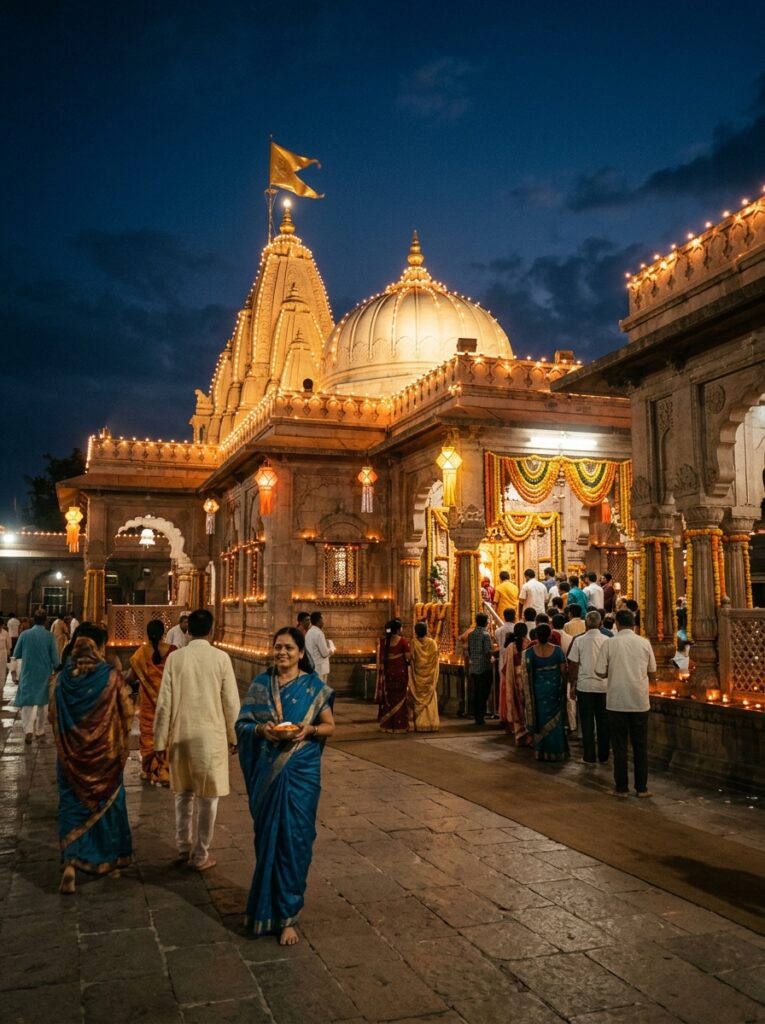
For millions of devotees around the world, Shirdi is not just a destination; it is a spiritual sanctuary. Located in the Ahmednagar district of Maharashtra, this holy town is where the revered 19th-century saint, Sai Baba, lived, taught, and took Samadhi. July is a deeply significant time to plan a pilgrimage to Shirdi. In the Hindu calendar, July often hosts the sacred festival of Guru Purnima, which is celebrated in Shirdi with unmatched devotion, grand processions, and overnight prayers. Furthermore, the monsoon rains of July cool down the region, making the journey and waiting in temple queues much more comfortable than during the hot summer months. However, planning a pilgrimage during peak monsoon and festival seasons requires careful preparation. To ensure a smooth, peaceful, and spiritually enriching trip, here is our complete guide on Shirdi Sai Baba darshan timings, online booking procedures, local attractions, and travel itineraries for July. — Shirdi Temple Timings and Aarti Schedule The Shri Saibaba Sansthan Trust operates the main temple complex. Understanding the daily schedule of prayers (*Aartis*) is essential for planning your darshan. The Four Daily Aartis: 1. Kakad Aarti (Morning Aarti): 4:30 AM – 5:00 AM (Devotees gather to wake up Baba) 2. Madhyan Aarti (Noon Aarti): 12:00 PM – 12:30 PM (Mid-day prayers) 3. Dhoop Aarti (Evening Aarti): Sunset (normally between 6:00 PM and 6:30 PM) 4. Shej Aarti (Night Aarti): 10:00 PM – 10:30 PM (Baba is prepared for sleep) *Note: Access to the main hall during Aarti times is limited. Devotees who wish to attend an Aarti must book an Aarti pass well in advance.* — How to Book Shirdi Darshan and Aarti Online Due to the heavy rush of pilgrims in July, especially around Guru Purnima and weekends, walking in without pre-booked passes can lead to long waiting times (sometimes 4 to 6 hours in queues). The temple trust offers an online booking facility. Step-by-Step Online Booking Guide: 1. Visit the Official Portal: Go to the official Shri Saibaba Sansthan Trust website (online.sai.org.in). Avoid third-party unofficial sites. 2. Create an Account: Register using a valid mobile number and email ID. 3. Select Your Service: Choose between “Paid Darshan” (VIP pass), “Free Darshan” (time slot pass), or “Aarti Pass.” 4. Enter Details & Upload ID: Enter the details of all travelers. You will need to upload a passport-sized photograph and a government-approved identity card (Aadhaar Card, PAN Card, Voter ID, or Passport). 5. Choose Date and Time Slot: Select your preferred date in July and an available time slot. If you plan to attend Guru Purnima, check for special bookings. 6. Make Payment: The VIP (Paid) Darshan pass costs ₹200 per devotee. Kakad Aarti passes cost ₹600, while Madhyan, Dhoop, and Shej Aarti passes cost ₹400. Free darshan passes must also be booked online to secure a time slot. 7. Download the Pass: Print or save the confirmation PDF on your phone. You must carry the same original ID card that you uploaded during booking when you enter the temple. — Top Attractions to Visit in Shirdi While the Samadhi Mandir is the heart of Shirdi, there are several key spots within and near the temple complex that tell the story of Sai Baba’s life: — Combining Nearby Pilgrimages To make the most of your Shirdi tour package, consider combining your visit with these prominent holy sites nearby: 1. Shani Shingnapur (70 km from Shirdi) Dedicated to Lord Shani (the deity associated with the planet Saturn), this village is famous worldwide because none of the houses, shops, or banks have doors or locks. The villagers believe that Lord Shani protects the village from theft. Devotees offer mustard oil to the black stone idol of Lord Shani, which stands in the open air. 2. Nashik & Trimbakeshwar (115 km from Shirdi) Nashik is a sacred city on the banks of the Godavari River. Just 30 km from Nashik lies Trimbakeshwar, home to one of the 12 sacred Jyotirlingas of Lord Shiva. The temple is unique as its lingam features three faces representing Brahma, Vishnu, and Mahesh. The drive from Shirdi to Nashik is scenic in July, surrounded by lush green vineyards and mist-covered hills. — Detailed 2-Day Shirdi & Shani Shingnapur Itinerary This 2-Day itinerary is perfect for families and senior citizens, ensuring a comfortable, hassle-free pilgrimage experience. Day & Time Activity / Location Key Highlights Practical Tips :— :— :— :— Day 1: Morning Arrive in Shirdi & Check-in Check-in at your hotel; take a rest after your journey. Book a hotel within walking distance of the temple. Day 1: Afternoon VIP Darshan at Samadhi Mandir Enter the VIP queue using your pre-booked online pass. Wear decent, traditional attire. Electronic items and leather items are not allowed. Day 1: Evening Explore Dwarkamai & Gurusthan Visit Dwarkamai to collect sacred *Udi*, and light incense at Gurusthan. Prepare for light queues. Carry a small water bottle. Day 1: Night Attend Shej Aarti or rest Experience the peaceful night chanting, or rest at the hotel. Sleep early if you plan to attend the Kakad Aarti the next day. Day 2: Early Morning Optional Kakad Aarti or Second Darshan Wake up early for the 4:30 AM Kakad Aarti, or enjoy a quiet early morning walk. The morning air in Shirdi during July is cool and refreshing. Day 2: Morning Drive to Shani Shingnapur Take a private AC cab from Shirdi to Shani Shingnapur (1.5-hour drive). Watch the scenic rural landscape washed in monsoon rains. Day 2: Afternoon Darshan at Shani Shingnapur & Return Perform puja at the open-air temple and drive back to Shirdi or proceed to Nashik. Buy puja materials (mustard oil, black cloth) from official shops. — Traveling from Indore to Shirdi: Route & Tips Indore is a major starting point for Shirdi pilgrimages. If you are traveling from Indore, here are your best options: — IMPORTANT: Monsoon Pilgrimage Guidelines for July: * Rain Gear: Carry lightweight umbrellas or rain jackets, as queue complexes, though mostly covered, may require walking through

Spiritual & Pilgrimage

Varanasi in Monsoon: Attending Ganga Aarti & Temple Tours Under the Rains

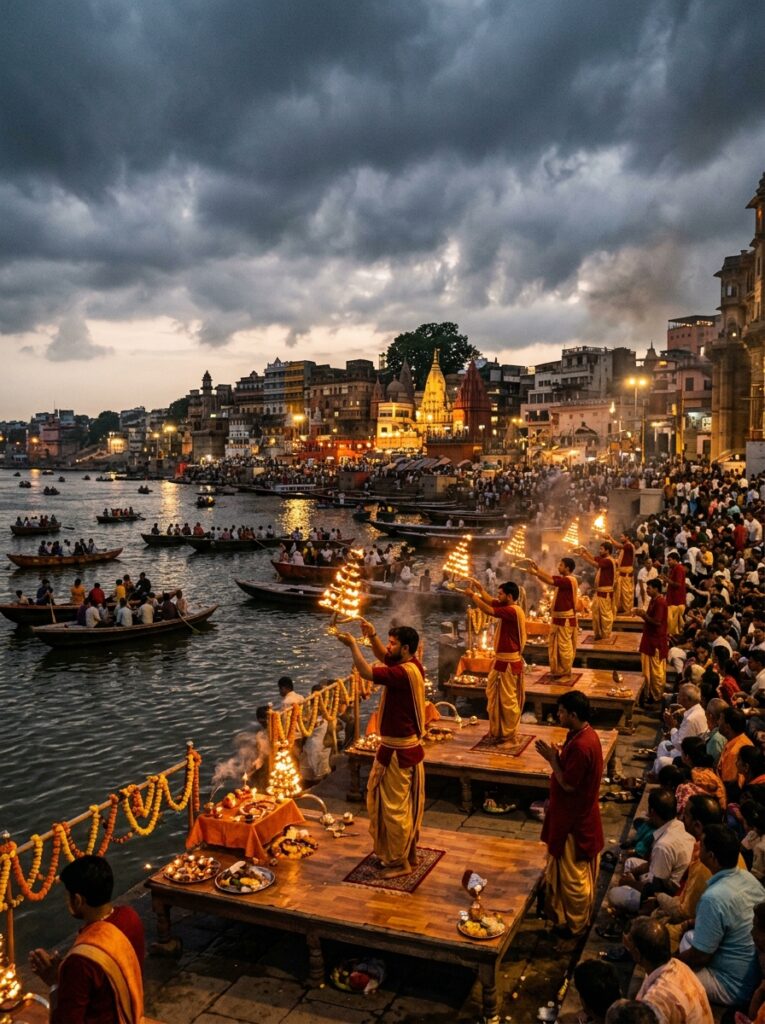
Varanasi, also known as Kashi or Banaras, is one of the oldest continuously inhabited cities in the world. It is a city where life, death, and spirituality merge seamlessly along the banks of the holy River Ganges. While travelers flock to this sacred land throughout the year, visiting Varanasi in monsoon offers an experience that is deeply spiritual, sensory, and unique. In July, the rains bring a fresh, cleansing energy to the dusty ghats. More importantly, July coincides with the Hindu holy month of Shravan (Sawan), which is dedicated to Lord Shiva, the patron deity of Kashi. During this time, the city is painted in hues of saffron as lakhs of Kanwariya pilgrims walk miles to offer holy Ganges water to the Kashi Vishwanath Jyotirlinga. The air resonates with chants of *”Har Har Mahadev”* and *”Bol Bam,”* creating an electric, highly charged spiritual atmosphere. However, planning a trip to Varanasi during the rainy season requires careful preparation. The Ganges swells, the ghat steps submerge, and the daily rituals adapt to the rising waters. In this comprehensive guide, we share everything you need to know about witnessing the iconic Ganga Aarti, planning temple tours in the rain, and booking a customized Varanasi tour package with Travel Path holiday. — The Spirit of Varanasi in July: The Month of Sawan For devout Hindus, visiting Kashi during the month of Sawan (July–August) is the ultimate pilgrimage. According to Vedic legends, Lord Shiva loves the rainy season, and offering water to His shrines during this month washes away sins and brings prosperity. — Varanasi 3-Day Monsoon Itinerary Summary Day Focus Key Highlights Recommended Experience Day 1 Arrival & River Sightseeing Check-in, evening Ganga Aarti (from rooftops/platforms) Traditional Saffron Welcome, Rooftop View of Aarti Day 2 Spiritual Darshans Kashi Vishwanath Temple, Kaal Bhairav, Durga Mandir VIP Darshan, Kulhad Chai & Kachori Walk Day 3 Buddhist Heritage & Departure Sarnath Tour (Dhamek Stupa, Museum), Departure Quiet Walk in Sarnath Deer Park — Ganga Aarti in Monsoon: What Changes? The evening Ganga Aarti at Dashashwamedh Ghat is a world-famous spectacle where priests perform a synchronized multi-tiered lamp ritual to worship the river goddess. In dry months, thousands of tourists watch this from boats docked on the river. In July, the experience changes significantly: 1. Platform Shift: As the water level of the Ganges rises, the lower steps of the ghats are completely submerged. For safety, the priests shift the Aarti performance to raised concrete platforms and rooftops of the buildings bordering the ghats. 2. Boat Restrictions: Due to the extremely high water currents and rising water levels, the local administration frequently suspends boat rides for tourists. You cannot watch the Aarti from the river. Instead, we arrange for our travelers to watch the ritual from secure rooftop cafes and private ghat balconies, offering a bird’s-eye view of the beautiful lamps against the dark, roaring river. 3. Timings: In July, the evening Ganga Aarti starts around 6:45 PM and lasts for about 45 minutes. We advise reaching the spot by 6:00 PM to secure a seating place. — Must-Visit Temples in Varanasi Under the Rains 1. Kashi Vishwanath Temple (The Golden Temple) This is the heart of Varanasi. Housing one of the 12 sacred Jyotirlingas, the temple features a magnificent gold-plated spire. 2. Kaal Bhairav Temple Known as the “Kotwal” or the police chief of Varanasi, Kaal Bhairav is a fierce form of Lord Shiva. According to local folklore, anyone who enters Varanasi must first visit this temple to seek permission to stay in the city. It is located in the narrow, winding lanes of Bhaironath. 3. Durga Temple (Durga Kund) Built in the 18th century by a Maharani of Bengal, this striking temple is painted in bright red and built in the North Indian Nagara style of architecture. It sits next to a large rectangular pond (*Kund*). In the monsoon, the red walls of the temple contrast beautifully with the dark clouds and the full water tank. 4. Sankat Mochan Hanuman Temple Founded by the famous saint-poet Goswami Tulsidas (author of the *Ramcharitmanas*), this temple is dedicated to Lord Hanuman. It is a peaceful sanctuary where you can sit and listen to the chanting of prayers while rain patters on the surrounding trees. — WARNING: River Safety Warning: The Ganges during July is incredibly powerful. Under no circumstances should you attempt to swim or bathe in the river if the administration has put up warning flags. Always stick to the designated safety barriers on the ghats. NOTE: Varanasi Monsoon Street Food Guide: The monsoon rains are the perfect excuse to indulge in Varanasi’s legendary street food. Don’t miss: * Kachori Sabzi & Jalebi: Spicy potato curry served with hot, crispy fried bread, followed by sweet, dripping jalebis. * Tamatar Chaat: A Varanasi specialty made of mashed tomatoes, potatoes, spices, and a sweet sugar-lemon syrup, served in a clay bowl (*dona*). * Banarasi Kulhad Chai: Thick, cardamom-infused tea served in earthen clay cups that absorb the flavor, tasting best under a rainy sky. — Experience Varanasi’s Sacred Aura with Travel Path holiday Navigating Varanasi’s massive crowds, finding clean hotels near the ghats, and coordinating darshans during the holy month of Sawan can be difficult for individual travelers. At Travel Path holiday, we offer curated, stress-free Varanasi tour packages designed to provide comfort and spiritual peace. Our specialized services include: Ready to embark on a soul-stirring pilgrimage? Get a Free Customized Quote Today! 👉 💬 Chat with a Travel Expert on WhatsApp 👉 Fill out our Quick Trip Planner Form *(Get your custom Varanasi itinerary and quote within 24 hours!)*

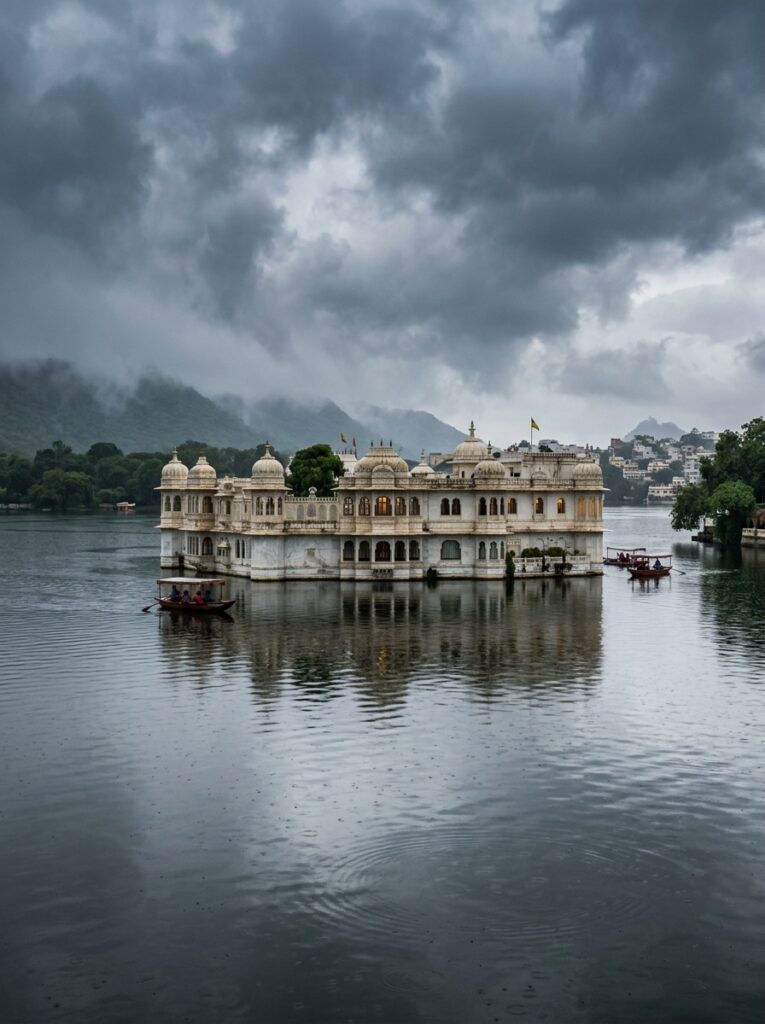
Romantic Lake Palace boating tour in Udaipur Rajasthan
Seasonal & Monsoon Specials

Monsoon Magic in Udaipur: Exploring the Lake City Under July Showers

When people think of Rajasthan, they often picture vast stretches of golden sand dunes, camel safaris, and scorching desert heat. However, there is one destination that shatters this desert stereotype, especially during the rainy season. Welcome to Udaipur, the “City of Lakes” and the “Venice of the East.” In July, as the southwest monsoon sweeps across the Aravalli Hills, Udaipur undergoes a breathtaking transformation. The dry summer breeze is replaced by cool, moisture-laden winds. The surrounding hills, once brown and dry, drape themselves in vibrant shades of emerald green. The city’s famous lakes—Lake Pichola, Fateh Sagar, and Badi Lake—swell with fresh rainwater, and the white marble palaces seem to shine brighter under the gray, overcast sky. Visiting Udaipur in monsoon is an experience straight out of a royal fairy tale. If you are looking for a romantic getaway, a quiet family vacation, or a scenic road trip in July, here is your ultimate guide to exploring Udaipur under the magic of monsoon showers. — Udaipur Monsoon Quick Facts Info Details July Temperature Ranges from 24°C (Night) to 31°C (Day) – highly pleasant Rainfall Intensity Moderate. It rarely rains continuously for days, allowing easy sightseeing. Best For Couples, honeymooners, families, and photographers Top Vibe Sipping kulhad coffee by the lake while watching clouds roll over the hills. — Why Udaipur in Monsoon is Absolutely Magical If you are debating whether to visit Udaipur in July, here are four reasons why it is the best decision you will make: 1. The Sajjangarh Monsoon Palace comes to life: Perched high on a hilltop, this palace was built by Maharana Sajjan Singh specifically to watch the monsoon clouds gather over the city. 2. Pleasant Weather: The blistering summer heat is long gone. The average temperature drops significantly, making outdoor activities like boating, walking, and sightseeing comfortable. 3. Fewer Tourist Crowds: July is considered the beginning of the shoulder season. You can explore the city’s heritage sites without the suffocating winter crowds, and enjoy lower rates at luxury hotels. 4. Vibrant Nature and Full Lakes: Udaipur’s lakes are interconnected. The rain fills them up, bringing the boat cruises, ghats, and fountains to life. — Top 6 Places to Visit in Udaipur in July To experience the best of the monsoon season, make sure these destinations are on your Udaipur itinerary: 1. Sajjangarh Monsoon Palace No monsoon trip to Udaipur is complete without visiting Sajjangarh. Perched on the Bansdara peak of the Aravalli hills (about 944 meters above sea level), the palace offers a bird’s-eye view of Udaipur’s lakes, palaces, and surrounding countryside. Monsoon Vibe: In July, the palace is often wrapped in thick clouds and mist. Watching the rain fall over Udaipur from this height is a spellbinding experience. 2. Fateh Sagar Lake & Rani Road Fateh Sagar is the heart of Udaipur’s social life. The lake features three small islands, including Nehru Park, which houses a boat-shaped restaurant and zoo. The Experience: Hire a bicycle or take a leisurely walk along Rani Road, the scenic road wrapping around the lake. Stop by a local stall to enjoy spicy *Mirchi Bada* (chili fritters) and hot *Kulhad Coffee* as you watch the raindrops ripple across the lake water. 3. Bahubali Hills & Badi Lake Located about 12 km from the city center, Badi Lake is a quiet, non-touristy lake. Next to it lies Bahubali Hills, a small rocky hill that requires a short, 15-minute uphill trek. Why it’s a must-visit: The top of the hill offers a dramatic 360-degree view of Badi Lake, surrounded by green hills. The view is incredibly photogenic and looks like a miniature version of the Kerala Western Ghats. 4. Lake Pichola Boat Cruise The oldest and most famous lake in Udaipur houses the iconic Taj Lake Palace and Jag Mandir Palace. The Experience: Board a boat cruise from Ambrai Ghat or Lal Ghat in the late afternoon. Gliding over the calm waters under a soft drizzle, with the historic City Palace reflecting on the water’s surface, is pure romance. 5. Ambrai Ghat at Sunset Located on the waterfront of Old Udaipur, Ambrai Ghat offers an uninterrupted view of the City Palace and the Lake Palace. The Experience: Sit on the stone steps of the ghat as the evening sets in. Watch the lights of the City Palace turn on, reflecting a golden glow over the rain-swept lake. 6. Saheliyon-ki-Bari (Courtyard of the Maidens) This beautiful historic garden was built by Maharana Sangram Singh for the royal ladies. It is famous for its marble fountains, lotus pools, and pavilions. The Monsoon Connection: The fountains operate purely on water pressure and gravity, drawing water from Fateh Sagar Lake. During the monsoon, the water levels are high, and the fountains operate at their full, natural capacity, creating a soothing sound of running water. — Detailed 4-Day Udaipur Monsoon Itinerary Here is a balanced 4-day itinerary designed specifically for a monsoon trip to Udaipur: Day Timing Activity / Highlight Recommended Food Spot Day 1 Afternoon Arrive in Udaipur, check into a lake-facing heritage hotel. Lunch at a rooftop restaurant in Lal Ghat Evening Boat cruise on Lake Pichola; walk around Gangaur Ghat. Dinner at Ambrai Restaurant Day 2 Morning Explore the majestic City Palace complex (indoors, safe from rain). Traditional Rajasthani Thali Afternoon Drive up to Sajjangarh Monsoon Palace for panoramic mist views. Hot tea at Sajjangarh foothills Evening Cultural folk dance show at Bagore-ki-Haveli. Lakeside cafe at Fateh Sagar Day 3 Morning Drive to Badi Lake and hike up Bahubali Hills for photos. Packed picnic snacks Afternoon Visit Saheliyon-ki-Bari and Lok Kala Mandal. Kulhad Coffee at Rani Road Evening Shopping for handicrafts, Bandhani sarees, and miniature paintings. Mewari dinner overlooking the lake Day 4 Morning Half-day trip to Sajjan Garh Biological Park or Shilpgram. – Afternoon Check out and head to the airport/railway station for departure. – — TIP: ### 🍽️ Udaipur Monsoon Street Food Checklist Do not leave Udaipur without trying these local delicacies in the rain: * Mirchi Bada: Large green

Adventure, Trekking & Road Trips

Valley of Flowers National Park, Uttarakhand: Peak July Trekking & Flora Guide

Imagine standing at an altitude of 3,658 meters in the heart of the Western Himalayas, surrounded by a vibrant, endless carpet of blue, pink, purple, and yellow alpine flowers. Mist floats gently across the meadows, snow-capped peaks tower in the background, and the crisp mountain air is filled with the fresh scent of wild blossoms and rain. This is the Valley of Flowers National Park in Uttarakhand, a UNESCO World Heritage Site that transforms into a real-life botanical fairy tale during the monsoon season. While the park is open from June to September, July is widely considered the absolute best time to visit. It is when the monsoon rains breathe life into the dormant seeds, initiating the peak blooming season. If you are an adventure enthusiast, nature photographer, or someone looking to cross off one of the world’s most beautiful treks from your bucket list, this is your ultimate guide. In this comprehensive guide, we cover everything you need to plan your Valley of Flowers trek in July—including a detailed day-by-day itinerary, essential safety guidelines, flora highlights, and expert packing tips. — Valley of Flowers Trek: Quick Facts Before diving into the detailed itinerary, here is a quick overview of the trek to help you prepare: Parameter Details :— :— Location Chamoli District, Uttarakhand, India Altitude 3,658 meters (12,000 feet) to 4,389 meters (14,400 feet) at Hemkund Sahib Trek Distance Approximately 38 km (round trip from Govindghat) Difficulty Level Moderate (Suitable for beginners with good physical fitness) Best Time to Visit July to August (Peak blooming period) Base Camp Ghangaria (a small village with basic hotels and guesthouses) Nearest Railway Station Yog Nagari Rishikesh Railway Station (YNRK) – 273 km from Govindghat Nearest Airport Jolly Grant Airport, Dehradun – 290 km from Govindghat — Peak Flora: What Blooms in the Valley in July? The Valley of Flowers is home to over 500 species of wild alpine flowers. The landscape changes its colors every few weeks as different species bloom and fade. In July, the valley shifts from green to shades of blue, pink, and white. Here are the iconic flowers you can spot during your July trek: Himalayan Blue Poppy (*Meconopsis aculeata*): Often called the “Queen of Himalayan Flowers,” this rare, striking blue flower with delicate petals is a prized sight for trekkers in July. Brahmakamal (*Saussurea obvallata*): The state flower of Uttarakhand, usually found at higher altitudes (above 4,000 meters) on the way to Hemkund Sahib. It blooms in late July and holds deep religious significance. Himalayan Bellflower (*Campanula latifolia*): Beautiful bell-shaped violet-blue flowers that line the trails in dense clusters. Himalayan Marsh Orchid (*Dactylorhiza hatagirea*): Locally known as *Hathajari*, this medicinal orchid blooms with bright purple spikes. Sunflowers and Daisies: Vast fields of golden wild sunflowers (*Senecio*) and white anemones paint the meadow, contrasting beautifully with the grey monsoon skies. — Detailed 6-Day Valley of Flowers Trek Itinerary This carefully curated 6-day itinerary is designed to give you ample time for acclimatization, exploration, and safety, starting and ending in the spiritual hub of Rishikesh. Day 1: Rishikesh to Govindghat (Drive: 273 km | 9–10 hours) Your Himalayan adventure begins with an early morning drive from Rishikesh. The route follows the Alaknanda and Ganga rivers, taking you through the holy confluences (Panch Prayag)—Devprayag, Rudraprayag, and Karnaprayag. Scenic Highlights: Watch the dramatic meeting of the Bhagirathi and Alaknanda rivers at Devprayag, where the holy Ganges is officially formed. Road Conditions: The roads are generally well-maintained, but monsoon showers can cause occasional delays due to minor landslides. Evening: Reach Govindghat, a bustling town situated on the banks of the Alaknanda River. Check into your hotel, attend a brief orientation, and enjoy a warm dinner. Overnight Stay: Hotel in Govindghat. Day 2: Govindghat to Ghangaria via Pulna (Drive: 4 km | Trek: 10 km | 5–6 hours) Wake up to the sound of roaring rivers. After a hearty breakfast, take a short 4 km drive to Pulna village, which is the starting point of the trek. The Trek: The trail from Pulna to Ghangaria is a well-paved stone path that runs parallel to the gushing Laxman Ganga river. The trail is clean, shaded by dense pine and oak forests, and dotted with small dhabas selling hot tea, Maggi, and fresh fruits. Ghangaria Base Camp: Ghangaria is a scenic hamlet that serves as the base camp for both the Valley of Flowers and the holy shrine of Hemkund Sahib. No vehicles are allowed past this point. Alternative Transport: If you prefer not to walk, mules, porters, and helicopter services (subject to weather conditions) are available from Govindghat/Pulna to Ghangaria. Overnight Stay: Guesthouse/Hotel in Ghangaria. Day 3: Ghangaria to Valley of Flowers and Back (Trek: 8 km round trip | 6–7 hours) Today is the day you’ve been waiting for! Start your day by 7:00 AM to make the most of the clear morning weather. Entering the Park: Cross the Laxman Ganga bridge and clear the Forest Department checkpoint. The trail immediately narrows, winding through dense forests of birch and rhododendrons before opening up into the wide-open glacial valley. Exploring the Valley: Once inside the valley, the trail becomes relatively flat. You can walk for kilometers amidst towering mountains, waterfalls cascading down rock faces, and millions of blooming flowers. Do not miss the grave of Joan Margaret Legge, a British botanist who lost her life here in 1939 while studying the flora. Important Rule: Camping or staying overnight inside the National Park is strictly prohibited. You must start your return trek to Ghangaria by 2:00 PM to cross the exit gate before dark. Overnight Stay: Guesthouse/Hotel in Ghangaria. Day 4: Ghangaria to Shri Hemkund Sahib and Back (Trek: 12 km round trip | 7–8 hours) Prepare yourself for a steep climb today as you visit Hemkund Sahib, the highest Gurudwara in the world, situated next to a pristine glacial lake at 4,329 meters. The Trail: The trail is a steep zig-zag stone pathway. Take slow, steady steps to cope with the thin mountain

Key Monastery and snow mountains in Spiti Valley Himachal Pradesh
Adventure, Trekking & Road Trips

Spiti Valley in July: Escape the Rain in India’s Cold Desert Mountain Valley

If you are someone who loves mountains but hesitates to plan a Himalayan getaway in July due to the fear of heavy monsoon rains, landslides, and road blockages, we have good news for you. Tucked away in the northeastern part of Himachal Pradesh lies Spiti Valley, a pristine, high-altitude cold desert that remains virtually dry throughout the monsoon season. Spiti, which translates to “The Middle Land” (the land between India and Tibet), lies in the rain-shadow region of the Great Himalayas. The towering mountain ranges block the rain-bearing monsoon clouds from entering the valley. As a result, while the plains of India are drenched and the foothills of Himachal experience heavy downpours, Spiti enjoys clear blue skies, bright sunshine, and dry roads. July is widely considered the absolute peak and best time to visit Spiti Valley. In this comprehensive guide, we will cover the routes, permits, must-visit spots, a detailed 8-day itinerary, and crucial preparation tips for your dream Spiti adventure. — Spiti Valley Quick Travel Info Before packing your bags, here are the essential details of Spiti Valley in July: Feature Details July Temperature 10°C to 22°C (Days are warm and sunny; nights are cold, dropping to 5°C) Monsoon Status Rain-shadow zone. Negligible rainfall inside the valley. Road Status Both entry points (via Shimla and via Manali/Kunzum Pass) are fully open. Best Travel Mode High-clearance SUV (4×4 or 4×2 like Scorpio, Innova) or Adventure Motorcycle. Permits Required None for Indian nationals. Foreign nationals require an Inner Line Permit (ILP). — The Two Entry Routes to Spiti Valley To visit Spiti, you can either take the Shimla Route or the Manali Route. We highly recommend executing a “Full Circuit” trip: entering from Shimla and exiting from Manali. This ensures gradual altitude gain, minimizing the risk of Altitude Sickness. “`mermaid graph LR A[Shimla Route] –>|Gradual Climb / 1000 km / Open All Year| B(Kaza – Capital of Spiti) C[Manali Route] –>|Steep Climb / Kunzum Pass / Open June-Oct| B B –>|Exits via| C “` Route 1: The Shimla Route (Via Kinnaur) Path: Delhi/Chandigarh ➔ Shimla ➔ Sarahan ➔ Sangla (Sangla Valley) ➔ Kalpa ➔ Nako ➔ Tabo ➔ Kaza. Why it’s great: The ascent is gradual. You start at 2,000 meters in Shimla and slowly climb to 3,650 meters in Kaza over 3–4 days. This gives your body ample time to acclimatize to the thin air. Scenery: You transition from lush green pine forests in Shimla and Kinnaur to the barren, moon-like landscapes of Spiti. Route 2: The Manali Route (Via Atal Tunnel & Kunzum Pass) Path: Delhi/Chandigarh ➔ Manali ➔ Atal Tunnel ➔ Gramphu ➔ Batal ➔ Kunzum Pass (14,931 feet) ➔ Kaza. Why it’s great: It is much shorter, taking only 8 to 10 hours from Manali to Kaza. The Catch: The altitude jump is sudden (from 2,050m in Manali to 3,650m in Kaza, crossing a 4,500m pass). The road from Gramphu to Batal is a dirt track consisting of gravel, boulders, and water crossings (chattus) made of melted glacial water. — Must-Visit Highlights of Spiti Valley in July 1. Key Monastery (Kye Gompa) The most iconic image of Spiti Valley is the Key Monastery. Perched on a volcanic-shaped hill at an altitude of 4,166 meters, this 1,000-year-old Tibetan Buddhist monastery looks like a fortress of white blocks stacked on top of one another. Monsoon Highlight: The clear July skies provide a stunning contrast to the whitewashed walls of the monastery and the turquoise Spiti River flowing below. 2. Chandratal Lake (The Moon Lake) Situated at 4,300 meters, this crescent-shaped alpine lake is a sight to behold. In July, the snow around the lake has completely melted, and the lake water reflects different shades of blue and green depending on the time of day. The Experience: Camping in dome tents under a canopy of millions of stars. The campsites are located 2 km away from the lake to protect its ecology. 3. Hikkim: The Highest Post Office in the World Located at 4,400 meters, Hikkim is home to the world’s highest operational post office. Must-Do: Buy postcards from Kaza, write letters to your loved ones, drive up to Hikkim, and mail them. It takes about 2 to 3 weeks for the letters to reach their destination, stamped with the unique Hikkim seal. 4. Komic: The Highest Motorable Village Just a short drive from Hikkim lies Komic, situated at 4,587 meters (15,027 feet). The village features a small monastery (Komic Lundup Banzar Karo Gompa) and a local cafe that proudly claims to serve hot food at the world’s highest motorable location. 5. Langza: The Fossil Village Famous for the giant, colorful statue of Lord Buddha overlooking the clay houses of the village. Langza is also known for marine fossils. Millions of years ago, Spiti was under the Tethys Ocean, and today, you can easily find fossilized seashells in the rocks around the village. 6. Tabo and Dhankar Monasteries Tabo Monastery: Founded in 996 AD, it is a UNESCO World Heritage Site famous for its ancient mud clay statues and priceless wall frescoes. It is often called the “Ajanta of the Himalayas.” Dhankar Monastery: Built precariously on a cliff edge overlooking the confluence of the Spiti and Pin Rivers. The structure is fragile but visually jaw-dropping. — Detailed 8-Day Spiti Valley Full Circuit Itinerary Here is the ideal day-by-day route designed for maximum safety, comfort, and sightseeing: Day Route Highlights Night Stay Day 1 Chandigarh to Shimla / Narkanda Scenic drive, transition into lower hills Narkanda Day 2 Narkanda to Sangla / Chitkul Drive along Sutlej River, visit Chitkul (last village of India) Chitkul / Sangla Day 3 Sangla to Kalpa Visit Roghi suicide point, view Kinner Kailash peak Kalpa Day 4 Kalpa to Kaza (via Nako & Tabo) View Nako Lake, explore 1000-year-old Tabo Monastery Kaza Day 5 Kaza local sightseeing Visit Key Monastery, Kibber village, and Chicham Bridge Kaza Day 6 Kaza High Villages tour Visit Hikkim (Post Office), Komic (Highest village), Langza Kaza Day 7 Kaza to

Char Dham Yatra pilgrimage circuit in Uttarakhand
Spiritual & Pilgrimage

Planning Char Dham Yatra in Monsoon: Safety Tips, Route Updates & Complete Guide

The Char Dham Yatra—comprising the four sacred shrines of Yamunotri, Gangotri, Kedarnath, and Badrinath nestled in the Garhwal Himalayas of Uttarakhand—is one of the most spiritually significant pilgrimages in Hinduism. Every year, millions of devotees embark on this journey to seek blessings and wash away their sins. The pilgrimage season runs from May to November. However, the arrival of the monsoon in July and August brings a unique set of circumstances. The mountains are washed clean, the valleys bloom in vibrant green, and the temples are wrapped in a mystical shroud of mist. But the heavy rain also brings challenges: landslides, flash floods, slippery trekking trails, and road blockages. Is it possible to complete the Char Dham Yatra in monsoon? Yes, it is entirely possible and can be a deeply rewarding experience—provided you are well-prepared, follow safety protocols, and travel with a reliable tour operator. In this comprehensive guide, we cover everything you need to know about planning a safe and successful Char Dham Yatra during the monsoon season, including route overviews, essential safety tips, and packing requirements. — Char Dham Yatra: Quick Reference Guide Here is a quick summary of the four holy shrines, including their altitudes and trek distances: Dham Deity Altitude Base Town Trek Distance (One Way) Key Highlight :— :— :— :— :— :— Yamunotri Goddess Yamuna 3,293 m (10,800 ft) Janki Chatti 6 km Divya Shila & Surya Kund hot springs Gangotri Goddess Ganga 3,415 m (11,200 ft) Gangotri Town 0 km (Road access) Bhagirathi river, Gangotri Temple Kedarnath Lord Shiva 3,584 m (11,750 ft) Gaurikund 16–18 km Jyotirlinga temple, Mandakini Valley Badrinath Lord Vishnu 3,300 m (10,830 ft) Badrinath Town 0 km (Road access) Tapt Kund hot springs, Neelkanth Peak — The Pros and Cons of a Monsoon Yatra Traveling to the Himalayas in July has both distinct advantages and challenges: The Advantages: 1. Fewer Crowds: The massive rush of pilgrims seen in May and June decreases significantly in July. You can experience peaceful *Darshan* at the temples without standing in 8-hour queues. 2. Stunning Scenery: The natural beauty of Uttarakhand is at its peak. The waterfalls are roaring, and the mountains are covered in lush green vegetation. 3. Cheaper Rates: Since it is considered the “off-season,” hotel rates, helicopter shuttle tickets, and transport costs are often lower. The Challenges: 1. Landslides: Heavy rain can trigger rockfalls and landslides, particularly on landslide-prone stretches like the Lambagarh zone (near Badrinath) and Sirobagarh (near Srinagar). 2. Trek Safety: The 16 km trek to Kedarnath becomes slippery and muddy. Mule movement slows down, and trekking takes longer. 3. Flight Delays: Helicopter services to Kedarnath from Guptkashi, Phata, and Sersi are frequently delayed or cancelled due to low visibility, rain, and heavy fog. — Essential Safety & Planning Tips for a Monsoon Yatra If you plan to undertake the Char Dham Yatra in monsoon, these safety guidelines are non-negotiable: 1. Mandatory Biometric Registration Before starting your journey, you must register online on the official Uttarakhand Tourism portal (registrationandtouristcare.uk.gov.in). Carry physical printouts of your registration slip, as mobile networks can be unreliable in the mountains. 2. Keep 2 to 3 Buffer Days in Your Itinerary Do not plan a tight, back-to-back schedule. Heavy rains can cause road blockages that take 4 to 12 hours for the Border Roads Organisation (BRO) to clear. Having buffer days ensures you do not miss your return train or flight. 3. Hire a Professional Driver & Reliable Vehicle Never attempt to self-drive or hire inexperienced city drivers. Mountain driving in the rain requires exceptional skill, quick reflexes, and knowledge of the terrain. Vehicles should have high ground clearance (like a Bolero, Innova, or Tempo Traveler) and tires with excellent grip. 4. Monitor Weather and Road Updates Daily Stay updated by checking the weather forecasts from the India Meteorological Department (IMD) and road status updates from the Uttarakhand Police social media handles. If a “Red Alert” or warning of heavy rainfall is issued, stay at your current hotel and do not travel. 5. Pack a Heavy-Duty Rain Poncho and Proper Footwear Umbrellas are useless on windy mountain treks. Buy a thick, waterproof poncho that covers you and your backpack. Wear high-traction trekking shoes with waterproof or water-resistant layers. Pack plenty of spare socks in zip-lock bags. — Standard 10-Day Char Dham Monsoon Route & Safety Guide Here is how a safe, slow-paced Char Dham Yatra is typically structured during the monsoon: “`mermaid graph TD A[Haridwar / Rishikesh] –> B[Barkot / Yamunotri] B –> C[Uttarkashi / Gangotri] C –> D[Guptkashi / Phata] D –> E[Kedarnath Shrine] E –> F[Pipalkoti / Joshimath] F –> G[Badrinath Shrine] G –> H[Rudraprayag / Srinagar] H –> I[Rishikesh / Haridwar] “` Day 1: Haridwar to Barkot (220 km | 7–8 hours): The journey starts with a drive along the Yamuna River. Watch out for road conditions near Mussourie and Yamuna Bridge. Day 2: Barkot to Yamunotri and back (Drive: 45 km | Trek: 6 km one way): The trek path from Janki Chatti is paved but can get slippery. Walk slowly, particularly on the descent. Return to Barkot for the night. Day 3: Barkot to Uttarkashi (90 km | 4 hours): A relatively short drive. Visit the historic Vishwanath Temple in Uttarkashi. Day 4: Uttarkashi to Gangotri and back (100 km one way | 4 hours): Drive through the gorgeous Harsil Valley. Gangotri is accessible by road, making it the easiest Dham to visit. Return to Uttarkashi. Day 5: Uttarkashi to Guptkashi (220 km | 8–9 hours): A long drive connecting the Yamuna/Ganga valley to the Mandakini valley. Watch for road updates near Tehri. Day 6: Guptkashi to Gaurikund and Trek to Kedarnath (Drive: 35 km | Trek: 16 km): Start your trek by 5:00 AM. In July, carry a high-quality walking stick. If using a helicopter, be prepared for flight delays; have a backup plan to trek or stay overnight at Guptkashi if flights are grounded. Day 7: Kedarnath to Gaurikund and return to Guptkashi (Trek: 16 km |

Holy Amarnath cave temple yatra route and mountains
Spiritual & Pilgrimage

Amarnath Yatra 2026: Registration, Route Information & Preparation Tips

Every year, between the months of July and August, lakhs of devotees from around the world embark on one of the most sacred and physically demanding pilgrimages in Hinduism: the Amarnath Yatra. Situated at an altitude of 3,888 meters (12,756 feet) in a narrow gorge in the union territory of Jammu and Kashmir, the holy Amarnath Cave houses a natural ice stalagmite, revered as the Ice Lingam of Lord Shiva. The ice lingam waxes and wanes with the phases of the moon. Witnessing this divine form of Baba Barfani is a lifetime dream for many, but the journey to the cave is not a walk in the park. It requires traversing rugged terrain, facing unpredictable weather, and dealing with extreme high-altitude conditions. Whether you are planning to trek the traditional path or take a helicopter, this ultimate Amarnath Yatra guide covers registration, routes, helicopter bookings, physical fitness, and packing tips to ensure your pilgrimage is smooth and spiritually fulfilling. — Amarnath Yatra Overview Here is a quick snapshot of the key facts about the Yatra: Feature Details Location Anantnag District, Jammu & Kashmir (3,888 meters altitude) Primary Deity Lord Shiva (Baba Barfani / Ice Lingam) Duration Typically 45 to 60 days (Starting late June/early July to Shravan Purnima in August) Starting Points Pahalgam (Traditional Route) or Baltal (Short Route) Age Limits 13 years to 70 years (No children under 13, no adults over 70, no pregnant women beyond 6 weeks) Key Requirements Compulsory Health Certificate (CHC) and Yatra Permit — Step 1: Compulsory Health Certificate & Registration Process Due to the extreme altitude and thin air, the Shri Amarnathji Shrine Board (SASB) mandates that every pilgrim obtain a Compulsory Health Certificate (CHC) before registering for the Yatra. How to Get the Compulsory Health Certificate (CHC) 1. Authorized Doctors: Download the official CHC form from the SASB website. You can only get it signed by doctors or hospitals authorized by your state government for the Amarnath Yatra. 2. Medical Checks: The doctor will check your blood pressure, ECG, and general fitness to ensure you do not suffer from respiratory diseases, heart conditions, or severe hypertension. 3. Validity: The CHC must be issued after the official date announced by SASB (usually in March or April). Online & Offline Registration Steps Online Registration: Visit the SASB official portal. Upload your photo, the scanned copy of your CHC, and pay the registration fee online. Once approved, you can download your official Yatra Permit (RFID-enabled card). Offline Registration (Bank Branches): You can also register through designated branches of Punjab National Bank (PNB), Jammu & Kashmir Bank, and YES Bank by submitting the CHC, application form, photos, and registration fee. RFID Cards (Mandatory): From recent years, SASB has made RFID tracking cards compulsory. You must collect your RFID card at designated counters in Jammu or Srinagar before starting the trek. No pilgrim is allowed past domestic checkpoints without it. — Step 2: Choosing Your Route (Pahalgam vs. Baltal) There are two distinct routes to reach the Amarnath Cave. Choosing the right one depends on your physical stamina, time availability, and age. “`mermaid graph TD A[Srinagar] –>|90 km| B(Baltal Route) A –>|95 km| C(Pahalgam Route) B –>|14 km steep trek / 1 Day| D[Amarnath Holy Cave] C –>|Drive 16 km| E[Chandanwari] E –>|Trek 12 km steep| F[Sheshnag] F –>|Trek 4.6 km| G[Mahagunas Pass 14,500 ft] G –>|Trek 6.4 km| H[Panchtarni] H –>|Trek 6 km| D “` Route 1: The Pahalgam Route (Traditional & Scenic) This is the traditional route taken by sages and pilgrims for centuries. It starts from Pahalgam (Nunwan Base Camp), which is about 95 km from Srinagar. The Journey: Chandanwari (16 km drive from Pahalgam) ➔ Pissu Top ➔ Sheshnag ➔ Mahagunas Pass (the highest point at 14,500 feet) ➔ Panchtarni ➔ Holy Cave (total trek distance is around 32 km one-way). Time Taken: 3 to 4 days of trekking. Difficulty: Moderate. While the route is longer, the incline is gradual, making it easier for acclimatization. Why Choose It: Beautiful alpine meadows, lake views (Sheshnag Lake), and plenty of time for your body to adjust to high altitudes. Route 2: The Baltal Route (Short & Steep) This route starts from Baltal (near Sonamarg), which is about 90 km from Srinagar. The Journey: Baltal Base Camp ➔ Domel ➔ Barari Marg ➔ Sangam ➔ Holy Cave (total trek distance is 14 km one-way). Time Taken: 1 to 2 days. Fit pilgrims can complete a same-day return journey (28 km total). Difficulty: High. The path is narrow, extremely steep, and prone to sudden rockfalls or mudslides during rains. Why Choose It: If you have limited time or prefer a short, challenging trek. — Step 3: Helicopter Booking & Logistics If trekking is physically impossible or you are short on time, taking a helicopter is a highly convenient option. Helicopter Routes: Baltal Route: Helicopters fly from Neelgrath (Baltal) to Panjtarni. From Panjtarni, it is a 6 km walk/pony ride to the cave. Pahalgam Route: Helicopters fly from Pahalgam to Panjtarni. Booking Rules: Bookings must be made online via the official SASB portal. Tickets sell out within minutes of release, so keeping track of dates is vital. A valid Compulsory Health Certificate (CHC) is still required to board the helicopter. Carry a printout of your helicopter ticket, registration card, and original ID card (Aadhaar or Passport). — Step 4: Physical Preparation & Acclimatization Tips Do not underestimate the physical demands of this trek. Thin air, low oxygen levels, and cold winds can cause Acute Mountain Sickness (AMS). 1. Physical Training (Start 2 months before the Yatra) Cardio: Walk 4–5 km daily. Practice climbing stairs or walking uphill. Breathing Exercises: Practice Pranayama or deep-breathing exercises to improve lung capacity. Strength Training: Do squats and core exercises to prepare your legs for long descents. 2. Packing Essentials Clothing: Heavy woolens, thermals (2 pairs), windproof jacket, waterproof raincoat or poncho (weather changes in minutes), woolen gloves, cap, and extra socks. Footwear: Broken-in trekking shoes with a good grip. Normal sports

Dal Lake houseboats and shikhara ride in Srinagar Kashmir
Family & Leisure

The Ultimate Kashmir Tour Guide: 7-Day Custom Itinerary from Indore

Are you dreaming of escaping the bustling streets of Indore and stepping into a paradise of snow-capped mountains, serene lakes, and whispering pine forests? Look no further than Kashmir—often hailed as “Heaven on Earth.” Whether you are planning a romantic honeymoon, a memorable family vacation, or an adventure trip with friends, a trip to the Kashmir Valley offers an experience that stays with you forever. However, planning a trip from Indore to a destination over 1,500 km away can feel overwhelming. How do you travel? What should your itinerary look like? How can you avoid tourist traps? In this comprehensive guide, we present a customizable 7-Day Kashmir tour package from Indore designed to make your travel seamless, luxurious, and completely stress-free. Kashmir 7-Day Itinerary Summary Day Destination Key Highlights Accommodation Type Day 1 Srinagar Houseboat Check-in, Shikara Ride on Dal Lake Premium Houseboat Day 2 Srinagar Mughal Gardens, Shankaracharya Temple Luxury Hotel Day 3 Gulmarg Gondola Ride, Snow Sports, Khilanmarg Luxury Hotel Day 4 Pahalgam Saffron Fields, Avantipura Ruins, Lidder River Riverside Resort Day 5 Pahalgam Betaab Valley, Aru Valley, Chandanwari Riverside Resort Day 6 Srinagar Return to Srinagar, Shopping at Lal Chowk Luxury Hotel Day 7 Departure Srinagar Airport Transfer, Fly back to Indore – Detailed Day-by-Day Itinerary Day 1: Arriving in Srinagar – The Magic of Dal Lake Your journey begins as you board a flight from Devi Ahilyabai Holkar Airport in Indore to Srinagar International Airport (usually with a short layover in New Delhi). As your flight descends into the Srinagar Valley, you will be greeted by the breathtaking sight of the snow-clad Pir Panjal mountain range. Upon arrival, a representative from Travel Path holiday will welcome you and transfer you to a traditional wooden houseboat docked on the quiet waters of Dal Lake or Nigeen Lake. Day 2: Srinagar Local Sightseeing – Mughal Elegance & Spiritual Heights Wake up to the gentle chirping of birds over the lake. After breakfast, head out for a full day of sightseeing in Srinagar. TIP Pro Tip for Travelers: If you are visiting in late March or April, we will customize your package to include a visit to the Indira Gandhi Memorial Tulip Garden—the largest tulip garden in Asia, showcasing millions of vibrant blooms. Day 3: Srinagar to Gulmarg – The Meadow of Flowers After an early breakfast, take a scenic 2-hour drive (approx. 50 km) to Gulmarg, India’s premier ski destination and home to some of the highest green golf courses in the world. Day 4: Gulmarg to Pahalgam – Saffron Valleys & Ancient Ruins Today, you will head southeast towards Pahalgam, the “Valley of Shepherds” (approx. 140 km, a 4-hour drive). Day 5: Pahalgam Sightseeing – Valleys of Paradise Pahalgam is a haven for nature lovers. After breakfast, hire a local union vehicle (included in our premium packages) to visit the three iconic valleys of the region. Day 6: Pahalgam to Srinagar – Final Shopping & Cultural Immersion After breakfast, drive back to Srinagar. Use this day to explore anything you missed and do some final souvenir shopping. Day 7: Srinagar to Indore – Goodbye Paradise Enjoy your final breakfast overlooking the mountains. Pack your bags along with wonderful memories of your Kashmiri getaway. Our driver will pick you up and drop you off at the Srinagar Airport for your return flight back to Indore. Best Time to Visit Kashmir from Indore Kashmir is a year-round destination, but the experience changes completely depending on when you go: Why Book Your Kashmir Package with Travel Path holiday? Planning a trip to Kashmir requires reliable transport, hotel bookings with good heating facilities, and guides who know the local terrain. At Travel Path holiday, we offer: Let us Plan Your Dream Kashmir Vacation Ready to experience the snows of Gulmarg and the waters of Dal Lake? Don’t leave your vacation to guesswork. Get a Free Customized Quote Today! Let our travel designers customize the perfect Kashmir package for your budget and schedule. 👉 💬 Chat with a Travel Expert on WhatsApp 👉 Fill out our Quick Trip Planner Form (Get a personalized itinerary via email within 24 hours!)

Family & Leisure

Himachal Pradesh: Where Nature Meets Faith – Tourism and Pilgrimage Explained

Himachal Pradesh is a land that speaks in silence. Its mountains tell stories, its rivers carry legends, and its temples reflect centuries of belief. Located in the heart of the western Himalayas, Himachal Pradesh offers a rare travel experience where modern tourism and ancient spirituality exist side by side. Unlike destinations that focus only on leisure or religion, Himachal has two clear identities. One attracts travelers looking for scenic beauty, adventure, and relaxation. The other draws pilgrims seeking faith, peace, and spiritual connection. Together, these two sides make Himachal Pradesh one of India’s most meaningful destinations. What Makes Himachal Pradesh Special?Himachal Pradesh is not about fast travel or crowded cities. It is about slowing down, breathing clean air, and reconnecting—with nature or with belief. People visit Himachal Pradesh for many reasons: Whether someone travels with family, friends, or alone, Himachal offers depth—not just sightseeing. Side One: The Tourist Side of Himachal Pradesh This side of Himachal focuses on leisure, adventure, and natural beauty. Hill stations, valleys, rivers, and mountain passes create unforgettable travel memories. Shimla – Heritage, Hills, and Comfort Shimla is one of the most well-known hill stations in India. Once the summer capital during British rule, it still carries a classic charm. Wooden houses, old churches, and scenic walking paths define the city. Visitors enjoy: Shimla is suitable for travelers who want mountain beauty without leaving comfort behind. Manali – Where Adventure Lives Manali represents the energetic side of Himachal Pradesh. Surrounded by tall peaks and flowing rivers, it is a favorite among young travelers and adventure lovers. Popular experiences include:- Manali balances excitement with natural calm, making it one of the most visited places in the state. Dharamshala and McLeod Ganj – Mountains with Meaning Dharamshala offers something different from typical hill stations. Here, nature blends with culture and mindfulness. The area is strongly influenced by Tibetan traditions and Buddhist philosophy Travelers come here to: This region attracts people who travel not just to see, but to feel. Dalhousie and Khajjiar – Slow Travel Destinations Dalhousie is ideal for travelers who prefer silence over crowds. The town is surrounded by forests and offers beautiful viewpoints without heavy traffic or noise. Nearby Khajjiar, with its open meadows and forest views, feels untouched and calm. These places are best suited for families, couples, and senior travellers Spiti Valley – The Untamed Himalayas Spiti Valley shows the raw side of Himachal Pradesh. The landscape is dramatic, open, and powerful. Life here is simple, shaped by nature and tradition. Visitors are drawn to: Spiti is not for luxury travel, but for meaningful exploration. Side Two: The Pilgrimage and Spiritual Side of Himachal Pradesh Himachal Pradesh is often called Dev Bhoomi, meaning Land of the Gods. This name comes from the strong presence of sacred sites across the state. Faith here is not limited to temples—it is part of daily life. Kangra Region – Power and Devotion The Kangra region holds immense religious importance. It is known for temples dedicated to Goddess Shakti, visited by devotees from across India. Major spiritual centers include: Faith here is deep, personal, and enduring. Chamba – Living Tradition of Worship Chamba reflects Himachal’s spiritual history through its temples, art, and festivals. The town has preserved religious traditions that date back centuries. Pilgrims and visitors experience: Chamba shows how spirituality and culture grow together. Naina Devi – Belief on the Mountain Peak Naina Devi is a sacred destination for devotees of the Goddess. Located on a hilltop, the journey itself is considered an act of devotion. People visit this temple for: Faith here is powerful and deeply emotional. Manikaran Sahib – Shared Faith, Shared Space Manikaran Sahib is unique because it is sacred to more than one religion. Located in the Parvati Valley, it represents harmony and service. The site is known for: It stands as a symbol of unity in diversity. Rewalsar – A Place of Spiritual Balance Rewalsar Lake is surrounded by temples, monasteries, and gurudwaras. It is respected by Hindus, Buddhists, and Sikhs alike. Visitors come here for: This place shows that faith does not divide—it connects. Tourism and Pilgrimage: Two Paths, One Destination Himachal Pradesh does not separate tourism and pilgrimage. Instead, both grow together. A traveler may come for adventure and leave with peace.A pilgrim may arrive for faith and discover nature. Best Time to Visit Himachal Pradesh Each season offers a different experience. Final Thoughts Himachal Pradesh is not a destination you rush through. It is a place you absorb—slowly and deeply. Its mountains invite adventure, while its sacred sites invite reflection. With its tourist charm on one side and spiritual depth on the other, Himachal Pradesh offers something rare: a journey that satisfies both the traveler and the seeker.

You have been successfully Subscribed! Ops! Something went wrong, please try again.

About Us

Travel Path Holiday is a full-service travel company dedicated to delivering seamless, personalized, and memorable travel experiences. We specialize in crafting customized journeys for both corporate and leisure travelers, ensuring every trip is stress-free and enjoyable.

Destinations

Kashmir

Manali

Leh-Ladakh

Nepal

Bhutan

Blog

  • All Post
  • Adventure, Trekking & Road Trips
  • Andaman
  • Bali Honeymoon
  • Bhutan Honeymoon
  • Dubai Honeymoon
  • Family & Leisure
  • Goa Honeymoon
  • Gujarat
  • Himachal Honeymoon
  • Himachal Pradesh
  • Honeymoon & Romance
  • India Travel Guides
  • Kashmir Honeymoon
  • Kerala Honeymoon
  • Nepal Honeymoon
  • Rajasthan Honeymoon
  • Seasonal & Monsoon Specials
  • Sikkim & Northeast
  • Singapore Honeymoon
  • Spiritual & Pilgrimage
  • Thailand
  • Tour Packages & Guides
  • Uttarakhand Honeymoon

Travel Path Holiday, Indore | © 2026 Travel Path Holiday. All Rights Reserved. | Website crafted by Amit Nayak, India

Scroll to Top