Local Shopping Guide in Tsomgo Lake: Authentic Souvenirs
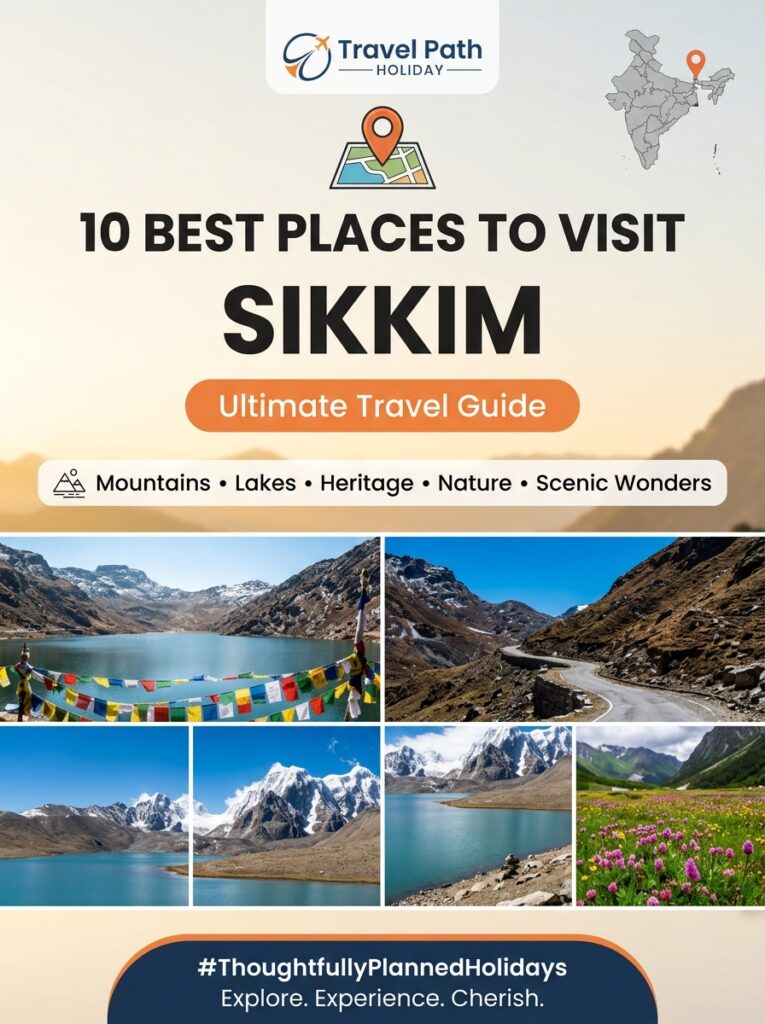
Overview Tsomgo Lake (popularly known as Changu Lake), perched at a breath-taking altitude of 12,400 feet above sea level in East Sikkim, is world-famous not only for its glacial turquoise waters and dramatic Himalayan panoramas, but also for hosting one of the most vibrant high-altitude souvenir markets in India. Situated just 38 kilometers from Gangtok along the historic Silk Route corridor leading toward Nathula Pass, the colorful lakeside bazaar offers a captivating cultural immersion into Tibetan, Bhutia, and Nepalese craftsmanship. For travelers visiting from Indore and Central India, shopping in Tsomgo Lake is far more than a simple retail pause—it is an opportunity to acquire authentic mountain keepsakes directly from local mountain artisans. From hand-carved Sikkimese prayer wheels and embossed porcelain tea cups to heavy Yak wool mufflers, aromatic organic black cardamom, and hand-woven wool carpets, this mountain market holds treasures that preserve the rich heritage of the Eastern Himalayas. Travel Path Holiday (TPH) has compiled this detailed shopping guide to help you identify genuine handicrafts, navigate high-altitude market logistics, understand realistic price points, and bring home authentic souvenirs from your Sikkim holiday. Local Logistical Advice for Indore Travelers Planning a high-altitude trip from the warm Malwa plateau of Indore to the alpine heights of Tsomgo Lake requires well-coordinated travel logistics and sensible preparation. Air Transit from Indore: Fly from Indore Devi Ahilya Bai Holkar Airport (IDR) to Bagdogra Airport (IXB) in West Bengal. Convenient connecting flights operate daily via Delhi (DEL) or Kolkata (CCU) on airlines like IndiGo and Air India, departing IDR early in the morning. Alternatively, seasonal flight connections land at Pakyong Airport (PYG) near Gangtok. From Bagdogra, Travel Path Holiday arranges a comfortable 4 to 4.5-hour private cab transfer (Toyota Innova Crysta) along NH10 through the scenic Teesta River valley up to Gangtok. Train Route Options: Travelers preferring rail journeys can board direct or connecting trains from Indore Junction (INDB) or nearby Bhopal (BPL) to New Jalpaiguri Railway Station (NJP), followed by a pre-arranged private mountain vehicle transfer to Gangtok. Gangtok to Tsomgo Lake Drive: Tsomgo Lake is located 38 km steep uphill from Gangtok (approximately a 2-hour drive through scenic mountain hairpin bends along Jawaharlal Nehru Road). Non-Sikkim taxies are restricted on this high-altitude border route; TPH provides dedicated Sikkim-registered mountain vehicles driven by expert local drivers. Protected Area Permits (PAP): Because Tsomgo Lake lies in a restricted military border zone near Nathula Pass, a Protected Area Permit (PAP) issued by Sikkim Tourism and the Sikkim Police Checkpost is mandatory. TPH handles all permit processing on your behalf—travelers simply need to share 2 passport-sized photographs and a valid government photo ID (Aadhaar Card or Voter ID) with our team 72 hours before departure. Climate Transition & Attire: Indori travelers accustomed to a warm, tropical dry climate (25°C to 38°C) will experience a sharp temperature drop at 12,400 feet, where alpine conditions range from sub-zero chills (-5°C to 8°C) with brisk mountain winds and ice flurries. Layer up in thermal innerwear, heavy fleece jackets, windproof coats, woolen caps, and insulated gloves before stepping out of your vehicle at the lake parking stand. Mobile Network & Roaming: Travelers from Madhya Pradesh can rest easy knowing that standard MP prepaid SIM cards (Airtel, Jio, Vi, and BSNL) work seamlessly under national roaming across Sikkim, including Gangtok and the Tsomgo Lake visitor complex. You do not need to buy a separate local SIM card. However, high-altitude weather can occasionally cause data signal fluctuations near the market stalls. Cash Currency Advisory: While some vendor stalls accept UPI payments, cellular data connectivity at 12,400 feet can be intermittent. Carry sufficient physical Indian currency (INR 100, 200, and 500 notes) to ensure smooth purchases at the market. Complete Details & Practical Guidelines The wooden shopping stalls at Tsomgo Lake line the stone-paved walkway adjacent to the Yak ride staging point and warm food stalls. Here is an in-depth breakdown of the top 5 authentic souvenirs to buy at Tsomgo Lake, along with detailed product insights, current pricing, and buyer inspection tips. 1. Sikkimese Prayer Wheels (Mani Chokhor) Spiritual symbols deeply rooted in Himalayan Tibetan Buddhism, hand-held prayer wheels (*Mani Chokhor*) are among the most sacred and sought-after souvenirs available at Tsomgo Lake. Craftsmanship & Meaning: Each prayer wheel consists of a central wooden or bone handle supporting a cylinder made of embossed brass, copper, or silver-plated alloy. Inside the hollow cylinder is a tightly wound paper scroll printed with thousands of repetitions of the sacred Buddhist mantra *”Om Mani Padme Hum”*. Varieties Available: Stalls offer classic hand-held spinning prayer wheels, ornate brass table-top models, and decorative wall-hanging prayer wheels set in hand-carved wooden frames. Price Range: Standard white-metal hand prayer wheels range from ₹350 to ₹700; hand-carved copper and brass prayer wheels inlaid with synthetic turquoise and coral stones cost between ₹1,200 and ₹2,500. Inspection Tip: Hold the handle firmly and spin the metal cylinder in a clockwise direction. A well-crafted prayer wheel should rotate smoothly and quietly without wobbling, while the attached metal counterweight swings in steady rhythm. 2. Traditional Sikkim Cups & Tea Sets (Chaki / Thungku) Tea drinking is an essential ritual in Sikkimese households. Bringing home traditional mountain tea cups adds distinct Himalayan charm to your daily tea routine in Indore. Design & Utility: Traditional Sikkim cups comprise a fine porcelain inner bowl fitted inside a hand-carved wooden or embossed metal outer casing, covered with an intricate matching lid (*Chaki*). The outer metal covers feature raised motifs of sacred snow lions, double dragons (*Druk*), lotus blossoms, and eternal knot symbols. Practical Use: Designed to retain heat while protecting your hands from hot Butter Tea (*Suja*) or orthodox Sikkim Temi black tea, these cups also double as striking decor items for display units and dining rooms. Price Range: Individual porcelain cups with ornate metal lids range from ₹250 to ₹500; complete matching 6-piece ceramic and brass tea sets with an embossed teapot range from ₹1,800 to ₹4,000. Packaging Tip: Ask the vendor to double-wrap your cups in protective