
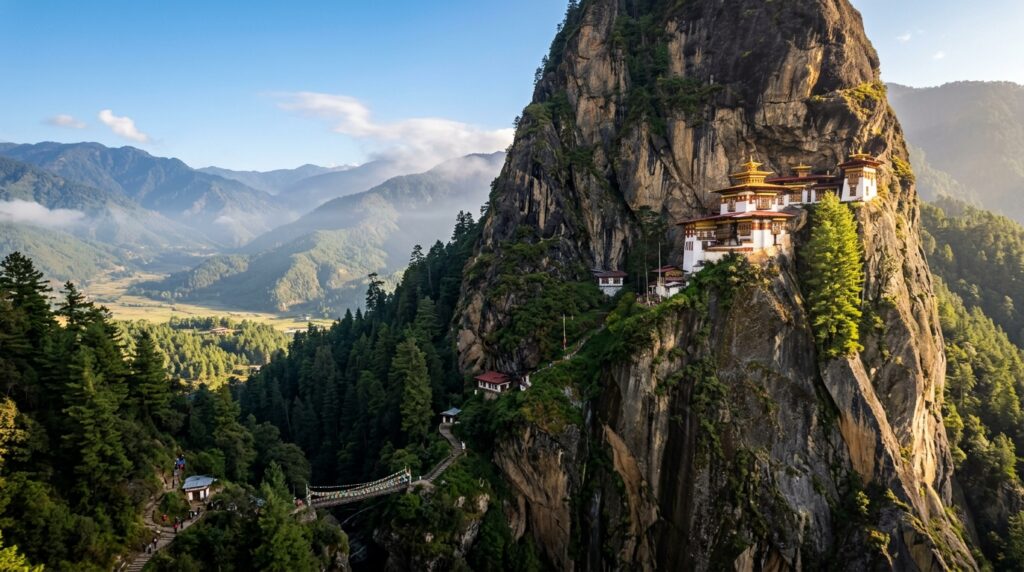
Things to Avoid in Paro Tigers Nest: Tourist Safety Guidelines
Overview Perched on a sheer granite cliff face 900 meters above the pine-scented Paro Valley (at an elevation of 3,120 meters above sea level), Taktsang Palphug Monastery, world-renowned as Tiger’s Nest, stands as Bhutan’s most iconic spiritual sanctuary and trekking experience. According to 8th-century Himalayan lore, Guru Rinpoche (Padmasambhava) flew to this cave on the back of a tigress to meditate, consecrating the mountain as sacred ground. While ascending to this architectural marvel is a bucket-list dream for travelers departing from Central India, the high-altitude terrain, steep cliffside pathways, and strict monastic decorum require careful physical preparation and cultural awareness. Mistakes such as rushing the 9-kilometer round-trip hike without proper acclimatization, improper pony usage on steep declines, wearing inadequate footwear, violating sacred temple dress codes, or taking unauthorized interior photographs can turn a spiritual pilgrimage into a hazardous or distressing experience. As Indore’s premier custom travel advisory, Travel Path Holiday (TPH) has crafted this definitive safety guide detailing the critical things to avoid at Paro Tiger’s Nest. Designed specifically for Indori travelers, this guide provides essential advice on high-altitude safety, trail logistics, monastic etiquette, and climate adjustments to ensure your journey is safe, comfortable, and deeply rewarding. Local Logistical Advice for Indore Travelers 1. Flight & Transit Coordinates from Indore For travelers departing from Indore’s Devi Ahilya Bai Holkar Airport (IDR), reaching Paro involves crossing international borders into a high-altitude alpine environment: Air Routes via Delhi or Kolkata: Take a early morning connection from Indore (IDR) to Indira Gandhi International Airport in Delhi (DEL) or Netaji Subhash Chandra Bose International Airport in Kolkata (CCU). From DEL or CCU, board an international connecting flight operated by Bhutan’s national carriers—Drukair or Bhutan Airlines—into Paro International Airport (PBH). Single-PNR Booking Advantage: Always ensure your flights from Indore to Paro are ticketed under a single PNR or coordinated with adequate buffer windows. This guarantees that your checked luggage is seamlessly transferred and protects you against missed connections caused by domestic flight delays. Overland Train/Road Option: Travelers who prefer ground transit can board the *Malwa Express* or connecting express trains from Indore Junction (INDB) to Hasimara Railway Station in West Bengal. From Hasimara, a short 30-minute taxi ride brings you to the border town of Phuentsholing, where you complete immigration before driving 4 to 5 hours up the scenic mountain highways to Paro. 2. Climate & Altitude Transition (Indore to Paro) Indore lies in the Malwa plateau at an altitude of approximately 553 meters, characterized by a warm, dry tropical climate. In contrast, Paro town sits at 2,250 meters, and the Tiger’s Nest summit reaches 3,120 meters above sea level. Oxygen & Temperature Drop: As you ascend from Indore’s ambient warmth to Paro’s high altitude, air density and oxygen pressure decrease significantly. Morning temperatures on the trail frequently drop below 5°C during spring and autumn, while winter temperatures can dip near freezing. Acclimatization Rule: NEVER schedule the Tiger’s Nest hike on Day 1 or Day 2 of your Bhutan itinerary. Attempting a 3,120-meter trek immediately after arriving from Central India increases the risk of altitude sickness. Travel Path Holiday structures your tour to place the Taktsang hike on Day 4 or Day 5, after you have acclimatized during lower-elevation sightseeing in Thimphu (2,320 m) and Punakha (1,300 m). 3. Prepaid SIM Cards & Mobile Connectivity No Domestic Indian Roaming: Standard prepaid SIM cards from Airtel, Jio, or Vi issued in Madhya Pradesh will not work under standard Indian domestic tariffs in Bhutan. Upon crossing the border or landing in Paro, they automatically switch to expensive international roaming rates. Buy a Local Tourist SIM: Upon arrival at Paro International Airport or the Phuentsholing immigration gate, purchase a local tourist SIM or eSIM from TashiCell or B-Mobile. A 30-day tourist data card costs approximately Nu. 500 (~INR 500) and provides reliable 4G connectivity across Paro Valley and the lower sections of the Tiger’s Nest trail. 4. Sustainable Development Fee (SDF) Clearances All Indian nationals visiting Bhutan must pay the official Sustainable Development Fee (SDF) of INR 1,200 per adult per night (children aged 6 to 12 receive a 50% discount; children under 6 are exempt). Travel Path Holiday pre-clears all SDF permits and entry vouchers before your departure from Indore, eliminating paperwork delays at airport immigration. 5. Pure Vegetarian Dining Logistics Bhutanese local cuisine relies heavily on local spices, chilies (*Ema Datshi*), and non-vegetarian stews. For Indori travelers who prefer hand-vetted vegetarian options or freshly cooked pure vegetarian dishes prepared without onion or garlic, TPH coordinates directly with partner resort kitchens in Paro. We arrange hot thermoses of herbal ginger-lemon tea and fresh vegetarian energy packs for your trekking day. Complete Details & Practical Guidelines “` =================================================================================== TAKTSANG (TIGER’S NEST) TRAIL PROFILE =================================================================================== Trailhead (Ramthangkha) Mid-Way Cafeteria Monastery Summit Elevation: 2,600 m Elevation: 2,940 m Elevation: 3,120 m ———————– ———————- ——————- [START] —> 2.0 km Uphill —> [REST & PONY STOP] —> 700 Stone Steps —> [TEMPLE] (Dirt Switchbacks) (Cliff Gorge & Bridge) =================================================================================== “` 1. Steep Climbing & Trail Hazards: Critical Mistakes to Avoid The trail to Tiger’s Nest covers approximately 4.5 kilometers uphill (9 kilometers round trip) with a total vertical elevation gain of over 550 meters. The terrain transitions from dusty pine-forest dirt tracks to rocky slopes, ending in a flight of over 700 narrow stone steps cut directly into the cliff side. Avoid Rushing the Ascent: Pushing a rapid pace during the initial dirt switchbacks causes sudden exhaustion, elevated heart rates, and muscle strain. Maintain a steady, rhythmic breathing pace. Take small, measured steps and schedule 2-minute standing breaks every 20 minutes. Avoid Wearing Casual or Smooth-Soled Shoes: DO NOT attempt this hike in flat sneakers, canvas shoes, slip-ons, or un-broken-in leather footwear. The trail contains loose gravel, exposed tree roots, and damp mud. Wear sturdy, ankle-high trekking boots with deep rubber lug soles (Vibram treads) to prevent slipping and protect your ankles from roll injuries. Avoid Trekking Without Walking Poles: Hiking without trekking poles places excessive impact on your knees and